
Resources
Explore a wide range of valuable resources on GCED to deepen your understanding and enhance your research, advocacy, teaching, and learning.
232 Results found
 State Program on Countering Religious Extremism and Terrorism in the Republic of Kazakhstan for 2018 - 2022 Year of publication: 2018 Corporate author: Government of the Republic of Kazakhstan The document contains the main provisions of the State program on countering religious extremism and terrorism in the Republic of Kazakhstan for 2018 - 2022.The geopolitical changes taking place in the world initiate a new spectrum of challenges and risks in the field of national security, which is becoming more diverse and emanating from a greater number of sources of danger. This determines the complexity and relevance of the tasks within the framework of a systematic prevention of threats of religious extremism and terrorism.Under these conditions, the current national system of combating religious extremism and terrorism needs to be further improved in the context of creating a mechanism for reliable protection of individuals, society and the state from extremist manifestations of a violent nature and threats of terrorism.
  A Global Vision for Citizenship Education: The European Model Year of publication: 2010 Author: Mohammed Lashin | Rania Algmal Corporate author: Egyptian Society of Comparative Education and Educational Administration (ESCEEA) The researchers provide a global vision of education for citizenship, drawing on some examples from Europe. The researchers review the experiences and models from European institutions, and how educational institutions in the Arab world can benefit from them.
  The Characteristics and Basics of Human Rights Year of publication: 2018 Corporate author: Monwa3at The video provides an explanation of the human rights curriculum approved by the Ministry of Higher Education on all colleges and institutes of the Arab Republic of Egypt. The video consists of 3 chapters which are as follows: the legal system of the rules for the protection of human rights, the general rules of the idea of human rights and finally the characteristics.
  Economic, Social and Cultural Rights: Handbook for National Human Rights Institutions (Professional Training Series No.12) Year of publication: 2005 Corporate author: UN. Office of the United Nations High Commissioner for Human Rights (UN. OHCHR) This publication reviews economic, social and cultural human rights. It is a guide to national institutions produced by the United Nations. The guide is a reference in all matters related to human rights to create a decent life for people, and to clarify the role that governments should play in this regard.This handbook is intended to help national human rights institutions maximize the effectiveness of their functions and powers in addressing economic, social and cultural rights. Its aim is to assist national human rights institutions in the development of policies, processes and skills to integrate economic, social and cultural rights further into their work, thereby enabling them to address poverty and development, for example, through an economic, social and cultural rights framework.This handbook will discuss ways in which national human rights institutions can become more effective in protecting and promoting economic, social and cultural rights. It will examine how national institutions’ legal mandates can be interpreted to incorporate economic, social and cultural rights within their jurisdictions, how their functions and powers can be exercised more appropriately in regard to these rights, how they can use their resources most efficiently and effectively and how they can implement economic, social and cultural rights in the political and social contexts in which they operate.
  Human Dignity and Its Prospects in Islamic Law 2: Human Rights Year of publication: 2012 Corporate author: Ahlulbayt E-learning Organization (AELO) This video talks about the human being and how the Lord created him with dignity. The video talks in details about human dignity and rights according to the Islamic law.
  Report of the Committee on the Rights of the Child (General Assembly Official Records Sixty-fifth Session Supplement No. 41) Year of publication: 2010 Corporate author: UN. Committee on the Rights of the Child (UN. CRC) This report reviews the efforts of the Committee on the Rights of the Child, published in 2010. The report is considered a tool to review the Convention on the Rights of the Child and what has been done to achieve it.
 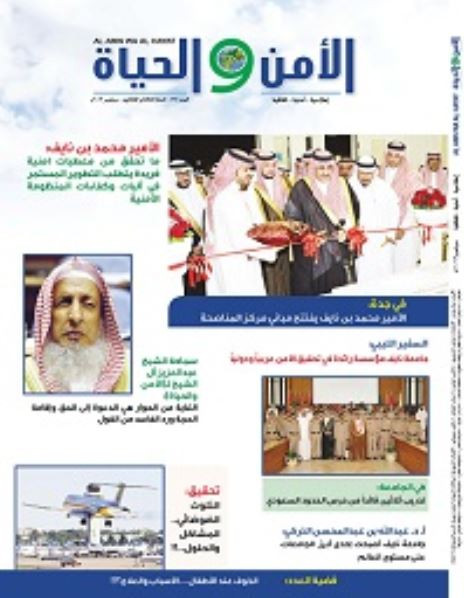 Domestic Violence Year of publication: 2013 Author: Sabha Ghora Corporate author: Naif Arab University for Security Sciences (NAUSS) This article deals with domestic violence and its forms and goes on to discuss hitting children as one of the types of domestic violence. And how hitting children leads to intertwining problems in a child's life.
 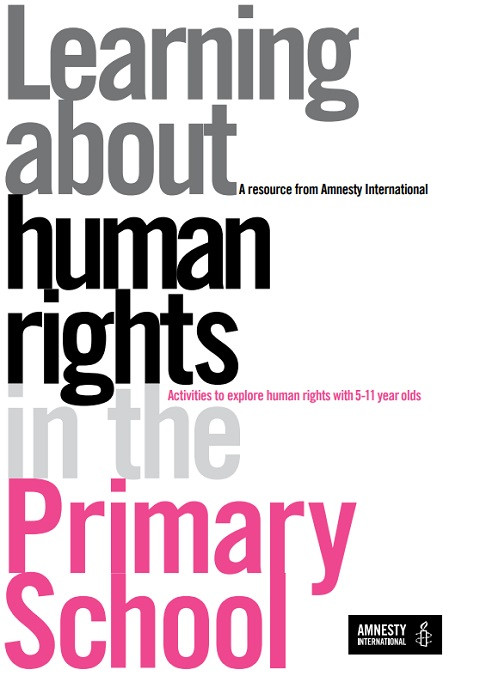 Learning About Human Rights in the Primary School Year of publication: 2013 Corporate author: Amnesty International UK This booklet provides a sample of our human rights education resources produced for primary schools. It helps provide pupils with an understanding of their own human rights and the values and attitudes that underpin them. It will help to foster attitudes of respect and an appreciation of the uniqueness of each individual. Pupils will also develop skills to enable them to take action to defend human rights.You will find a set of 10 interactive lessons for children – five for age 5+ (England and Northern Ireland: Key Stage 1; Wales: Foundation Phase; Scotland: Early and First Level) and five for age 7-11 (England, Nothern Ireland and Wales: Key Stage 2; Scotland: Second Level). Please photocopy and adapt these exercises for your own classroom use.All the activities are designed to encourage pupils to take a basic starting point, often based on something close to home or an event or situation they’ve experienced or can relate to, and then develop it. Pupils are then invited to expand their understanding beyond themselves and to begin to think outwards and towards others, whether locally, nationally or globally.The final activity, Taking action for human rights, explains how schools can sign up to the Junior Urgent Action Network. It’s an opportunity for children to become more actively involved with Amnesty International’s human rights work through our letter-writing campaign. In addition, you can download free resources on a range of human rights issues and order free posters for your school from www.amnesty.org.uk/resources-schools.
  Technical and Vocational Education and Training in Tajikistan and Other Central Asian countries. Main Results and Policy Directions Year of publication: 2021 Corporate author: Asian Development Bank (ADB) This publication is an analysis of the technical and vocational education and training (TVET) system and its effectiveness in Tajikistan and other Central Asian countries, with recommendations for policy makers and implementers. It shows the importance of TVET and the urgent need for its improvement in the context of labor market needs and responses to the Sustainable Development Goals.
 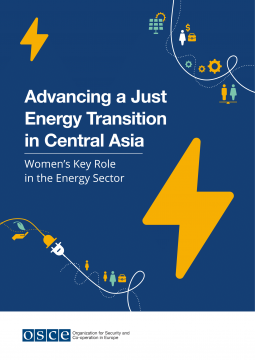 Advancing a Just Energy Transition in Central Asia: Women’s Key Role in the Energy Sector Year of publication: 2024 Corporate author: Организация по безопасности и сотрудничеству в Европе (ОБСЕ) | Global Women’s Network for the Energy Transition (GWNET) The OSCE study analyzes the socio-economic benefits of the energy transition for the five OSCE participating States in the region. It provides specific considerations for the strategic development of an appropriately skilled labour force and also contains critical yet unpublished data on the job creation potential of renewable energy in each Central Asian country.