
Resources
Explore a wide range of valuable resources on GCED to deepen your understanding and enhance your research, advocacy, teaching, and learning.
232 Results found
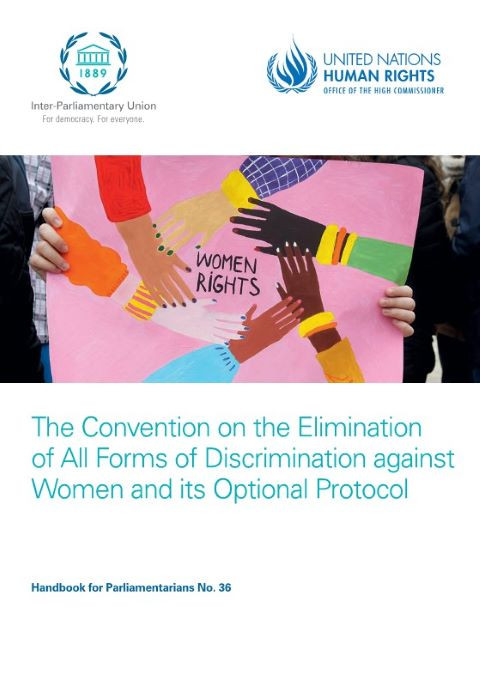 The Convention on the Elimination of All Forms of Discrimination against Women and its Optional Protocol: Handbook for Parliamentarians No. 36; Revised edition Year of publication: 2023 Corporate author: Inter-Parliamentary Union (IPU) | UN. Office of the United Nations High Commissioner for Human Rights (UN. OHCHR) More than four decades after its adoption, the Convention on the Elimination of All Forms of Discrimination against Women remains an essential and ambitious guide for achieving gender equality across the board – from the family and the classroom to executive boards and political leadership roles. Despite considerable progress since the Convention came into force, no country can yet claim to have fully achieved gender equality. This revised edition of The Convention on the Elimination of All Forms of Discrimination against Women and its Optional Protocol: Handbook for Parliamentarians is a joint collaboration undertaken by the Inter-Parliamentary Union (IPU) and the Office of the United Nations High Commissioner for Human Rights (OHCHR).
 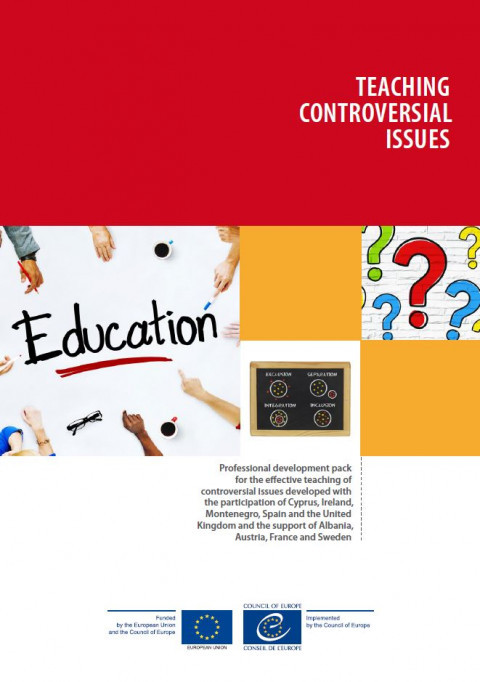 Living with Controversy: Teaching Controversial Issues through Education for Democratic Citizenship and Human Rights (EDC/HRE); Training Pack for Teachers Year of publication: 2015 Corporate author: Council of Europe Learning how to engage in dialogue with people whose values are different from one’s own and to respect them is central to the democratic process and essential for the protection and strengthening of democracy and fostering a culture of human rights. Yet in Europe young people do not often have an opportunity to discuss controversial issues in school because they are seen as too challenging to teach, e.g., issues to do with extremism, gender violence, child abuse, or sexual orientation. Unable to voice their concerns, unaware of how others feel or left to rely on friends and social media for their information, young people can be frustrated or confused about some of the major issues which affect their communities and European society today. In the absence of help from school, they might have no reliable means of dealing with these issues constructively and no one to guide them. The idea for this Pack came out of a call from policy-makers and practitioners in a number of European countries for more effective training for teachers in the teaching of controversial issues.
  Anti-Semitism : a never-ending struggle ? (Vol 2) Corporate author: Anne Frank House | OSCE. Office for Democratic Institutions and Human Rights (ODIHR) These teaching materials were developed by ODIHR and the Anne Frank House in Amsterdam, in co-operation with experts from several OSCE participating States. Part 2 covers contemporary forms of anti-Semitism. The version available here is an English translation of the Polish version. Toolkit on the Holocaust and Human Rights Education in the EU Corporate author: European Union Agency for Fundamental Rights | Yad Vashem Responding to a practical need expressed by teachers and students with a view toward examining the connections between Holocaust and Human Rights Education, the Fundamental Rights Agency (FRA) and Yad Vashem have developed this Toolkit to provide first insights into Holocaust and Human Rights Education content and methodologies, which can be used for teaching about and from the Holocaust and human rights. The Toolkit is a practical guide for teachers and educators who wish to develop teaching projects, by linking Holocaust and human rights. In addition, some examples of teaching projects and learning activities of Holocaust Education and Human Rights Education are provided in the Toolkit. Excursion to the past - teaching for the future : Handbook for teachers Year of publication: 2010 Corporate author: European Union Agency for Fundamental Rights What role do Holocaust-related sites play in today's societies? What do they offer young people? What should schools and teachers consider when planning a visit to such a site? And how can teachers make best use of such visits for teaching about the Holocaust and human rights? This Handbook provides a number of examples, hints and historical background information, which will help teachers and students to make visits to Holocaust-related sites and exhibitions a meaningful and enriching experience. Exkurze do minulosti – výuka pro budoucnost: příručka pro pedagogy Year of publication: 2010 Corporate author: European Union Agency for Fundamental Rights What role do Holocaust-related sites play in today's societies? What do they offer young people? What should schools and teachers consider when planning a visit to such a site? And how can teachers make best use of such visits for teaching about the Holocaust and human rights? This Handbook provides a number of examples, hints and historical background information, which will help teachers and students to make visits to Holocaust-related sites and exhibitions a meaningful and enriching experience. UNESCO associated schools news infos: human rights education Year of publication: 2011 Corporate author: UNESCO Associated Schools Project Network (ASPnet) Human Rights Education is as relevant today as it was in 1953 when it was acknowledged as one of the major themes of ASPnet at its foundation. Education should encompass values such as peace, non‐ discrimination, equality, justice, non‐violence, tolerance and respect for human dignity. Quality education, using a human rights‐based approach, means that rights are implemented throughout the whole education system and in all learning environments. Address by Ms. Irina Bokova, Director-General of UNESCO on the occasion of the Civil Society / Education on Human Rights Event; New York, 27 September 2012 Year of publication: 2012 Corporate author: UNESCO. Director-General, 2009-2017 (Bokova, I.G.) This speech was given by Ms. Irina Bokova, Director-General of UNESCO, on the occasion of the Civil Society / Education on Human Rights event . COMPASS: a manual on human rights education with young people Year of publication: 2012 Author: Patricia Brander Corporate author: Council of Europe Compass was first published in 2002 within the framework of the Human Rights Education Youth Programme of the Directorate of Youth and Sport of the Council of Europe. The programme was created because human rights education – meaning educational programmes and activities that focus on promoting equality in human dignity – was and remains of incalculable value in shaping a dimension of democratic citizenship for all young people and in promoting a culture of universal human rights.Compass has become a reference manual for many young people involved in value-based youth work and non-formal education. It is currently available in more than 30 languages, ranging from Arabic and Japanese to Icelandic and Basque. In some countries it has become part of the resources for human rights education in schools and in some others it is not possible to use it in schools. The adventures of Compass across Europe often mirror the contrasted reality of human rights education: promoted here and combated there, praised by some and despised by others.The success of Compass has been followed by its younger sibling, Compasito – a manual for human rights education with children is already available in several languages and on the way to becoming another bestseller for human rights education. More importantly, Compass and its publication in various language versions has been the medium through which human rights education has been brought onto the agenda of youth work and into the programme of many schools. National networks for human rights education have been created in several countries, where they reinforce the work done by human rights organisations and educational professionals in making the right to human rights education a reality to more children and young people across Europe. The forum on human rights education with young people, Living, Learning, Acting for Human Rights, held in Budapest in 2009, stressed the importance of human rights education today.
 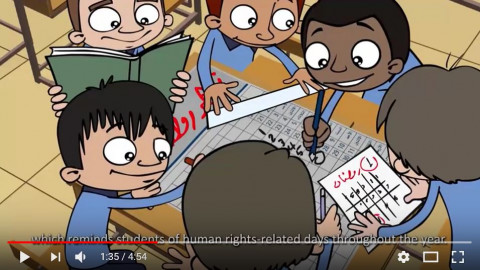 [Video] Equal rights between girls and boys Year of publication: 2015 Corporate author: United Nations Relief and Works Agency for Palestine Refugees in the Near East (UNRWA) Palestine refugee students of all ages learn about human rights in their everyday lives through the Human Rights, Conflict Resolution and Tolerance Education Programme, funded by the United States. In this short animation, young boys and girls learn to respect each other’s rights regardless of gender.