
Resources
Explore a wide range of valuable resources on GCED to deepen your understanding and enhance your research, advocacy, teaching, and learning.
3 Results found
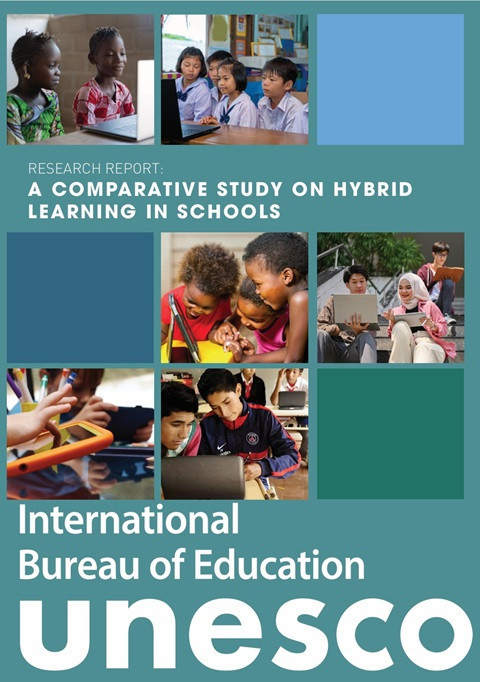 Research Report: A Comparative Study on Hybrid Learning in Schools Year of publication: 2024 Corporate author: UNESCO International Bureau of Education (IBE) During the COVID-19 lockdown, policymakers and educators faced an unprecedented challenge disrupting all levels of education. The initial optimism about replacing physical classes with virtual lessons diminished as complex interconnected issues emerged. To address the need for continuous and sustainable learning, school systems implemented variations of hybrid learning during the pandemic, seeking to integrate physical and virtual classes. These approaches prompted this comparative study led by UNESCO-IBE. The initial phase of this study involved collecting and analysing data on hybrid strategies from six countries. The research aimed to examine factors influencing hybrid learning implementation during the lockdown, with a subsequent focus on developing and validating a practical Hybrid Learning Framework for Schools. The cross-case analysis was designed not to rank or compare, but to understand and connect different scenarios and contexts. Phase I focuses on current hybrid learning practices and influencing factors, while Phases II and III will concentrate on using the information gathered to create and validate a Hybrid Learning Framework for Schools. Hybrid learning is not just a response to pandemics but also serves as a viable solution for other scenarios where full school attendance is difficult. Aligned with UNESCO-IBE’s overarching vision of a comprehensive, personalized, and democratized curriculum accessible to all, hybrid learning facilitates inclusive education across diverse regions, overcoming geographical and temporal limitations. The approach aims to unlock the unique potential of every learner, fostering a more flexible educational environment.Published in February 2024 by the UNESCO International Bureau of Education (IBE) with support from the European Union.
  Strengthening Social and Emotional Learning in Hybrid Modes of Education: Building Support for Students, Teachers, Schools and Families; A UNESCO-IBE Discussion Paper Year of publication: 2024 Corporate author: UNESCO International Bureau of Education (IBE) The COVID-19 pandemic intensified existing educational disparities globally, prompting a reevaluation of school curricula to include Social and Emotional Learning (SEL). This shift recognized the holistic needs of learners, teachers, and families, emphasizing competencies beyond traditional knowledge acquisition. Despite SEL's increasing global recognition, it is often absent from formal curricula, prompting the UNESCO-IBE to address this gap. This Discussion Paper explores the crucial role of SEL in the broader transformation of global education, particularly in the post-COVID-19 era. It highlights six key topics, presenting diverse experiences in integrating SEL into education. Experts from various fields contribute insights, focusing on socio-emotional and hybrid learning advancements worldwide. The report aims to inspire global change-makers, advocating for robust policies aligned with UNESCO's Futures of Education framework. This call to action aligns with the UNESCO-IBE's HELA initiative, promoting flexible hybrid learning models for crisis response and sustainable educational strategies in line with the UN Transforming Education Summit's vision.
  Research Report: A Comparative Study on Hybrid Learning in Schools Year of publication: 2024 Corporate author: UNESCO International Bureau of Education (IBE) During the COVID-19 lockdown, policymakers and educators faced an unprecedented challenge disrupting all levels of education. The initial optimism about replacing physical classes with virtual lessons diminished as complex interconnected issues emerged. To address the need for continuous and sustainable learning, school systems implemented variations of hybrid learning during the pandemic, seeking to integrate physical and virtual classes. These approaches prompted this comparative study led by UNESCO-IBE. The initial phase of this study involved collecting and analysing data on hybrid strategies from six countries. The research aimed to examine factors influencing hybrid learning implementation during the lockdown, with a subsequent focus on developing and validating a practical Hybrid Learning Framework for Schools. The cross-case analysis was designed not to rank or compare, but to understand and connect different scenarios and contexts. Phase I focuses on current hybrid learning practices and influencing factors, while Phases II and III will concentrate on using the information gathered to create and validate a Hybrid Learning Framework for Schools. Aligned with UNESCO-IBE’s overarching vision of a comprehensive, personalized, and democratized curriculum accessible to all, hybrid learning facilitates inclusive education across diverse regions, overcoming geographical and temporal limitations. The approach aims to unlock the unique potential of every learner, fostering a more flexible educational environment.