
Resources
Explore a wide range of valuable resources on GCED to deepen your understanding and enhance your research, advocacy, teaching, and learning.
169 Results found
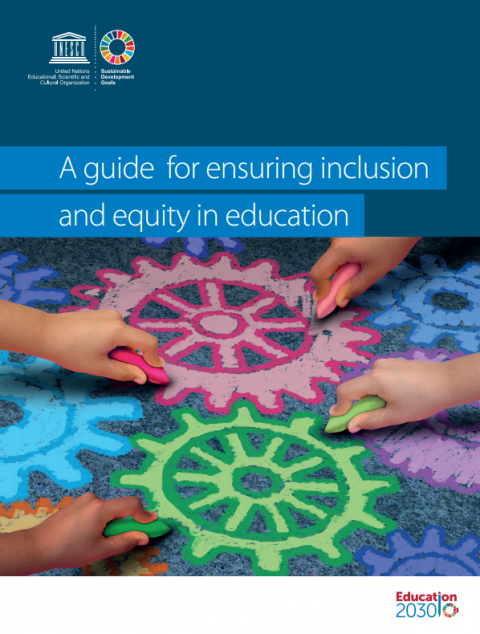 A Guide for ensuring inclusion and equity in education Year of publication: 2017 Corporate author: UNESCO As countries seek to strengthen their national educational systems, finding ways of including all learners and ensuring that each individual has an equal opportunity for educational progress remain major challenges. This guide is intended to support countries in embedding inclusion and equity in educational policy. The ultimate objective is to create system-wide change for overcoming barriers to quality educational access, participation, learning processes and outcomes, and to ensure that all learners are valued and engaged equally.
 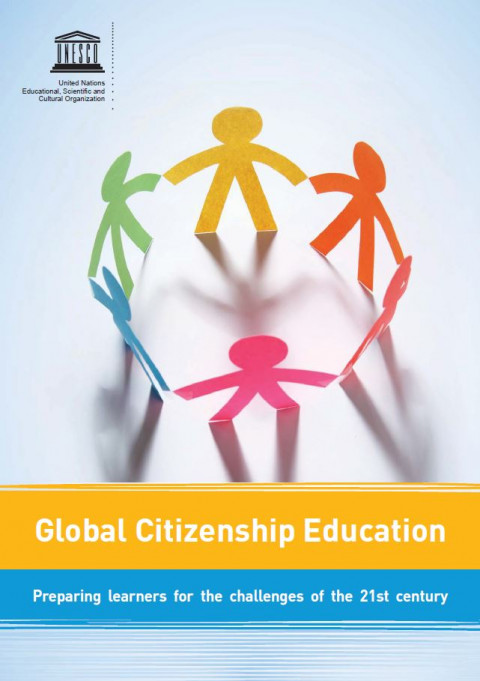 Global Citizenship Education: Preparing Learners for the Challenges of the 21st Century Year of publication: 2014 Corporate author: UNESCO The United Nations Secretary-General’s Global Education First Initiative (GEFI) has established education as a means to ‘foster global citizenship’ – one of its three priority areas. To support this, UNESCO organized two landmark meetings on GCE in 2013. This publication aims to define the parameters of GCE by using the collective expertise, experience and wisdom of those participants who gathered at these landmark events, and to plan for future action in line with emerging thinking and other ongoing work. The review establishes that GCE has a critical role to play in equipping learners with competencies to deal with the dynamic and interdependent world of the twenty-first century. While GCE has been applied in different ways in different contexts, regions and communities, it has a number of common elements, which include fostering in learners. In formal settings, GCE can be delivered as an integral part of an existing subject (such as civic or citizenship education, social studies, environmental studies, geography or culture), or as an independent subject area. Integrated models appear to be more common. Some less traditional, but at least as effective, pathways for GCE have included the following: the use of information and communication technologies and social media, sport competitions and the use of art and music, and youth-led initiatives employing a wide variety of approaches. Both traditional and new horizons for GCE are profiled in this review. This publication also explores a number of enabling conditions for the promotion and implementation of GCE. These include: the existence of an open environment for universal values, the implementation of transformative pedagogy and support for youth-led initiatives.The review acknowledges that there are a number of ongoing tensions with the concepts of global citizenship and global citizenship education. While these tensions vary, they all point to the fundamental question of how to promote universality (e.g. common and collective identity, interest, participation, duty), while respecting singularity (e.g. individual rights, self-improvement). Some ways forward to resolve these tensions are suggested, whilst maintaining that challenges around theoretical elements of GCE should not undermine its practice. The processes documented in this publication have strengthened partnerships, built coalitions and contributed to improving the evidence base on the theory and practice of global citizenship education. While there are tasks that remain, this foundation bodes well for improving the enabling conditions and the practices highlighted in this review. By preparing learners to fulfil their potential in an increasingly globalized world, we are promoting transformed societies that are also better equipped to deal with the twenty-first century challenges and to seize twenty-first century opportunities. Éducation à la citoyenneté mondiale : Préparer les apprenants aux défis du XXIe siècle Year of publication: 2014 Corporate author: UNESCO Qu’est-ce que l’éducation à la citoyenneté mondiale ? Est-ce que nous l’apprenons à l’école ? Quels changements peut-elle générer ? Comment peut-elle être introduite dans les programmes scolaires et devenir une pratique courante ? Cette publication cherche à répondre à ces questions, ainsi qu’à d’autres encore.Pour l’UNESCO, l’éducation à la citoyenneté mondiale (ECM) renforce les connaissances, les compétences, les valeurs et les comportements dont les apprenants ont besoin pour construire un monde plus juste, pacifique et durable, et pour prospérer en tant que citoyens du monde au XXIe siècle.Dans un monde globalisé en rapide mutation, il est fondamental que les générations actuelles et futures développent la capacité d’agir dès aujourd’hui et de trouver des solutions aux problèmes mondiaux de demain.Le point de départ de l’ECM est la reconnaissance de l’apport de l’éducation dans la compréhension et la résolution de problèmes mondiaux complexes. C’est aussi la reconnaissance du rôle qu’elle a à jouer pour aller au-delà du simple développement de capacités cognitives – par exemple, lire, écrire et compter – en inculquant aux apprenants des valeurs et des compétences sociales et émotionnelles capables de promouvoir le changement social et la coopération entre les nations.Cette publication a pour objectif : d’améliorer la compréhension de l’ECM en tant qu’approche éducative et de ses implications sur les contenus éducatifs et les méthodes d’enseignement ; d’identifier des approches novatrices et de bonnes pratiques en matière d’ECM ; et de partager les enseignements tirés et les moyens de promouvoir davantage encore l’ECM. Cette publication a été préparée à l’intention des responsables des politiques chargés de l’éducation, des praticiens, des organisations de la société civile et des leaders de la jeunesse, à partir des conclusions de deux conférences internationales consacrées à l’ECM. Educación para la Ciudadanía Mundial: Preparar a los Educandos para los Retos del Siglo XXI Year of publication: 2014 Corporate author: UNESCO Esta publicación explora una serie de condiciones favorables para la promoción y la puesta en práctica de la ECM. Entre estos se incluyen: la existencia de un entorno abierto para los valores universales, la aplicación de pedagogía transformativa y el apoyo a las iniciativas dirigidas por los jóvenes. El estudio reconoce que hay una serie de tensiones vigentes para con los conceptos de ciudadanía mundial y educación para la ciudadanía mundial. Si bien estas tensiones varían, todas ellas apuntan a la cuestión fundamental de cómo promover la universalidad (p. ej. la identidad, el interés, la participación, el deber comunes y colectivos), respetando al mismo tiempo la singularidad (es decir, los derechos individuales, la superación personal). Se proponen algunas maneras de avanzar para resolver estas tensiones, a la vez que se mantiene que las dificultades que plantean los elementos teóricos de la ECM no deben socavar su práctica.
  九个人口大国关于2015年后教育的联合声明 : 伊斯兰堡声明 Year of publication: 2014 Corporate author: 联合国教科文组织 (UNESCO) This statement is adopted by the participants of the 10th E-9 Ministerial Review Meeting held in Islamabad, Pakistan, on November 27-28, 2014. They have taken stock of the progress made since 2000 and challenges remaining in the nine countries in achieving the six Education for All (EFA) goals, and reflected on the priorities and prospects for each country to sustain and further advance educational development beyond 2015. Their deliberations were based on a careful examination of the National EFA 2015 Reviews of the countries concerned, the Muscat Agreement adopted at the Global Education for All Meeting (Muscat, Oman, 12-14 May 2014), the Outcome Document of the United Nations General Assembly Open Working Group on Sustainable Development Goals, and took into account the Aichi-Nagoya Declaration on Education for Sustainable Development as well as the changing global environment that shapes the cooperation among the E-9 countries. البيان المشترك للبلدان التسعة ذات الأعداد الضخمة فيما يخص التعليم في مرحلة ما بعد عام 2015 Year of publication: 2014 Corporate author: منظمة الأمم المتحدة للتربية والعلم والثقافة (UNESCO) This statement is adopted by the participants of the 10th E-9 Ministerial Review Meeting held in Islamabad, Pakistan, on November 27-28, 2014. They have taken stock of the progress made since 2000 and challenges remaining in the nine countries in achieving the six Education for All (EFA) goals, and reflected on the priorities and prospects for each country to sustain and further advance educational development beyond 2015. Their deliberations were based on a careful examination of the National EFA 2015 Reviews of the countries concerned, the Muscat Agreement adopted at the Global Education for All Meeting (Muscat, Oman, 12-14 May 2014), the Outcome Document of the United Nations General Assembly Open Working Group on Sustainable Development Goals, and took into account the Aichi-Nagoya Declaration on Education for Sustainable Development as well as the changing global environment that shapes the cooperation among the E-9 countries. Declaración Conjunta del Grupo E-9 sobre la Educación Después de 2015: Declaración de Islamabad Year of publication: 2014 Corporate author: Organización de las Naciones Unidas para la Educación, la Ciencia y la Cultura (UNESCO) This statement is adopted by the participants of the 10th E-9 Ministerial Review Meeting held in Islamabad, Pakistan, on November 27-28, 2014. They have taken stock of the progress made since 2000 and challenges remaining in the nine countries in achieving the six Education for All (EFA) goals, and reflected on the priorities and prospects for each country to sustain and further advance educational development beyond 2015. Their deliberations were based on a careful examination of the National EFA 2015 Reviews of the countries concerned, the Muscat Agreement adopted at the Global Education for All Meeting (Muscat, Oman, 12-14 May 2014), the Outcome Document of the United Nations General Assembly Open Working Group on Sustainable Development Goals, and took into account the Aichi-Nagoya Declaration on Education for Sustainable Development as well as the changing global environment that shapes the cooperation among the E-9 countries.
  Ensuring the right to equitable and inclusive quality Education: results of the ninth consultation of Member States on the implementation of the UNESCO Convention and Recommendation against Discrimination in Education Year of publication: 2017 Corporate author: UNESCO The Convention and Recommendation against Discrimination in Education reflect UNESCO’s constitutional mission of instituting collaboration among nations to ‘advance the ideal of equality of educational opportunities without regard to race, sex, or any distinctions, economic or social.’ The purpose of these instruments, recently recognized as a cornerstone of the Education 2030 Agenda, is not only the elimination of discrimination in education, but also the adoption of concrete measures aimed at promoting equality of opportunities and treatment in this field. They cover the right to education comprehensively. The purpose of reporting is to illustrate the steps taken to implement the instruments, the progress made and the difficulties encountered by Member States. Eight Member State consultations have been conducted on the measures taken for the implementation of the 1960 Convention and Recommendation since the adoption of these instruments by the General Conference of UNESCO. Each of the consultations led to a global report containing the results of the consultation for submission to the UNESCO Executive Board’s Committee on Conventions and Recommendations and for consideration by the General Conference. Educación para Todos (EPT) en América Latina y el Caribe: Balance y Desafíos post-2015, 30-31 de Octubre del 2014, Lima, Perú: Declaración de Lima Year of publication: 2014 Corporate author: Organización de las Naciones Unidas para la Educación, la Ciencia y la Cultura (UNESCO) The Ministers of Education of Latin America and the Carribean (LAC), high-level government officials, UN agencies, representatives of civil society organizations and development partners, gathered at th meeting on "Education for All (EFA) in Latin America and the Carribean: Assessment of progress and post-2015 challenges", in Lima, Peru, from 30 to 31 October 2014. Having deliberated on progress towards EFA in the region, the Muscat Agreement adopted at the Global EFA Meeting (GEM) in Muscat, Oman, 12-14 May 2014, and the outcome document of the UN General Assembly Open Working Group for Sustainable Development Goals, and having examined the unfinished EFA tasks in the region, as well as the challenges and priorities that will configure the post-2015 education agenda for the region, the Lima Statement was adopted. L'Education pour tous (EPT) en Amérique latine et dans les Caraïbes: Évaluation des Progrès et Enjeux de l'après-2015, 30-31 Octobre 2014, Lima, Pérou: Déclaration de Lima Year of publication: 2014 Corporate author: Organisation des Nations Unies pour l'éducation, la science et la culture (UNESCO) The Ministers of Education of Latin America and the Carribean (LAC), high-level government officials, UN agencies, representatives of civil society organizations and development partners, gathered at th meeting on "Education for All (EFA) in Latin America and the Carribean: Assessment of progress and post-2015 challenges", in Lima, Peru, from 30 to 31 October 2014. Having deliberated on progress towards EFA in the region, the Muscat Agreement adopted at the Global EFA Meeting (GEM) in Muscat, Oman, 12-14 May 2014, and the outcome document of the UN General Assembly Open Working Group for Sustainable Development Goals, and having examined the unfinished EFA tasks in the region, as well as the challenges and priorities that will configure the post-2015 education agenda for the region, the Lima Statement was adopted.