
Resources
Explore a wide range of valuable resources on GCED to deepen your understanding and enhance your research, advocacy, teaching, and learning.
169 Results found
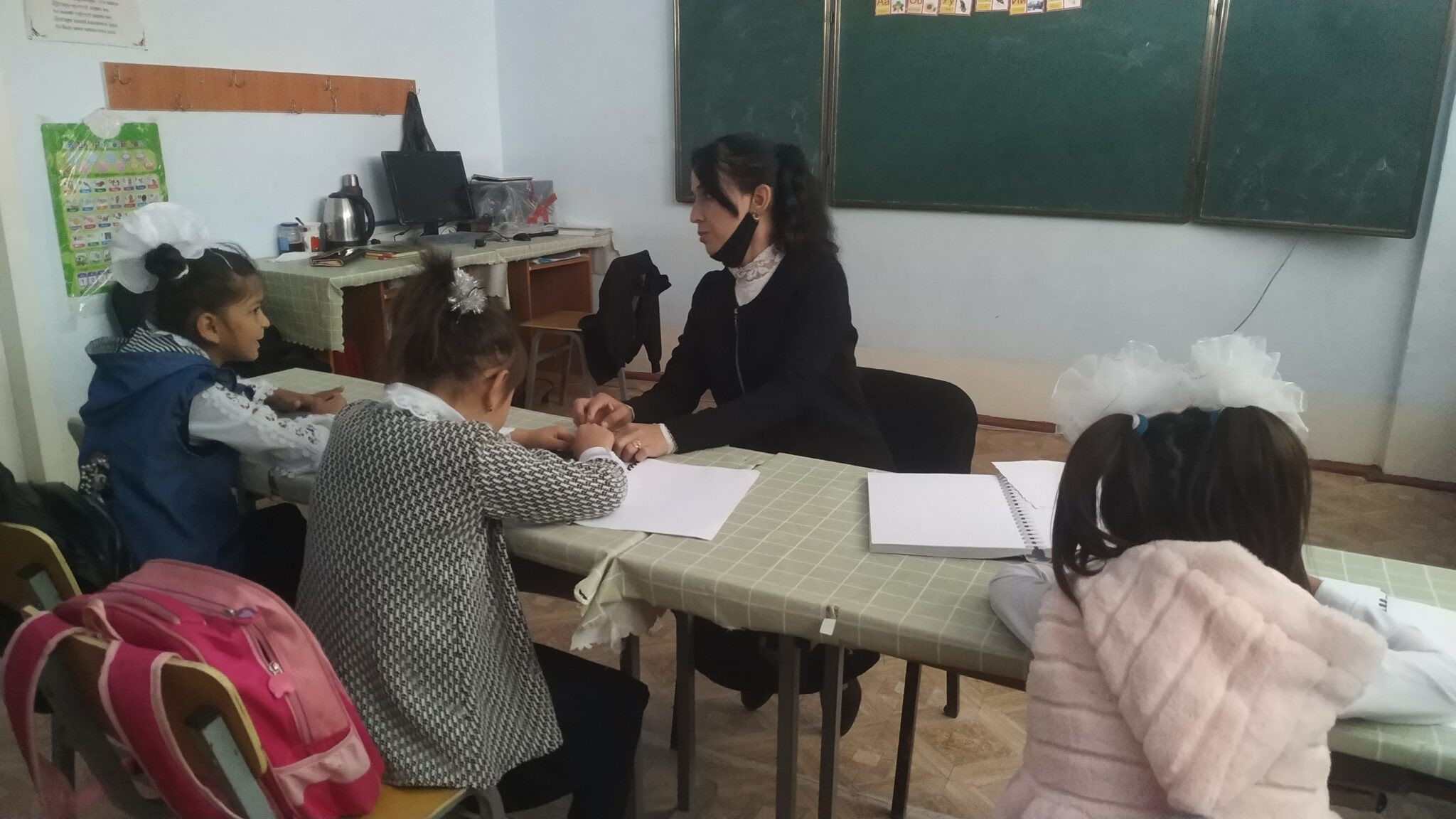 Children with Disabilities in Remote Regions of Tajikistan Have No Access to Quality Education Year of publication: 2023 Corporate author: CABAR.asia Parents of children with disabilities from remote villages in Khatlon Province are concerned about their children’s education conditions, but authorities say all are covered. У детей с инвалидностью в отдаленных регионах Таджикистана нет доступа к качественному образованию Year of publication: 2023 Corporate author: CABAR.asia Родители детей с инвалидностью из отдаленных сел Хатлонской области обеспокоены условиями обучения своих детей, но власти заявляют, что все они охвачены образованием.
  Notre diversité créatrice: rapport de la commission mondiale de la culture et du développement, version condensée Year of publication: 1996 Corporate author: World Commission on Culture and Development This report is designed to address a diversified audience across the world that ranges from community activists, field workers, artists and scholars to government officials and politicians. We want it to inform the world’s opinion leaders and to guide its policy-makers. We want it to capture the attention of the world’s intellectual and artistic communities, as well as the general public. We aim to have shown them how culture shapes all our thinking, imagining and behaviour. It is the transmission of behaviour as well as a dynamic source for change, creativity, freedom and the awakening of innovative opportunities. For groups and societies, culture is energy, inspiration and empowerment, as well as the knowledge and acknowledgment of diversity: if cultural diversity is ‘behind us, around us and before us”, as Claude L&i-Strauss put it, we must learn how to let it lead not to the clash of cultures, but to their fruitful coexistence and to intercultural harmony. Just as in the tasks of building peace and consolidating democratic values, an indivisible set of goals, so too economic and political rights cannot be realized separately from social and cultural rights. The challenge to humanity is to adopt new ways of thinking, new ways of acting, new ways of organizing itself in society, in short, new ways of living. The challenge is also to promote different paths of development, informed by a recognition of how cultural factors shape the way in which societies conceive their own futures and choose the means to attain these futures. I have for some time been concerned with the “culture of peace”. There is now considerable evidence that neglect of human development has been one of the principal causes of wars and internal armed conflicts, and that these, in turn, retard human development. With government complicity and with the intention of raising export receipts, private businesses continue to sell advanced military technology, nuclear materials and equipment for the production of bacteriological and chemical warfare. The concept of state sovereignty which still prevails today has increasingly come under scrutiny. In the area of peace-keeping, the distinction between external aggression and internal oppression is often unrealistic. The predominant threat to stability are violent conflicts within countries and not between them. There is an urgent need to strengthen international human rights law. Many of the most serious troubles come from within states – either because of ethnic strife or repressive measures by governments. Conditions that lead to tyranny and large-scale violations of human rights at home sooner or later are likely to spill over into a search for enemies abroad. The temptation of repressive states to export internal difficulties is great. Consider the Soviet Union’s invasion of Hungary and Czechoslovakia after it had used domestic oppression and the persistent refusal - for many years - of the previous South African governments to grant independence to Namibia. An ounce of prevention is better than a ton of punishment.
  Singapore’s educational reforms toward holistic outcomes: (Un)intended consequences of policy layering Year of publication: 2023 Author: Dennis Kwek | Jeanne Ho | Hwei Ming Wong Corporate author: Center for Universal Education at Brookings In the transition from economic imperatives to holistic drivers, there has been a gradual move over five policy phases (from 1965 to 2022 and beyond) toward curriculum and school diversification to cater to different students, with more autonomy given to schools to innovate their pedagogy and improve instructional quality to meet their students’ unique needs. Importantly, there has been a shift in policy rhetoric from focusing on educational structures to focusing on pedagogy and instructional quality. To shift pedagogy from being mainly didactic in nature—with emphasis on preparing students for national examination—the Singapore government recognized the need to focus on school leaders’ and teachers’ capacity building to enable new curricula and teaching practices. The school cluster structure was initiated in 1997 to enable collaboration and learning among school leaders, key personnel, and teachers. Opportunities for collaborative teacher learning are provided at different ecological levels: professional learning communities (PLCs) within schools and networked learning communities (NLCs) across schools. Beyond the education system, the Singapore government works with other ministries and community organizations, such as ethnic self-help organizations, to tackle educational equity issues. Ultimately, even though the official policy narrative post-1997 has been a de-emphasis on examination results and educational infrastructure to help improve the instructional quality in schools toward holistic outcomes and improved student well-being have been developed, education systems building co-exists with an alternative underlying shadow education system valued by parents who continue to chase narrow academic outcomes. Tuition and enrichment centers in Singapore constitute the shadow education system.
  The Comprehensive Learning Diagnosis: Chile’s approach to assess socio-emotional learning in schools Year of publication: 2023 Author: José Weinstein | Juan Bravo Corporate author: Center for Universal Education at Brookings Education in Chile has important challenges of quality, equity, and social integration. For decades, policies tried to respond to these concerns with a high-stakes accountability institutional framework, which has not had success. The underlying vision of educational quality was limited. The assessment system in place privileged cognitive and academic dimensions of educational results. Socio-emotional learning had been neglected or considered secondary, without an infrastructure of assessment tools that allowed teachers and principals to diagnosis students’ situations and monitor their progress. The COVID-19 crisis was an opportunity for change: Students’ socioemotional needs were a main concern for schools and society, and the regular accountability system based on standardized tests was interrupted. Subsequently, the Comprehensive Learning Diagnosis (DIA) was launched by the Education Quality Agency. The DIA is a voluntary assessment tool made available to all Chilean schools. The DIA promotes the comprehensive development of students, providing timely information and guidance to internally monitor students’ learning in the academic and socio-emotional domains at several points during the school year. Specifically, with respect to socio-emotional learning, three areas were considered: personal, community, and citizenship. In each of these areas, a set of socioemotional skills were defined, operationalized, and became possible to monitor by school communities. The DIA also collects students’ opinions of school management practices regarding socio-emotional skills. The DIA has received a wide acceptance in school communities. Despite being voluntary, an ample majority of schools decided to participate. The information collected from the DIA allows for practical use by principals and teachers. Moreover, the DIA provides the opportunity for students to inform school management. The new Chilean government has decided to strengthen DIA as an important component in a four-year national plan for reactivating academic and socio-emotional learning in schools. The previous high-stakes accountability system, which involved external assessments, has been suspended and is under discussion. The DIA experience has shown that critical social and educational situations can provide fertile ground to motivate deep and rapid transformation, if an educational actor (in this case the Education Quality Agency) is capable of enacting a pertinent, timely, and practical response to school needs. The DIA is not only an example of productive uses of students´ assessment by schools, but also a demonstration that it is possible to build an institutional arrangement among local, intermediate, and national levels of school systems, where a vertical hierarchy is changed by a collaborative relationship based on local agency, mutual trust, and differentiated technical contributions.
  Evidence on Inclusive Education in Kazakhstan based on a Formative and a Big Data Evaluation Year of publication: 2024 Author: Arseniy Gurin | Udayan Rathore | Zhanar Zhaxylykova Corporate author: UNICEF Kazakhstan The objective of the JB formative evaluation was to examine the functioning of the state education programmes between 2011 and 2021 with a special focus on inclusivity. This covered children from pre-school to secondary school levels. The Big data evaluation or Social Media Listening (SML) study focused on the same age group of children and aimed to further the understanding of different stakeholder perspectives, as expressed via social media and online news media outlets. The demography of Kazakhstan reflects that it is a relatively young country. Given that the youth are more inclined to using social media, this is an important source of discussions in the country, including those on inclusive education. Результаты формативной оценки образования с фокусом на инклюзивность и оценки с использованием больших данных Year of publication: 2024 Author: Arseniy Gurin | Udayan Rathore | Zhanar Zhaxylykova Corporate author: UNICEF Kazakhstan Целью формативной оценки JB было изучение функционирования государственных образовательных программ в период с 2011 по 2021 год с особым фокусом на инклюзивность. Она охватывала детей дошкольного возраста и возраста средней школы. Оценка с применением больших данных или «Мониторинг социальных сетей» (МСС) были сосредоточены на одной и той же возрастной группе детей и были направлены на дальнейшее понимание различных точек зрения заинтересованных сторон, выраженных посредством социальных сетей и интернет-СМИ. Демографическая ситуация отражает то, что Казахстан относительно молодая нация. Принимая во внимание, что молодежь более склонна к использованию социальных сетей, они представляют собой важный источник обсуждений в стране, в том числе по вопросам инклюзивного образования.
  A Path to Inclusive Education in Petropavlovsk, Kazakhstan Year of publication: 2013 Author: Nils Joseph Kauffman | Larisa A. Popova The article examines the challenges faced by initiators of inclusive education in the Republic of Kazakhstan. The research was conducted in qualitative methodology, in a case study strategy, and the object was a small school in Petropavlovsk, which has ten years of experience in including students with motor disabilities in the regular educational process. The study of this school's experience shows that the inclusion of students with special educational needs can lead to broader integration, since children with emotional and behavioral disorders now also study at the school. The difficulties of implementing inclusion are analyzed, and it is shown that the success of this educational project is largely due to the cooperation between the rehabilitation center under the Ministry of Social Protection and the public school. Путь к инклюзивному образованию в городе Петропавловске Республики Казахстан Year of publication: 2013 Author: Nils Joseph Kauffman | Larisa A. Popova В статье рассматриваются испытания, с которыми сталкиваются инициаторы инклюзивного образования в Республике Казахстан. Исследование проводилось в качественной методологии, в стратегии кейс стади, в качестве объекта выступала небольшая школа в г. Петропавловске, которая имеет десятилетний опыт включения в обычный образовательный процесс учеников с нарушениями опорно-двигательного аппарата. Изучение опыта этой школы показывает, что включение учащихся с особыми образовательными потребностями может привести к более широкой интеграции, поскольку теперь в школе обучаются также дети с эмоциональными и поведенческими нарушениями. Проанализированы трудности реализации инклюзии, а также показано, что успех данного образовательного проекта во многом обеспечен сотрудничеством между реабилитационным центром при Министерстве социальной защиты и государственной школой.
  Tradition, Stigma and Inclusion: Overcoming Obstacles to Educational Access in Tajikistan Year of publication: 2013 Author: Manzura T. Juraeva | Benjamin Gatling In this article, the authors summarize their observations on the implementation of inclusive education in Tajikistan through the case study of a rural woman and her disabled son. The case study demonstrates a mother's victory over social and structural barriers to the implementation of inclusive education, and shows how community organizations and individual parents can change social policy from within, act in the best interests of their children, and win.