
Resources
Explore a wide range of valuable resources on GCED to deepen your understanding and enhance your research, advocacy, teaching, and learning.
169 Results found
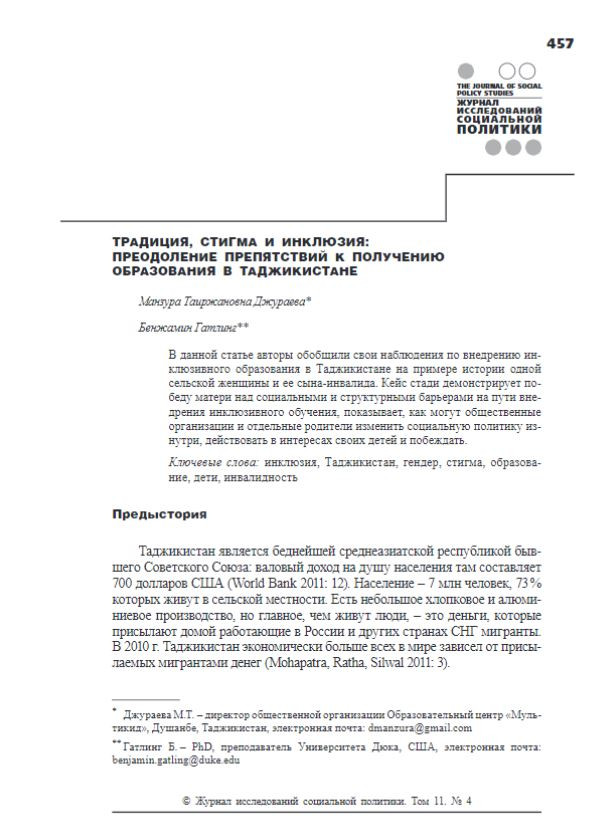 Традиция, стигма и инклюзия: преодоление препятствий к получению образования в Таджикистане Year of publication: 2013 Author: Manzura T. Juraeva | Benjamin Gatling В данной статье авторы обобщили свои наблюдения по внедрению инклюзивного образования в Таджикистане на примере истории одной сельской женщины и ее сына-инвалида. Кейс стади демонстрирует победу матери над социальными и структурными барьерами на пути внедрения инклюзивного обучения, показывает, как могут общественные организации и отдельные родители изменить социальную политику изнутри, действовать в интересах своих детей и побеждать.
 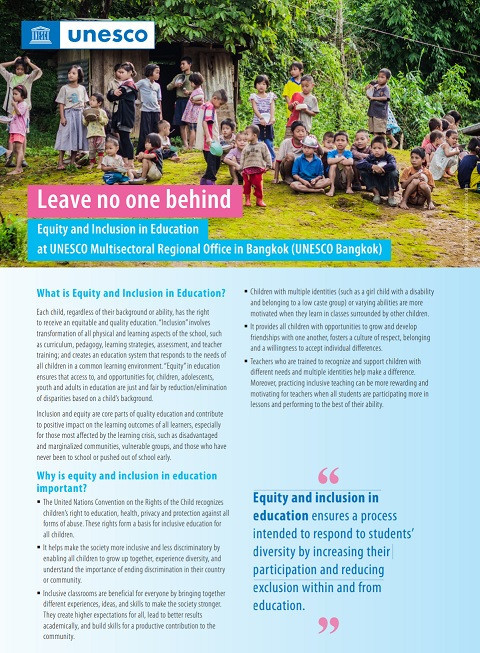 Leave No One Behind: Equity and Inclusion in Education at UNESCO Multisectoral Regional Office in Bangkok (UNESCO Bangkok) Year of publication: 2023 Corporate author: UNESCO Bangkok Equity and inclusion in education ensures a process intended to respond to students’ diversity by increasing their participation and reducing exclusion within and from education.
 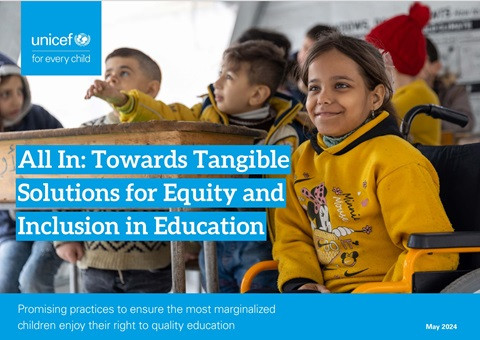 All In: Towards Tangible Solutions for Equity and Inclusion in Education Year of publication: 2024 Corporate author: United Nations Children's Fund (UNICEF) All In: Towards Tangible Solutions for Equity and Inclusion in Education showcases promising practices that were successfully implemented to ensure that inclusive education really does include all children, so that the most marginalized learners – including children with disabilities, children who are out of school, children living in poverty, marginalized girls, and refugee children – have access to quality education. While many of the promising practices were initiated in response to the COVID-19 crisis, or draw upon the pandemic experience, they go beyond the immediate focus of pre- or post-COVID-19 education systems to an overall view of child well-being and the need to focus on skills for the 21st century. Many of these practices have the potential to be applied more widely within education systems and can be adapted and replicated by stakeholders in any context where innovative and inclusive approaches are needed to protect and promote children’s right to education. Ingenuity, flexibility and a commitment to true inclusion and forward-looking policies are the common thread of promising practices in this document. This publication is a complementary resource to the 2021 report: Reimagining Girls’ Education: Solutions to Keep Girls Learning in Emergencies.
 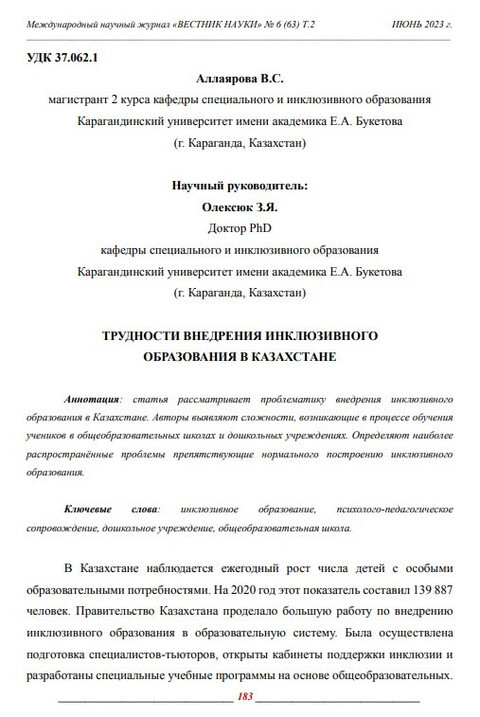 Difficulties of Implementing Inclusive Education in Kazakhstan (Bulletin of Science; Vol.2, No.6) Year of publication: 2023 Author: Аллаярова В.С. | Олексюк З.Я. The article examines the problems of the introduction of inclusive education in Kazakhstan. The authors identify the difficulties that arise in the process of teaching students in general education schools and preschool institutions. Identify the most common problems that hinder the normal construction of inclusive education. Трудности внедрения инклюзивного образования в Казахстане (Вестник науки; Vol.2, No.6) Year of publication: 2023 Author: Аллаярова В.С. | Олексюк З.Я. Статья рассматривает проблематику внедрения инклюзивного образования в Казахстане. Авторы выявляют сложности, возникающие в процессе обучения учеников в общеобразовательных школах и дошкольных учреждениях. Определяют наиболее распространённые проблемы препятствующие нормального построению инклюзивного образования.
 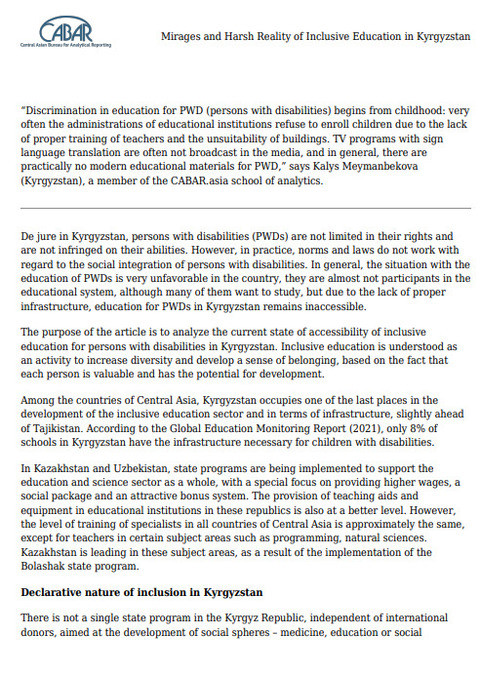 Mirages and Harsh Reality of Inclusive Education in Kyrgyzstan Year of publication: 2022 Author: Kalys Meymanbekova Corporate author: Central Asian Bureau for Analytical Reporting (CABAR) The purpose of the article is to analyze the current state of accessibility of inclusive education for persons with disabilities in Kyrgyzstan. Inclusive education is understood as an activity to increase diversity and develop a sense of belonging, based on the fact that each person is valuable and has the potential for development. Миражи и суровая реальность инклюзивного образования в Кыргызстане Year of publication: 2022 Author: Kalys Meymanbekova Corporate author: Central Asian Bureau for Analytical Reporting (CABAR) Целью статьи является анализ текущего положения доступности инклюзивного образования для ЛОВЗ Кыргызстана. Инклюзивное образование понимается как деятельность по расширению разнообразия и развитию чувства сопричастности, основанная на том, что каждый человек ценен, и у него есть потенциал развития.
 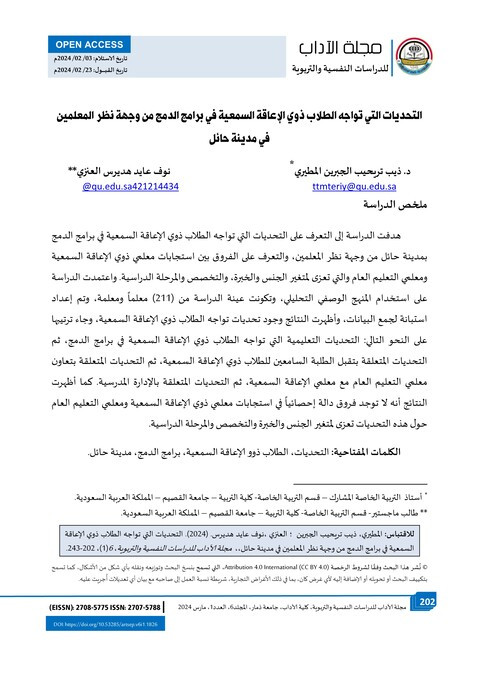 التحديات التي تواجه الطلاب ذوي الإعاقة السمعية في برامج الدمج من وجهة نظر المعلمين في مدينة حائل (الآداب للدراسات النفسية والتربوية ;no.1, vol.6) Year of publication: 2024 Author: Theeb Turayhib Aljbreen Almutairi | Nouf Ayed Huders Alenezi Corporate author: Dhamar University هدفت الدراسة إلى التعرف على التحديات التي تواجه الطلاب ذوي الإعاقة السمعية في برامج الدمج بمدينة حائل من وجهة نظر المعلمين، والتعرف على الفروق بين استجابات معلمي ذوي الإعاقة السمعية ومعلمي التعليم العام والتي تعزى لمتغير الجنس والخبرة، والتخصص والمرحلة الدراسية. واعتمدت الدراسة على استخدام المنهج الوصفي التحليلي، وتكونت عينة الدراسة من (211) معلماً ومعلمة، وتم إعداد استبانة لجمع البيانات، وأظهرت النتائج وجود تحديات تواجه الطلاب ذوي الإعاقة السمعية، وجاء ترتيبها على النحو التالي: التحديات التعليمية التي تواجه الطلاب ذوي الإعاقة السمعية في برامج الدمج، ثم التحديات المتعلقة بتقبل الطلبة السامعين للطلاب ذوي الإعاقة السمعية، ثم التحديات المتعلقة بتعاون معلمي التعليم العام مع معلمي الإعاقة السمعية، ثم التحديات المتعلقة بالإدارة المدرسية. كما أظهرت النتائج أنه لا توجد فروق دالة إحصائياً في استجابات معلمي ذوي الإعاقة السمعية ومعلمي التعليم العام حول هذه التحديات تعزى لمتغير الجنس والخبرة والتخصص والمرحلة الدراسية. Challenges Facing Inclusion Programs Hearing Impairment Students from the Perspective of Teachers in Hail City (Literature for Psychological and Educational Studies; vol.6, no.1) Year of publication: 2024 Author: Theeb Turayhib Aljbreen Almutairi | Nouf Ayed Huders Alenezi Corporate author: Dhamar University The study aimed to identify the challenges facing students with hearing impairment in inclusion programs in Hail city from teachers' perspectives, highlighting the differences between the responses of teachers of students with hearing impairment and those of general education regarding such challenges attributed to gender, experience, study major and level variables. The descriptive analytical approach was adopted. The study sample iconsisted of (211) teachers, and a questionnaire was used for data collection. The results showed that there were challenges facing students with hearing imapirment in the inclusion programs from the point of view of teachers. The challenges were ordered as follows: educational challenges facing students with hearing impairment, challenges related to the acceptance of sound hearing students to those with hearing imparment, challenges pertaining to coopertation between general education teachers and those of hearing imapired students, and challenges related to school adminstration. It was also revealed that there were no statistically significant differences in the responses of teachers of hearing imapaired students and general education instructors on the challenges attributed to gender, experience, major and study level variables.
 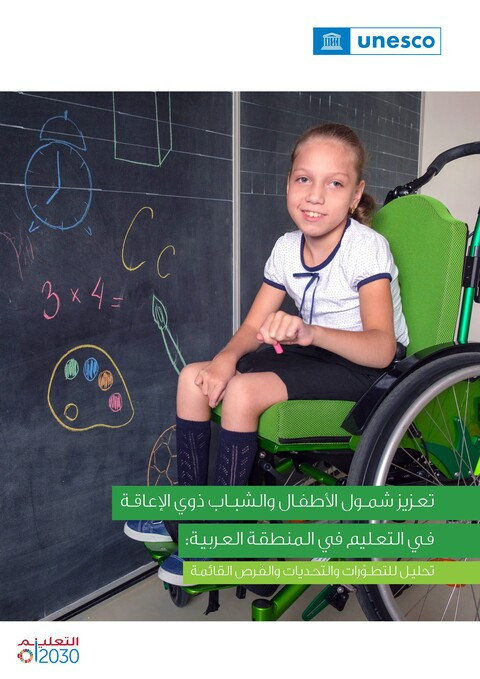 تعزيز شمول الأطفال والشباب ذوي الإعاقة في التعليم في المنطقة العربية: تحليل للتطوّرات والتحديات والفرص القائمة Year of publication: 2022 Author: Maha Khochen-Bagshaw Corporate author: UNESCO Beirut أعد هذا التقرير مكتب اليونسكو الإقليمي للتربية في الدول العربية في إطار برنامج الأمير سلطان بن عبد العزيز آل سعود لتعزيز اللغة العربية. ويقدم التقرير تحليلاً للتعليم الشامل في البلدان العربية بهدف صياغة توصيات مستقبلية.ورغم أنّ التقرير يركز تحديدًا على الأشخاص ذوي الإعاقة، فهو يقرّ أنّ فئات أخرى من المتعلمين تعاني من التهميش ولا تستطيع الانتفاع من الفرص التعليمية. ويتناول العوائق والتحديات التي تحول دون الشمول، ويتطرق إلى التقدم المحرز والتقدم اللازم تحقيقه ليصبح التعليم الجيد الشامل واقعًا في المنطقة العربية. ويؤكد التقرير ضرورة التعاون المنظم والمنهجي بين المعلمين والمدارس والمجتمع التعليمي. ويدعو الحكومات إلى تنفيذ تدابير فورية لإسناد المسؤوليات المرتبطة بالمتعلمين ذوي الإعاقة إلى وزارة التربية والتعليم، ويحثها على تخصيص التمويل الكافي لوضع خطط فعالة وقابلة للتنفيذ وحشد الالتزام الوطني بالتعليم الشامل للجميع.