
Resources
Explore a wide range of valuable resources on GCED to deepen your understanding and enhance your research, advocacy, teaching, and learning.
169 Results found
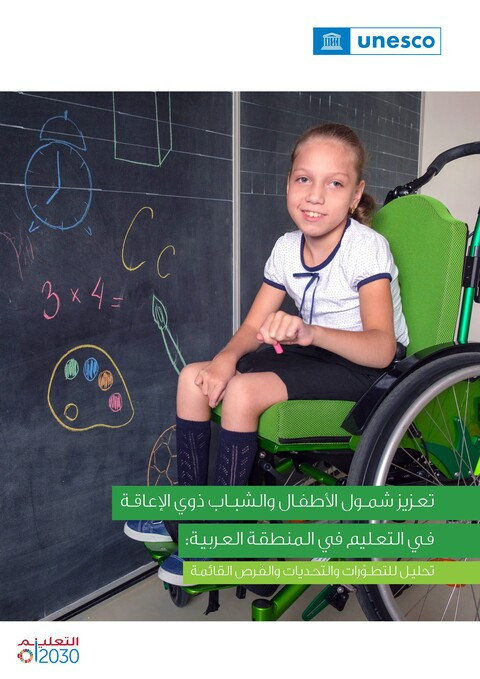 Promoting the Inclusion of Children and Young People with Disabilities in Education in the Arab Region: An Analysis of Existing Developments, Challenges and Opportunities Year of publication: 2022 Author: Maha Khochen-Bagshaw Corporate author: UNESCO Beirut This report was prepared by the UNESCO Regional Office for Education in the Arab Countries within the framework of the Prince Sultan bin Abdulaziz Al Saud Program to Promote the Arabic Language. The report provides an analysis of inclusive education in Arab countries with the aim of formulating future recommendations, although the report focuses specifically on persons with disability. It acknowledges that other categories of learners suffer from marginalization and are unable to benefit from educational opportunities. It addresses the obstacles and challenges that prevent inclusion, and addresses the progress made and the progress needed to make comprehensive quality education a reality in the Arab region. The report stresses the need for organized and systematic cooperation between teachers, schools and the educational community. It calls on governments to implement immediate measures to assign responsibilities related to learners with disabilities to the Ministry of Education, and urges them to allocate adequate funding to develop effective and implementable plans and mobilize national commitment to inclusive education for all. Promouvoir l’inclusion des enfants et des jeunes handicapés dans l’éducation dans la région arabe: une analyse des développements, défis et opportunités actuels Year of publication: 2022 Author: Maha Khochen-Bagshaw Corporate author: UNESCO Beirut Ce rapport a été préparé par le Bureau régional de l'UNESCO pour l'éducation dans les pays arabes dans le cadre du programme du Prince Sultan ben Abdulaziz Al Saud pour promouvoir la langue arabe. Le rapport fournit une analyse de l'éducation inclusive dans les pays arabes dans le but de formuler des recommandations futures, bien qu'il se concentre spécifiquement sur les personnes en situation de handicap. Il reconnaît que d'autres catégories d'apprenants souffrent de marginalisation et ne peuvent pas bénéficier des opportunités éducatives. Il aborde les obstacles et défis qui empêchent l'inclusion, ainsi que les progrès réalisés et ceux nécessaires pour faire de l'éducation de qualité une réalité dans la région arabe. Le rapport souligne la nécessité d'une coopération organisée et systématique entre les enseignants, les écoles et la communauté éducative. Il appelle les gouvernements à mettre en œuvre des mesures immédiates pour assigner les responsabilités liées aux apprenants en situation de handicap au ministère de l'Éducation, et les exhorte à allouer un financement adéquat pour développer des plans efficaces et réalisables et mobiliser l'engagement national en faveur de l'éducation inclusive pour tous.
  Inclusive Education Year of publication: 2008 Corporate author: UNESCO International Bureau of Education (IBE) Inclusive education: the road to the future is the subject of the forty-eighth meeting of the International Conference on Education (CIE) to be held in Geneva from November 25 to 28, 2008. I believe that a genuine dialogue and a frank debate between Ministers and other education actors on this central theme and on the four related sub-themes: approaches, scope and content; public politics; systems, interfaces and transitions, and students and teachers, will be both timely and appropriate.
  VII Days of Educational Corperation with Iberian America on Special Education and Educational Inclusion: Secondary Education Year of publication: 2011 Author: Daniela Eroles Corporate author: UNESCO Santiago | Spain. Ministry of Education The publication that we deliver contains some of the main papers and reflections emanating from the VII Conference on Educational Cooperation with Ibero-America on Special Education and Educational Inclusion, organized by the Ministry of Education of Spain and the Regional Office of Education for Latin America and the Caribbean ( OREALC / UNESCO Santiago). This publication has the inclusion in secondary education as a central theme, since it was the axis of the VII Conference. It is a particularly critical issue in our region since it establishes the minimum level necessary to escape poverty, to access decent employment and to exercise citizenship. However, access to secondary education is still very low in some countries and is especially low in the case of the most vulnerable populations, being those who most require access to this level of studies to overcome their situation of inequality. VII Jornadas de Cooperación Educativa con Iberoamérica sobre Educación Especial e Inclusión Educativa: Educación Secundaria Year of publication: 2011 Author: Daniela Eroles Corporate author: UNESCO Santiago | Spain. Ministry of Education La publicación que entregamos contiene algunas de las principales ponencias y reflexiones emanadas de las VII Jornadas de Cooperación Educativa con Iberoamérica sobre Educación Especial e Inclusión Educativa, organizadas por el Ministerio de Educación de España y la Oficina Regional de Educación para América Latina y el Caribe (OREAL C/UNESCO Santiago). Esta publicación tiene a la inclusión en la educación secundaria como tema central, pues constituyó el eje de las VII Jornadas. Es un tema especialmente crítico en nuestra región ya que establece el nivel mínimo necesario para salir de la pobreza, para acceder a un empleo digno y para ejercer la ciudadanía. Sin embargo, el acceso a la educación secundaria todavía es muy bajo en algunos países y es especialmente bajo en el caso de las poblaciones en situación de mayor vulnerabilidad, siendo quienes más requieren acceder a este nivel de estudios para superar su situación de desigualdad. Educación Inclusiva Year of publication: 2008 Corporate author: UNESCO International Bureau of Education (IBE) La educación inclusiva: el camino hacia el futuro es el tema de la cuadragésimo octava reunión de la Conferencia Internacional de Educación (CIE) que tendrá lugar en Ginebra del 25 al 28 de noviembre de 2008. Creo que un genuino diálogo y un franco debate entre los ministros y otros actores de la educación sobre este tema central y sobre los cuatro subtemas relacionados: enfoques, alcance y contenido; políticas públicas; sistemas, interfaces y transiciones, y alumnos y docentes, resultarán a la vez oportunos y apropiados. Education pour l'inclusion Year of publication: 2008 Corporate author: UNESCO International Bureau of Education (IBE) L’auteur présente ce numéro spécial qui offre une sélection d’articles alliant recherche théorique et pratique sur la notion de l’éducation pour l’inclusion et sur les problèmes rencontrés dans l’élaboration de politiques et leur application pratique. Ces articles reflètent les approches diversifiées et à volets multiples de l’inclusion, eu égard aux aspects théoriques, disciplinaires et méthodologiques. Tout au long de ce numéro, l’inclusion est le principe de base qui oriente l’Éducation pour tous (EPT) de qualité —- c’est-à-dire, l’établissement de systèmes éducatifs tirant profit de la diversité et visant à édifier une société plus juste et plus démocratique.Ce numéro spécial est consacré au thème de la quarante-huitième session de la Conférence internationale de l’éducation (CIE) « L’éducation pour l’inclusion : la voie de l’avenir » (Genève, 25-28 novembre 2008).
  Educational Policies for Attention to Cultural Diversity: Brazil, Chile, Colombia, Mexico and Peru; volume 1 Year of publication: 2005 Author: Carolina Hirmas R. | Ricardo Hevia R. | Ernesto Treviño | Pablo Marambio V. Corporate author: UNESCO Santiago This publication consists of three volumes. The first is an analysis of how the educational policies of five countries in the region -Brazil, Chile, Colombia, Mexico and Peru- address the issue of cultural diversity, both through its legislation and its curricular policies. teacher training and institutional management. The second presents a set of ethnographic studies conducted in these same countries in order to show how the phenomenon of "cultural discrimination" occurs in the daily life of the school, the opposite side of the "cultural pluralism" that the school is called to build. The third volume is a compendium of educational materials on five relevant topics about cultural diversity to be worked with teachers and students in schools. Políticas educativas de atención a la diversidad cultural: Brasil, Chile, Colombia, México y Perú; volumen 1 Year of publication: 2005 Author: Carolina Hirmas R. | Ricardo Hevia R. | Ernesto Treviño | Pablo Marambio V. Corporate author: UNESCO Santiago Esta publicación consta de tres volúmenes. El primero da cuenta de un análisis de cómo las políticas educativas de cinco países de la región –Brasil, Chile, Colombia, México y Perú- abordan el tema de la diversidad cultural, tanto a través de su legislación como de sus políticas curriculares, de formación de maestros y de gestión institucional.El segundo presenta un conjunto de estudios etnográficos realizados en estos mismos países con el fin de mostrar cómo se da en la vida cotidiana de la escuela el fenómeno de la “discriminación cultural”, la cara opuesta del “pluralismo cultural” que la escuela está llamada a construir. El tercer volumen es un compendio de materiales educativos sobre cinco temas relevantes acerca de la diversidad cultural para ser trabajados con docentes y estudiantes en los centros educativos.
 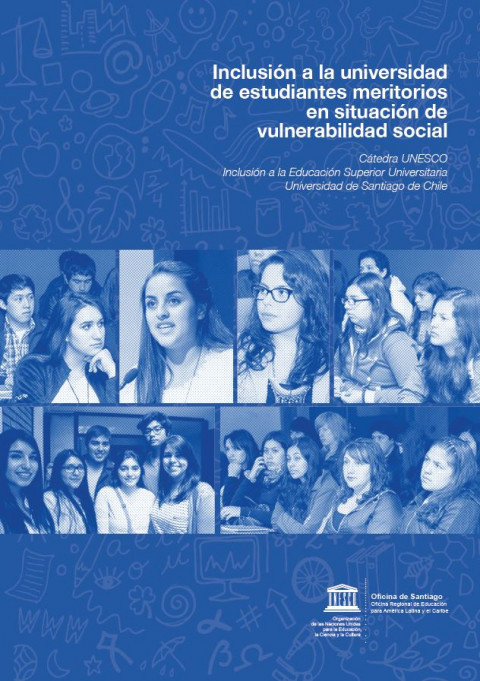 Inclusion at the University of Meritorious Students in Situations of Social Vulnerability Year of publication: 2015 Author: Marcela Orellana | Karla Moreno | Francisco Javier Gil Corporate author: UNESCO Santiago | UNESCO Chair on Inclusion in Higher Education The first edition of this work was published by the OREALC / UNESCO Santiago for its dissemination among those attending the Education for All Ministerial Meeting in Latin America and the Caribbean: Balance and Challenges post 2015, within the framework of the Regional Education Project for America Latin America and the Caribbean (PRELAC), held in Lima, Peru on October 30 and 31, 2014. In this second edition, we are pleased to add other inclusion mechanisms that arise from the commitment of the UNESCO Chair in Inclusion in Higher Education, the valuable support from non-profit private foundations and the support of OREALC / UNESCO Santiago. The generation of these alliances constitutes a fundamental contribution to the collection of relevant information for the design of public policy proposals aimed at reducing the inequality gaps in higher education, guaranteeing the right to a quality education and to collaborate in the construction of societies with greater social justice.