
Resources
Explore a wide range of valuable resources on GCED to deepen your understanding and enhance your research, advocacy, teaching, and learning.
169 Results found
 Promoting inclusive teacher education: Introduction Year of publication: 2013 Author: Ian Kaplan | Ingrid Lewis Corporate author: UNESCO Bangkok ‘Promoting Inclusive Teacher Education’ is a series of five advocacy guides. The guides discuss challenges and barriers to inclusive education in different areas of teacher education and offer related strategies and solutions for effective advocacy towards more inclusive practices. The series begins with this introductory guide. It provides an overview of inclusive teacher education and of what advocacy means in this context. It also provides an introduction to the topics covered in the four other guides in the series. These are ‘Policy’, ‘Curriculum’, ‘Materials’, and ‘Methodology’.Advocacy Guide 1: Introduction – This introductory guide begins by providing a brief introduction to inclusive education. Readers should not, however, see this introductory guide as their only guide for understanding inclusive education. It is assumed that advocates will either have existing knowledge of inclusive education or will refer to other more comprehensive sources of information to learn about the concept. This guide goes on to explain the benefits of integrating awareness and understanding of inclusive education throughout pre-service teacher education. Finally, it provides a practical introductory guide to advocacy.
 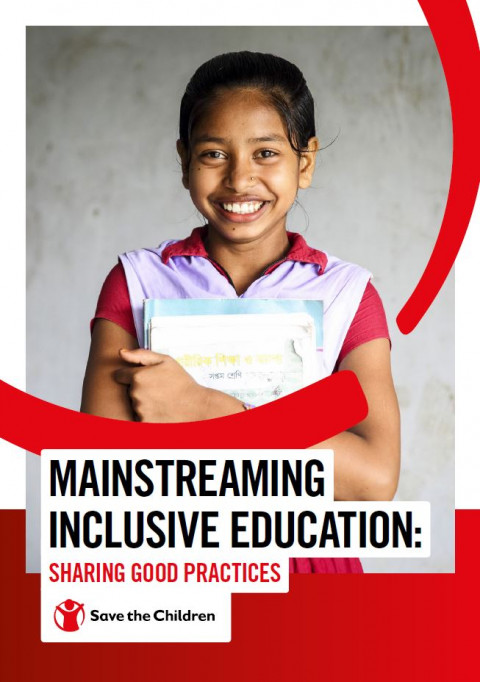 Mainstreaming Inclusive Education: Sharing Good Practices Year of publication: 2019 Corporate author: Save the Children The primary aim of this documentation is to provide a deeper understanding of how projects have applied more inclusive concepts in not only changing the lives of children with disabilities, those living in poverty or children from ethnic minority populations, their families and communities, but in catalysing changes in policies and practices to the education system to benefit all learners.The stories follow a common structure describing the background of the project, a description of an approach that has worked especially well in the project, followed by stakeholder and partner engagement, participation of children, key milestones and significant challenges, scalability and sustainability, recommendations for replication and contact links for project tools and materials. A selection of practical tools and models have been attached as annexes.
  Promoting inclusive teacher education: curriculum Year of publication: 2013 Author: Ian Kaplan | Ingrid Lewis Corporate author: UNESCO Bangkok ‘Promoting Inclusive Teacher Education’ is a series of five advocacy guides. The guides discuss challenges and barriers to inclusive education in different areas of teacher education and offer related strategies and solutions for effective advocacy towards more inclusive practices. The series begins with this introductory guide. It provides an overview of inclusive teacher education and of what advocacy means in this context. It also provides an introduction to the topics covered in the four other guides in the series. These are ‘Policy’, ‘Curriculum’, ‘Materials’, and ‘Methodology’.Advocacy Guide 3: Curriculum – changing the overall organization and sequencing of teacher education. Curriculum refers to the overall courses of study at pre-service teacher education institutions. A curriculum is a way of organizing and sequencing learning experiences with the aim of achieving specified learning outcomes. It guides what will be learned, and why, and how this learning is facilitated. The curriculum reflects connections between society, politics and schools/teachers, so the development of inclusive curricula reflects 2 ADVOCACY GUIDE 1 3 a desire to develop an equitable, non-discriminatory society1 through attention to the overall structuring of teaching and learning within teacher education.
  Promoting inclusive teacher education: materials Year of publication: 2013 Author: Ian Kaplan | Ingrid Lewis Corporate author: UNESCO Bangkok ‘Promoting Inclusive Teacher Education’ is a series of five advocacy guides. The guides discuss challenges and barriers to inclusive education in different areas of teacher education and offer related strategies and solutions for effective advocacy towards more inclusive practices. The series begins with this introductory guide. It provides an overview of inclusive teacher education and of what advocacy means in this context. It also provides an introduction to the topics covered in the four other guides in the series. These are ‘Policy’, ‘Curriculum’, ‘Materials’, and ‘Methodology’.Advocacy Guide 4: Materials – changing the materials that are used to support teaching and learning within teacher education. Materials refer to the resources (e.g. textbooks) which are used in pre-service teacher education institutions. Teacher education utilizes a wide range of materials, including those used by teacher educators as an aid to teaching, and those used by student teachers as an aid to learning.
  Promoting inclusive teacher education: methodology Year of publication: 2013 Author: Ian Kaplan | Ingrid Lewis Corporate author: UNESCO Bangkok ‘Promoting Inclusive Teacher Education’ is a series of five advocacy guides. The guides discuss challenges and barriers to inclusive education in different areas of teacher education and offer related strategies and solutions for effective advocacy towards more inclusive practices. The series begins with this introductory guide. It provides an overview of inclusive teacher education and of what advocacy means in this context. It also provides an introduction to the topics covered in the four other guides in the series. These are ‘Policy’, ‘Curriculum’, ‘Materials’, and ‘Methodology’.Advocacy Guide 5: Methodology – changing teaching methodology within teacher education institutions. Methodology refers to the theory and practice of teaching and learning. This addresses how teaching and learning is understood, organized, and conducted. Methodology, then, is the overall framework or approach to teaching which encompasses specific teaching methods. For example, an overall inclusive teaching methodology involves specific approaches to individualized/personalized instruction, and learner-centred teaching. These four advocacy guides are structured so that they: • break the issue down into several key challenges; • analyse the broad situation in the region, and suggest questions that advocates could ask to help them investigate the situation in their specific context; and • suggest pertinent advocacy goals, and the messages that advocates may want to convey, as well as indicators for deciding whether advocacy on the issue is having any impact. Tables at the end of each advocacy guide summarize the advocacy messages and suggest potential targets for each message, and then offer space for readers to make notes about how they might convey these messages to each target (drawing on advice provided in the brief guide to advocacy in this introductory guide). Illustrative case studies are provided wherever possible, and readers are encouraged to use their own investigations within their context to identify local case studies that they can use to back up their advocacy messages.
  Promoting inclusive teacher education: policy Year of publication: 2013 Author: Ian Kaplan | Ingrid Lewis Corporate author: UNESCO Bangkok ‘Promoting Inclusive Teacher Education’ is a series of five advocacy guides. The guides discuss challenges and barriers to inclusive education in different areas of teacher education and offer related strategies and solutions for effective advocacy towards more inclusive practices. The series begins with this introductory guide. It provides an overview of inclusive teacher education and of what advocacy means in this context. It also provides an introduction to the topics covered in the four other guides in the series. These are ‘Policy’, ‘Curriculum’, ‘Materials’, and ‘Methodology’.Advocacy Guide 2: Policy – raising awareness of existing policies for inclusive education and changing/adapting policies at different levels in the education system (e.g. at the ministry, teacher education institution and school levels). Policy refers mainly to the guiding rules, laws and principles of education at the national level and within teacher education institutions. Policy guides the practices of individuals, groups and institutions on various inclusive education issues.
 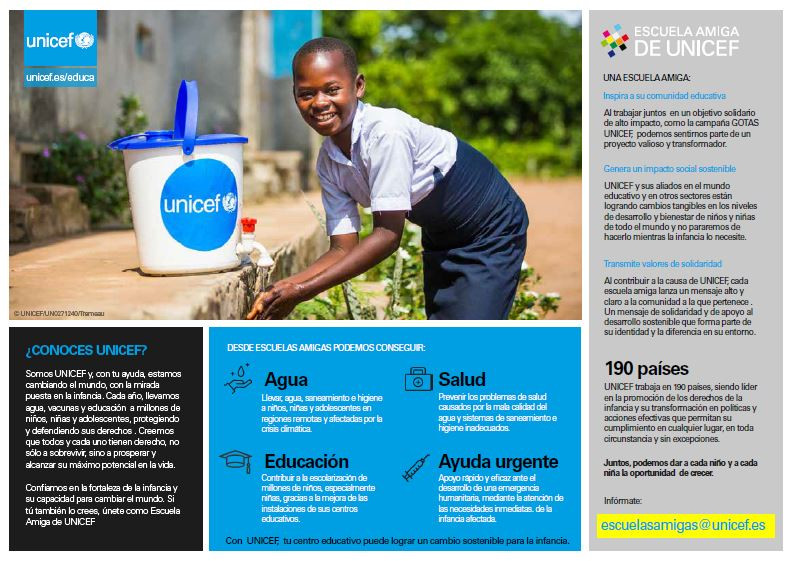 School Friend of UNICEF Year of publication: 2006 Corporate author: UNICEF Spain This infographic presents the program in which each school establishes a personalized commitment to UNICEF in the form of a collaboration agreement by which they undertake, depending on their circumstances, interests and capacity, to carry out different awareness-raising and fundraising activities throughout the school year. The activities can be framed within the GOTAS UNICEF school campaign or directed to an emergency humanitarian action campaign proposed by UNICEF. Escuela amiga de UNICEF Year of publication: 2006 Corporate author: UNICEF Spain Esta infografía presenta el programa en el que cada escuela amiga establece un compromiso personalizado con UNICEF en forma de convenio de colaboración por el que se compromete, en función de sus circunstancias, intereses y capacidad a la realización de diferentes actividades de sensibilización y captación de fondos a lo largo del curso escolar. Las actividades pueden enmarcarse dentro de la campaña escolar GOTAS UNICEF o dirigirse a una campaña de acción humanitaria de emergencias propuesta por UNICEF.
 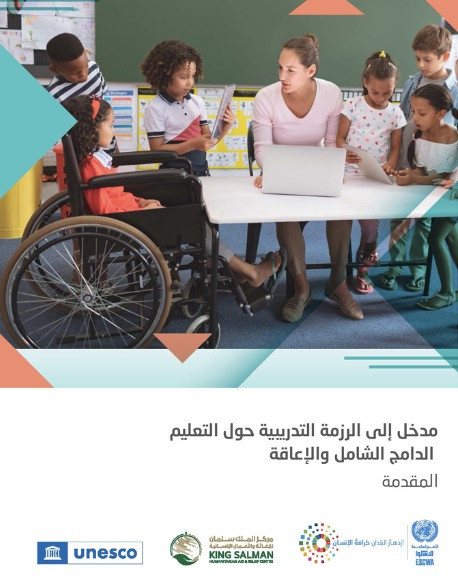 Training Package on Inclusive Education and Disability Year of publication: 2022 Corporate author: United Nations Economic and Social Commission for Western Asia (ESCWA) The comprehensive training package on inclusive education for children and young people with disabilities was developed as part of a partnership between the United Nations Economic and Social Commission for Western Asia (ESCWA) and the United Nations Educational, Scientific and Cultural Organization (UNESCO) with the support of the King Salman Humanitarian Aid and Relief Center, to support and disseminate inclusive education.This training package is directed explicitly to educators in the Arab region, at the local, national, or regional levels, whether in the private or public sectors, including teachers and decision-makers working in the entire educational sector and to those wishing to expand their knowledge in the field of inclusive education. مدخل إلى الرزمة التدريبية حول التعليم الدامج الشامل والإعاقة Year of publication: 2022 Corporate author: United Nations Economic and Social Commission for Western Asia (ESCWA) أُعدّت هذه الدورة التدريبية حول التعليم الدامج للأطفال وذوي الإعاقة في إطار شراكة بين لجنة الأمم المتّحدة الاقتصاديّة والاجتماعيّة لغربي آسيا (الإسكوا) ومنظّمة الأمم المتحدة للتربية والعلم والثقافة (اليونسكو)، وبدعم من مركز الملك سلمان للإغاثة والأعمال الإنسانية. تتناول الدورة قضايا السياسات التعليمية الشاملة، وتعزيز جودة التعليم، وضمان مشاركة جميع الأطفال في المدرسة، ووضع الطفل المتعلّم في صلب العمليّة التربويّة. وهي تركّز بشكل خاصّ على الأطفال الأكثر عرضة لخطر التسرّب المدرسيّ وعلى المدارس الواقعة في المناطق الأكثر حرماناً. الدورة موجهة إلى العاملين والعاملات في المجال التربوي في المنطقة العربية، في القطاعين الخاص والعام وعلى مختلف الصعد المحلية والوطنية والإقليمية، من معلمين ومعلمات وصانعي وصانعات قرار على مستوى الفصل أو المدرسة أو القطاع التعليمي ككلّ، وإلى الراغبين في تعزيز معرفتهم في مجال التعليم الدامج.