
Resources
Explore a wide range of valuable resources on GCED to deepen your understanding and enhance your research, advocacy, teaching, and learning.
6 Results found
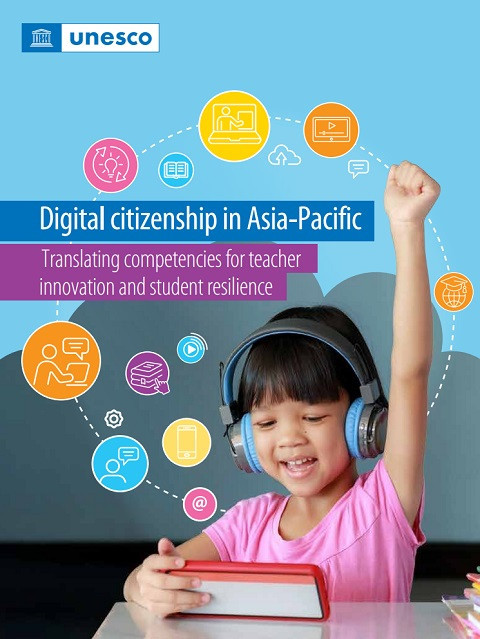 Digital Citizenship in Asia-Pacific: Translating Competencies for Teacher Innovation and Student Resilience Year of publication: 2023 Corporate author: UNESCO Bangkok A digitally-equipped and competent teaching force is crucial for cultivating students' digital citizenship skills. This UNESCO report, consisting of a comprehensive analysis comprising 15 countries in the Asia-Pacific region, unveils compelling evidence pertaining to what factors influence teachers' Information and Communication Technology (ICT) skills and their impact on students’ digital citizenship competencies. Perhaps unsurprisingly, the findings of this report show that students are developing most of their digital citizenship competencies through self-directed learning and outside of school. Nevertheless, teachers still play an important role, particularly in coaching students to use technology safely and effectively. Thus as UNESCO reports, Digital Creativity and Innovation remains relatively underdeveloped in all participating research countries. Additionally, female students tend to benefit more from teachers' guidance and advice, especially in terms of Digital Safety and Resilience. Support for teachers in terms of access to ICT infrastructure and training on ICT and pedagogical skills will contribute towards improving their ability to effectively guide and mentor their students, ultimately leading to better outcomes in terms of digital citizenship competencies. To achieve this, it is important for education systems to develop comprehensive and contextualized approaches to enhance digital citizenship capacities in teachers. Education policymakers and leaders are encouraged to use the 10 recommendations herein as a ‘roadmap’ to ensure that teachers are equipped with the necessary skills and knowledge to effectively integrate digital citizenship education into their teaching practices. This will ultimately help prepare students for the digital world and ensure their safety and well-being online.
 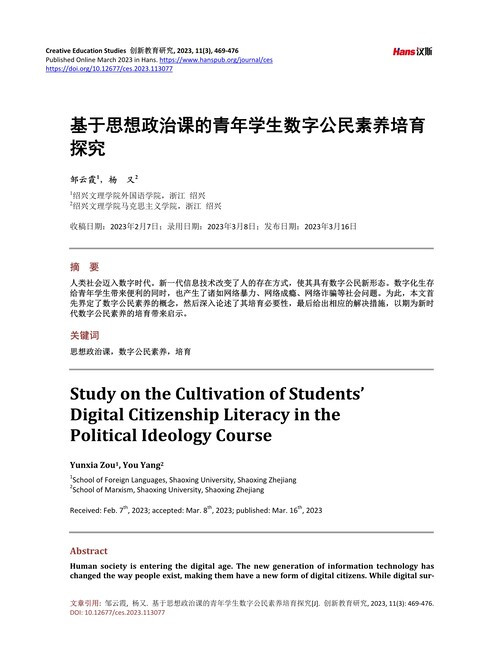 Study on the Cultivation of Students’ Digital Citizenship Literacy in the Political Ideology Course (Creative Education Studies; Vol.11, No.3) Year of publication: 2023 Author: 邹云霞 | 杨又 Human society is entering the digital age. The new generation of information technology has changed the way people exist, making them have a new form of digital citizens. While digital sur-vival brings convenience to youth students, it also brings about social problems such as cyberbullying, Internet addiction, online fraud and so on. Therefore, this paper first defines the concept of digital citizenship, then discusses the necessity of cultivating digital citizenship, and finally gives the corresponding measures to bring enlightenment for the cultivation of digital citizenship in the new era. 基于思想政治课的青年学生数字公民素养培育探究 (创新教育研究; Vol.11, No.3) Year of publication: 2023 Author: 邹云霞 | 杨又 人类社会迈入数字时代。新一代信息技术改变了人的存在方式,使其具有数字公民新形态。数字化生存给青年学生带来便利的同时,也产生了诸如网络暴力、网络成瘾、网络诈骗等社会问题。为此,本文首先界定了数字公民素养的概念,然后深入论述了其培育必要性,最后给出相应的解决措施,以期为新时代数字公民素养的培育带来启示。
 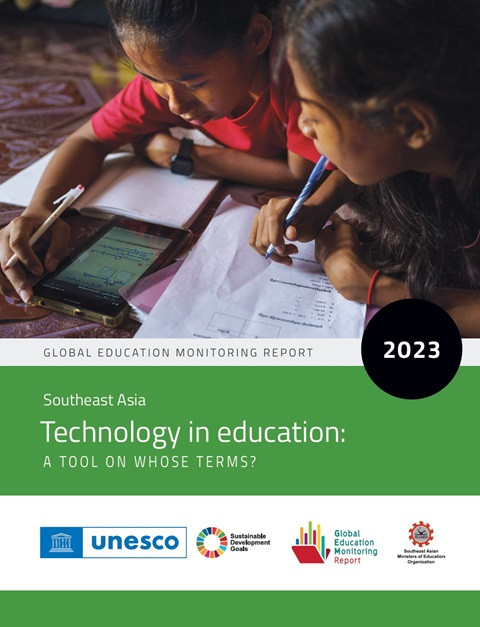 Global Education Monitoring Report 2023, Southeast Asia: Technology in Education; A Tool on Whose Terms? Year of publication: 2023 Corporate author: Global Education Monitoring Report Team | Southeast Asian Ministers of Education Organization (SEAMEO) Developed in partnership with the Southeast Asia Ministers of Education Organization (SEAMEO), and with the contribution of EdTech Hub, the fifth regional report focuses on technology in education in Southeast Asia. Characterized by a variety of contexts and resources, Southeast Asia has experienced a rapid growth in digital technology applications. In education, digital technologies have been identified for their potential to transform education and meet the region’s development aspirations. The regional report investigates both challenges and potentials, which technology as a tool and as a process can potentially contribute to, across and within countries, and education levels. The regional report on Southeast Asia covers 11 countries, Brunei Darussalam, Cambodia, Lao PDR, Indonesia, Malaysia, Myanmar, Philippines, Singapore, Thailand, Timor-Leste and Viet Nam. Extensive background research informs the regional analysis: 9 country case-studies compiled by local research teams and independent experts; 5 thematic studies produced by SEAMEO centers on open and distance learning, technology for students with disabilities, integration of technology in teaching practices, key policies issues in ICT in education; technology in technical and vocational education and training, and 3 research inputs on ICT in education practices produced by SEAMEO affiliate members and partners.
 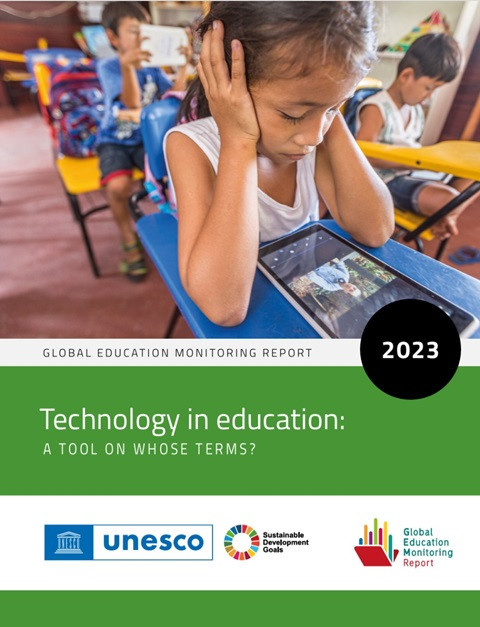 Global Education Monitoring Report 2023: Technology in Education; A Tool on Whose Terms? Year of publication: 2023 Corporate author: UNESCO | Global Education Monitoring Report Team This report recommends that technology should be introduced into education on the basis of evidence showing that it would be appropriate, equitable, scalable and sustainable. In other words, its use should be in learners’ best interests and should complement face-to-face interaction with teachers. It should be seen as a tool to be used on these terms. Midway to the deadline, the 2023 Global Education Monitoring Report assesses the distance still to go to reach the 2030 education targets. Education is the key to unlocking the achievement of other development objectives, not least the goal of technological progress.
 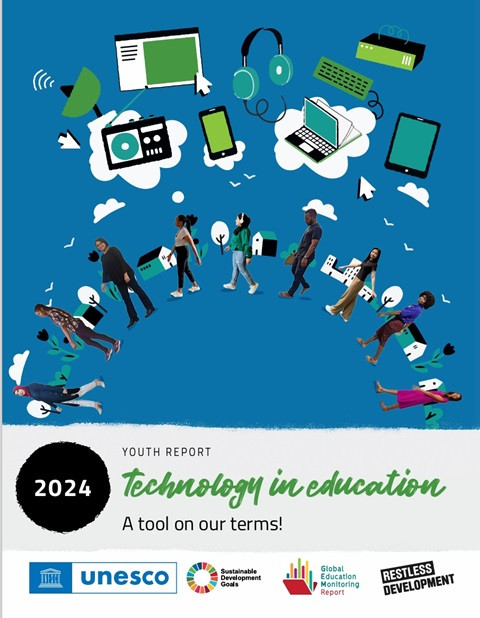 Youth Report 2024: Technology in Education; A Tool on Our Terms! Year of publication: 2024 Corporate author: UNESCO | Global Education Monitoring Report Team | Restless Development The 2024 Youth Report on technology in education is the result of an extensive consultation process in partnership with Restless Development involving +1500 youth and students across 8 regions. The consultations invited participants to reflect on the key challenges and opportunities for the use of technology in education in their regions through the lenses of the recommendations in the global 2023 Global Education Monitoring Report on technology in education: Technology on our terms. The discussions centred on the need for the use of technology in education to be appropriate for national and local contexts and to be equitable and leave no one behind. The report calls for decisions about technology in education to keep learners at the centre when deciding whether the use of technology in education would be appropriate, equitable, evidence-based, and sustainable. Through this report, young people have described what technology on their terms would look like. It concludes with a call to action calling which highlights concrete recommendations that governments can follow to ensure that technology in education is on youth terms.