
Resources
Explore a wide range of valuable resources on GCED to deepen your understanding and enhance your research, advocacy, teaching, and learning.
9 Results found
 Learning with Intangible Heritage for a Sustainable Future: Guidelines for Educators in the Asia-Pacific Region Year of publication: 2015 Corporate author: UNESCO Bangkok The guide provides teacher educators and teachers with an understanding of the concept of intangible cultural heritage (ICH) and explains why ICH should be integrated into the curriculum in tandem with the principles and perspectives of Education for Sustainable Development (ESD). This guide explains how the strategic incorporation of ICH elements and ESD principles into the curriculum can enable learners to gain the knowledge and skills that are necessary for ensuring sustainable development in the future. Нематериальное наследие в системе обучения в интересах устойчивого будущего Year of publication: 2015 Corporate author: UNESCO Bangkok Руководство предоставляет работникам образования и преподавателям понимание концепции нематериального культурного наследия и объясняет внедрения нематериального культурного наследия в учебные планы вместе с принципами и теорией Образования в интересах устойчивого развития (ОУР). Руководство объясняет, как стратегическое включение элементов нематериального культурного наследия и принципов ОУР в учебные планы может помочь учащимся получить знания и навыки, необходимые для обеспечения устойчивого развития в будущем.ЮНЕСКО разработала настоящее руководство на основании результатов пилотных проектов, проведенных в четырех странах в Азиатско-Тихоокеанском регионе, где участники разработали своиместные руководства и материалы для включения элементов нематериального культурного наследия и принципов ОУР в образовательный процесс. Примеры нематериального культурного наследия, приведенные в данном руководстве, не являются более важными, чем другие, и не обязательно должны быть приоритетными. Они скорее представлены в качестве иллюстративных примеров.
 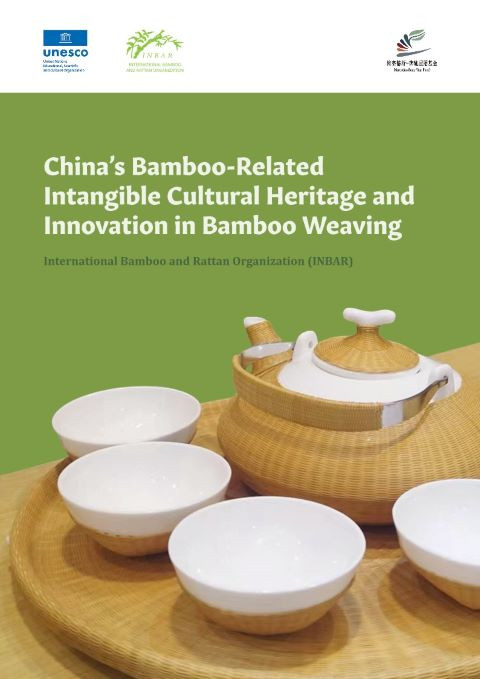 China’s Bamboo-Related Intangible Cultural Heritage and Innovation in Bamboo Weaving Year of publication: 2024 Author: Li Yanxia | Liu Chenge | Wang Renfei Corporate author: UNESCO Beijing | International Bamboo and Rattan Organization (INBAR) In the writing and editing of China’s Bamboo-Related Intangible Cultural Heritage and Innovation in Bamboo Weaving (hereinafter called the “Booklet”), we have focused on introducing Chinese bamboo weaving to allow readers to comprehend relevant knowledge about the craft, fully appreciate its charm, and inspire the passing down and innovation of bamboo-weaving techniques.The Booklet includes six chapters focusing on intangible cultural heritage, China’s national bamboo related intangible cultural heritage elements, the development of Chinese bamboo weaving, analysis of bamboo-weaving patterns, modern designs and product innovations, and a tutorial series on bamboo-woven products. The first chapter introduces the definition of global and Chineseintangible cultural heritage. The second chapter systematically outlines the history, model for classification and contemporary development status of China’s traditional bamboo crafts. The third chapter presents an in-depth analysis of the development of bamboo-weaving skills. The fourth chapter features 12 flat weaving patterns recorded by the project team in Chishui City, Guizhou Province, where “China Danxia, a World Heritage Site, is located. It provides a detailed exploration of pattern characteristics and weaving methods, accompanied by picture and video tutorials for readers to practice by hands. The fifth chapter comprehensively elaborates on the innovative design system of bamboo-woven products and showcases real-world cases through personal involvement in designing and collecting innovative bamboo-woven products from both domestic and international sources. Finally, the sixth chapter explains the production methods of common bamboo-woven products to readers through video tutorials. 中国竹类非物质文化遗产与竹编创新知识图册 Year of publication: 2024 Author: Li Yanxia | Liu Chenge | Wang Renfei Corporate author: UNESCO Beijing | International Bamboo and Rattan Organization (INBAR) 本图册内容包括非物质文化遗产、中国国家级竹类非遗项目、中国竹编发展、竹编图纹解析、竹编的现代设计与产品创新、产品编织讲解系列等 6 节内容。第一节介绍了全球和中国对非物质文化遗产的界定;第二节系统性梳理了中国传统竹类技艺的历史、分类模式以及当代发展现状;第三节着重对代表性非物质文化遗产——竹编技艺深入剖析;第四节则以编写团队在中国丹霞贵州赤水世界自然遗产的所在地,贵州省赤水市所采集到的 12 种平面编织纹样为例,介绍了其纹样特点及编织方法, 并提供图片和视频版本的详细教程,供读者动手编织时参考;第五节竹编的现代设计与产品创新由编前 言写团队与数位清华大学美术学院研究生合作完成,不仅详细介绍了当代竹编产品创新设计体系,还通过亲身参与设计和收集国内外独特的创新竹编产品来进行案例展示。第六节通过视频教程的方式,向读者讲解了制作常见竹编制品方法。
 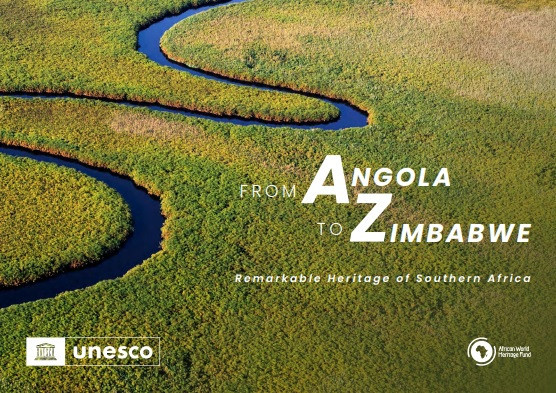 From Angola to Zimbabwe: remarkable heritage of Southern Africa Year of publication: 2022 Corporate author: UNESCO Harare | African World Heritage Fund A celebration of Southern Africa’s rich and diverse heritageToday, Southern Africa’s diverse heritage faces a rising number of challenges which need to be addressed, including climate change, natural disasters, conflicts, urban development and tourism pressures. The region currently has 42 World Heritage sites and 24 Living Heritage elements inscribed on the UNESCO World Heritage and Intangible Cultural Heritage Lists, making it a vibrantly rich home to cultural diversity and human creativity. However, more work needs to be done to further recognize the value of Southern Africa’s multifaceted heritage and enhance its protection in the face of increasing threats.World Heritage sites in the region continue to play an essential role in the lives of the communities who live in and around them, as they constitute a source of pride, history and knowledge, a powerful driver of local economic development, and a vital resource for reconciliation, social integration and sustainable peace. Similarly, Southern Africa’s living heritage elements provide communities with a strong sense of identity and help create a favorable environment for nurturing cultural diversity and human creativity.Inviting you on a journey of discovery from Angola’s Mbanza Kongo to Zimbabwe’s Mbende Jerusarema dance, this publication provides a new outlook on the exceptional heritage that can be found in the countries of the Southern African Development Community region and emphasizes the need for its long-term protection and safeguarding as a shared responsibility.
  Bringing Living Heritage to the Classroom in Asia-Pacific: A Resource Kit Year of publication: 2022 Corporate author: UNESCO Bangkok | APCEIU | International Information and Networking Centre for Intangible Cultural Heritage in the Asia-Pacific Region (ICHCAP) Integrating living heritage in school teaching and learning can enhance education quality, enliven the experiences of students and teachers, and contribute to keeping this heritage alive for current and future generations. In addition, as the ongoing COVID-19 pandemic has also demonstrated, living heritage can play an important role in ensuring the well-being and resilience of communities. UNESCO encourages countries to safeguard living heritage through formal and non-formal education. From the end of 2019 to early 2022, UNESCO has been working with partners to implement a pilot project “Teaching and Learning with Living Heritage in Schools” in six countries in Asia and the Pacific - including Cambodia, Kazakhstan, Kyrgyzstan, Nepal, Republic of Korea and Thailand. Over 1900 students from 21 schools had the opportunity to participate in these innovative classes. Throughout the process, 86 teachers, with more than two thirds being women, have developed and tested 101 lesson plans and activities. This Resource Kit provides step-by-step guidance and key resources on why and how to integrate living heritage in lessons and extracurricular activities in schools. Whoever you are – policy-maker, school director, teacher, student, parent, heritage practitioner – you have a vital role to play in this process. Иcпользование живого наследия в учебном процессе в азиатскотихоокеанском регионе: комплект методических материалов Year of publication: 2022 Corporate author: UNESCO Bangkok | Азиатско-Тихоокеанский центр образования для международного понимания (APCEIU) | International Information and Networking Centre for Intangible Cultural Heritage in the Asia-Pacific Region (ICHCAP) Использование концепций и практики живого наследия в учебном процессе может повысить качество образования, способствовать оживлению учебного процесса для учащихся и учителей и способствовать сохранению такого наследия для нынешнего и будущих поколений. Кроме того, как показала продолжающаяся пандемия COVID-19, живое наследие может играть важную роль в обеспечении благополучия и жизнеспособности человеческих сообществ. ЮНЕСКО призывает страны сохранять живое наследие посредством формального и неформального образования. С конца 2019 по начало 2022 года ЮНЕСКО совместно со своими партнёрами реализовала пилотный проект «Преподавание и обучение с использованием элементов живого наследия в школах» в шести странах Азиатско-Тихоокеанского региона — Камбодже, Казахстане, Кыргызстане, Непале, Южной Корее и Таиланде. Более 1900 учащихся из 21 школы получили возможность принять участие в этих инновационных занятиях. В ходе этого проекта 86 учителей, из которых более двух третей — женщины, разработали и опробовали 101 план уроков и мероприятий. Данный комплект методических материалов содержит пошаговое руководство и основные сведения, позволяющие понять важность и научиться интегрировать концепции и практику живого наследия в учебные и внеклассные мероприятия в школах. Кем бы вы ни были — сотрудником директивных органов, директором школы, учителем, учеником, родителем, практикующим носителем живого наследия — вам предстоит сыграть жизненно важную роль в этом процессе.
 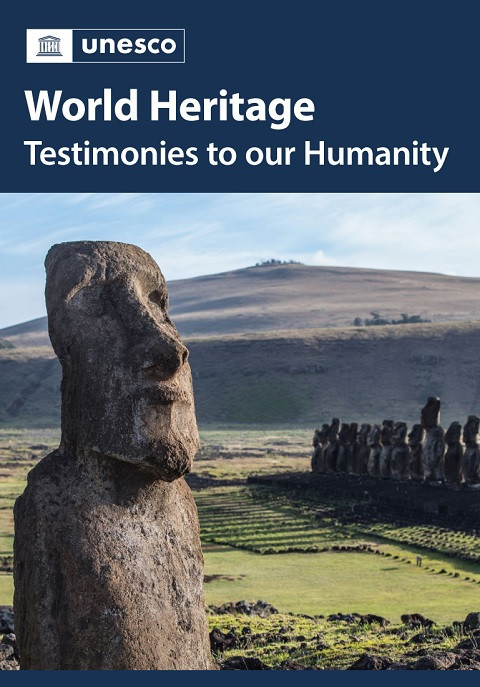 World Heritage: Testimonies to Our Humanity Year of publication: 2022 Corporate author: UNESCO The Convention for the Protection of the Cultural and Natural Heritage is an international agreement based on the principle that some places on Earth embody outstanding universal value that should be part of the shared heritage of humankind. UNESCO recognizes cultural and natural sites of outstanding universal value, and protects them for the benefit of all. As a basis for mutual understanding and dialogue, the responsibility for protecting our shared heritage requires cooperation among all States Parties as well as civil society, local communities and the private sector. The idea of reconciling the conservation of cultural sites with that of natural sites originated in the United States of America. A White House conference in Washington, D.C., in 1965 called for the creation of a “World Heritage Foundation” that would stimulate international cooperation to protect “the most extraordinary places, landscapes, and historic sites for the present and future of all mankind.” In 1968, the International Union for Conservation of Nature (IUCN) made similar proposals to its members. These proposals were presented at the United Nations Conference on the Human Environment in Stockholm in 1972. Eventually, all parties concerned agreed on a single text. The Convention concerning the Protection of the World Cultural and Natural Heritage was adopted by the General Conference of UNESCO on 16 November 1972. In recognizing both cultural and natural aspects of heritage, the Convention reminds us of the interaction between human beings and nature and the fundamental need to preserve the balance between the two.
 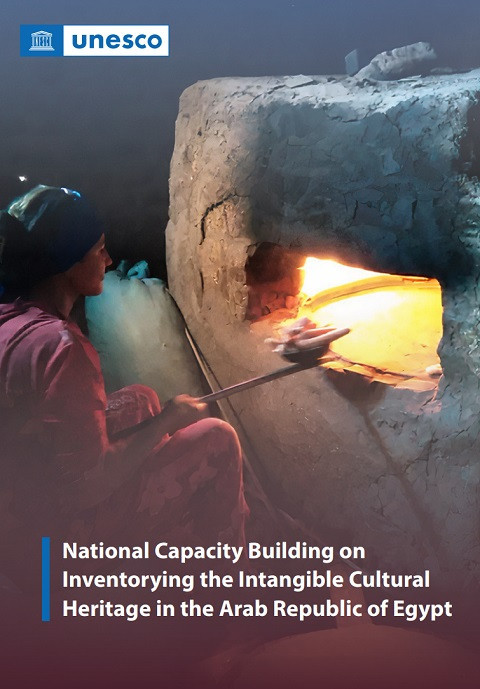 National Capacity Building on Inventorying the Intangible Cultural Heritage in the Arab Republic of Egypt Year of publication: 2024 Author: Ahmed Bahi El Din | Haitham Younes Corporate author: UNESCO | UNESCO Cairo Communities in Egypt are inventorying their living heritage Egypt is famed for its rich civilization and long history. Egyptian identity is presented not only through archaeological sites and Ancient Egyptian civilization, but also through Egypt’s diverse living heritage. More than simply showing who they are today, this living heritage tells the story of how the Egyptians arrived at this point over the generations.To celebrate this identity and strengthen national capacities to safeguard it, UNESCO, alongside the Egyptian government and civil society, implemented the project Strengthening National Capacities for Safeguarding Intangible Cultural Heritage in Egypt for Sustainable Development, which ran from June 2018 to June 2021.The project focused on community-based inventorying of living heritage. This involved training workshops and a pilot community-based inventorying exercise, which took place in six different locations throughout Egypt (Cairo, Fayoum, Gharbeya, Aswan, Assuit, and Marsa Matrouh). Thanks to the project, participating community practitioners and heritage bearers are now equipped to inventory their own living heritage. • This pilot was Egypt’s first step to establishing a national inventory of Intangible Cultural Heritage (ICH) under the Ministry of Culture, in collaboration with community practitioners. • This publication provides recommendations on how to further enhance national capabilities for ICH safeguarding and how to advance community engagement in the inventorying processes in Egypt.