
Resources
Explore a wide range of valuable resources on GCED to deepen your understanding and enhance your research, advocacy, teaching, and learning.
17 Results found
 Measuring Intercultural Dialogue: A Conceptual and Technical Framework Year of publication: 2020 Author: Ciara Aucoin | Euan Mackway-Jones | Marcel Smits Corporate author: UNESCO | Institute for Economics and Peace The challenges of addressing growing diversity have amply demonstrated that this vision is needed now more than ever. We all have much to gain from more open and connected societies yet misunderstanding, exclusion and discrimination continue to push identity and culture-based grievances towards conflict and violence, challenging the very foundations of sustainable and inclusive development.This report represents a first step in the UNESCO-IEP joint initiative to strengthen the evidence-base on dialogue for peace and development. Through mobilizing better data on effective dialogue, it is our sincere hope that policymakers and practitioners can better support meaningful and transformative dialogue, holistically supporting the aspirations of the 2030 Agenda. Through this, we hope to elevate dialogue as a connecting enabler of all pillars of UN action, accelerating progress towards the Sustainable Development Goals and making good on the promise of ‘leaving no one behind’. Mesurer le dialogue interculturel: cadre conceptuel et technique Year of publication: 2020 Author: Ciara Aucoin | Euan Mackway-Jones | Marcel Smits Corporate author: UNESCO | Institute for Economics and Peace Les défis rencontrés pour tenir compte de la diversité croissante ont amplement démontré que cette vision était plus que jamais nécessaire. Nous avons tous beaucoup à gagner de sociétés plus ouvertes et plus connectées, mais l’incompréhension, l’exclusion et la discrimination continuent de nourrir les griefs identitaires et culturels conduisant au conflit et à la violence, en remettant en question les fondements mêmes du développement durable et inclusif.Ce rapport représente une première étape dans l’initiative conjointe UNESCO-IEP visant à renforcer la base de données factuelles sur le dialogue pour la paix et le développement. En favorisant la collecte de données de meilleure qualité sur un dialogue efficace, nous espérons sincèrement que les décideurs politiques et les spécialistes pourront mieux soutenir un dialogue constructif et transformateur, afin d’appuyer de manière globale les objectifs du Programme 2030. Ainsi, nous espérons faire du dialogue un élément essentiel commun à tous les piliers de l’action des Nations Unies, afin d’accélérer les progrès vers la réalisation des objectifs de développement durable et de la promesse de « ne laisser personne de côté ».
  Difficult Dialogue in the Classroom: Guidance and Activities to Give Teachers the Skills to Manage Difficult Dialogue Year of publication: 2017 Corporate author: Tony Blair Institute for Global Change This book builds on the core curriculum to support educators manage difficult conversations, related to challenging issues and topics. Through practical and easy to use facilitation techniques, educators are able to move young people deeper in dialogue and ensure they learn accountability for what they say. الحوار الصعب في الصف: مورد لمنح المُعلِّمي المهارات إ لدارة الحوار الصعب في الصف Year of publication: 2017 Corporate author: Tony Blair Institute for Global Change يعتمد هذا الكتاب على المنهج الأساسي لدعم المعلمين في إدارة المحادثات الصعبة المتعلقة بالقضايا والمواضيع الصعبة. من خلال تقنيات التيسير العملية وسهلة الاستخدام ، يستطيع المعلمون نقل الشباب إلى عمق أكبر في الحوار والتأكد من أنهم يتعلمون المساءلة عما يقولونه.
 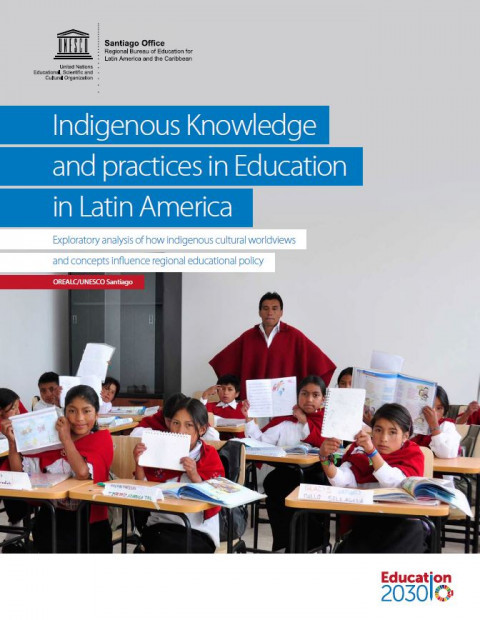 Indigenous Knowledge and practices in Education in Latin America: Exploratory Analysis of How Indigenous Cultural Worldviews and Concepts Influence Regional Educational Policy Year of publication: 2017 Corporate author: UNESCO Santiago This study presents a preliminary exploration of the approaches, processes and tools through which indigenous worldviews and concepts of knowledge and well-being can and have influenced education policies in Latin America. First, it addresses the principal theoretical approaches used in the area of indigenous knowledge and education policies, taking into account the persistence of an “epistemic otherness” and the need for a dialogue between the predominant approaches. Second, it addresses the normative framework and intercultural educational policies, emphasizing how and to what extent the countries in the region take indigenous knowledge into consideration and include it in their education policies and practices. Third, it presents a number of “relevant practices” in terms of dialogue with indigenous knowledge in education policies, taking into account the factors that favour the relevance of education to indigenous views and cultural practices, facilitating their replicability and sustainability. Furthermore, these practices respond to key criteria like recognizing learners as ‘carriers’ and producers of culture, valuing the use of schools as centres of social and cultural activities and favouring the inclusive learning of indigenous and non-indigenous students. Finally, the study unveils challenges for the advancement of the dialogue between indigenous knowledge and education policies, at the same time proposing key concepts to be approached in depth. Conocimiento Indígena y Políticas Educativas en América Latina: Análisis exploratorio de cómo las cosmovisiones y conceptos culturales indígenas de conocimiento inciden, y pueden incidir, en la política educativa en la región Year of publication: 2017 Corporate author: UNESCO Santiago El presente estudio explora la idea de una ‘alternativa epistémica’, construyendo desde el conocimiento y los valores que sustentan las prácticas sociales y educacionales indígenas de la región. En particular, explora cómo estos valores y formas de conocimiento han sido adoptados en las políticas educacionales de tres países de la región andina: Bolivia, Ecuador y Perú, que hace poco atravesaron reformas políticas y constitucionales con el fin de reconocer la composición de sus poblaciones multiculturales, multiétnicas y multilingüísticas. Esta publicación es una invitación a considerar el conocimiento indígena como una fuente legítima de inspiración para las políticas educacionales que puedan contribuir al bienestar de todos y a la sostenibilidad del planeta.
  The Ultimate Dialogue Adventure: An Online Global Citizenship Game for Students Ages 13-17 Year of publication: 2020 Corporate author: Generation Global An interactive online platform that leads young people ages 13-17, through a game to learn the skills of intercultural dialogue and participate in forums focused on a variety of global topics and issues. The Ultimate Dialogue Adventure can be used as a self-directed learning journey for young people, or as an in-class companion for teachers, to support rigorous dialogue about a global topic or provide a place of practice when using our offline materials.
 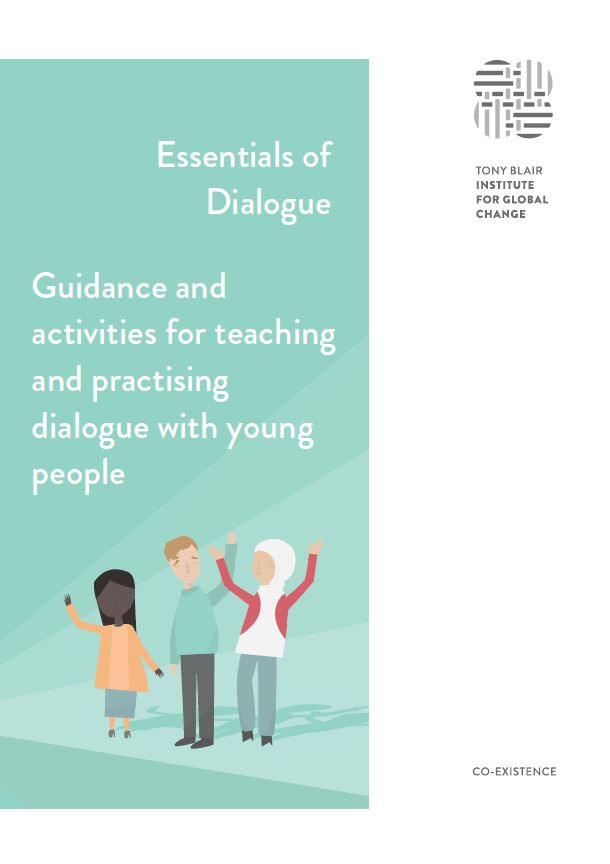 أساسيّات الحوار: مورد لمنح الطلاب الشباب من حول العالم مهارات وتجربة الحوار Year of publication: 2016 Corporate author: Tony Blair Institute for Global Change يزود "أساسيات الحوار" المعلمين بمقدمة للتعلم القائم على الحوار ويوفر أنشطة مهمة لبناء المهارات الأساسية لبناء مهارات الحوار، سواء كان ذلك شخصيًا أو عن بُعد.يقدم هذا الدليل دروسًا قابلة للتكيف ويركز على المهارات الخمسة الأساسية للحوار، والملاحظات الموجزة، وخطوات إعداد الشباب للانخراط في الحوار بين الثقافات عبر الإنترنت لدعم تنمية المواطنة العالمية. Essentials of Dialogue: Guidance and Activities for Teaching and Practising Dialogue with Young People Year of publication: 2016 Corporate author: Tony Blair Institute for Global Change The Essentials of Dialogue, gives educators an introduction to dialogue-based learning and provides important foundational skill building activities to build the skills of dialogue, whether it be in-person or remote.This guidebook provides adaptable lessons that focus on the five core skills of dialogue, briefing notes, and steps to prepare young people for engaging in intercultural dialogue online to support global citizenship development.
 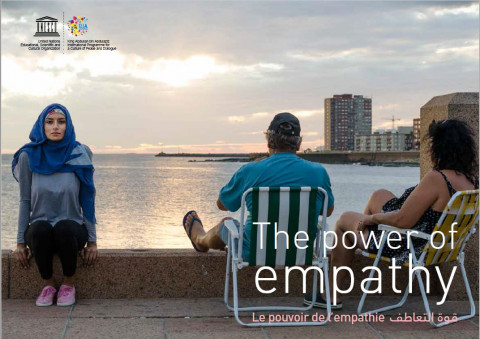 The Power of Empathy Year of publication: 2017 Corporate author: UNESCO This photobook is a tribute to the power of empathy and solidarity felt and expressed by young people. Its photographs and stories were selected from the response to the global youth contest “If I were…”, launched by UNESCO on social media in Arabic, English, French and Spanish in early 2017. UNESCO received some 837 submissions, from 117 countries, covering a wide variety of issues and experiences.Despite the gravity of the themes addressed in these beautiful pictures, hope emerges from the testaments of the young photographers which demonstrate not only a sensitivity to the situations of “others”, but, moreover, a resolve to help people recover and protect their rights and dignity.