
Resources
Explore a wide range of valuable resources on GCED to deepen your understanding and enhance your research, advocacy, teaching, and learning.
371 Results found
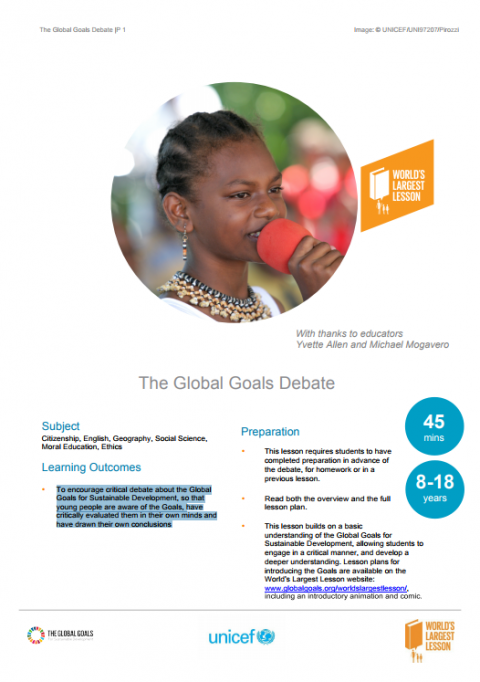 The global goals debate Corporate author: United Nations Children's Fund (UNICEF) Learning outcomes: To encourage critical debate about the Global Goals for Sustainable Development, so that young people are aware of the Goals, have critically evaluated them in their own minds and have drawn their own conclusions
 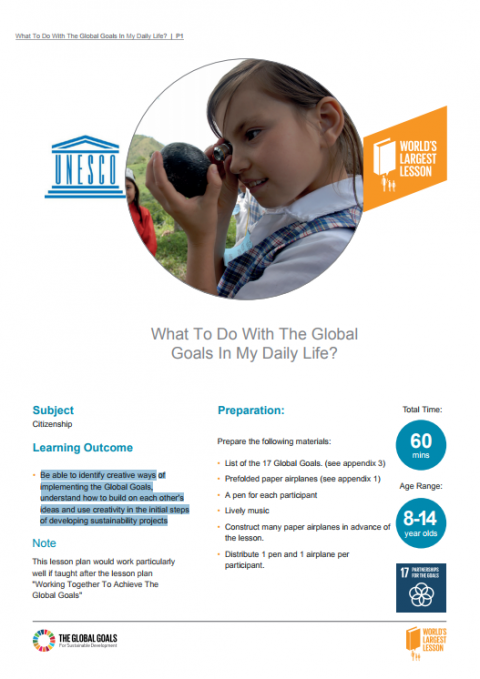 What To Do With The Global Goals In My Daily Life? Corporate author: United Nations Children's Fund (UNICEF) Learning outcomes: Be able to identify creative ways of implementing the Global Goals, understand how to build on each other’s ideas and use creativity in the initial steps of developing sustainability projects
  Internationalization in Basic Education: Languages of Reality(Revista iberoamericana de educación; vol. 93, no. 1) Year of publication: 2023 Author: Vera Lucia Felicetti | Vanessa Gabrielle Woicolesco Corporate author: Revista Iberoamericana de Educación The presence of internationalization practices in Basic Education schools has been quietly taking shape on the national, Ibero-American and international stage, but the absence of records of the actions that characterize them as internationalization continues to be a gap in their understanding. From these silent practices of internationalization we see the potential to build knowledge while respecting the interculturality that permeates the educational space. In this sense, we must recognize and understand these practices as internationalization processes, with a view to debating and reflecting on how they can contribute to the improvement of the educational system from an Ibero-American perspective. Internacionalización en la educación básica: Lenguajes de la realidad(Revista iberoamericana de educación; vol. 93, núm. 1) Year of publication: 2023 Author: Vera Lucia Felicetti | Vanessa Gabrielle Woicolesco Corporate author: Revista Iberoamericana de Educación La presencia de prácticas de internacionalización en los centros escolares de Educación Básica se ha ido configurando de forma silenciosa en el escenario nacional, iberoamericano e internacional, pero la ausencia de registros de las acciones que las caracterizan como internacionalización sigue siendo una laguna en su comprensión. A partir de estas prácticas silenciosas de internacionalización vemos el potencial para construir el conocimiento respetando la interculturalidad que impregna el espacio educativo. En este sentido, debemos reconocer y entender estas prácticas como procesos de internacionalización, con vistas a debatir y reflexionar sobre cómo pueden contribuir a la mejora del sistema educativo desde una perspectiva iberoamericana.
 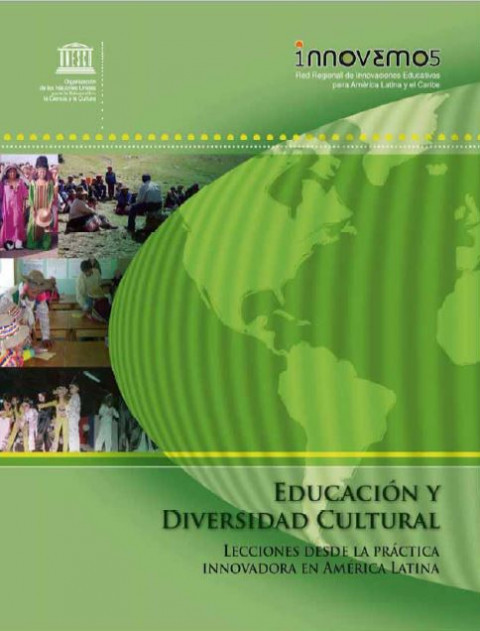 Education and Cultural Diversity Lessons from Innovative Practice in Latin America Year of publication: 2008 Author: Carolina Hirmas R. Corporate author: UNESCO Santiago This publication, which is the second volume of the collection, is the result of analysis and reflection on a series of innovative educational experiences from several Latin American countries, which respond with pedagogical relevance to the students' cultural context and offer an education oriented towards knowledge, understanding and dialogue between people of different cultures. The significant contribution of the aforementioned experiences lies in the recognition and appreciation of the ethnic and cultural diversity of its students and communities, as a starting point for the development of new learning and affirmation of their identity. In turn, life in educational centers promotes intercultural relations of respect and fraternity in a local and subregional sociogeographic context, characterized by multiculturalism.
  Discours de M. Koïchiro Matsuura, Directeur général de l'UNESCO, à l'occasion de la Conférence de Copenhague sur l'éducation pour la compréhension et le dialogue interculturels, Copenhague, 21 octobre 2008 Year of publication: 2008 Corporate author: UNESCO. Director-General, 1999-2009 (Matsuura, K.) This address is given by Mr Koïchiro Matsuura, Director-General of UNESCO, on the occasion of the Copenhagen Conference: “Education for Intercultural Understanding and Dialogue”. Address by Mr Koïchiro Matsuura, Director-General of UNESCO, on the occasion of the Copenhagen Conference: Education for Intercultural Understanding and Dialogue; Copenhagen, 21 October 2008 Year of publication: 2008 Corporate author: UNESCO. Director-General, 1999-2009 (Matsuura, K.) This address is given by Mr Koïchiro Matsuura, Director-General of UNESCO, on the occasion of the Copenhagen Conference: “Education for Intercultural Understanding and Dialogue”. Discours de M. Koïchiro Matsuura, Directeur général de l'UNESCO, à l'occasion de la Conférence de Copenhague: l'éducation pour la compréhension interculturelle et le dialogue; Copenhague, le 21 Octobre 2008 Year of publication: 2008 Corporate author: UNESCO. Director-General, 1999-2009 (Matsuura, K.) Cette adresse est donnée par M. Koïchiro Matsuura, Directeur général de l'UNESCO, à l'occasion de la Conférence de Copenhague: «L'éducation pour la compréhension interculturelle et le dialogue ». املبادرة العاملية للتعليم أوا: مبادرة األمني العام لألمم املتحدة Year of publication: 2012 Corporate author: United Nations (UN) أطلق الأمين العام للأمم المتحدة مبادرة التعليم أولاً العالمية (GEFI) لمدة خمس سنوات في سبتمبر 2012 لتسريع التقدم نحو تحقيق أهداف التعليم للجميع والأهداف الإنمائية للألفية المتعلقة بالتعليم. وتهدف المبادرة إلى: حشد مجموعة واسعة من الجهات الفاعلة للدفعة النهائية نحو عام 2015؛ وضع التعليم الجيد والملائم والتحويلي في قلب جداول الأعمال الاجتماعية والسياسية والتنموية؛ توليد تمويل إضافي وكاف للتعليم من خلال جهود الدعوة العالمية المستمرة. وقد حددت هذه المبادرة المجالات الثلاثة ذات الأولوية؛ إدخال كل طفل إلى المدرسة، وتحسين جودة التعلم، وتعزيز المواطنة العالمية. Iniciativa Mundial La Educación ante Todo: una Iniciativa del Secretario General de las Naciones Unidas Year of publication: 2012 Corporate author: United Nations (UN) The United Nations Secretary-General launched the five-year Global Education First Initiative (GEFI) in September 2012 to accelerate progress towards the Education for All goals and the education-related Millennium Development Goals. The Initiative aims to: Rally together a broad spectrum of actors for the final push to 2015; Put quality, relevant and transformative education at the heart of the social, political and development agendas; Generate additional and sufficient funding for education through sustained global advocacy efforts. This initiative outlined the three priority areas; Put every child in school, Improve the quality of learning, and Fostering global citizenship.