
Resources
Explore a wide range of valuable resources on GCED to deepen your understanding and enhance your research, advocacy, teaching, and learning.
371 Results found
 L'Initiative Mondiale pour l'Education Avant tout: une Initiative du Secrétaire Général de l'Organisation des Nations Unies Year of publication: 2012 Corporate author: United Nations (UN) The United Nations Secretary-General launched the five-year Global Education First Initiative (GEFI) in September 2012 to accelerate progress towards the Education for All goals and the education-related Millennium Development Goals. The Initiative aims to: Rally together a broad spectrum of actors for the final push to 2015; Put quality, relevant and transformative education at the heart of the social, political and development agendas; Generate additional and sufficient funding for education through sustained global advocacy efforts. This initiative outlined the three priority areas; Put every child in school, Improve the quality of learning, and Fostering global citizenship. Global Education First Initiative: An Initiative of the United Nations Secretary-General Year of publication: 2012 Corporate author: United Nations (UN) The United Nations Secretary-General launched the five-year Global Education First Initiative (GEFI) in September 2012 to accelerate progress towards the Education for All goals and the education-related Millennium Development Goals. The Initiative aims to: Rally together a broad spectrum of actors for the final push to 2015; Put quality, relevant and transformative education at the heart of the social, political and development agendas; Generate additional and sufficient funding for education through sustained global advocacy efforts. This initiative outlined the three priority areas; Put every child in school, Improve the quality of learning, and Fostering global citizenship. Global Education First Initiative: An Initiative of the United Nations Secretary-General Year of publication: 2012 Corporate author: United Nations (UN) Le Secrétaire Général de l’ONU a lancé l’Éducation Globale Première Initiative (EGPI) pour les cinq ans en Septembre 2012 pour accélérer les progrès vers l'Éducation pour Tous et les Objectifs du Millénaire pour le Développement liés à l'éducation. L'initiative vise à: Rassemblement d' un large éventail d'acteurs pour la poussée finale à 2015; Mettre de qualités, de pertinence et d’éducation transformatrice au cœur des agendas sociaux, politiques et de développement; Générer des fonds supplémentaires et suffisants pour l'éducation grâce à des efforts de sensibilisation mondiale soutenue. Cette initiative a décrit les trois domaines prioritaires; Mettez tous les enfants à l'école, Améliorer la qualité de l'apprentissage, et Favoriser la citoyenneté mondiale. 글로벌 교육 우선 구상: 유엔 사무총장의 구상 Year of publication: 2012 Corporate author: United Nations (UN) 유엔 사무총장은 교육과 관련된 ‘모두를 위한 교육 목표(Education for All Goals)’와 ‘새천년개발목표(Millennium Development Goals)’의 진행을 가속화 시키기 위하여 2012년 9월 5개년 ‘글로벌교육우선구상(GEFI)’을 출범시켰다. 이 구상의 목표는 2015년 최종 추진을 위한 광범위한 활동의 스펙트럼을 함께 이어가며, 그 중심에 사회·정치적 개발 의제와 관련된 양질의 변화된 교육을 두고, 지속적인 글로벌 지지 노력을 통해 교육을 위한 충분한 추가적 펀딩을 확보한다. 본 사업은 세가지 우선 순위의 영역을 두는데, 그 첫 번째로는 모든 어린이를 학교에 입학시키는 것, 두 번째는 학습의 질을 향상시키는 것, 세 번째는 세계 시민을 육성하는 것이다.
 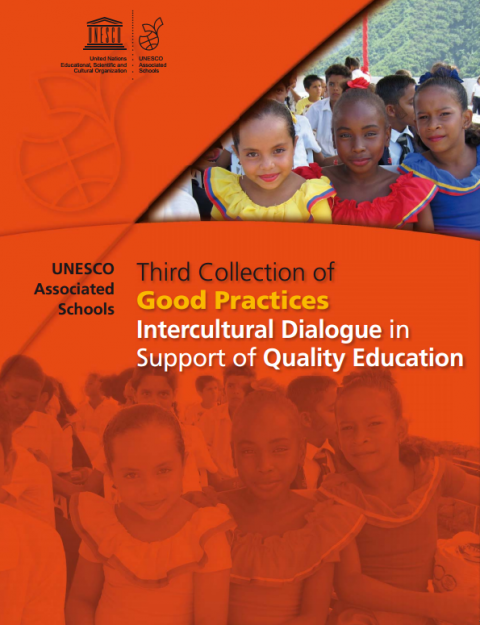 Third collection of good practices: intercultural dialogue in support of quality education Year of publication: 2013 Corporate author: UNESCO Associated Schools Project Network (ASPnet) The UNESCO Associated Schools Project Network (ASPnet) conducts pilot projects aimed at reinforcing the humanistic and ethical principles of UNESCO in school curricula and throughout the learning process, often within the framework of UN and UNESCO International Day, Years and Decades, Promoting intercultural dialogue is thus an ASPnet priority. The initiatives presented in this Third Collection of ASPnet Good Practices were carried out by ASPnet schools and their partner institutions in the context of the International Year for the Rapprochement of Cultures (2010). The selected projects illustrate both multicultural education and intercultural education in action. Troisième recueil de bonnes pratiques: le dialogue interculturel à l'appui de l'éducation de qualité Year of publication: 2013 Corporate author: UNESCO Associated Schools Project Network (ASPnet) Les écoles associées de l'UNESCO (réSEAU) mènent des projets pilotes visant à renforcer les principes humanistes et éthiques de l'UNESCO dans les programmes scolaires et tout au long du processus d'apprentissage, souvent dans le cadre de l'ONU et de la Journée internationale de l'UNESCO, années et décennies, la promotion du dialogue interculturel est donc une priorité Reseau. Les initiatives présentées dans ce troisième Collection de Reseau bonnes pratiques ont été réalisées par les écoles Reseau et leurs institutions partenaires dans le cadre de l'Année internationale du rapprochement des cultures (2010). Les projets sélectionnés illustrent à la fois l'éducation multiculturelle et l'éducation interculturelle dans l'action.
 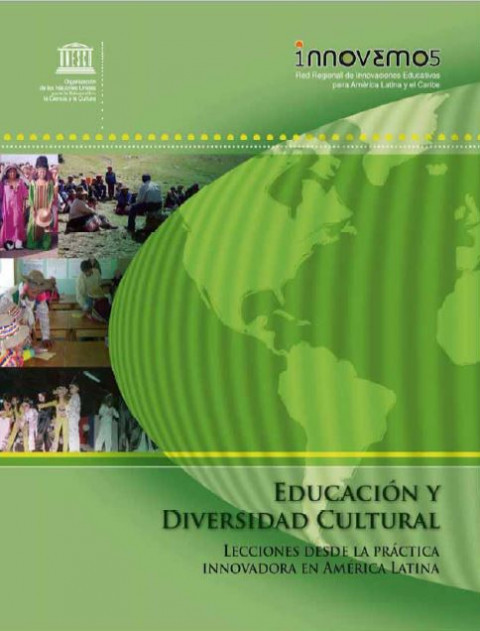 Educación y diversidad cultural: lecciones desde la práctica innovadora en América Latina Year of publication: 2008 Author: Carolina Hirmas R. Corporate author: UNESCO Santiago Esta publicación, que constituye el segundo volumen de la colección, es el resultado del análisis y la reflexión acerca de un conjunto experiencias educativas innovadoras de varios países de Latinoamérica, que responden con pertinencia pedagógica al contexto cultural de los estudiantes y ofrecen una educación orientada al conocimiento, comprensión y diálogo entre personas de diferentes culturas. El aporte significativo de las experiencias referidas, reside en el reconocimiento y valoración de la diversidad étnica y cultural de sus estudiantes y comunidades, como punto de partida para el desarrollo de nuevos aprendizajes y afirmación de su identidad. A su vez, la vida en los centros educativos promueve relaciones interculturales de respeto y fraternidad en un contexto sociogeográfico local y subregional, caracterizado por la multiculturalidad.
  Youth and the Field of Countering Violent Extremism Year of publication: 2018 Author: Marc Sommers Most youth are peaceful. Even if the field known as “countering violent extremism” (CVE) did not exist, most young people still would not join a violent extremist organization (VEO). At the same time, the overwhelming majority of people who become violent extremists are youth — most of whom are male. The challenge at the center of CVE is thus an unusual one: identifying the fraction of youth populations most likely to enter a VEO and thwarting that option. This paper investigates that challenge, with analysis featuring interviews with 21 experts and over 400 publications on violent extremism, CVE, and youth. Two correlations inform this work: the direct relationship between nations with “youth bulge” populations and state repression, and the connection between state repression and increased violent extremism, with repressive states usually targeting male youth.
  School-related violence and bullying on the basis of Sexual Orientation and Gender Identity or Expression (SOGIE) - Synthesis Report on China, the Philippines, Thailand and VietNam Year of publication: 2018 Corporate author: UNESCO Bangkok School related violence and bullying is a problem in all countries. UNESCO is committed to ensuring that all children and young people have access to safe, inclusive, health-promoting learning environments as part of its strategy on education for health and well-being. This synthesis report on school related violence and bullying on the basis of Sexual Orientation and Gender Identity or Expression (SOGIE), covering China, the Philippines, Thailand and Viet Nam, was developed to broaden awareness and understanding about this issue, while also identifying best practices and policies. It also aims to mobilize support for advocacy among educators, research institutions, policy makers and activists at the national and regional levels.
 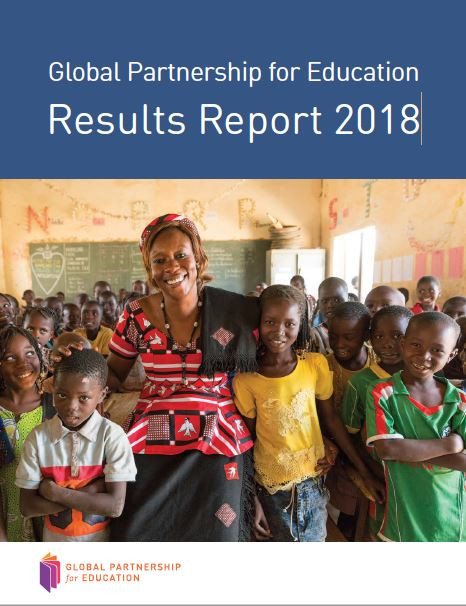 Global Partnership for Education Results Report 2018 Year of publication: 2018 Corporate author: Global Partnership for Education (GPE) The GPE Results Report 2018 shows progress against agreed-upon targets and identifies critical gaps that need to be addressed.