
Resources
Explore a wide range of valuable resources on GCED to deepen your understanding and enhance your research, advocacy, teaching, and learning.
8 Results found
 The Right to Education of Migrants and Refugees Year of publication: 2014 Author: Vernor Muñoz Villalobos The focus of this report is on those who have crossed national borders, who generally are at risk of marginalization and specifically to discrimination in the provision of education. The research addresses six core issues, the consideration of which follows an analysis of the contextual background. Attention to these issues is viewed as indispensable in meeting the educational challenges and opportunities related to migration. These core, but inevitably interrelated themes are: the legal and normative framework; social and cultural issues; language and curriculum; teachers; accreditation and lifelong learning. The preparation of the report has benefitted greatly from the active and constructive engagement of many relevant actors including Governments, international organizations, academics, non-governmental organizations and concerned individuals. Together they have offered a wealth of different perspectives and which form the basis of a number of recommendations ending the text. El Derecho a la Educación de las Personas Migrantes y Refugiadas Year of publication: 2014 Author: Vernor Muñoz Villalobos El objetivo de este artículo es sobre las personas que han cruzado las fronteras nacionales, quienes generalmente se encuentran en riesgo de exclusión social y se enfrentan a la discriminación en el acceso y las oportunidades educativas. El texto aborda seis temas principales, seguido de un análisis del marco contextual. La atención a estas cuestiones es indispensable para enfrentar los desafíos y las oportunidades educativas relacionadas con la migración. Los temas tratados están inevitablemente interrelacionados son el marco legal y normativo, las cuestiones sociales y culturales, el lenguaje y el currículo, los maestros, acreditación y el aprendizaje a lo largo de la vida. La elaboración de la investigación que nutre este artículo se ha beneficiado en gran medida de la participación activa y constructiva de muchas partes interesadas, incluidos los gobiernos, organizaciones internacionales, académicos, organizaciones no gubernamentales y personas interesadas. Juntos han ofrecido una gran cantidad de diferentes perspectivas y que forman la base de una serie de recomendaciones con las que termina el texto.
  Building Intercultural Citizenship through Education: A Human Rights Approach Year of publication: 2008 Author: Rodolfo Stavenhagen This article analyses the challenges posed by traditional ethnic and linguistic minorities in multicultural states and more specifically the problems faced by indigenous peoples and communities. Their educational and cultural needs and demands are increasingly being framed in the language of human rights, based on the expanding international legal and institutional human rights system. The United Nations World Conference on Human Rights, held in Vienna in 1993, endorsed a rights-based approach to development, human rights education is a growing field in educational practice, respect for cultural diversity is now enshrined in international and domestic laws, and the right of every person to education and to culture has become a mainstay of international human rights principles to which a majority of the world's states has subscribed.
 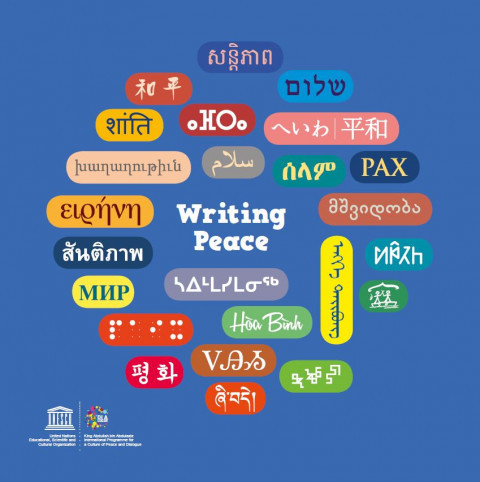 J'écris la paix Year of publication: 2017 Author: Eric Cattelain Corporate author: Organisation des Nations Unies pour l'éducation, la science et la culture (UNESCO) J’écris la Paix est un manuel qui invite le jeune public à découvrir les écritures contemporaines à travers un échantillon d’entre elles. Son but est de partir à la découverte du monde et de le rendre un peu plus proche, un peu plus familier. J’écris la Paix encourage les enfants (de 8 à 18 ans) à prendre conscience de l'interdépendance des cultures en se familiarisant avec les systèmes d'écriture contemporains, leur histoire et leurs emprunts mutuels.Le manuel contient 24 fiches d'activités. Chaque section présente les caractères d'un système d'écriture, un texte d'introduction et un contexte historique, le mot "paix" et le mot "bonjour", les langues associées au(x) système(s), et une activité dont les réponses apparaissent en fin de manuel.Six mille ans après l'avènement de l'écriture, que savons-nous des autres, de leurs systèmes de pensée et des transcriptions de leurs écritures? Comment les différents systèmes d'écriture peuvent-ils contribuer à une meilleure compréhension du monde et de la place que nous y occupons? En commençant par la découverte de ces scripts et de leur beauté fascinante, le manuel relie les enfants à la diversité, leur ouvrant ainsi les yeux sur le concept de paix et sur la conscience que nous en avons. Escribir la Paz Year of publication: 2017 Author: Eric Cattelain Corporate author: Organización de las Naciones Unidas para la Educación, la Ciencia y la Cultura (UNESCO) Escribir la Paz es un manual que invita a un público infantil y juvenil a descubrir las escrituras contemporáneas a través de una muestra de ellas. Tiene por objeto explorar el mundo, volviéndolo más cercano y más familiar. Escribir la Paz ayuda a niños y jóvenes de 8 a 18 años a tomar conciencia de la interdependencia de las culturas, familiarizándose con los sistemas de escritura contemporáneos, su historia y sus aportes mutuos. El manual incluye 24 fichas de actividades. Cada sección presenta los caracteres de un sistema de escritura, un texto introductorio y un contexto histórico, las palabras “Paz” y “Hola”, los idiomas asociados a las distintas escrituras, y una actividad cuyas respuestas se presentan al final del manual. Seis mil años después de la aparición de la escritura, ¿qué sabemos de los demás, de sus sistemas de pensamiento y la transcripción de sus escrituras? ¿De qué manera pueden los distintos sistemas de escritura contribuir a un mejor conocimiento del mundo y del lugar que ocupamos en él? Empezando por el descubrimiento de estas escrituras y su fascinante belleza, el manual conecta a los jóvenes con la diversidad y les sensibiliza al concepto de paz y a la conciencia que de él tenemos. أكتب السلام Year of publication: 2017 Author: Eric Cattelain Corporate author: منظمة الأمم المتحدة للتربية والعلم والثقافة (UNESCO) يدعو كتيب "أكتب السلام" فئة القراء الصغار إلى اكتشاف الكتابات الحديثة من خلال التعريف بلغات مختلفة. كما نسعى من خلال ذلك إلى التعايش مع الاختلاف ليبدو العالم أكثر قربا وحيوية. يشجع كتيب "أكتب السلام" الأطفال الذين تتراوح أعمارهم بين 8 ـ 14 سنة على الاطلاع على مختلف أشكال الترابط والتفاعل بين الثقافات من خلال تعريفهم بأنظمة الكتابة وتاريخها والاقتباسات المتبادلة بينها.يحتوي الكتيب على 24 ورقة نشاط حيث يعرض كل جزء حروف أحد أنظمة الكتابة المدرجة في الكتيب من جهة، ومن جهة أخرى، نصَا تعريفيّا بها وبخلفيتها التاريخية، إضافة إلى كلمة "السلام" وكلمة "مرحبا" واللغة أو اللغات المرتبطة بتلك الأنظمة. كما يحتوي كل جزء على نشاط معرفي تتوفر أجوبته في آخر الدليل.بعد مرور 6000 سنة على مجيء الكتابة، ما الذي نعرفه عن الآخرين، عن أنظمتهم الفكرية وعن كيفية تناقل أنظمتهم الخطيّة؟ كيف لهذه الأنظمة المختلفة أن تساهم في تقديم معرفة أفضل عن العالم وعن موقعنا فيه؟ نسعى من خلال افتتاحنا للكتاب بآليات التعلم حول تلك الأنظمة وجمالها الأخاذ ربط إدراك الأطفال بالتنوع والانفتاح على مفهوم السلام والوعي به. Writing Peace Year of publication: 2017 Author: Eric Cattelain Corporate author: UNESCO “Writing Peace” is a manual that invites young audiences to discover contemporary writings through the introduction of various languages. Its goal is to make the world appear a little closer and a little more familiar. "Writing Peace" encourages children (ages8 to 14) to become aware of the interdependence of cultures through familiarization with contemporary writing systems, their history, and their borrowings.The manual contains 24 activity sheets. Each section presents the characters of a writing system, an introductory text and historical background, the word “peace” and the word “hello,” the language(s) attached to the system(s), and an activity whose answers appear at the end of manual.Six thousand years after the advent of writing, what do we know about others, their systems of thought, and the transcriptions of their writing systems? How can different writing systems contribute to a better understanding of the world and our place within it? By beginning to learn about these writings and their fascinating beauty, the manual connects children to diversity, thus opening their eyes to the concept of peace and our awareness of it.
  Translation: From One World to Another (The UNESCO Courier No. 2; April-June 2022) Year of publication: 2022 Corporate author: UNESCO To translate is “to say almost the same thing”, in the words of the Italian writer Umberto Eco. A whole world is contained in this “almost”. To translate is to confront the other, the different, the unknown. It is often the essential prerequisite for those who want to access a universal, multiple, diverse culture. It is therefore no coincidence that the League of Nations took up the issue in the 1930s, envisaging the creation of an Index Translationum.Taken over by UNESCO in 1948, this Index allowed the first census of translated works in the world. Two years later, the Representative Works programme was launched to translate masterpieces of world literature. UNESCO’s support for the publication last year of a lexicon of words from indigenous languages of Mexico that are untranslatable into Spanish is a continuation of these efforts.Although their disappearance was predicted as early as the 1950s, translators – who are most often women – have never been as numerous as they are today. The machines developed in the aftermath of the war have not been able to outdo this behind-the-scenes profession. Nor have digital translation tools, which have become the standard feature of our globalized conversations, even if they have contributed to transforming the job.This is because language is more than just a means of communication. It is that, and much more. It is what written or oral works make of it, contributing to forge what is sometimes called the ‘genius of the language’, which the most powerful applications cannot restore.