
Resources
Explore a wide range of valuable resources on GCED to deepen your understanding and enhance your research, advocacy, teaching, and learning.
32 Results found
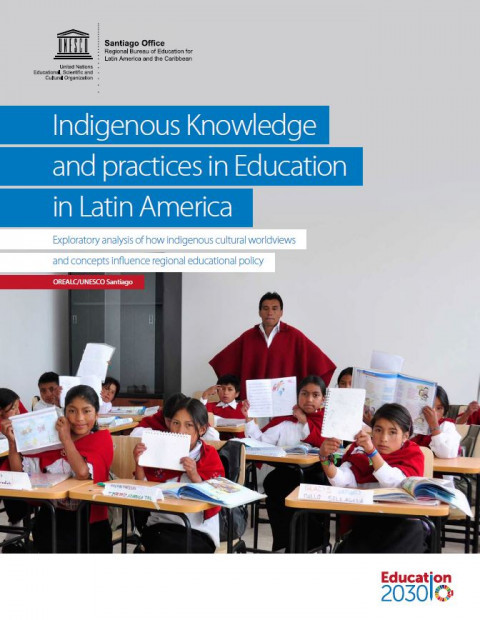 Indigenous Knowledge and practices in Education in Latin America: Exploratory Analysis of How Indigenous Cultural Worldviews and Concepts Influence Regional Educational Policy Year of publication: 2017 Corporate author: UNESCO Santiago This study presents a preliminary exploration of the approaches, processes and tools through which indigenous worldviews and concepts of knowledge and well-being can and have influenced education policies in Latin America. First, it addresses the principal theoretical approaches used in the area of indigenous knowledge and education policies, taking into account the persistence of an “epistemic otherness” and the need for a dialogue between the predominant approaches. Second, it addresses the normative framework and intercultural educational policies, emphasizing how and to what extent the countries in the region take indigenous knowledge into consideration and include it in their education policies and practices. Third, it presents a number of “relevant practices” in terms of dialogue with indigenous knowledge in education policies, taking into account the factors that favour the relevance of education to indigenous views and cultural practices, facilitating their replicability and sustainability. Furthermore, these practices respond to key criteria like recognizing learners as ‘carriers’ and producers of culture, valuing the use of schools as centres of social and cultural activities and favouring the inclusive learning of indigenous and non-indigenous students. Finally, the study unveils challenges for the advancement of the dialogue between indigenous knowledge and education policies, at the same time proposing key concepts to be approached in depth. Conocimiento Indígena y Políticas Educativas en América Latina: Análisis exploratorio de cómo las cosmovisiones y conceptos culturales indígenas de conocimiento inciden, y pueden incidir, en la política educativa en la región Year of publication: 2017 Corporate author: UNESCO Santiago El presente estudio explora la idea de una ‘alternativa epistémica’, construyendo desde el conocimiento y los valores que sustentan las prácticas sociales y educacionales indígenas de la región. En particular, explora cómo estos valores y formas de conocimiento han sido adoptados en las políticas educacionales de tres países de la región andina: Bolivia, Ecuador y Perú, que hace poco atravesaron reformas políticas y constitucionales con el fin de reconocer la composición de sus poblaciones multiculturales, multiétnicas y multilingüísticas. Esta publicación es una invitación a considerar el conocimiento indígena como una fuente legítima de inspiración para las políticas educacionales que puedan contribuir al bienestar de todos y a la sostenibilidad del planeta.
  2023년 한국어학급 관리자 다문화 역량 강화 워크숍: 초중등 Year of publication: 2023 Corporate author: 국가평생교육진흥원 | 중앙다문화교육센터 교육부, 17개 시도교육청, 국가평생교육진흥원, 중앙다문화교육센터 주최로 2023년 4월 25일(화)에 개최되었던 '2023년 한국어학급 관리자 다문화 역량 강화 워크숍'의 초중등용 자료집입니다. 중앙다문화교육센터 홈페이지 자료실(https://www.edu4mc.or.kr/edu/list.html)에서 제목으로 검색하시면 다운받으실 수 있습니다.
  2023학년도 한국어학급 운영 가이드라인: 유치원 Year of publication: 2023 Corporate author: 국가평생교육진흥원 | 중앙다문화교육센터 본 자료는 다문화교육 정책학교 및 한국어학급 담당 교사의 사업에 대한 이해를 제고하고 운영에 도움을 드리고자 제작하였습니다. 본 자료에서 정하는 바를 참고하되, 학교(유치원)의 여건과 다문화학생(유아)의 특성 등을 종합적으로 고려하여 운영하시기 바랍니다. 더욱 자세한 사항은 시·도교육청 및 국가평생교육진흥원 중앙다문화교육센터를 통해 안내받으실 수 있습니다.
  Education in Contexts of Cultural Diversity: A Study on Brazilian Educators (Iberoamerican Journal of Education; vol. 85, no. 2) Year of publication: 2021 Author: Valentín Martínez-Otero Pérez Corporate author: Organization of Ibero-American States for Education, Science and Culture (OEI) This article is interested in education in contexts of cultural diversity and the perspective of educators on their training needs. An ad hoc designed questionnaire was used and a mixed, quantitative and qualitative method was chosen. The questionnaire was applied to a sample of 237 Brazilian educators. The results reveal that attention to cultural diversity plays an important role in educational activity. Educators, as a whole, are sensitive to cultural diversity and its promotion, but the intercultural training received is insufficient. Little family participation is encouraged, resources are scarce and the intercultural dimension lacks pedagogical systematization. La educación en contextos de diversidad cultural: un estudio sobre educadores brasileños (Revista Ibero-americana de Educação; vol. 85, núm. 2) Year of publication: 2021 Author: Valentín Martínez-Otero Pérez Corporate author: Organización de Estados Iberoamericanos para la Educación, la Ciencia y la Cultura (OEI) Este artículo se interesa por la educación en contextos de diversidad cultural y por la perspectiva de los educadores sobre sus necesidades formativas. Se utilizó un cuestionario diseñado ad hoc y se opta por un método mixto, cuantitativo y cualitativo. El cuestionario se aplicó a una muestra de 237 educadores brasileños. Los resultados revelan que la atención a la diversidad cultural ocupa un papel importante en la actividad educativa. Los educadores, en su conjunto, son sensibles a la diversidad cultural y a su fomento, pero la formación intercultural recibida es insuficiente. Se fomenta poco la participación familiar, los recursos escasean y la dimensión intercultural carece de sistematización pedagógica.
  [DIALOG #15] Information and methodological bulletin on multilingual and multicultural education in Central Asia Year of publication: 2018 Corporate author: United Nations Children's Fund (UNICEF) | Organization for Security and Co-operation in Europe (OSCE) The website and the informational and methodological bulletin "Dialogue" was created in order to assist educational organizations of the countries of Central Asia in the implementation of multilingual education programs. The website is supported by the Central Asian Education Program of the OSCE HCNM, the UN Children's Fund UNICEF and the Center for Social Integration.The bulletin is addressed to teachers and school leaders, representatives of education authorities, researchers and experts in the field of education. The bulletin is intended to quarterly inform about initiatives and significant events in the field of multilingual and multicultural education in Central Asia and around the world. In each issue of the bulletin you can find a variety of materials: interviews with experts, a review of the experience of multilingual schools, methodological articles and lesson development, announcements of events and publications, links to Internet resources. [ Диалог #15 ] Информационно-методический вестник по многоязычному и поликультурному образованию в странах Центральной Азии Year of publication: 2018 Corporate author: Организация по безопасности и сотрудничеству в Европе (ОБСЕ) | United Nations Children's Fund (UNICEF) Сайт и информационно-методический вестник "Диалог" создан в целях оказания содействия образовательным организациям стран Центральной Азии в реализации программ многоязычного образования. Работу сайта поддерживают Центральноазиатская образовательная программа ВКНМ ОБСЕ, Детский фонд ООН ЮНИСЕФ и Центр социальной интеграции.Вестник адресован преподавателям и руководителям школ, представителям органов управления образованием, исследователям и экспертам в сфере образования. Вестник призван ежеквартально информировать об инициативах и значимых событиях в сфере многоязычного и поликультурного образования в Центральной Азии и по всему миру. В каждом выпуске вестника можно найти разнообразные материалы: интервью с экспертами, обзор опыта многоязычных школ, методические статьи и разработки уроков, анонсы мероприятий и публикаций, ссылки на интернет-ресурсы.
  [DIALOG #14] Information and methodological bulletin on multilingual and multicultural education in Central Asia Year of publication: 2017 Corporate author: Организация по безопасности и сотрудничеству в Европе (ОБСЕ) | United Nations Children's Fund (UNICEF) The website and the informational and methodological bulletin "Dialogue" was created in order to assist educational organizations of the countries of Central Asia in the implementation of multilingual education programs. The website is supported by the Central Asian Education Program of the OSCE HCNM, the UN Children's Fund UNICEF and the Center for Social Integration.The bulletin is addressed to teachers and school leaders, representatives of education authorities, researchers and experts in the field of education. The bulletin is intended to quarterly inform about initiatives and significant events in the field of multilingual and multicultural education in Central Asia and around the world. In each issue of the bulletin you can find a variety of materials: interviews with experts, a review of the experience of multilingual schools, methodological articles and lesson development, announcements of events and publications, links to Internet resources. [ Диалог #14 ] Информационно-методический вестник по многоязычному и поликультурному образованию в странах Центральной Азии Year of publication: 2017 Corporate author: Организация по безопасности и сотрудничеству в Европе (ОБСЕ) | United Nations Children's Fund (UNICEF) Сайт и информационно-методический вестник "Диалог" создан в целях оказания содействия образовательным организациям стран Центральной Азии в реализации программ многоязычного образования. Работу сайта поддерживают Центральноазиатская образовательная программа ВКНМ ОБСЕ, Детский фонд ООН ЮНИСЕФ и Центр социальной интеграции.Вестник адресован преподавателям и руководителям школ, представителям органов управления образованием, исследователям и экспертам в сфере образования. Вестник призван ежеквартально информировать об инициативах и значимых событиях в сфере многоязычного и поликультурного образования в Центральной Азии и по всему миру. В каждом выпуске вестника можно найти разнообразные материалы: интервью с экспертами, обзор опыта многоязычных школ, методические статьи и разработки уроков, анонсы мероприятий и публикаций, ссылки на интернет-ресурсы.