
Resources
Explore a wide range of valuable resources on GCED to deepen your understanding and enhance your research, advocacy, teaching, and learning.
61 Results found
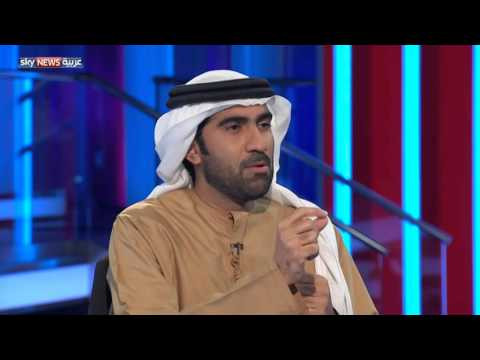 Gulf Society .. and the Multiplicity of Foreign Cultures Year of publication: 2014 Corporate author: Sky News Arabia This video is a TV program discussing the case of multiculturalism in the Arab Gulf countries. The multiculturalism is brought to the Gulf by foreign workers. There program is having guests discussing the issue. What are the negative and positive effects of foreign cultures on local culture in the countries of the region? What are the ways to preserve the identity and values of society? المجتمع الخليجي.. وتعدد الثقافات الوافدة Year of publication: 2014 Corporate author: Sky News Arabia برنامج تلفزيوني يناقش قضية التعددية الثقافية في دول الخليج العربي، ويتطرق لجلب التعددية الثقافية إلى الخليج من قبل العمال الأجانب. ويستضيف البرنامج مجموعة من الضيوف لمناقشة القضية. ويجاوب على الاسئبة التالية: ما هي الآثار السلبية والإيجابية للثقافات الأجنبية على الثقافة المحلية في دول المنطقة؟ ما هي طرق الحفاظ على هوية المجتمع وقيمه؟لمشاهدة المزيد، يرجى زيارة صفحة البرنامج على الموقع الإلكتروني لسكاي نيوز عربية من خلال الضغط على الرابط التالي:http://www.skynewsarabia.com/web/AlMasaa
 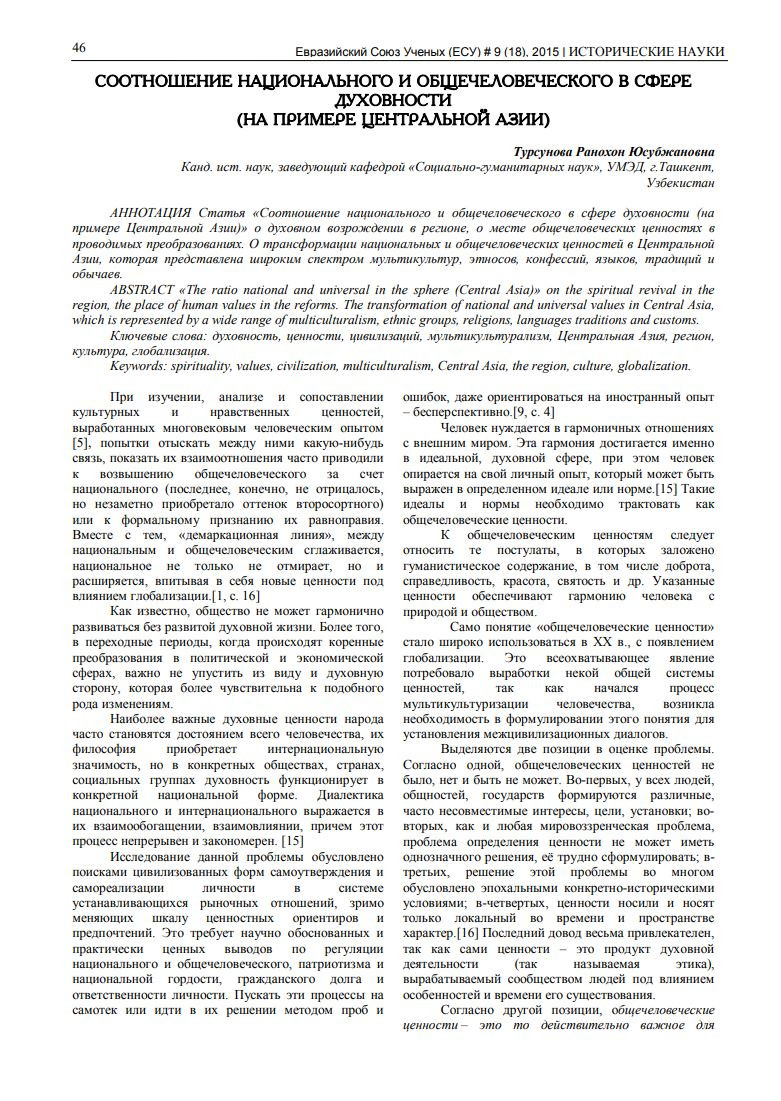 The Ratio of the National and Universal in the Sphere of Spirituality (on the example of Central Asia) Year of publication: 2015 Author: Ranokhon Tursunova The ratio national and universal in the sphere (Central Asia)» on the spiritual revival in the region, the place of human values in the reforms. The transformation of national and universal values in Central Asia, which is represented by a wide range of multiculturalism, ethnic groups, religions, languages traditions and customs. Соотношение национального и общечеловеческого в сфере духовности (на примере Центральной Азии) Year of publication: 2015 Author: Ranokhon Tursunova Статья «Соотношение национального и общечеловеческого в сфере духовности (на примере Центральной Азии)» о духовном возрождении в регионе, о месте общечеловеческих ценностях в проводимых преобразованиях. О трансформации национальных и общечеловеческих ценностей в Центральной Азии, которая представлена широким спектром мультикультур, этносов, конфессий, языков, традиций и обычаев.
 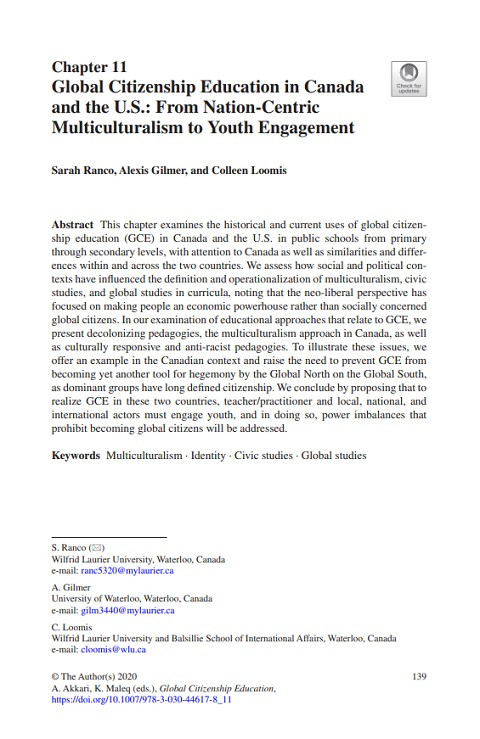 Global Citizenship Education in Canada and the U.S.: From Nation-Centric Multiculturalism to Youth Engagement Year of publication: 2020 Author: Sarah Ranco | Alexis Gilmer | Colleen Loomis Corporate author: Cham Springer This chapter examines the historical and current uses of global citizenship education (GCE) in Canada and the U.S. in public schools from primary through secondary levels, with attention to Canada as well as similarities and differences within and across the two countries. The authors assess how social and political contexts have influenced the definition and operationalization of multiculturalism, civic studies, and global studies in curricula, noting that the neo-liberal perspective has focused on making people an economic powerhouse rather than socially concerned global citizens. In their examination of educational approaches that relate to GCE, the authors present decolonizing pedagogies, the multiculturalism approach in Canada, as well as culturally responsive and anti-racist pedagogies. To illustrate these issues, the authors offer an example in the Canadian context and raise the need to prevent GCE from becoming yet another tool for hegemony by the Global North on the Global South, as dominant groups have long defined citizenship. They conclude by proposing that to realize GCE in these two countries, teacher/practitioner and local, national, and international actors must engage youth, and in doing so, power imbalances that prohibit becoming global citizens will be addressed.
  Manuel d'apprentissage de la démocratie pour les jeunes en Tunisie Year of publication: 2011 Corporate author: UNESCO Rabat The main aim of these manual and guide is to raise awareness among Tunisian youth about the values of democracy, human rights and responsible citizenship, and empower youth to make their voice heard during this critical period in the Tunisian democratic transition. دليل شباب تونس في تعلّم الديمقراطيّة Year of publication: 2011 Corporate author: UNESCO Rabat The main aim of these manual and guide is to raise awareness among Tunisian youth about the values of democracy, human rights and responsible citizenship, and empower youth to make their voice heard during this critical period in the Tunisian democratic transition.
  Tools for a More Inclusive Education Year of publication: 2020 Corporate author: Chile. Ministry of Education This document presents a conceptual framework to help the different educational teams deployed at the national level to devise and implement inclusive practices in their daily management, in their ways of living together and in their teaching-learning processes. This, within the framework of the promulgation of Law 20,845, modifies the General Education Law (N°20,370/2009) in its article 4, adding that “It is the duty of the State to strive to ensure quality inclusive education for all people. Herramientas para una educación más inclusiva Year of publication: 2020 Corporate author: Chile. Ministry of Education En este documento se presenta un marco técnico conceptual para contribuir a que los distintos equipos educativos desplegados a nivel nacional puedan idear e implementar prácticas inclusivas en su gestión cotidiana, en sus modos de convivir y en sus procesos de enseñanza – aprendizaje. Esto, en el marco de la promulgación de la Ley 20.845 modifica la Ley General de Educación (N°20.370/2009) en su artículo 4° agregando que “Es deber del Estado propender a asegurar a todas las personas una educación inclusiva de calidad.”
 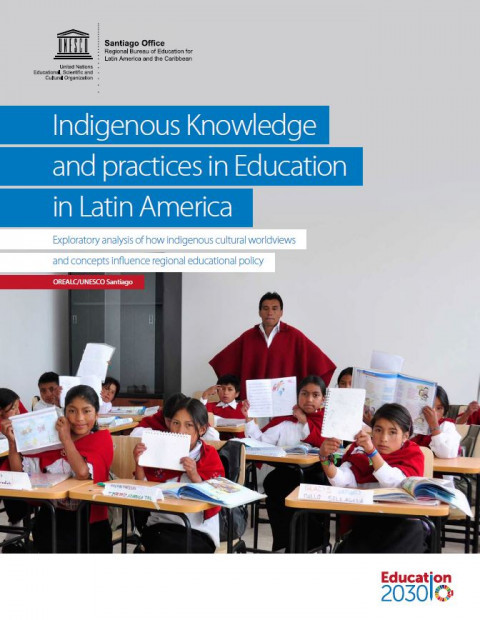 Indigenous Knowledge and practices in Education in Latin America: Exploratory Analysis of How Indigenous Cultural Worldviews and Concepts Influence Regional Educational Policy Year of publication: 2017 Corporate author: UNESCO Santiago This study presents a preliminary exploration of the approaches, processes and tools through which indigenous worldviews and concepts of knowledge and well-being can and have influenced education policies in Latin America. First, it addresses the principal theoretical approaches used in the area of indigenous knowledge and education policies, taking into account the persistence of an “epistemic otherness” and the need for a dialogue between the predominant approaches. Second, it addresses the normative framework and intercultural educational policies, emphasizing how and to what extent the countries in the region take indigenous knowledge into consideration and include it in their education policies and practices. Third, it presents a number of “relevant practices” in terms of dialogue with indigenous knowledge in education policies, taking into account the factors that favour the relevance of education to indigenous views and cultural practices, facilitating their replicability and sustainability. Furthermore, these practices respond to key criteria like recognizing learners as ‘carriers’ and producers of culture, valuing the use of schools as centres of social and cultural activities and favouring the inclusive learning of indigenous and non-indigenous students. Finally, the study unveils challenges for the advancement of the dialogue between indigenous knowledge and education policies, at the same time proposing key concepts to be approached in depth.