
Resources
Explore a wide range of valuable resources on GCED to deepen your understanding and enhance your research, advocacy, teaching, and learning.
5 Results found
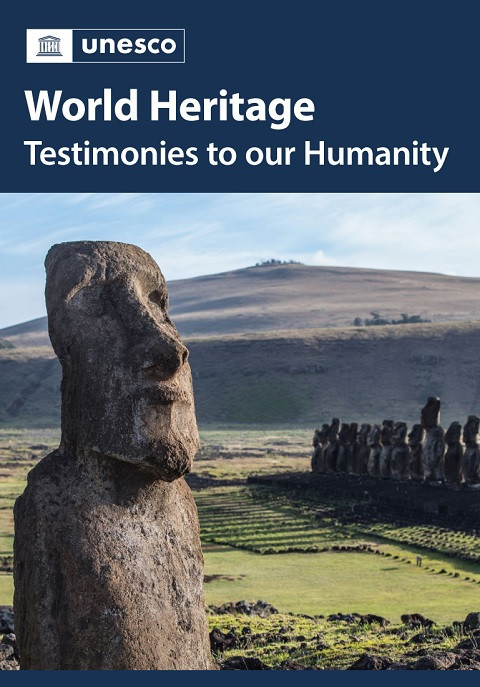 World Heritage: Testimonies to Our Humanity Year of publication: 2022 Corporate author: UNESCO The Convention for the Protection of the Cultural and Natural Heritage is an international agreement based on the principle that some places on Earth embody outstanding universal value that should be part of the shared heritage of humankind. UNESCO recognizes cultural and natural sites of outstanding universal value, and protects them for the benefit of all. As a basis for mutual understanding and dialogue, the responsibility for protecting our shared heritage requires cooperation among all States Parties as well as civil society, local communities and the private sector. The idea of reconciling the conservation of cultural sites with that of natural sites originated in the United States of America. A White House conference in Washington, D.C., in 1965 called for the creation of a “World Heritage Foundation” that would stimulate international cooperation to protect “the most extraordinary places, landscapes, and historic sites for the present and future of all mankind.” In 1968, the International Union for Conservation of Nature (IUCN) made similar proposals to its members. These proposals were presented at the United Nations Conference on the Human Environment in Stockholm in 1972. Eventually, all parties concerned agreed on a single text. The Convention concerning the Protection of the World Cultural and Natural Heritage was adopted by the General Conference of UNESCO on 16 November 1972. In recognizing both cultural and natural aspects of heritage, the Convention reminds us of the interaction between human beings and nature and the fundamental need to preserve the balance between the two.
 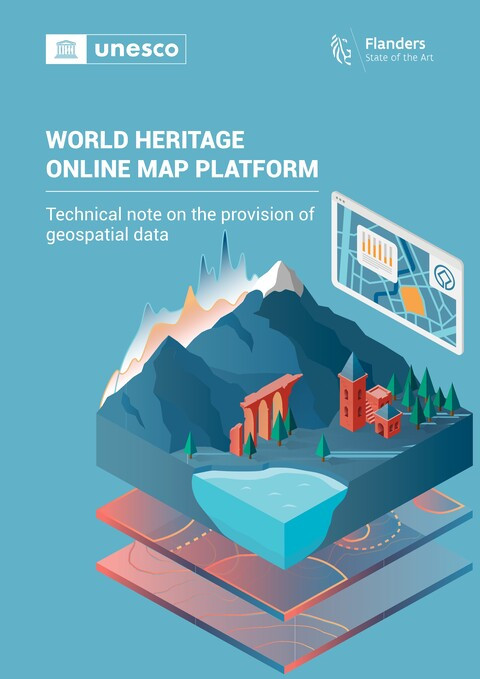 World Heritage Online Map Platform: Technical Note on the Provision of Geospatial Data Year of publication: 2023 Corporate author: UNESCO UNESCO’s World Heritage Online Map Platform (WHOMP) is a Geographic Information System (GIS) developed with the support of the Government of Flanders (Belgium), aiming at the creation of a comprehensive and accessible geodatabase for World Heritage properties worldwide. This platform is hosted and managed by UNESCO which ensures that the data presented correspond exactly to the boundaries of the World Heritage properties and their buffer zones as inscribed in the World Heritage List, including any changes adopted by the World Heritage Committee after the initial inscription of a property. Plateforme de cartes en ligne du patrimoine mondial: Note technique sur la mise à disposition de données géospatiales Year of publication: 2023 Corporate author: UNESCO La Plateforme de cartes en ligne du patrimoine mondial de l’UNESCO est un système d’information géographique (SIG) développé avec le soutien du Gouvernement flamand (Belgique) visant à créer une base de données géospatiales complète et accessible pour les biens du patrimoine mondial du monde entier. Cette plateforme est hébergée et gérée par le Centre du patrimoine mondial de l’UNESCO, qui veille à ce que les données présentées correspondent exactement aux limites des biens du patrimoine mondial et de leurs zones tampons, telles qu’inscrites dans la Liste du patrimoine mondial, en tenant compte de toute éventuelle modification adoptée par le Comité du patrimoine mondial après l’inscription initiale du bien.
 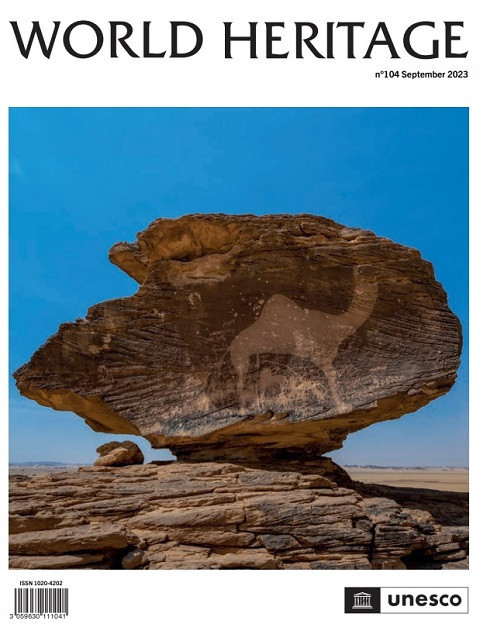 World Heritage, No.104 Year of publication: 2023 Corporate author: UNESCO As the extended 45th session of the World Heritage Committee begins in the Kingdom of Saudi Arabia, we express our gratitude to our hosts for convening the first in-person Committee since the onset of COVID-19. Surrounded by old friends and young professionals alike, we are reminded that this meeting is more than the sum of important decisions taken. It is a powerful platform where we rekindle the sense of ‘heritage community’ and renew our commitment to heritage. This issue of World Heritage magazine features African heritage leaders who are empowering peers and creating positive ripple effects from Egypt to Mozambique. A report on climate change details the critical benefits provided by World Heritage forests notably through carbon absorption, with one caveat – their capacity will continue to decline unless we act now. A compelling story comes from Havana, Cuba, where a major UNESCO programme Transcultura is blending tangible heritage, intangible practices and contemporary creativity, true to the way culture intersects in the local communities. Readers may notice the new design of this World Heritage magazine, which pays homage to the original iconic look. The first issue in 1996 put a spotlight on the accelerating international cooperation to conserve Angkor, bearing fruit in 2004 with the removal from the List of World Heritage in Danger. Just as the magazine has been a witness to history, it continues to champion the evolving principles of heritage safeguarding. This is why this revamped magazine will centrally feature stories of custodians, innovators and trailblazers, in line with the 'fifth C' (Communities) of the Strategic Objectives. The words by the 80-year-old Havana resident Noemí Moreno should echo with many of us: 'In the end, we are nothing more than a bird that comes and flies away. History is what remains'. And so we get to work together, pooling experience gained over the past five decades of the 1972 Convention and the ancestral knowledge passed down over centuries, to preserve the remnants of history as best as we can. Patrimoine mondial, No.104 Year of publication: 2023 Corporate author: UNESCO Alors que la 45e session élargie du Comité du patrimoine mondial s'ouvre au Royaume d'Arabie saoudite, nous exprimons notre gratitude à nos hôtes pour avoir invité le premier Comité en personne à se réunir depuis le début de la COVID-19. Entourés de vieux amis et de jeunes professionnels, nous nous rappelons que cette réunion est plus que la somme des décisions importantes qui ont été prises. C'est une plateforme puissante où nous ravivons le sens de la « communauté du patrimoine » et renouvelons notre engagement en faveur du patrimoine. Ce numéro du magazine Patrimoine Mondial présente des responsables africains du patrimoine qui, de l'Égypte au Mozambique, responsabilisent leurs pairs et créent des effets d'entraînement positifs. Un rapport sur le changement climatique détaille les avantages cruciaux offerts par les forêts du patrimoine mondial, notamment par l'absorption du carbone, avec une mise en garde : leur capacité continuera à diminuer si nous n'agissons pas maintenant. Une histoire passionnante nous vient de La Havane, à Cuba, où un programme majeur de l'UNESCO, Transcultura, mêle patrimoine matériel, pratiques immatérielles et créativité contemporaine, fidèle à la façon dont la culture s'entrecroise dans les communautés locales. Les lecteurs remarqueront peutêtre la nouvelle maquette de ce magazine Patrimoine Mondial, qui rend hommage à l'aspect iconique d'origine. Le premier numéro, paru en 1996, a mis en lumière l'accélération de la coopération internationale pour la conservation d'Angkor, qui a porté ses fruits en 2004 avec le retrait du site de la Liste du patrimoine mondial en péril. Tout comme le magazine a été un témoin de l'histoire, il continue à défendre les principes évolutifs de la sauvegarde du patrimoine. C'est pourquoi le nouveau magazine Patrimoine Mondial présentera essentiellement des histoires de gardiens, d'innovateurs et de pionniers, conformément au « cinquième C » (Communautés) des objectifs stratégiques. Les mots de Noemí Moreno, une habitante de La Havane âgée de 80 ans, devraient trouver un écho chez beaucoup d'entre nous : « En fin de compte, nous ne sommes rien d'autre qu'un oiseau qui vient et s'envole. L'Histoire, c'est ce qui reste. » C'est pourquoi nous devons œuvrer ensemble, en mettant en commun l'expérience acquise au cours des 50 dernières années de la Convention de 1972 et les connaissances ancestrales transmises au fil des siècles, afin de préserver au mieux les vestiges de l'histoire.