
Resources
Explore a wide range of valuable resources on GCED to deepen your understanding and enhance your research, advocacy, teaching, and learning.
63 Results found
 Address by Irina Bokova, Director-General of UNESCO, on the occasion of the Inaugural Lecture on: Diverse Societies, Inclusive Democracies: New Skills for a Sustainable World, Organized by the Mahatma Gandhi Institute of Education for Peace Year of publication: 2014 Corporate author: UNESCO. Director-General, 2009-2017 (Bokova, I.G.) This document is the address of Irina Bokova, Director-General of UNESCO, on the occasion of the inaugural lecture on: Diverse Societies, Inclusive Democracies: New Skills for a Sustainable World, organized by the Mahatma Gandhi Institute of Education for Peace in Delhi, India, 25 November 2014. She insisted the importance of social integration, the human rights for all and education for sustainable development.
 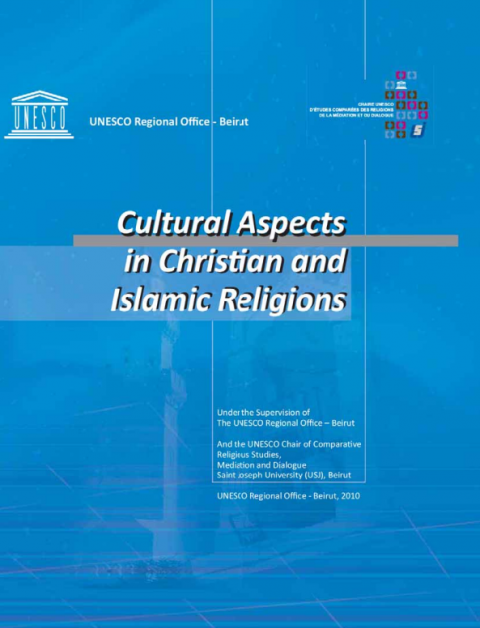 Cultural aspects in Christian and Islamic religions Year of publication: 2011 Corporate author: UNESCO Beirut | Université Saint Joseph de Beyrouth This book allows the readers the opportunity to know about the cultural aspects related to religions, mainly in Lebanon and the Near East, their meaning and their aim. This knowledge will help the reader, firstly, to grasp the meaning of these various aspects, whether they concern him directly or the people who live in the same country, with whom he shares common space and living. Secondly, the book contributes to the Lebanese understanding one another’s behaviors and their own behavior concerning these aspects. Therefore, the book also contributes to the Lebanese looking at one another with more trust before starting to criticize. This book includes chapters that cover most of the different cultural aspects in Christian and Islamic religions. The first chapter deals with time, passing through each month of the year and its days, in a chronological manner. The second chapter delves into religious occasions in the Christian then Islamic religions. It explains the meaning of Holidays and remembrances of God and their particular aspects as well as the religious reasons of each. This chapter includes a part about al-‘awliya’ and Saints who are mentioned in some of the Lebanese daily rituals. Chapter three delves into the individual’s life stages from birth to religious vows, to marriage and death. The aspects that go with these stages constitute an important part in the life of the Lebanese. This chapter details the aspects and traditions of all these stages in which people take part, thus creating a common ground in a multi-religious society. Chapter four deals with religious practices, acts of worship, and legal prescriptions. It describes them and deals with their spiritual meaning to individuals who express their faith when practicing them. Prayer, Mass, and Pilgrimage, among others, are religious practices that are detailed in a way to make the reader understand what they mean to those who perform them. Chapter five leads us into religious places and their meaning, from churches to mosques and monasteries, khalwat and husayniyyat, all of which have different and divergent meanings to visitors. Yet, they all show the importance given by man to the place when expressing his faith and his relation with the Creator. Chapter six takes us to religious habits and customs, such as the clothes worn by religious dignitaries, their symbolism and meaning. It also deals with some general habits and customs. The reader may find that some chapters overlap. In fact, we have tried to make each part related to the others yet independent from them. This method facilitates the reading and understanding of any subject on its own without the need to refer to prior or subsequent parts. Finally, those who had any – minor or major – contribution in this book – despite the lacks that some readers might see – hope that they have offered a useful work in the process of discovering others who are different and who hold rich traditions as well human and spiritual values.
  Evaluating the Link between Conflict and Education Year of publication: 2005 Author: Lynn Davies Corporate author: SAGE Publishing This paper examines two areas of important evaluation: the impact of education on peace and the impact of education on conflict, and argues that they are not necessarily the same type of evaluation.
  Education in the twenty‐first century: Conflict, reconstruction and reconciliation1 Year of publication: 2005 Author: Alan Smith Corporate author: Taylor & Francis This paper is an attempt to map out an emerging and increasingly important field of study concerning the relationship between education and conflict. The paper argues that actions through various ‘entry points’ at each of these levels carry the potential to exacerbate or ameliorate conflict and suggests that a systemic analysis of investments in education systems from a conflict perspective should be a routine part of educational planning.
 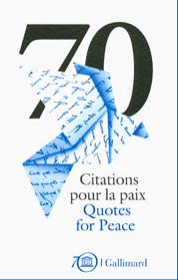 70 quotes for peace: UNESCO's 70th anniversary celebrations Year of publication: 2015 Author: Guila Clara Kessous Corporate author: UNESCO This book, created to mark the 70th anniversary of the United Nations Educational Scientific and Cultural Organization (UNESCO), features 70 quotes from artists, intellectuals, activists, politicians and statesmen. The quotes all testify to a strong conviction that peace, in order to be sustainable, must be built upon a mutual understanding between people and the intellectual solidarity of humankind. But they also demonstrate that each person bears within himself a huge capacity for tolerance and dignity that he can choose to use to achieve this ideal.
  Global Citizenship Education: An Emerging Perspective Year of publication: 2014 Corporate author: UNESCO This document draws on inputs to, and common perspectives emerging from, a Technical Consultation on Global Citizenship Education organized by UNESCO and the Republic of Korea (i.e., the Ministries of Foreign Affairs and of Education, and the Asia-Pacific Centre of Education for International Understanding) in Seoul on 9-10 September 2013 . Informing this draft document are: a) responses from the expert participants to a questionnaire circulated by UNESCO in advance of the consultation; b) presentations from experts during the consultation; c) discussions during the consultation; and d) reference material contributing to, and prepared for, the consultation. The final draft of this document was prepared by UNESCO’s Division of Education for Peace and Sustainable Development at Headquarters in Paris, with the assistance of a drafting team.
  The Influence of education on conflict and peace building Year of publication: 2010 Author: Alan Smith Corporate author: UNESCO The purpose of this paper is to identify aspects of education that may have a positive influence on the dynamics of conflict or make a contribution to peacebuilding. The UN Secretary-General’s (2009) report on peacebuilding identifies a number of recurring priorities in conflict-affected situations, ‘establishing security, building confidence in a political process, delivering initial peace dividends and expanding core national capacity’. These priorities include ‘the provision of basic services, such as water and sanitation, health and primary education’. However, in conflict-affected situations education is also about more than service delivery because it is a means of socialization and identity development through the transmission of knowledge, skills, values and attitudes across generations. Education may therefore be a driver of conflict (fuelling grievances, stereotypes, xenophobia and other antagonisms), but can also be a way of contributing to ‘conflict transformation’ and ‘peacebuilding’.
 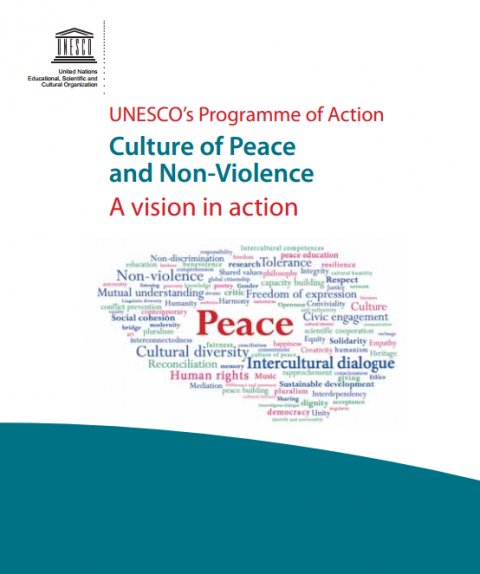 UNESCO's programme of action: culture of peace and non-violence, a vision in action Year of publication: 2013 Corporate author: UNESCO This document builds upon the experience and resources of the Intersectoral Platform for a Culture of Peace and Non-Violence and has benefited from the contribution of Professor Arjun Appadurai. This document shows the UNESCO's mission; Buidling the defences of peace in the minds of men and women and Culture of peace and Non-violence which is positive values, attitudes and behaviours for everyday peace. This document pointed out today's multiple crisis, and then introduced the programme of action on a culture of peace and non-violence. After drew the UNESCO's strategies, UNESCO's peace activities were followed.
  Considerations on the follow-up of the United Nations International Year for the Rapprochement of Cultures with regard to implementation of the Kyiv Statement towards Mutual Understanding and Dialogue Year of publication: 2011 Corporate author: UNESCO As one of the co-initiators of the International Year for the Rapprochement of Cultures, Ukraine proposed to initiate a general discussion regarding the protection of monuments and sites with religious or spiritual meaning (hereinafter referred to as religious2 and sacred3 properties) at the international level. This discussion was timely and in line with one of the four themes, selected to build an action plan for the Year in the fields of UNESCO’s competence, namely to promote reciprocal knowledge of cultural, ethnic, linguistic and religious diversity. 2. This initiative, having constituted one of the essential elements of the International Year of Rapprochement of Cultures, is aimed at enhancing protection and management of religious properties. It stems from the appeal of the Ukrainian authorities, launched at the 35th session of the UNESCO General Conference (2009), inviting all Member States to participate in the International Seminar “The Role of religious communities in the management of World Heritage properties” (2-5 November 2010). This announcement was welcomed by UNESCO within the framework of the Year. Numerous Member States expressing their support for the proposal designated representatives to participate in this Seminar. The elaboration of the Kyiv Statement (as one of the main outcomes of the Seminar) and its adoption in close cooperation with representatives of religious communities contributes to the creation of a culture of dialogue.
 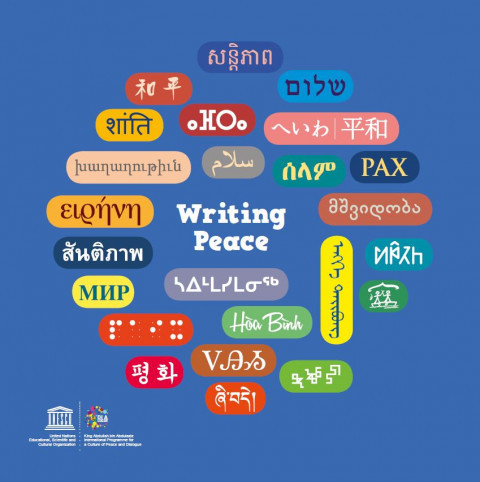 Writing Peace Year of publication: 2017 Author: Eric Cattelain Corporate author: UNESCO “Writing Peace” is a manual that invites young audiences to discover contemporary writings through the introduction of various languages. Its goal is to make the world appear a little closer and a little more familiar. "Writing Peace" encourages children (ages8 to 14) to become aware of the interdependence of cultures through familiarization with contemporary writing systems, their history, and their borrowings.The manual contains 24 activity sheets. Each section presents the characters of a writing system, an introductory text and historical background, the word “peace” and the word “hello,” the language(s) attached to the system(s), and an activity whose answers appear at the end of manual.Six thousand years after the advent of writing, what do we know about others, their systems of thought, and the transcriptions of their writing systems? How can different writing systems contribute to a better understanding of the world and our place within it? By beginning to learn about these writings and their fascinating beauty, the manual connects children to diversity, thus opening their eyes to the concept of peace and our awareness of it.