
Resources
Explore a wide range of valuable resources on GCED to deepen your understanding and enhance your research, advocacy, teaching, and learning.
116 Results found
 Peace Education in Northeast Asia: A Situational Analysis Year of publication: 2021 Author: Soonwon Kang | Cheng Liu | Ketei Matsui | Batbaatar Monkhooroi | Boyoung Park | Muyu Huang | Oyuntsetseg Dugarsuren Corporate author: APCEIU Being central to education for international understanding and global citizenship, peace education has always been an important theme in UNESCO. For effective delivery of peace education, it is critical to examine and understand the relevance of peace education and its key issues and approaches at a given juncture. With this in mind, in 2020, APCEIU conducted a study on peace education in South Korea to review its current state and suggest some policy recommendations. Following up on this study, APCEIU initiated in 2021 a research project on peace education in Northeast Asia in order to identify how peace education is interpreted and practised in the countries of the region and explore possibilities of cooperation among peace educators, researchers, and practitioners in the region. Building on this research, APCEIU hopes to develop and carry out joint projects for peace education in the region.
  Global Citizenship Education in Southern Africa: Learning to Live Together - the Role of Teachers; Report of a Networking Meeting Year of publication: 2019 Corporate author: UNESCO Harare | APCEIU This is a report on the second GCED networking meeting held from 28 to 29 October 2019 in Johannesburg, South Africa. It took stock of GCED in the region and discussed how GCED is and could be integrated in curricula and teacher education in the Southern African context to strengthen and expand the existing networks of GCED stakeholders and partners.
  EIU Best Practices Series No. 19: Culture-Based Education Programme for Indigenous Children & Youth in the Philippines Year of publication: 2010 Author: Benjamin David Abadiano Corporate author: APCEIU This monograph is one of APCEIU's EIU Best Practices Series, which aims to encourage educators, scholars, and activists to implement and share local initiatives on EIU. The Series No.19 introduces the Pumulaan program, a successful culture-based education programme for indigenous children and youth in the Philippines. The program is similar to that of Tugdaan, a widely recognized education program that promote learning for the Indigenous people. The Pumulaan program focuses on providing culturally sensitive, appropriate, and relevant education to students in Mangyan Tribe in Mindoro and the Matigsalog Tribe in Mindanao, incorporating values of peace, harmony, and diversity within the education programs.
  EIU Best Practices Series No. 21: EIU School-based Initiatives in Bhutan Year of publication: 2010 Author: Rinzin Wangmo Corporate author: APCEIU This monograph is one of APCEIU's EIU Best Practices Series, which aims to encourage educators, scholars, and activists to implement and share local initiatives on EIU. The Series No.21 introduces the case of Yonphula Lower Secondary School in Trashigang, Bhutan, which successfully incorporated EIU principles into the existing curriculum. With the Gross National Happiness (GNH) principle as Bhutan’s educational framework, EIU can fit easily to the academic settings and system. The case highlights activities, such as providing non-formal education for illiterate parents, and counseling services, health programs, and meditation programs to students, in exemplifying how innovative school activities can optimize the GNH framework for the promotion of EIU.
 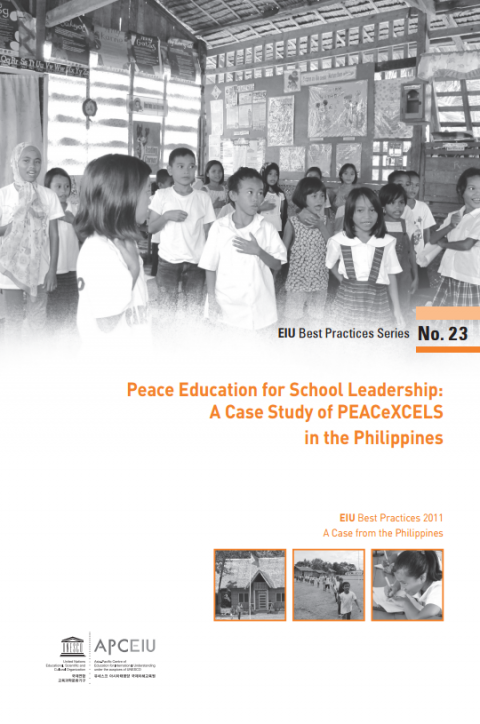 EIU Best Practices Series No. 23: Peace Education for School Leadership: A Case Study of PEACeXCELS in the Philippines Year of publication: 2011 Author: Ethel Agnes Pascua-Valenzuela | Elaissa Marina Mendoza | Cristina Villanueva-Moreno Corporate author: APCEIU This report is one of APCEIU's EIU Best Practices Series, which aims to encourage educators, scholars, and activists to implement and share local initiatives on EIU. The Series No.23 showcases Peace Education Excellence in School Leadership for Southeast Asia (PEACeXCELS) in the Philippines, a competency building program for educators on EIU. Through comprehensive training, principals and educators undertook reforms in respective schools, implementing various activities to include concept of peace and multiculturalism within school policies and lesson plans.
 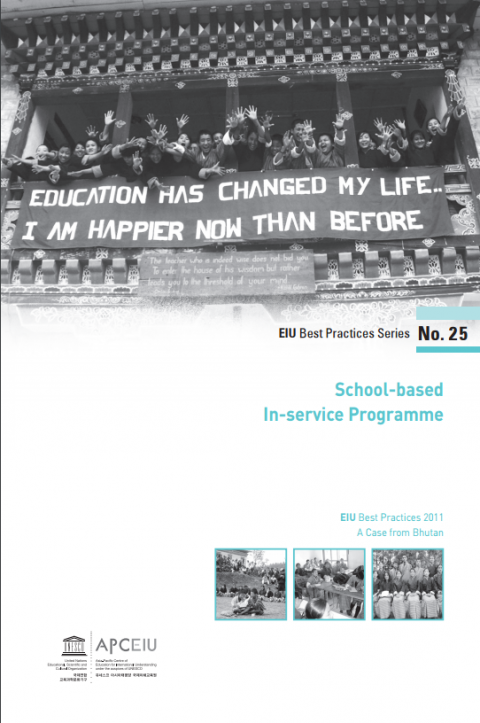 EIU Best Practices Series No. 25: School-based In-service Programme Year of publication: 2011 Author: Yeshi Pemo Corporate author: APCEIU This monograph is one of APCEIU's EIU Best Practices Series, which aims to encourage educators, scholars, and activists to implement and share local initiatives on EIU. The Series No.25 introduces the case of the Damphu Lower Secondary School in Bhutan, which carried out a number of initiatives to promote culture of peace and EIU through workshops, literary activities, and contests for students, teachers, parents, and nation-wide UNESCO clubs. The case showcases that the educators’ aspirations toward education for peace can be achieved through the combination of excellent school leadership, strong commitment, high competency, and available resources.
 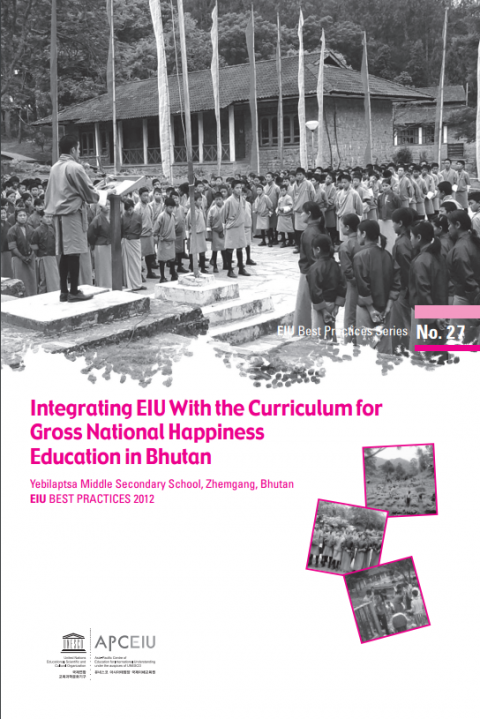 EIU Best Practices Series No. 27: Integrating EIU with the Curriculum for Gross National Happiness Education in Bhutan Year of publication: 2012 Author: Udhim Subba Corporate author: APCEIU This monograph is one of APCEIU's EIU Best Practices Series, which aims to encourage educators, scholars, and activists to implement and share local initiatives on EIU. The Series No.27 introduces Bhutan’s Yebilaptsa Middle Secondary School, in its effort to promote values of EIU as a complementary component of the Gross National Happiness Education efforts. Activities such as UNESCO club community activities, environmental learning, EIU cultural night, international exchange altogether exemplify effective ways to integrate EIU practices in the curriculum and extracurricular programs of schools.
 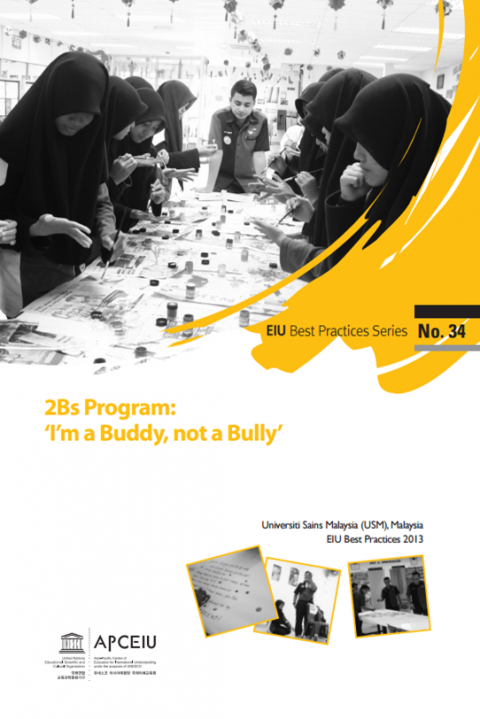 EIU Best Practices Series No.34: 2Bs Program: 'I'm a Buddy, not a Bully' Year of publication: 2013 Corporate author: Азиатско-Тихоокеанский центр образования для международного понимания (APCEIU) This issue is one of APCEIU's EIU Best Practices Series, which aims to encourage educators, scholars, and activists to implement and share local initiatives on EIU. The Series No.34 introduces the 2Bs Program implemented in boarding schools in Malaysia, highlighting the importance of education in preventing bullying behavior. The program involves three phases, such as employing creative and fun pedagogy approaches, rehabilitation, and student potential development to effectively raise awareness surrounding the issue and encourage behavior change. Such initiative is exemplary in combatting challenges that arise from cultural differences, and in fostering understanding.
 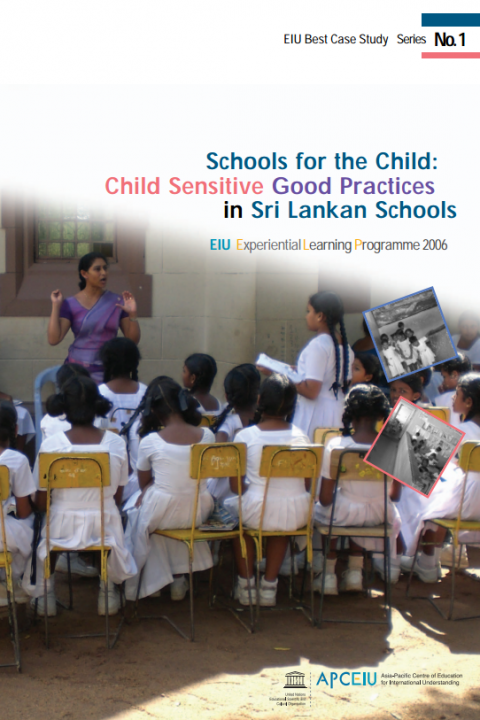 EIU Best Practices Series No. 1: Schools for the Child: Child Sensitive Good Practices in Sri Lankan Schools Year of publication: 2006 Corporate author: APCEIU This monograph is one of APCEIU's EIU Best Practices Series, which aims to encourage educators, scholars, and activists to implement and share local initiatives on EIU. The Series No.1 is a research study undertaken to identify positive practices that can foster peace education in post-conflict communities of Sri Lanka. Specifically, three schools are observed to understand how the model of peace education and multiculturalism can be promoted through educator’s creativity, dedication, and vision, curriculum revision, eco-friendly school environment, and use of external and community resources. The study showcases that culturally sensitive and mindful pedagogical practices are needed to generate understanding of peace.
 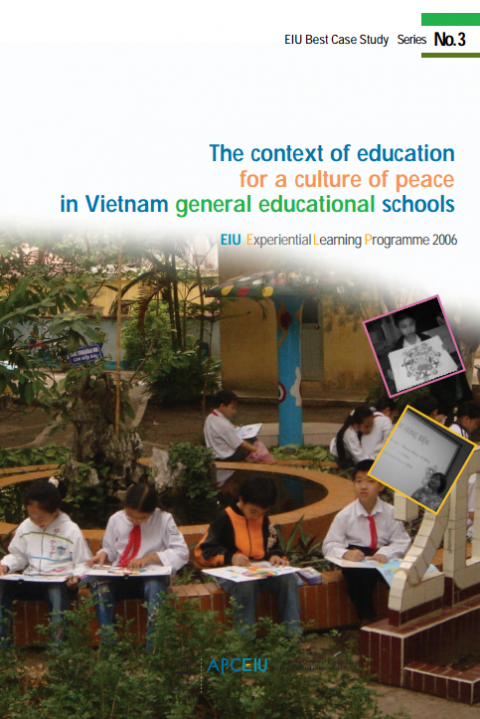 EIU Best Practices Series No. 3: The Context of Education for a Culture of Peace in Vietnam General Education Schools Year of publication: 2006 Corporate author: APCEIU This monograph is one of APCEIU's EIU Best Practices Series, which aims to encourage educators, scholars, and activists to implement and share local initiatives on EIU. The Series No.3 introduces a research study conducted to examine Vietnam’ general educational schools for culture of peace education. Upon assessment of interviews and surveys undertaken by educators and students from five schools, the result indicated that education for culture of peace was practiced through both academics and extracurricular activities.