
Resources
Explore a wide range of valuable resources on GCED to deepen your understanding and enhance your research, advocacy, teaching, and learning.
125 Results found
 Resilience Against Anti-Democratic Tendencies through Education: Competences for Democratic Culture in European Social and Youth Work Year of publication: 2021 Author: Markus Pausch | Patricia Hladschik | Filip Pazderski | Rasha Nagem Corporate author: Council of Europe In this handbook the authors focus on competences for democracy and thus on how to prevent and avoid anti-democratic phenomena like authoritarianism, violent radicalisation, extremism, hate speech or conspiracy theories. This material contains a set of new or refreshed educational methods, tailored to work specifically with social workers and youth workers. All of them should help them prepare to counter these tendencies. Handbook was developed in the project “Resilience through Education for Democratic Citizenship” (REDE), implemented in the programme “Democratic and Inclusive School Culture in Operation” (DISCO) of the European Commission and the Council of Europe.
  Teaching approaches that help to build resilience to extremism among young people Year of publication: 2011 Corporate author: United Kingdom. Department of Education This is a summary for decision-makers – policy- makers, school leaders, teachers and other practitioners, such as youth and community workers – of the key ingredients of evidence-based teaching approaches and interventions that are effective in building resilience to extremism among young people. It also details support factors in schools and other education settings that maximize the benefits and impact of such interventions. Teaching approaches that help to build resilience to extremism among young people Year of publication: 2011 Corporate author: United Kingdom. Department of Education Il s’agit d’un résumé des éléments clés des approches et interventions éducatives qui se sont avérées efficaces pour développer et renforcer la résilience des jeunes à l’extrémisme, destiné aux décideurs politiques ou non, chefs d’établissement scolaire, enseignants et autres acteurs du domaine éducatif, comme les jeunes et les animateurs socio-culturels. Le livre détaille également le soutien à apporter aux écoles et autres environnements éducatifs pour maximiser les bénéfices et l’impact de ces interventions.
  Education, Identity and Rising Extremism: From Preventing Violent Extremism to Promoting Peace, Resilience, Equal Rights and Pluralism (PREP) Year of publication: 2017 Author: Sanam Anderlini Corporate author: International Civil Society Action Network In November 2016, during ICAN’s fifth annual Women, Peace and Security forum, members of the Women’s Alliance for Security Leadership (WASL) and other women-led organizations in over 30 countries analyzed the role of formal and informal education in contributing to enabling conditions and mitigating extremist violence. They also highlighted their own practical experiences and lessons learnt in providing education to prevent violent extremism by fostering peace, resilience, equal rights and pluralism (PREP) in formal and informal spaces, including through the teachings of alternative religious narratives. Their experiences, combined with desk research on the state of current policy and practice, and the first multi-stakeholder Global Solutions Exchange (GSX) meeting on the nexus of education, gender and extremism held at the UNESCO headquarters in Paris in March 2017, inform the findings of this report. التعليم والهوية ومنع التطرف: من منع التطرف العنيف إلى تعزيز السالم والصمود والمساواة في الحقوق والتعددية )PREP) Year of publication: 2017 Author: Sanam Anderlini Corporate author: International Civil Society Action Network فـي تشـرين الثانـي / نوفمبـر 2016 ، خـال منتـدى ايـكان ICAN السـنوي الخامـس للمـرأة والسـام واألمـن ، قــام أعضــاء التحالــف النســائي مــن أجــل القيــادة األمنيــة )وصــل( وغيرهــا مــن المنظمــات التــي تقودهــا النســاء فــي أكثــر مــن 30 دولــة بتحليــل دور التعليــم الرســمي وغيــر الرســمي فــي المســاهمة فــي تمكيــن الظـروف و تخفيـف العنـف المتطرف.كمـا قامـوا بتسـليط الضـوء علـى تجاربهـم العمليـة الخاصـة والـدروس المســتفادة مــن توفيــر التعليــم لمنــع التطــرف العنيــف مــن خــال تعزيــز الســام والصمــود والمســاواة فــي الحقـوق والتعدديـة )PREP )فـي المسـاحات الرسـمية وغيـر الرسـمية، بمـا فـي ذلـك مـن خـال تعاليـم بديلـة إلـى جنـب مع األبحـاث المكتبيـة حـول حالـة السياسـات والممارسـات للروايـات الدينيـة.إن تجاربهـم، جنبـا الحاليــة، وأول اجتماع للمنصــة العالميــة لتبــادل الحلــول )GSX ) حــول العالقــة بيــن التعليــم والجنــدر والتطـرف الـذي عقـد فـي مقـر اليونسـكو فـي باريـس فـي مـارس 2017 ، تقـوم بإبـاغ نتائج هـذا التقريـر .
  The Role of Education in Countering Violent Extremism Year of publication: 2013 Corporate author: Center on Global Counterterrorism Cooperation and Hedayah On 18 and 19 September 2013, the Center on Global Counterterrorism Cooperation (CGCC) and Hedayah co-hosted in New York City an expert roundtable on “The Role of Education in Countering Violent Extremism.” The meeting brought together a group of policy-makers, researchers and practitioners to discuss challenges and best practices related to efforts to counter violent extremism through education. The Role of Education in Countering Violent Extremism Year of publication: 2013 Corporate author: Center on Global Counterterrorism Cooperation and Hedayah Les 19 et 20 septembre 2013, le Centre de coopération internationale pour la lutte contre le terrorisme (Center on Global Counterterrorism Cooperation, CGCC) et Hedayah ont accueilli une table ronde d'experts, à New York, sur « le rôle de l'éducation pour lutter contre l'extrémisme violent » (The Role of Edcuation in Countering Violent Extremism). Cet événement a réuni des décideurs politiques, des chercheurs et des praticiens afin de discuter des défis et des meilleures pratiques dans les efforts réalisés pour lutter contre l'extrémisme violent par l'éducation.
 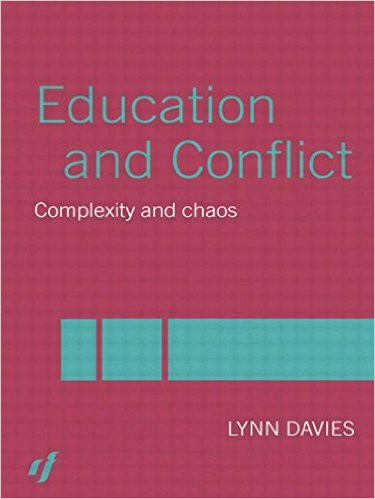 Education and Conflict: Complexity and Chaos Year of publication: 2003 Author: Lynn Davies Based on the author's extensive research and experience of education in several areas afflicted by conflict, the book explores the relationship between schooling and social conflict and looks at conflict internal to schools. It posits a direct link between the ethos of a school and the attitudes of future citizens towards 'others'. It also looks at the nature and purpose of peace education and war education, and addresses the role of gender and masculinity. Education and Conflict: Complexity and Chaos Year of publication: 2003 Author: Lynn Davies Basé sur une recherche approfondie de l'auteur et sur son expérience en terme d'éducation dans plusieurs zones affectées par des conflits, ce livre analyse la relation entre le fait d'aller à l'école et le conflit social, et s'attache aux conflits qui surviennent au sein des établissements scolaires. L’auteur postule un lien direct entre l'éthos adopté par une école donnée et le comportement de ses futures citoyens envers « les autres ». Il s'attache également à la nature et à l'objet de l'éducation pour la paix et de l'enseignement des conflits, et aborde la question du rôle joué par le genre et la masculinité.
 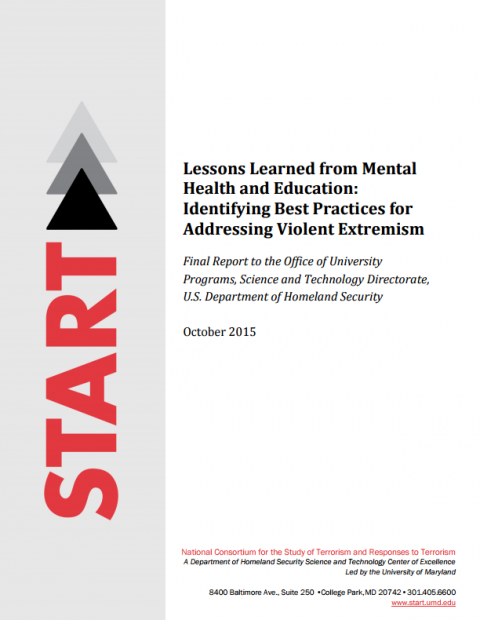 Lessons Learned from Mental Health and Education: Identifying Best Practices for Addressing Violent Extremism Year of publication: 2015 Author: Stevan Weine | B. Heidi Ellis | Ron Haddad | Alisa B. Miller | Rebecca Lowenhaupt | Chloe Polutnik Corporate author: National Consortium for the Study of Terrorism and Responses to Terrorism (START) The overall purpose of this research was to identify assets from the mental health and education fields that could contribute to best practices for preventing and intervening against violent extremism. Specifically we aimed to address the following questions:1) What prior knowledge, programmes or interventions within the mental health and education fields could contribute to best practices and other strategies that could help stop violent extremism? 2) How can professionals from the mental health and education fields best become involved in stopping violent extremism?