
Resources
Explore a wide range of valuable resources on GCED to deepen your understanding and enhance your research, advocacy, teaching, and learning.
125 Results found
 Aborder l'antisémitisme: pourquoi et comment? Un guide pour les éducateurs Year of publication: 2007 Corporate author: Organization for Security and Co-operation in Europe (OSCE) Ces instructions générales apportent des conseils et indications aux enseignants et autres éducateurs qui doivent aborder des sujets liés à l'antisémitisme contemporain. Ce document, qui reconnaît que le contexte varie selon le pays et selon la composition de la salle de classe, donne aux éducateurs un aperçu général des manifestations courantes de l'antisémitisme contemporain, et formule des principes éducatifs clés et des stratégies pour traiter de ce sujet complexe et délicat.
  Education and Countering Violent Extremism: a case study of schools in Pakistan Year of publication: 2015 Author: Hussain-Mohiud-Din Qadri This paper explores the role of education in combating the violent extremism by using the Pakistani education system as a case study. It undertakes a historical perspective of growth of the educational sector in Pakistan by delving deep into the pre-partition system. Education and Countering Violent Extremism: a case study of schools in Pakistan Year of publication: 2015 Author: Hussain-Mohiud-Din Qadri Cet article analyse le rôle de l'éducation dans la lutte contre l'extrémisme violent en prenant pour exemple le système éducatif pakistanais. Il développe une approche historique de la croissance du secteur éducatif, en analysant en détail le système précédant la partition du pays.
 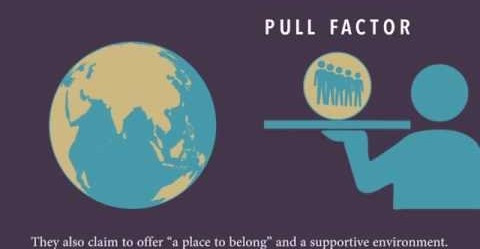 Preventing violent extremism through education Year of publication: 2016 Corporate author: Tim Parry Jonathan Ball Foundation for Peace This UNESCO video illustrates the importance of preventing violent extremism through education. It is based on excerpts from “My Former Life”, produced by the Tim Parry Johnathan Ball Foundation for Peace, based on testimonies of people once engaged in promoting or perpetrating extreme violence. This video also draws attention to some of the drivers of violent extremism, to the role of education in preventing violent extremism and to educational approaches recommended by UNESCO.
  Lessons learned from Danish and other international efforts on Countering Violent Extremism (CVE) in development contexts Year of publication: 2015 Corporate author: Danish International Development Assistance (DANIDA) Cette étude examine les leçons apprises des efforts danois et des autres acteurs du développement dans la lutte contre l'extrémisme violent (CVE). Ces leçons sont utiles pour l’élaboration de politiques fondées sur des preuves et afin de favoriser une vision partagée de la programmation liée à la CVE dans des contextes de développement. Evaluation Study: Lessons learned from Danish and other international efforts on Countering Violent Extremism (CVE) in development contexts Year of publication: 2015 Corporate author: Danish International Development Assistance (DANIDA) This evaluation study collates lessons being learned from Danish efforts and those of other development actors on Countering Violent Extremism (CVE) that can inform evidence based policy making and increase shared understanding on CVErelated programming in development contexts.
  Resilience, violent extremism and religious education Year of publication: 2013 Author: Joyce Miller This article is an attempt to provide an educational justification for the British Government-funded project REsilience, on addressing contentious issues through religious education (RE), which was carried out by the RE Council of England and Wales. A number of issues relating to the inclusion of religiously inspired violent extremism in the curriculum are raised – definitional, political and educational.
  Youth and the Field of Countering Violent Extremism Year of publication: 2018 Author: Marc Sommers Most youth are peaceful. Even if the field known as “countering violent extremism” (CVE) did not exist, most young people still would not join a violent extremist organization (VEO). At the same time, the overwhelming majority of people who become violent extremists are youth — most of whom are male. The challenge at the center of CVE is thus an unusual one: identifying the fraction of youth populations most likely to enter a VEO and thwarting that option. This paper investigates that challenge, with analysis featuring interviews with 21 experts and over 400 publications on violent extremism, CVE, and youth. Two correlations inform this work: the direct relationship between nations with “youth bulge” populations and state repression, and the connection between state repression and increased violent extremism, with repressive states usually targeting male youth.
  School-related violence and bullying on the basis of Sexual Orientation and Gender Identity or Expression (SOGIE) - Synthesis Report on China, the Philippines, Thailand and VietNam Year of publication: 2018 Corporate author: UNESCO Bangkok School related violence and bullying is a problem in all countries. UNESCO is committed to ensuring that all children and young people have access to safe, inclusive, health-promoting learning environments as part of its strategy on education for health and well-being. This synthesis report on school related violence and bullying on the basis of Sexual Orientation and Gender Identity or Expression (SOGIE), covering China, the Philippines, Thailand and Viet Nam, was developed to broaden awareness and understanding about this issue, while also identifying best practices and policies. It also aims to mobilize support for advocacy among educators, research institutions, policy makers and activists at the national and regional levels.
  منع التطرف من خلال التعليم: بيئة مدرسية آمنة وداعمة Year of publication: 2020 Author: Mohammad Madbouli يتحدث الفيديو عن منع التطرف في المدارس. يستخدم المقدم دليل اليونسكو لواضعي السياسات المنشور في 2018 كإطار لمناقشة منع التطرف. يتحدث المقدم عن بيئة آمنة وداعمة للطلاب في المدارس.