
Resources
Explore a wide range of valuable resources on GCED to deepen your understanding and enhance your research, advocacy, teaching, and learning.
125 Results found
 Resolution 2178 (2014) Adopted by the Security Council at Its 7272nd Meeting, on 24 September 2014 Year of publication: 2014 Corporate author: United Nations Security Council This resolution expanded the counter-terrorism framework by imposing obligations on member states to respond to the threat of foreign terrorist fighters. Through the resolution, the Council condemned violent extremism and decided that Member States shall, consistent with international law, prevent the "recruiting, organizing, transporting or equipping of individuals who travel to a State other than their States of residence or nationality for the purpose of the preperation, planning of, of participation in terrorist acts." Expressing concern over the establishment of international terrorist networks, the Council underscored the "particular and urgent need" to prevent the travel and support for foreign terrorist fighters associated with the Islamic State and the Levant (ISIL), Al-Nusra Front (ANL) and other affiliates or splinter groups of Al-Qaida. In that context, the Council, through the resolution, decided that all States shall ensure that their legal systems provide for the prosecution, as serious criminal offences, of travel for terrorism or related training, as well as the financing or facilitation of such activities. Member States, it also decided, shall prevent entry or transit through their territories of any individual about whom that state had credible information of their terrorist-related intentions, without prejudice to transit necessary for the furtherance of judicial processes. It called on States to require airlines to provide passenger lists for that purpose. Outlining further measures for international cooperation to counter international terrorism and prevent the growth of violent extremism, it expressed readiness to designate additional individuals for sanctions listings, and directed the United Nations counter-terrorism subsidiary bodies to devote special focus to foreign terrorist fighters, assessing the threat they posed and reporting on principal gaps in Member States' abilities to suppress their travel.
 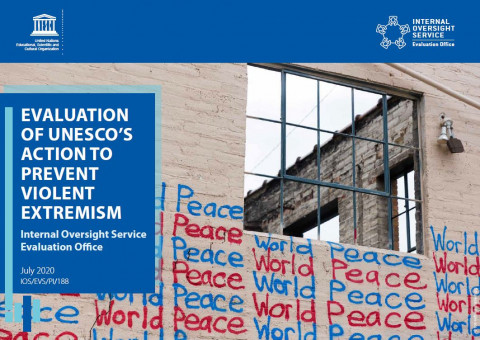 Evaluation of UNESCO’s Action to Prevent Violent Extremism Year of publication: 2020 Corporate author: UNESCO Internal Oversight Service (IOS) The purpose of this evaluation was twofold. To provide evidence, ideas and insights on how UNESCO’s efforts on PVE in the period from 2015-2018 have contributed to enhancing UNESCO’s action and position in the PVE sphere in light of the decisions of Member States. And to provide evidence and formulate lessons learned and good practices on the intersectoral approach with the aim of informing what works and what does not work in intersectoral cooperation.The evaluation found that UNESCO’s work on PVE was context specific and adjusted to respond to the needs of the countries and sub-regions where the work was being implemented.UNESCO’s work is aligned with the agency’s mandate and expertise and makes the most of its strong relationships with government bodies and civil society actors. UNESCO’s work on PVE has led to positive results around the quality, use and effectiveness of guidance documents, around capacity building of UNESCO partners and stakeholders, and around the provision of expertise and policy advice both at national and global level. Using an intersectoral approach led to an increase in information sharing and coordination. However, this was not always translated to intersectoral implementation or delivery of PVE initiatives. Primary schools and Prevent Year of publication: 2008 Corporate author: United Kingdom. Department for Children, Schools and Families This resource pack has been created to reduce the likelihood of young people becoming radicalized and then engaging in any form of violent extremism. The aim of ‘Prevent’ is to stop people becoming or supporting terrorists and to do this by challenging ideologies, protecting vulnerable individuals and supporting institutions, such as schools. It is part of the National Counter Terrorism Strategy known as CONTEST. Primary schools and Prevent Year of publication: 2008 Corporate author: United Kingdom. Department for Children, Schools and Families Cet ensemble de ressources a été élaboré afin d’empêcher, autant que possible, les jeunes de se radicaliser et de s’engager ensuite sur la voie de l’extrémisme violent. En effet, l’objectif d’une action préventive est d’empêcher les individus de rejoindre ou de supporter les groupes terroristes, en poussant à la remise en question de ces idéologies, en protégeant les personnes vulnérables et en soutenant les institutions en première ligne telles que les écoles. Cet outil participe ainsi à la Stratégie Nationale britannique de lutte contre le terrorisme, appelée CONTEST.
  Strengthening Democracy Is the Key to Preventing Far-Right Extremism Year of publication: 2021 Author: Cynthia Miller-Idriss This article emphasizes that Disinformation, misinformation and propaganda undermine democratic practices in ways that should be fought not only by trying to shrink or contain the extremist fringe, but also by strengthening democratic values and practices within the mainstream.And also highlights that It is critical to engage proactively and consistently in order to prevent further escalations in far-right extremism and interrupt violent radicalisation at early stages.
  School Online Safety - Self review tool Year of publication: 2016 Corporate author: South West Grid for Learning Trust (SWGfL) The Self Review Tool is intended to help schools to review their current online safety policy and practice. It provides management information and stimulus that can influence the production or review of online safety policies and develop good practice and process for identifying strengths and weaknesses. It also focuses on opportunities for commitment and involvement from the whole school as well as a continuum for schools to discuss how they might move from a basic level provision for online safety to practice that is aspirational and innovative. School Online Safety - Self review tool Year of publication: 2016 Corporate author: South West Grid for Learning Trust (SWGfL) Le Self Review Tool a pour objectif d'aider les écoles à réviser leurs politiques de sécurité en ligne et leurs pratiques actuelles. Cet outil contient des informations et des conseils de gestion qui peuvent influer sur la production ou la révision des politiques de sécurité en ligne et sur le développement de bonnes pratiques et processus permettant d’identifier les points forts et les faiblesses de ces systèmes. Il étudie également les possibilités d’engagement et d’implication pour l’ensemble de l’école, et la mise en place d’un espace de discussion en vue de passer d’une politique basique à des pratiques ambitieuses et innovantes.
 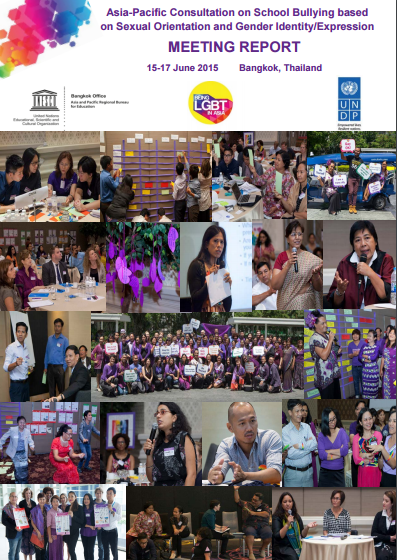 Asia-Pacific Consultation on School Bullying Based on Sexual Orientation and Gender Identity/Expression Year of publication: 2015 Corporate author: UNESCO Bangkok This report documents the presentations and discussions made during the Asia-Pacific Consultation on School Bullying based on Sexual Orientation and Gender Identity/Expression held from 15-17 June 2015 at the Pullman King Power Hotel in Bangkok, Thailand.
  Discussing Controversial Issues in the Classroom Year of publication: 2012 Author: Michael Hand | Ralph Levinson Discussion is widely held to be the pedagogical approach most appropriate to the exploration of controversial issues in the classroom, but surprisingly little attention has been given to the questions of why it is the preferred approach and how best to facilitate it. Here we address ourselves to both questions. Discussing Controversial Issues in the Classroom Year of publication: 2012 Author: Michael Hand | Ralph Levinson Engager la discussion est largement considéré comme l'approche pédagogique la plus appropriée pour aborder les questions controversées dans la salle de classe. Toutefois, l’analyse et la compréhension de ce statut privilégié n’a soulevé que peu d’attention, de même que la question de savoir par quels moyens faciliter cette approche dans la salle de classe. L'article traite de ces deux questions.