
Resources
Explore a wide range of valuable resources on GCED to deepen your understanding and enhance your research, advocacy, teaching, and learning.
7 Results found
 المظاهر الثقافية في الديانتين المسيحية والإسلامية Year of publication: 2011 Corporate author: UNESCO Beirut | Université Saint Joseph de Beyrouth This book allows the readers the opportunity to know about the cultural aspects related to religions, mainly in Lebanon and the Near East, their meaning and their aim. This knowledge will help the reader, firstly, to grasp the meaning of these various aspects, whether they concern him directly or the people who live in the same country, with whom he shares common space and living. Secondly, the book contributes to the Lebanese understanding one another’s behaviors and their own behavior concerning these aspects. Therefore, the book also contributes to the Lebanese looking at one another with more trust before starting to criticize. This book includes chapters that cover most of the different cultural aspects in Christian and Islamic religions. The first chapter deals with time, passing through each month of the year and its days, in a chronological manner. The second chapter delves into religious occasions in the Christian then Islamic religions. It explains the meaning of Holidays and remembrances of God and their particular aspects as well as the religious reasons of each. This chapter includes a part about al-‘awliya’ and Saints who are mentioned in some of the Lebanese daily rituals. Chapter three delves into the individual’s life stages from birth to religious vows, to marriage and death. The aspects that go with these stages constitute an important part in the life of the Lebanese. This chapter details the aspects and traditions of all these stages in which people take part, thus creating a common ground in a multi-religious society. Chapter four deals with religious practices, acts of worship, and legal prescriptions. It describes them and deals with their spiritual meaning to individuals who express their faith when practicing them. Prayer, Mass, and Pilgrimage, among others, are religious practices that are detailed in a way to make the reader understand what they mean to those who perform them. Chapter five leads us into religious places and their meaning, from churches to mosques and monasteries, khalwat and husayniyyat, all of which have different and divergent meanings to visitors. Yet, they all show the importance given by man to the place when expressing his faith and his relation with the Creator. Chapter six takes us to religious habits and customs, such as the clothes worn by religious dignitaries, their symbolism and meaning. It also deals with some general habits and customs. The reader may find that some chapters overlap. In fact, we have tried to make each part related to the others yet independent from them. This method facilitates the reading and understanding of any subject on its own without the need to refer to prior or subsequent parts. Finally, those who had any – minor or major – contribution in this book – despite the lacks that some readers might see – hope that they have offered a useful work in the process of discovering others who are different and who hold rich traditions as well human and spiritual values. Les aspects culturels dans les religions chrétienne et musulmane Year of publication: 2011 Corporate author: UNESCO Beirut | Université Saint Joseph de Beyrouth This book allows the readers the opportunity to know about the cultural aspects related to religions, mainly in Lebanon and the Near East, their meaning and their aim. This knowledge will help the reader, firstly, to grasp the meaning of these various aspects, whether they concern him directly or the people who live in the same country, with whom he shares common space and living. Secondly, the book contributes to the Lebanese understanding one another’s behaviors and their own behavior concerning these aspects. Therefore, the book also contributes to the Lebanese looking at one another with more trust before starting to criticize. This book includes chapters that cover most of the different cultural aspects in Christian and Islamic religions. The first chapter deals with time, passing through each month of the year and its days, in a chronological manner. The second chapter delves into religious occasions in the Christian then Islamic religions. It explains the meaning of Holidays and remembrances of God and their particular aspects as well as the religious reasons of each. This chapter includes a part about al-‘awliya’ and Saints who are mentioned in some of the Lebanese daily rituals. Chapter three delves into the individual’s life stages from birth to religious vows, to marriage and death. The aspects that go with these stages constitute an important part in the life of the Lebanese. This chapter details the aspects and traditions of all these stages in which people take part, thus creating a common ground in a multi-religious society. Chapter four deals with religious practices, acts of worship, and legal prescriptions. It describes them and deals with their spiritual meaning to individuals who express their faith when practicing them. Prayer, Mass, and Pilgrimage, among others, are religious practices that are detailed in a way to make the reader understand what they mean to those who perform them. Chapter five leads us into religious places and their meaning, from churches to mosques and monasteries, khalwat and husayniyyat, all of which have different and divergent meanings to visitors. Yet, they all show the importance given by man to the place when expressing his faith and his relation with the Creator. Chapter six takes us to religious habits and customs, such as the clothes worn by religious dignitaries, their symbolism and meaning. It also deals with some general habits and customs. The reader may find that some chapters overlap. In fact, we have tried to make each part related to the others yet independent from them. This method facilitates the reading and understanding of any subject on its own without the need to refer to prior or subsequent parts. Finally, those who had any – minor or major – contribution in this book – despite the lacks that some readers might see – hope that they have offered a useful work in the process of discovering others who are different and who hold rich traditions as well human and spiritual values.
 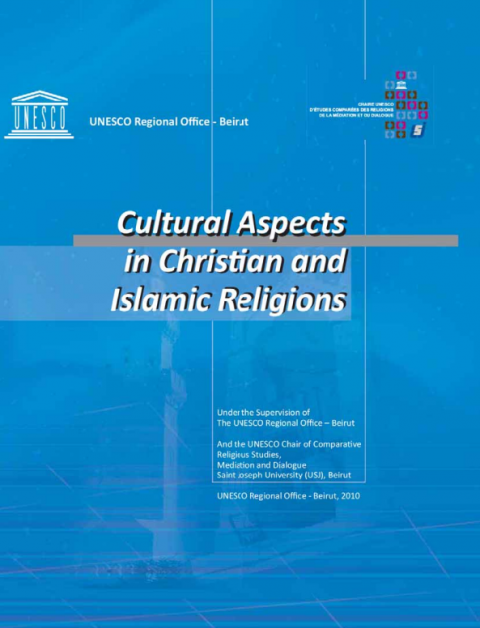 Cultural aspects in Christian and Islamic religions Year of publication: 2011 Corporate author: UNESCO Beirut | Université Saint Joseph de Beyrouth This book allows the readers the opportunity to know about the cultural aspects related to religions, mainly in Lebanon and the Near East, their meaning and their aim. This knowledge will help the reader, firstly, to grasp the meaning of these various aspects, whether they concern him directly or the people who live in the same country, with whom he shares common space and living. Secondly, the book contributes to the Lebanese understanding one another’s behaviors and their own behavior concerning these aspects. Therefore, the book also contributes to the Lebanese looking at one another with more trust before starting to criticize. This book includes chapters that cover most of the different cultural aspects in Christian and Islamic religions. The first chapter deals with time, passing through each month of the year and its days, in a chronological manner. The second chapter delves into religious occasions in the Christian then Islamic religions. It explains the meaning of Holidays and remembrances of God and their particular aspects as well as the religious reasons of each. This chapter includes a part about al-‘awliya’ and Saints who are mentioned in some of the Lebanese daily rituals. Chapter three delves into the individual’s life stages from birth to religious vows, to marriage and death. The aspects that go with these stages constitute an important part in the life of the Lebanese. This chapter details the aspects and traditions of all these stages in which people take part, thus creating a common ground in a multi-religious society. Chapter four deals with religious practices, acts of worship, and legal prescriptions. It describes them and deals with their spiritual meaning to individuals who express their faith when practicing them. Prayer, Mass, and Pilgrimage, among others, are religious practices that are detailed in a way to make the reader understand what they mean to those who perform them. Chapter five leads us into religious places and their meaning, from churches to mosques and monasteries, khalwat and husayniyyat, all of which have different and divergent meanings to visitors. Yet, they all show the importance given by man to the place when expressing his faith and his relation with the Creator. Chapter six takes us to religious habits and customs, such as the clothes worn by religious dignitaries, their symbolism and meaning. It also deals with some general habits and customs. The reader may find that some chapters overlap. In fact, we have tried to make each part related to the others yet independent from them. This method facilitates the reading and understanding of any subject on its own without the need to refer to prior or subsequent parts. Finally, those who had any – minor or major – contribution in this book – despite the lacks that some readers might see – hope that they have offered a useful work in the process of discovering others who are different and who hold rich traditions as well human and spiritual values.
 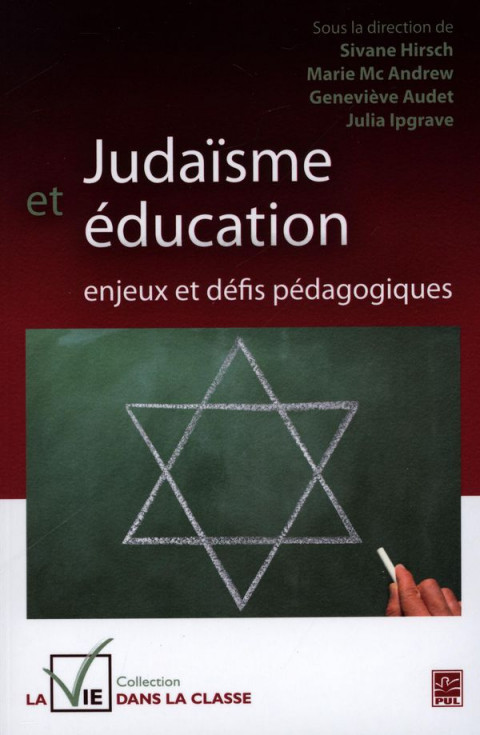 Judaïsme et éducation : enjeux et défis pédagogiques The question of relations between ethnic groups defined by different markers, including religion, is more than ever necessary in our plural societies. This original work focuses on the role of education in the dynamics of relations between the Jewish community and fellow citizens of all origins in Quebec, Canada and in other countries. Indeed, while the Jewish communities are often well established in their host societies, they often remain little known to the population and especially of the majority groups. The authors address three issues that may challenge the stakeholder community and school, but also the general public interested in "living together" and its challenges : Education on Jewish communities in public schools; Education on the Holocaust and innovative practices in this regard; Moving Jewish schools and their impact. (By the publisher - Translation) Expert meeting on intercultural education, Paris, 20-22 March 2006; report Year of publication: 2006 Corporate author: UNESCO This report will give for each panel a summary of the presentation, the ensuing debates and a synthesis. The discussions of the draft UNESCO Guidelines and of the database on Intercultural Education, including the results and next steps to be taken are also presented. In addition, the report provides a summary of the debate around the presentation of the UNESCO World Report on Cultural Diversity. Expert meeting on intercultural education, Paris, 20-22 March 2006; report Year of publication: 2006 Corporate author: UNESCO Ce rapport donnera pour chaque panneau un résumé de la présentation, les débats qui ont suivi et une synthèse. Les discussions sur le projet de directives de l'UNESCO et de la base de données sur l'éducation interculturelle, y compris les résultats et les prochaines mesures à prendre sont également présentés. En outre, le rapport fournit un résumé du débat autour de la présentation du Rapport mondial de l'UNESCO sur la diversité culturelle. 상호 문화 간 교육에 관한 전문가 회의 보고서(2006년 3월 20~23일, 파리) Year of publication: 2006 Corporate author: 유네스코 이 보고서는 각 패널을 위하여 프리젠테이션 요약, 연이은 토론과 그 종합적인 것들을 제공한다. 또한 유네스코 가이드라인 초안 및 상호문화 간 교육에 관한 데이터베이스에 대한 논의와 그 결과, 그리고 그 다음 단계를 제시한다. 아울러, 유네스코 세계문화 다양성 보고서(UNESCO World Report on Cultural Diversity) 프리젠테이션과 관련된 토론에 대한 요약본도 제공한다.