
Resources
Explore a wide range of valuable resources on GCED to deepen your understanding and enhance your research, advocacy, teaching, and learning.
4 Results found
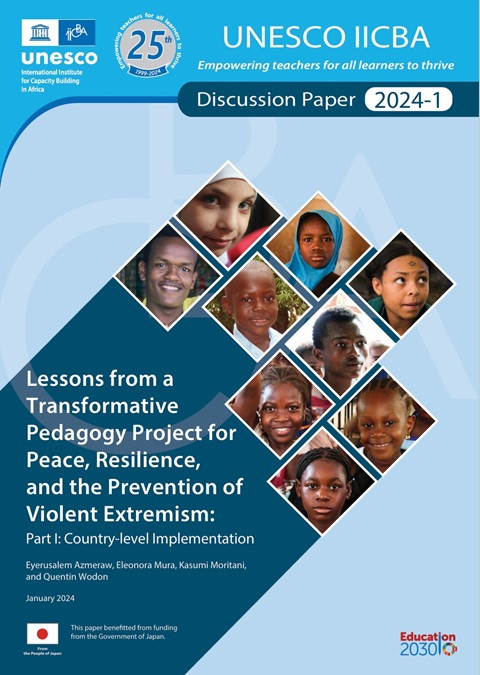 Lessons from a Transformative Pedagogy Project for Peace, Resilience, and the Prevention of Violent Extremism: Part I; Country-Level Implementation Year of publication: 2024 Author: Eyerusalem Azmeraw | Quentin Wodon | Eleonora Mura | Kasumi Moritani Corporate author: UNESCO International Institute for Capacity-Building in Africa (IICBA) From 2017 to 2022, UNESCO’s International Institute for Capacity Building in Africa (IICBA) led a series of projects for peacebuilding and the prevention of violent extremism through education with support from the Government of Japan. This two-part paper draws lessons from the projects. The first part of the paper briefly explains the transformative pedagogy approach that guided project implementation and provides examples of changes that were implemented at the country level under the projects. The analysis is qualitative, with the aim being to outline, through country examples, what can be achieved through such projects. Lessons on factors contributing to impact are also outlined.
 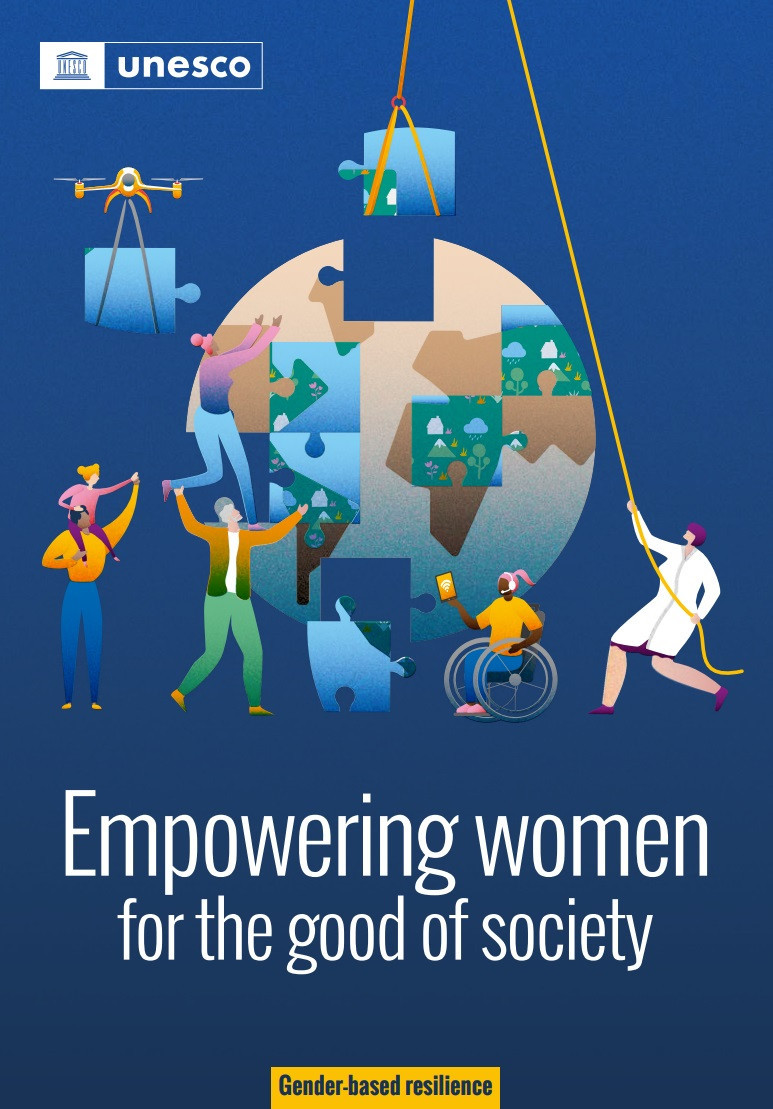 Empowering women for the good of society: gender-based resilience Year of publication: 2023 Author: Squicciarini, Mariagrazia | Sarlat, Garance | Manca, Anna Rita Corporate author: UNESCO <Short Summary> Let’s change the resilience paradigmWhat are the root causes and drivers of resilience? Societal resilience is shaped by the unique roles that individuals play and their ability to respond to shocks, gender-based expectations and discriminations hinder women’s and girls’ ability to participate in, and contribute to, society. In times of crises, their vulnerability intensifies resulting in a weakened response that ripples throughout society.In response, UNESCO designed the first Gender-Based Resilience Framework. As a compass for inclusive policymaking, this report analyzes how differences in opportunities, needs and constraints impact resilience and proposes a measurement Framework based on: (1) fundamental human rights; (2) socioeconomic characteristics, such as health, education, work, political engagement, and climate justice; (3) contextual factors, such as values and perceptions.Moving beyond the standard approach of coping with and recovering from shocks; UNESCO calls for a gender-transformative resilience, which leverages the interrelations between individuals and institutions. Decision- and policy-makers, researchers, and gender equality advocates are invited to use and add to this Framework to effectively navigate through current and future crises.It is only by empowering all women and girls, and people of all genders, that we will be able to face the challenges ahead.
 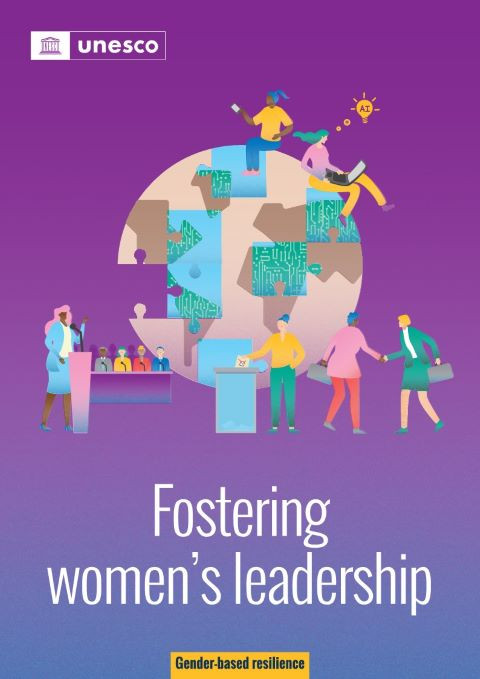 Fostering Women's Leadership Year of publication: 2024 Author: Mariagrazia Squicciarini | Anna Rita Manca | Garance Sarlat Corporate author: UNESCO No (leadership) share no gain (for societies and economies)! Leveraging UNESCO’s unique Gender-Based Resilience Framework, this report explores the role of women in leadership positions in both decision-making and high-tech, including in artificial intelligence-related innovations. It further highlights progress towards the G20 Brisbane Target, aimed to accelerate progress on gender equality by reducing the gender gap in labour market participation rates by 25% by 2025. Women remain underrepresented in decision-making, holding only about 26% of seats in national parliaments worldwide on average. In the world of work, female labour participation continues to lag behind men’s, at 47% for women against 72% for men on average. Despite progress by G20 members towards the Brisbane Target, a 2% average gap in absolute terms remained to be filled in 2022. In the high-tech world, women make up only 30% of AI professionals, and even less of leaders. Female inventors in AI account for about 37% of patents filed in 2022-23.
 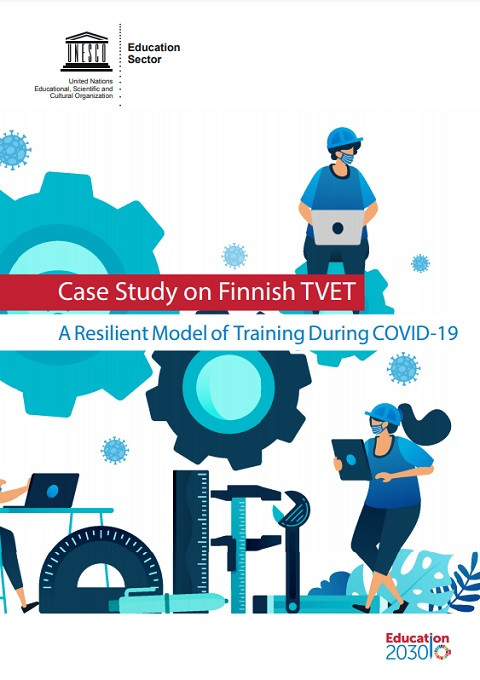 Case Study on Finnish TVET: A Resilient Model of Training During COVID-19 Year of publication: 2021 Corporate author: UNESCO | Omnia Education Partnerships This case study examines how technical and vocational education and training (TVET) was organized during the state of emergency caused by the COVID-19 pandemic in Finland. The disruption accentuated the importance of flexibility within the education system to make it resilient. Finnish TVET, created as a hybrid solution combining school-based, work-based and online-based learning environments, remained responsive and functional throughout the difficult time in spring 2020.To urgently improve the resilience of education, this case study emphasizes the necessity to improve system-level flexibilities across all levels and all types of TVET, including alternative modes of delivery and hybrid learning opportunities, as the one size fits all approach increases rigidity and redundancy of education and training. Flexible measures are key to improve resilience, also beyond the COVID-19 pandemic.