
Resources
Explore a wide range of valuable resources on GCED to deepen your understanding and enhance your research, advocacy, teaching, and learning.
25 Results found
 Safe Schools Declaration Year of publication: 2015 Corporate author: Global Coalition to Protect Education from Attack (GCPEA) The Safe Schools Declaration is an intergovernmental political commitment that was developed at an international conference held in Oslo, Norway, on 28-29 May 2015. The Declaration allows countries the opportunity to express their political support for the protection of students, teachers and schools during times of armed conflict; the importance of the continuation of education during armed conflict; and the implementation of the Guidelines for Protecting Schools and Universities from Military Use during Armed Conflict.
  Education in a Post-COVID World: Additional Considerations (In-Progress Reflection; No.43, 2021) Year of publication: 2021 Author: Renato Opertti Corporate author: UNESCO International Bureau of Education (IBE) This discussion document analyses some implications of the ideas proposed in the seminal UNESCO document “Education in a post-COVID world: Nine ideas for public action” (2020). Based on the work of the International Commission on the Futures of Education, the documents’ contributors included prominent figures with a wide range of professional and policy experience who hail from various regions of the world. The set of nine interconnected ideas illuminates the way forward toward the transformation of education and education systems and a reimagined future seen through a progressive lens. On one hand, it reaffirms basic principles, understandings, and commitments with regard to education as a global common good and universal human right; it also articulates the need to both reinvent multilateralism for a new global order and, crucially, to mobilize ideas and funding for transforming education. On the other hand, the document advocates for a comprehensive educational agenda, including the following critical issues: (i) visualizing educators as decision-makers in educational systems; (ii) appreciating students as active actors with rights; (iii) recognizing the value and specificity of the school space; (iv) addressing the dilemmas around technology’s ability to serve as an equalizer of opportunities; and (v) revisiting educational content for the sustainability of younger generations.
  ПЕРЕОСМЫСЛИМ НАШЕ БУДУЩЕЕ Year of publication: 2021 Corporate author: International Commission on the Futures of Education | UNESCO Наше человечество, наша планета находятся в опасности, пандемия лишь подтвердила нашу хрупкость и взаимозависимость, чтобы изменить ход вещей и переосмыслить наше будущее, необходимы неотложные совместные действия; в этом докладе Международной комиссии по перспективам образования подтверждается способность образования к осуществлению коренных изменений. Перед нами стоит двойная задача – выполнить невыполненное обещание обеспечить право на качественное образование для каждого ребёнка, молодого человека и взрослого и полностью реализовать преобразующий потенциал образования, способного проложить путь к устойчивому коллективному будущему. Для этого нам нужен новый общественный договор в области образования, который сможет устранять проявления несправедливости, преобразуя будущее.Этот новый общественный договор должен основываться на принципах прав человека, недопущения дискриминации, социальной справедливости, уважения жизни, человеческого достоинства и культурного разнообразия. Он должен включать в себя этику заботы о людях, взаимности и солидарности. Он должен укреплять позиции образования как общественного дела и общего блага.Этот доклад, который готовился два года на основе глобального процесса консультаций с участием миллиона человек, предлагает правительствам, учреждениям, организациям и гражданам всего мира разработать новый общественный договор в области образования, который поможет нам построить мирное, справедливое и устойчивое будущее, отвечающее всеобщим интересам.Представленные здесь концепции, принципы и предложения являются лишь отправной точкой. Их воплощение в практику в конкретных условиях – это коллективная работа. Уже есть много положительных моментов, и в настоящем докладе предпринята попытка их отразить и развить. Это не инструкция и не план, а начало жизненно важного разговора.
 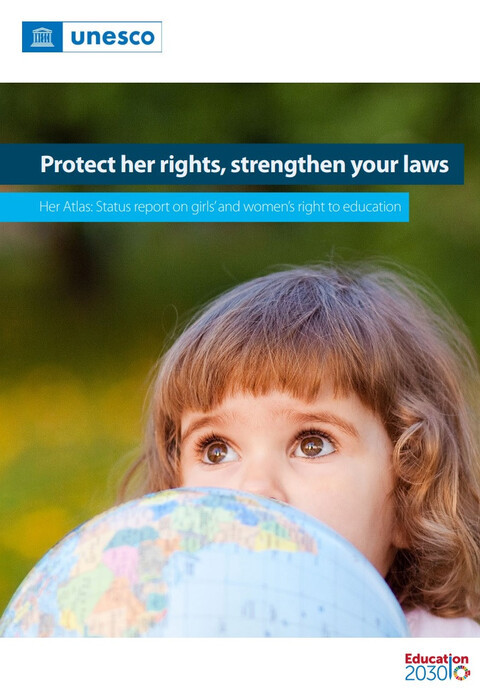 Protect Her Rights, Strengthen Your Laws: Her Atlas; Status Report on Girls’ and Women’s Right to Education Year of publication: 2022 Corporate author: UNESCO UNESCO’s Her Education, our future initiative, Her Atlas was launched in 2019 with the aim to enhance public knowledge and monitor the status of national constitutions, legislation and regulations related to girls’ and women’s education rights in order to encourage countries to take actions to improve their legal frameworks. Three years after its launch, the research phase has been completed: overall, the legal frameworks of 196 countries have been thoroughly analyzed to evaluate the level of protection of girls’ and women’s right to education around the world. In an interactive world map format, Her Atlas uses a color-coded scoring system to monitor 12 indicators of legal progress towards gender equality in the right to education. This report marks the completion of the first research phase and intends to highlight some key trends outlined by the research work, and to emphasize examples of legal provisions regarding some aspects of girls’ and women’s right to education guaranteed by States’ domestic laws.
 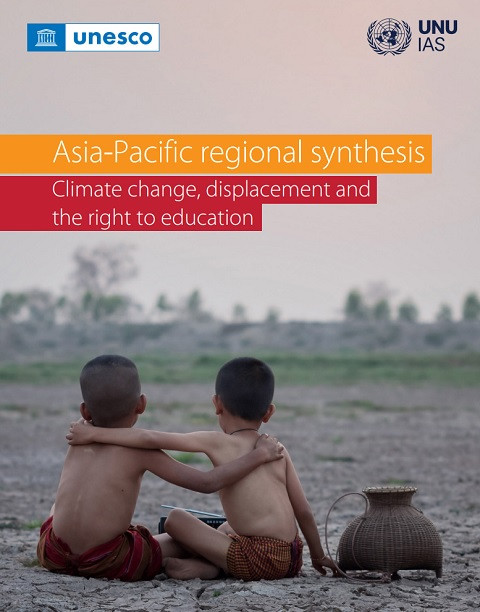 Asia-Pacific Regional Synthesis: Climate Change, Displacement and the Right to Education Year of publication: 2023 Corporate author: UNESCO | United Nations University Institute for the Advanced Study of Sustainability (UNU-IAS) | UNESCO Bangkok In 2020, 30.7 million people were displaced by natural disasters – disasters which the scientific community acknowledges are more frequent and more intense as a result of climate change. In Asia and the Pacific alone, 21.3 million people were displaced, making it the region the most impacted by national disasters and climate change in the world. Therefore, country case studies were carried out in Bangladesh, India, Indonesia, Tuvalu, and Viet Nam to examine not only specific vulnerabilities to climate change and related mobility, but also the impacts of climate change on the right to education in Asia and the Pacific. These case studies show that climate change directly threatens education – through the destruction of schools and property – but also indirectly puts education in peril by forcing people to cross borders, ensuring neither legal residency nor the right to education. This regional synthesis report aims to guide policy-makers through providing operational policy recommendations on how to ensure education is protected in Asia and the Pacific in the face of climate change and displacement from a human rights-based approach. The report is one of four being developed and will contribute to the global initiative on climate change and displacement and the right to education – launched by UNESCO in 2020 – by informing the development of a Global Report with global policyrecommendations.How climate change impacts the right to education in Asia and the Pacific21.3million displacementstook place in Asia and the Pacific
 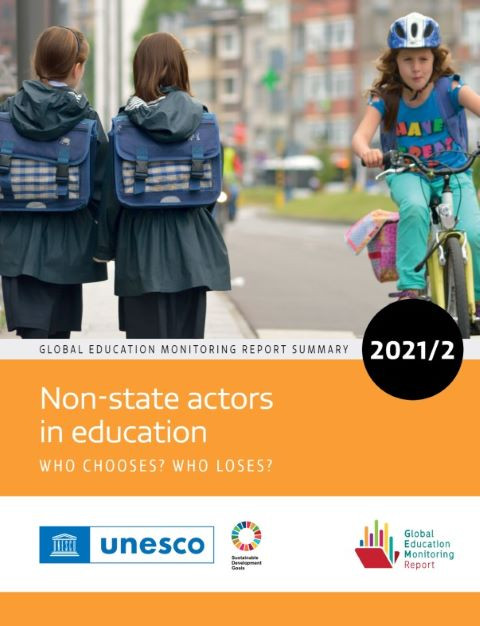 [Summary] Global Education Monitoring Report 2021/2: Non-state Actors in Education: Who Chooses? Who Loses? Year of publication: 2022 Corporate author: UNESCO Non-state actors’ role extends beyond provision of schooling to interventions at various education levels and influence spheres. Alongside its review of progress towards SDG 4, including emerging evidence on the COVID-19 pandemic’s impact, the 2021/2 Global Education Monitoring Report urges governments to see all institutions, students and teachers as part of a single system. Standards, information, incentives and accountability should help governments protect, respect and fulfill the right to education of all, without turning their eyes away from privilege or exploitation. Publicly funded education does not have to be publicly provided but disparity in education processes, student outcomes and teacher working conditions must be addressed. Efficiency and innovation, rather than being commercial secrets, should be diffused and practiced by all. To that end, transparency and integrity in the public education policy process need to be maintained to block vested interests. The report’s rallying call – Who chooses? Who loses? – invites policymakers to question relationships with non-state actors in terms of fundamental choices: between equity and freedom of choice; between encouraging initiative and setting standards; between groups of varying means and needs; between immediate commitments under SDG 4 and those to be progressively realized (e.g. post-secondary education); and between education and other social sectors.
  UNESCO Futures of Education Report Explained by Members of the International Commission Year of publication: 2022 Corporate author: UNESCO Initiated by UNESCO, the International Commission on the Futures of Education has prepared a new report on how education can best shape the future of humanity and the planet. In this video, members of the Commission and its chair explain the main recommendations and defining features of their report, Reimagining our futures together: A new social contract for education. The report is part of UNESCO’s Futures of Education initiative which aims to rethink education and shape the future. The initiative is catalyzing a global debate on how knowledge, education and learning need to be reimagined in a world of increasing complexity, uncertainty, and precarity.
 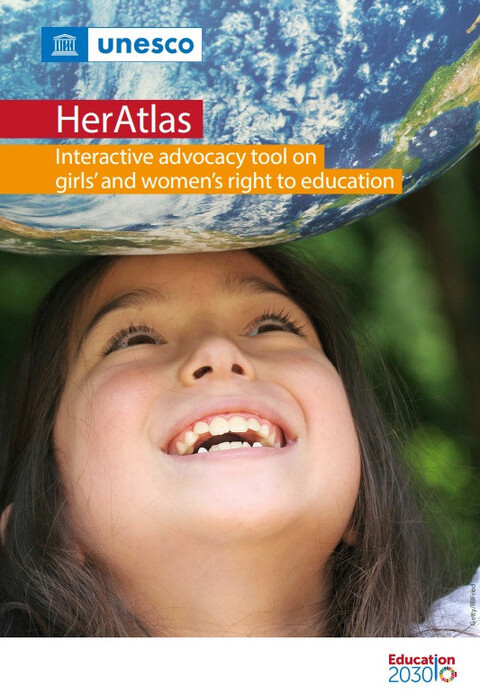 Her Atlas: Interactive Advocacy Tool on Girls’ and Women’s Right to Education Year of publication: 2023 Corporate author: UNESCO Many girls and women cannot exercise their right to education due to gender inequality and discriminatory practices. Poverty, early marriage, and gender-based violence are just some of the many reasons behind the high percentage of global female illiteracy and school drop-outs. Strengthening the right of girls and women to quality education is key to eliminate discrimination and to achieve equal rights between genders. This cannot be achieved without solid national legal frameworks that are rightsbased, gender responsive and inclusive. This is where HerAtlas comes in. HerAtlas, is a first of its kind online tool that maps the right to education of girls and women. It aims to enhance public knowledge and monitor the status of national constitutions, legislation and regulations related to education rights for girls and women to encourage countries to take action, strengthen their laws and policies, and lead to long term change. Concrete changes are already apparent. In 2019, 4% of countries were explicitly restricting the right to education of married, pregnant, and parenting girls. This has dropped to 2% in 2022, benefiting millions of girls who can now legally attend school when they marry or become pregnant.
 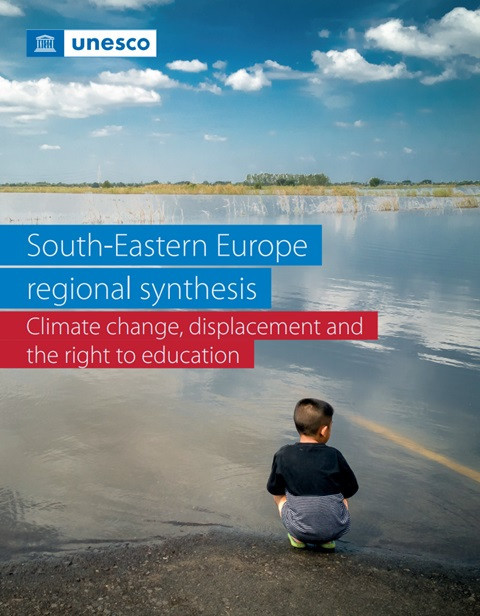 South-Eastern Europe regional synthesis: climate change, displacement and the right to education Year of publication: 2023 Corporate author: UNESCO In 2021 alone, 23.7 million people were displaced in 137 countries and territories due to natural disasters, which the scientific community has recognized have become more frequent and intense due to climate change. Climate change and displacement is currently taking place in Europe, with particularly disastrous consequences in South-Eastern Europe due to regional specificities. Comparative country case studies were carried out in Bosnia and Herzegovina, the Republic of Moldova, and Serbia, as they exemplify clear, present patterns of climate displacement, to examine the impacts of climate change on the right to education in the region. The case studies show that climate change directly threatens education through the destruction of schools and property. It also indirectly puts learning in peril by leading people across borders where their legal residency nor right to education is ensured. This publication aims to guide policy-makers by providing recommendations on how to ensure the protection of the right to education in South-Eastern Europe in the face of climate change and displacement. It is one of four regional reports that will lead to the development of a global report providing global policy guidance.
  Central America and the Caribbean regional synthesis: climate change, displacement and the right to education Year of publication: 2023 Corporate author: UNESCO From rising sea level to drought and increasingly frequent natural disasters - the effects of climate change are well-known today. However, its effect on human mobility is just coming to the forefront of the political discussion. In 2020 alone, 30.7 million people globally were displaced by natural disasters. Central America and the Caribbean region is prone to the effects of climate change and displacement due to its socioeconomic characteristics and geographic location. Country case studies were carried out in the Bahamas, Cuba, the Dominican Republic, Guatemala, and Jamaica to examine the impacts on the right to education in the region. The research shows that climate change directly threatens education through the destruction of schools and property. It also leads people across borders where their legal residency and right to education are not guaranteed. This report aims to guide policy-makers on how to ensure education is protected in the face of climate change and displacement. The report is one of four being developed and will contribute to UNESCO’s global initiative on climate change, displacement and the right to education. It will inform the development of a Global Report with policy recommendations.