
Resources
Explore a wide range of valuable resources on GCED to deepen your understanding and enhance your research, advocacy, teaching, and learning.
14 Results found
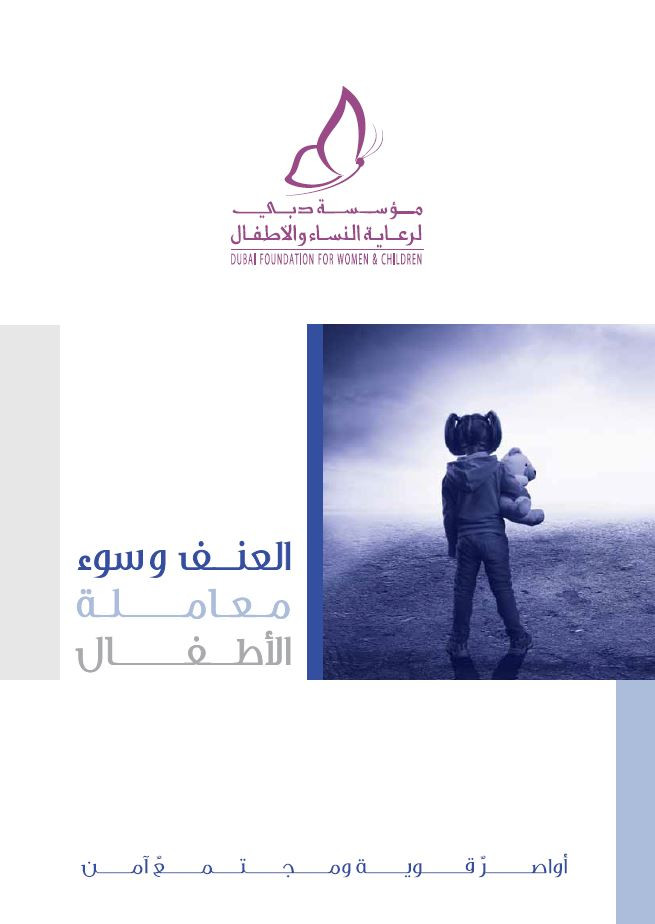 Violence and Child Abuse Year of publication: 2015 Corporate author: Dubai Foundation for Women and Children (DFWAC) | Center for Statistical, Economic and Social Research and Training for Islamic Countries The study aimed to investigate the phenomenon of violence against children in the United Arab Emirates. It focuses on the extent of violence against children and abuse in its various forms at home and at school. The study came out with a set of recommendations to deal with the phenomenon.
  Workshop on "Developing and Activating Family Protection" Year of publication: 2013 Corporate author: Oman. Ministry of Social Development This presentation presents a workshop on "Developing and activating family protection". It begins by referring to the interest in children's rights in history. It goes on to talk about children's rights in Islam. Then it expands on the protection of vulnerable groups and children in the family.
  Report of the Committee on the Rights of the Child (General Assembly Official Records Sixty-fifth Session Supplement No. 41) Year of publication: 2010 Corporate author: UN. Committee on the Rights of the Child (UN. CRC) This report reviews the efforts of the Committee on the Rights of the Child, published in 2010. The report is considered a tool to review the Convention on the Rights of the Child and what has been done to achieve it.
  Domestic Violence Year of publication: 2013 Author: Sabha Ghora Corporate author: Naif Arab University for Security Sciences (NAUSS) This article deals with domestic violence and its forms and goes on to discuss hitting children as one of the types of domestic violence. And how hitting children leads to intertwining problems in a child's life.
 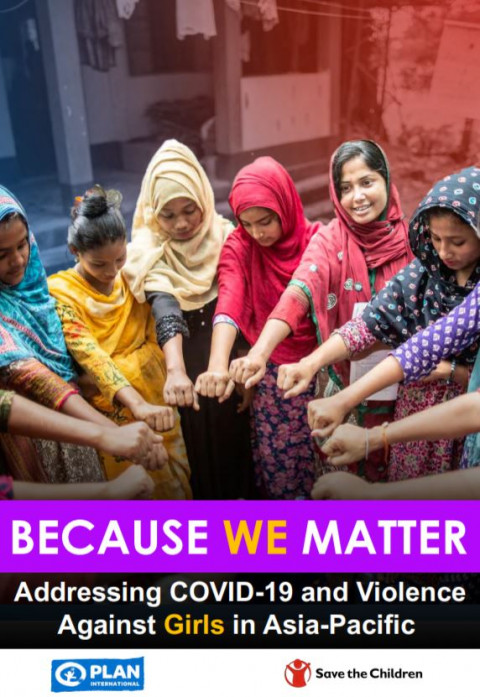 Because We Matter: Addressing COVID-19 and Violence Against Girls in Asia-Pacific Year of publication: 2020 Corporate author: Save the Children | Plan International This thematic policy brief aims to seek and secure commitment from regional and national leaders to urgently prioritize and invest consistently in the protection of girls, who are disproportionately exposed to multitude forms of violence and their devastating consequences. It provides evidence and raises concerns of girls’ vulnerability to combined and complex risks that are further intensified by the COVID-19 pandemic.This brief is primarily intended for regional policy-makers and duty-bearers responsible for regulating, planning and resourcing protection of There is no definition of what it means to be a girl. It offers a set of recommendations to guide policy and investments across the Asia Pacific region to ensure gender-responsive, effective and well-resourced measures to protect all children, and particularly girls.
 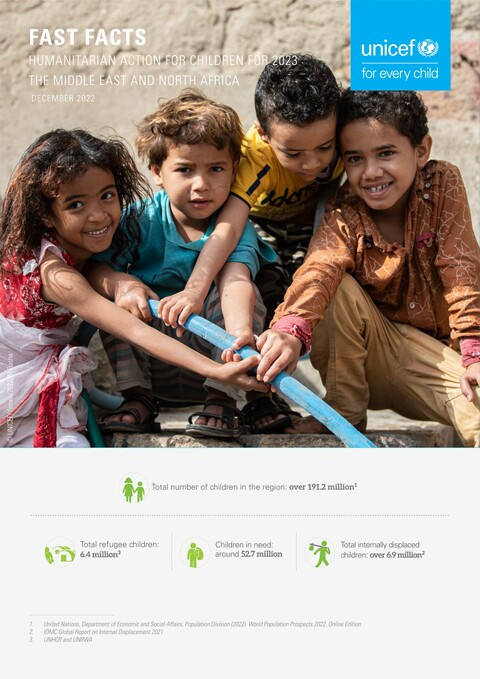 Humanitarian Action for Children in the Middle East and North Africa for 2023: Fast Facts Year of publication: 2022 Corporate author: UNICEF Middle East and North Africa Total number of children in the region: over 191.2 million Total refugee children: 6.4 million Children in need: around 52.7 million Total internally displaced children: over 6.9 million UNICEF MENA is appealing for US$ 2.6 billion to respond to the ongoing humanitarian crises and children’s humanitarian needs around the region.
  Developing Global Guidance for Child Rights Impact Assessments in Relation to the Digital Environment: Summary of Initial Project Findings Year of publication: 2024 Corporate author: United Nations Development Programme (UNDP) | German Institute of Development and Sustainability (IDOS) The age of technology and the Internet have brought tremendous benefits, including for children. However, the spread of digital technologies also comes with a broad spectrum of risks and harms to which children can be particularly vulnerable. Under the UN Guiding Principles on Business and Human Rights and the Children’s Rights and Business Principles, businesses have a responsibility to identify, assess, and address relevant human rights risks, including risks to children’s rights. With respect to the digital environment, a rapidly evolving landscape and the emergence of new technologies has changed the nature and severity of actual and potential child rights risks relating to business activities. In response, UNICEF has initiated a project to assess the current child rights impact assessment (CRIA) landscape in relation to digital business activities and develop new guidance to support robust implementation going forward. A summary of initial project findings is now available here. Further project outputs including the updated guidance (currently under development) are anticipated in late 2024.
 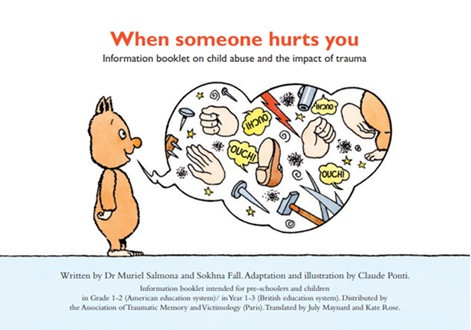 When Someone Hurts You: Information Booklet on Child Abuse and the Impact of Trauma Year of publication: 2022 Author: Muriel Salmona | Sokhna Fall Corporate author: UNICEF France | French Association for Traumatic Memory and Victimology This educational booklet is designed to help young children from kindergarten to Third grade to identify their feelings of unease following a situation of violence or threat of violence (physical, moral or sexual), understand the causes and consequences, and give advice on how to protect themselves and seek help.
  Global Kids Online: Comparative Report Year of publication: 2019 Author: Sonia Livingstone | Daniel Kardefelt-Winther | Marium Saeed Corporate author: UNICEF Innocenti The internet is often celebrated for its ability to aid children’s development. But it is simultaneously criticized for reducing children’s quality of life and exposing them to unknown and unprecedented dangers. There is considerable debate about when or how children’s rights – including the rights to expression, to privacy, to information, to play and to protection from harm, as set out in the United Nations Convention on the Rights of the Child – may be realized or infringed in the digital age.With more children around the world going online every day, it is more important than ever to clarify how the internet can advance children’s opportunities in life while safeguarding them from harm or abuse. This requires evidence, from children themselves, that represents the diversity of children’s experiences at the national and global levels. By talking to children, we are better able to understand not only the barriers they face in accessing the internet, but also the opportunities they enjoy and the skills and competences they acquire by engaging in these activities.This allows us to enquire about children’s exposure to online risks and possible harms, and about the role of their parents as mediators and sources of support. In bringing children’s own voices and experiences to the centre of policy development, legislative reform and programme and service delivery, we hope the decisions made in these spheres will serve children’s best interests.
 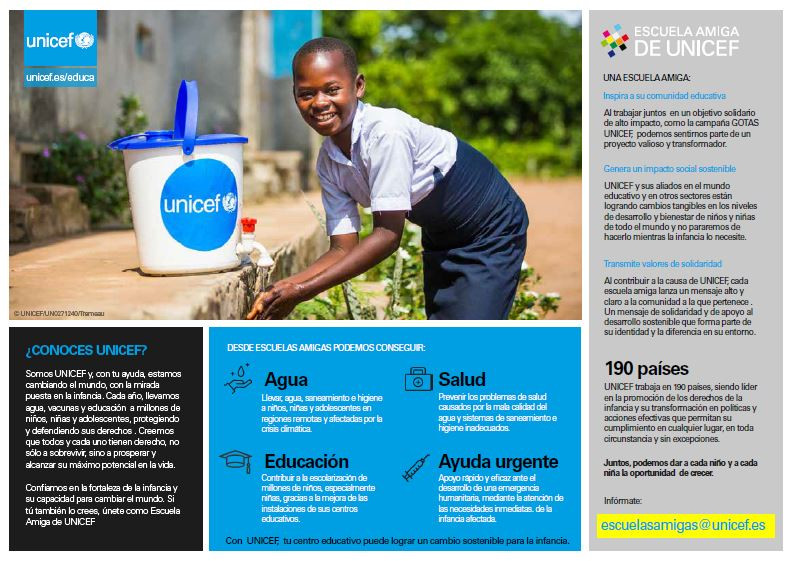 School Friend of UNICEF Year of publication: 2006 Corporate author: UNICEF Spain This infographic presents the program in which each school establishes a personalized commitment to UNICEF in the form of a collaboration agreement by which they undertake, depending on their circumstances, interests and capacity, to carry out different awareness-raising and fundraising activities throughout the school year. The activities can be framed within the GOTAS UNICEF school campaign or directed to an emergency humanitarian action campaign proposed by UNICEF.