
Resources
Explore a wide range of valuable resources on GCED to deepen your understanding and enhance your research, advocacy, teaching, and learning.
20 Results found
 Учёт показателей достижения ЦУР 4: доклад о ходе достижения национальных контрольных показателей; в фокусе внимания — учителя Year of publication: 2024 Corporate author: Global Education Monitoring Report Team | UNESCO Institute for Statistics (UIS) В настоящем издании представлена вторая оценка прогресса в достижении странами контрольных показателей, или национальных плановых ориентиров, установленных ими в отношении восьми показателей достижения ЦУР 4 в качестве вклада в реализацию глобальных целей. В этой оценке, охватывающей период с 2015 года, анализируется вероятность достижения каждой из стран национального контрольного показателя на 2025 год или (если контрольный показатель не был установлен) значения, которого они могли бы достичь в случае, если бы темпы их прогресса в истекший период (2000–2015 годы) были на уровне 25 % наиболее быстро прогрессирующих стран.В докладе об учете показателей достижения ЦУР 4 за 2024 год отмечено, что по большинству показателей темпы прогресса в достижении национальных целевых ориентиров отстают от плановых. Более того, по двум аспектам – гендерный дисбаланс (в пользу девочек) по показателю завершения полной средней школы и государственные расходы на образование в процентной доле от общего объема государственных расходов – в странах был зафиксирован регресс.Напротив, ускорился прогресс в достижении нового, восьмого показателя ЦУР 4 (доступ школ к интернету), который был добавлен с учетом приоритетного внимания, уделенного в ходе Саммита по трансформации образования 2022 года проблематике внедрения цифровых технологий. Треть стран установила в 2023 году национальные плановые ориентиры по этому показателю, в связи с чем в настоящем издании был впервые рассмотрен прогресс в этом вопросе.Наряду с этим относительно быстрыми темпами растет процентная доля учителей, имеющих минимально требуемый уровень квалификации. Этому показателю в настоящей публикации также было уделено повышенное внимание. В докладе представлены новые данные о национальных стратегиях в отношении минимальных уровней квалификации для доступа к учительской профессии, а также о правилах и стандартах, касающихся обязательного непрерывного повышения квалификации и обучения учителей навыкам применения новых технологий в сфере образования.
  سجّل الأداء بشأن تحقيق هدف التنمية المستدامة 4: التقرير المرحلي عن المؤشرات المرجعية الوطنية Year of publication: 2024 Corporate author: Global Education Monitoring Report Team | UNESCO Institute for Statistics (UIS) يتضمن هذا التقرير نتائج عملية التقييم الثانية للتقدم المحرز على الصعيد القطري نحو تحقيق المؤشرات المرجعية، أو الأهداف الوطنية، التي حددتها البلدان المساهمة في أهداف التنمية المستدامة بهدف تحديد مساهمتها في تحقيق الأهداف العالمية في مجال التعليم. وتغطي عملية التقييم هذه الفترة منذ عام 2015، وتقيّم مدى احتمال بلوغ البلدان المؤشر المرجعي الخاص بكل بلد لعام 2025، أو القيمة التي كان باستطاعة البلدان الوصول إليها في حال واصلت وتيرة التقدم المحرز فيها خلال الفترة 2000-2015.وأظهر شكل التقييم لعام 2024 أن معظم البلدان تتقدم ببطء نحو بلوغ الأهداف الوطنية المرجوة منها. بل إن البلدان تتراجع عن تحقيق هدفين اثنين – أحدهما التفاوت بين الجنسين لمصلحة الفتيات في إتمام التعليم الثانوي الكامل، والآخر الإنفاق العام على التعليم كنسبة مئوية من الإنفاق العام الإجمالي.وعلى ذلك، سجّل البلدان تقدّمًا متسارعًا في بلوغ المؤشر المرجعي الثامن، ألا وهو الاتصال بالإنترنت في المدارس، الذي أضيف نتيجةً للأولوية التي أُعطيت للتحول الرقمي في قمة التحول في التعليم لعام 2022. وقد وضعت ثلث البلدان أهدافًا وطنية بشأن هذا المؤشر في عام ٢٠٢٣. ويجري في هذا الإصدار من التقرير تقييم التقدم في هذا المجال لأول مرة.وتستمر البلدان كذلك في تحقيق تقدّم سريع نسبيًا بالنسبة للمؤشر المتعلق بالنسبة المئوية للمعلمين الذين يستوفون الحد الأدنى من المؤهلات. وقد أولى هذا الإصدار اهتمامًا خاصًا لهذا المؤشر. ويعرض التقرير بيانات جديدة بشأن الأطر الوطنية المتعلقة بالحد الأدنى من المؤهلات المطلوبة للالتحاق بمهنة التدريس، وكذلك القواعد والمعايير الخاصة بالتطوير المهني المستمر الإلزامي للمعلمين، إضافة إلى التدريب على استخدام الوسائل التكنولوجية في مجال التعليم.
  可持续发展目标4记分卡:关于国家基准的进展报告:聚焦教师 Year of publication: 2024 Corporate author: Global Education Monitoring Report Team | UNESCO Institute for Statistics (UIS) 这是第二份关于各国在实现基准或国家目标方面取得进展的评估报告,这些基准或国家目标是各国为八项可持续发展目标4指标而设定的,代表着其对全球目标的贡献。该评估涵盖了自2015年以来的时期,审查了每个国家实现其2025年基准的可能性;对于未设定此项基准的国家,则审查其是否有可能实现以历史上(2000–2015年)进展最快的25%国家的速度进步或将达到的数值。2024年可持续发展目标4记分卡表明,大多数指标的国家目标进展偏离轨道。在高中教育完成率方面男童处于不利地位的性别差距和公共教育支出占公共支出总额的比例这两项指标方面,各国甚至出现了倒退。相比之下,第八项基准指标——学校互联网连通性方面的进展较快,这项指标是在2022年教育变革峰会将数字变革作为优先事项后新增的。三分之一的国家在2023年制定了国家目标,本期报告首次审查了该指标的进展情况。另一个取得较快进展的指标,是具有最低必备资格的教师比例,这也是本期报告重点关注的指标。报告介绍了关于从事教师职业最低必备资格的国家政策、强制性持续专业培训政策,以及教师在教育技术方面培训政策的新证据。
  Tableau de bord pour l’ODD 4, rapport d’étape sur les points de référence nationaux: focus sur les enseignants Year of publication: 2024 Corporate author: Global Education Monitoring Report Team | UNESCO Institute for Statistics (UIS) Il s'agit de la deuxième évaluation des progrès des pays vers les points de référence, ou objectifs nationaux, que les pays ont fixés pour huit indicateurs de l'ODD 4 afin de marquer leur contribution aux objectifs mondiaux. L’évaluation couvre la période depuis 2015 et examine la probabilité que chaque pays atteigne son point de référence pour 2025 ou – lorsqu’un tel objectif n’a pas été fixé – la valeur qu’il aurait atteinte s’il avait progressé au rythme historique (2000–15) des 25 % des pays qui s’améliorent le plus rapidement.Le tableau de bord de l’ODD 4 2024 révèle que les progrès vers les objectifs nationaux sont en retard pour la plupart des indicateurs. Dans deux cas – l’écart entre les genres au détriment des garçons dans l’achèvement du deuxième cycle du secondaire et les dépenses publiques d’éducation en proportion des dépenses publiques totales – les pays reculent même.En revanche, les progrès sont plus rapides pour le huitième indicateur de référence, la connectivité Internet dans les écoles, qui a été ajouté suite à la priorité accordée à la transformation numérique lors du Sommet sur la transformation de l’éducation en 2022. Un tiers des pays ont fixé des objectifs nationaux en 2023 et les progrès sur l’indicateur sont examinés pour la première fois dans cette édition.Les progrès sont également relativement rapides en ce qui concerne le pourcentage d'enseignants possédant les qualifications minimales requises, qui est également l'indicateur central de cette édition. De nouvelles données sont présentées sur les politiques nationales concernant les niveaux de qualification minimaux requis pour accéder à la profession enseignante, les politiques de développement professionnel continu obligatoire et les politiques de formation des enseignants sur la tec SDG 4 Scorecard: Progress Report on National Benchmarks; Focus on Teachers Year of publication: 2024 Corporate author: Global Education Monitoring Report Team | UNESCO Institute for Statistics (UIS) This is the second assessment of country progress towards the benchmarks, or national targets, that countries have set for eight SDG 4 indicators to mark their contribution to the global targets. The assessment covers the period since 2015 and reviews the probability that each country will achieve its 2025 benchmark or – where such a benchmark was not set – the value they would have achieved if they had progressed at the historic (2000–15) rate of the fastest improving 25% of countries.The 2024 SDG 4 Scorecard finds that progress towards national targets is off track for most indicators. In two cases – the gender gap at the expense of boys in upper secondary education completion and public education expenditure as share of total public expenditure – countries are even moving backwards.In contrast, progress is faster in the eighth benchmark indicator, school internet connectivity, which was added following the priority given to digital transformation at the Transforming Education Summit in 2022. One third of countries set national targets in 2023 and progress on the indicator is being reviewed for the first time in this edition.Progress is also relatively fast in the percentage of teachers with minimum required qualifications, which is also the focus indicator of this edition. New evidence is presented on national policies for minimum required qualification levels to enter the teaching profession, compulsory continuous professional development policies, and teacher training policies on technology in education.
  Tablero de control para el ODS 4: informe sobre el progreso hacia los puntos de referencia nacionales; foco en docentes Year of publication: 2024 Corporate author: Global Education Monitoring Report Team | UNESCO Institute for Statistics (UIS) Esta es la segunda evaluación del progreso de los países hacia los puntos de referencia, o metas nacionales, que los países han establecido para ocho indicadores del ODS 4 para marcar su contribución a las metas globales. La evaluación cubre el período desde 2015 y revisa la probabilidad de que cada país alcance su punto de referencia para 2025 o, cuando no se haya establecido dicho punto de referencia, el valor que habría alcanzado si hubiera progresado al ritmo histórico (2000–15) del 25 % de los países que mejoran más rápidamente.El Tablero de Control para el ODS 4 de 2024 revela que el progreso hacia las metas nacionales está desviado en la mayoría de los indicadores. En dos casos – la brecha de género a expensas de los niños que terminan la educación secundaria alta y el gasto público en educación como proporción del gasto público total – los países incluso están retrocediendo.Por el contrario, el progreso es más rápido en el octavo indicador de referencia, la conectividad a Internet en las escuelas, que se añadió tras la prioridad otorgada a la transformación digital en la Cumbre sobre la Transformación de la Educación en 2022. Un tercio de los países estableció objetivos nacionales en 2023 y el progreso en el indicador está siendo revisado por primera vez en esta edición.El progreso también es relativamente rápido en el porcentaje de docentes con las calificaciones mínimas requeridas, que también es el indicador central de esta edición. Se presenta nueva evidencia sobre políticas nacionales en cuanto a los niveles mínimos de calificación requeridos para ingresar a la profesión docente, políticas de desarrollo profesional continuo obligatorio y políticas de formación docente sobre tecnología en educación.
 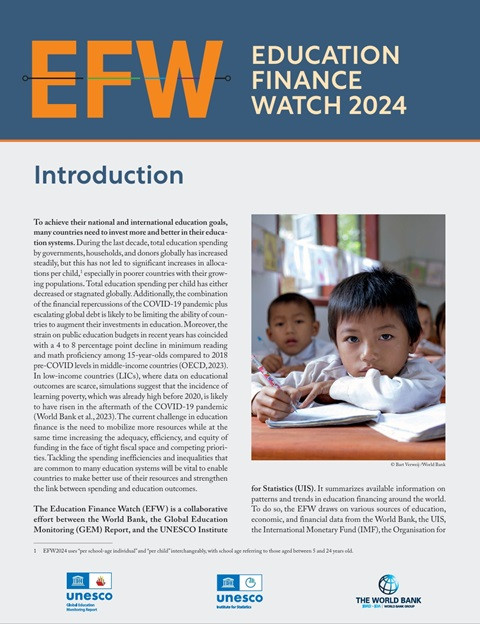 Education Finance Watch 2024 Year of publication: 2024 Corporate author: Global Education Monitoring Report Team | UNESCO Institute for Statistics (UIS) | World Bank The Education Finance Watch (EFW) is a collaborative effort between the World Bank, the GEM Report, and the UNESCO Institute for Statistics (UIS). The EFW aims to provide an analysis of trends, patterns, and issues in education financing around the world. The EFW uses various sources of education, economic, and financial data from the World Bank, UIS, the International Monetary Fund, and the Organization of Economic Co-operation and Development (OECD).
  UNESCO-UNEVOC Medium-Term Strategy for 2021-2023: Strengthening TVET Capacities and Cooperation in the Member States Year of publication: 2020 Corporate author: UNESCO International Centre for Technical and Vocational Education and Training (UNEVOC) The Medium-Term Strategy for 2021-2023 (MTS-III) sets out how UNESCO-UNEVOC will support TVET institutions to meet the demands of dynamic labour markets and provide quality skills training for a sustainable future of work. MTS-III focuses on developing the capacities of TVET leaders, supporting TVET institutions in implementing change programmes, and facilitating knowledge sharing and peer learning within the UNEVOC Network.
 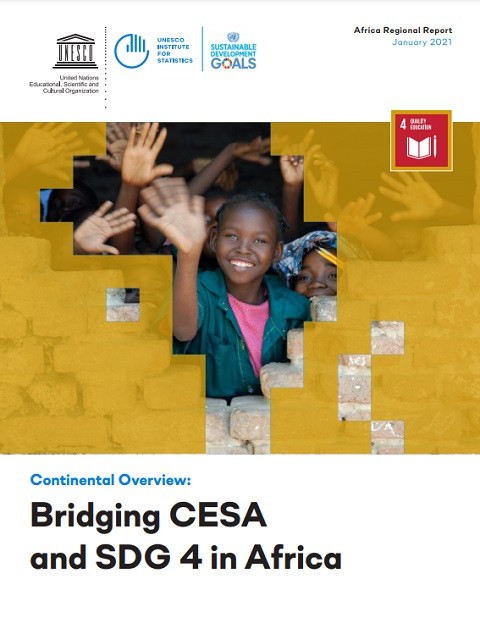 Continental Overview: Bridging CESA and SDG 4 in Africa; Africa Regional Report Year of publication: 2021 Corporate author: UNESCO Institute for Statistics (UIS) Monitoring progress toward Sustainable Development Goal 4 for education (SDG 4) is crucial to ensuring that children around the world have access to a quality education where they can learn and gain the skills they need to meet their full potential. SDG 4 indicators are organized with a view to global, thematic, regional and national targets.This report by the UNESCO Institute for Statistics (UIS) is the first in a series intended to bring a regional focus to SDG 4 monitoring, highlight the work being done in the regions and compare SDG 4 targets with those established by regional bodies.This new series of regional reports serve two purposes. Firstly, to map regional and SDG 4 targets to provide an overview of the symmetries between the two. Continental Overview: Bridging CESA and SDG 4 in Africa looks at how the strategic objectives of the Continental Education Strategy for Africa (CESA) compares with SDG 4 targets. Secondly, it analyses progress towards these objectives by African sub-regions.
 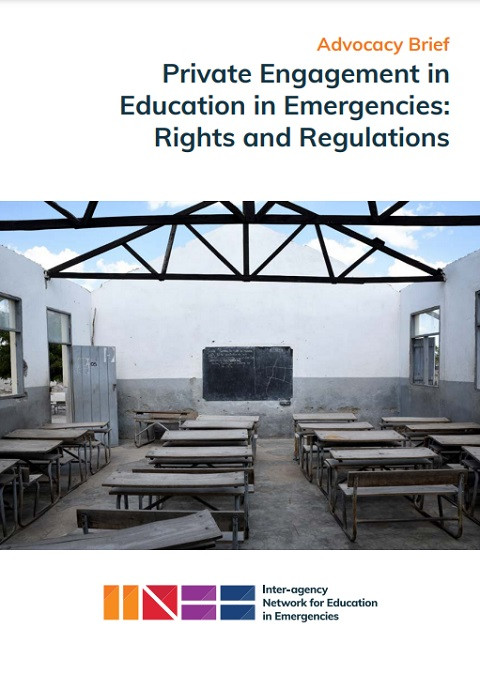 Private Engagement in Education in Emergencies: Rights and Regulations Year of publication: 2021 Author: Francine Sara Menashy | Zeena Zhakaria Corporate author: Inter-agency Network for Education in Emergencies (INEE) Efforts to secure inclusive and equitable education for all have prompted calls for greater engagement by the private sector, asserting that businesses and foundations can play significant roles as partners in achieving Sustainable Development Goal 4 (SDG4).In recent years, given shortfalls in public financing and the need for urgent responses, private actors have increasingly become involved in various aspects of educational programming for education in emergencies (EiE). This arrangement, however, can produce tensions between private engagement and humanitarian response in education, which need to be addressed and in turn require extra coordination, advocacy and attention. This brief explores some of these tensions and makes recommendations to support the prioritization of safe, equitable, and quality public education for all children and young people affected by crises.INEE supports every young person’s right to education and recognizes the State as the primary duty-bearer of schooling, in alignment with international declarations, frameworks, and legal instruments that assert and protect the right to education.