
Resources
Explore a wide range of valuable resources on GCED to deepen your understanding and enhance your research, advocacy, teaching, and learning.
96 Results found
 UNESCO-UNEVOC Medium-Term Strategy for 2021-2023: Strengthening TVET Capacities and Cooperation in the Member States Year of publication: 2020 Corporate author: UNESCO International Centre for Technical and Vocational Education and Training (UNEVOC) The Medium-Term Strategy for 2021-2023 (MTS-III) sets out how UNESCO-UNEVOC will support TVET institutions to meet the demands of dynamic labour markets and provide quality skills training for a sustainable future of work. MTS-III focuses on developing the capacities of TVET leaders, supporting TVET institutions in implementing change programmes, and facilitating knowledge sharing and peer learning within the UNEVOC Network.
 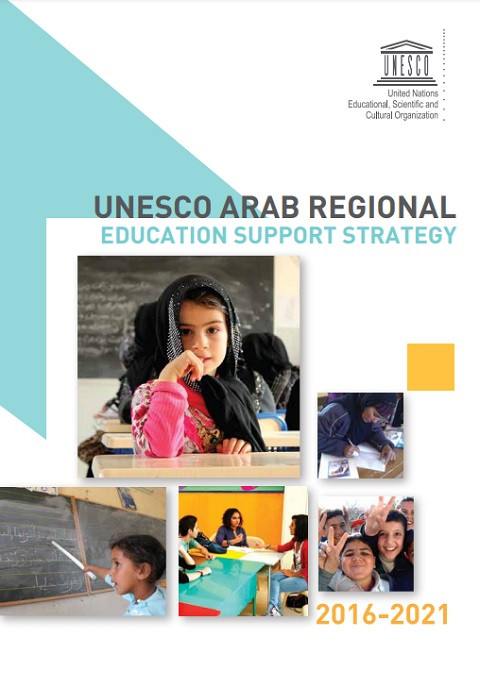 UNESCO Arab Regional Education Support Strategy: 2016-2021 Year of publication: 2016 Corporate author: UNESCO Beirut Covering the period of 2016-2021, this strategy document aims to provide tangible support for each Member State in the Arab Region, taking into account national needs and priorities and thus employing nationally relevant approaches based on the Agenda 2030 for Sustainable Development.
  Issue to Action: Mathematics; Teaching Toolkit for a Fairer World Year of publication: 2021 Author: Corinne Angier Corporate author: Scotdec These resources offer maths teams an opportunity to take an applications approach within the BGE phase. You might want to make connections to the UN Sustainable Development Goals and you can find some introductory activities to the goals here.The materials explore 3 broad themes – climate change, gender equality and migration – with 2 sets of activities for each theme supported with a PowerPoint presentation.The lessons and worksheets in the booklet and accompanying PowerPoints are all free to download below. All activities are mapped to ‘Experiences and Outcomes’, benchmarks and core maths skills are highlighter.
 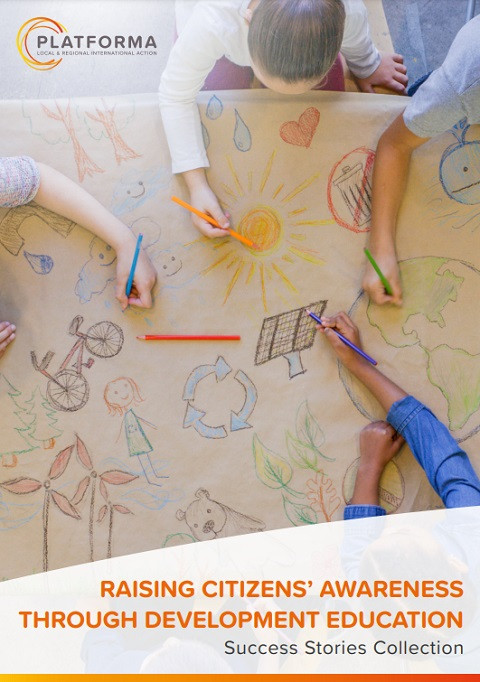 Raising Citizens' Awareness Through Development Education: Success Stories Collection Year of publication: 2020 Author: Lur Fernandez Salinas Corporate author: PLATFORMA Development Education and Awareness Raising (DEAR) are natural lines of action for local and regional governments active in development cooperation and tie in perfectly with their territorial strategies.Awareness-raising among citizens, through the action of municipalities and regions, remains a core component of the co-responsibility, solidarity, mutual knowledge and mutual understanding needed to mobilise and unite communities.Discover this Success Stories Collection which aims to showcase concrete, impactful and transformative experiences of local and regional governments and their associations actively engaged in DEAR projects and decentralised cooperation strategies. Sensibiliser les citoyens par l’éducation au développement : Exemples de réussites Year of publication: 2020 Author: Lur Fernandez Salinas Corporate author: PLATFORMA Le programme DEAR constitue une ligne d’action tout à fait naturelle pour les collectivités territoriales actives dans la coopération au développement et s’inscrit parfaitement dans leurs stratégies territoriales.La sensibilisation des citoyens, par l’action des municipalités et régions, reste une composante essentielle de la coresponsabilité, de la solidarité, de la connaissance et de la compréhension mutuelles nécessaires pour mobiliser et fédérer les communautés.Le présent recueil d’histoires de réussite vise à montrer les expériences concrètes, percutantes et transformatrices des collectivités territoriales et de leurs associations activement engagées dans des projets DEAR et des stratégies de coopération décentralisé
  Asia and the Pacific: SDG Progress Report 2021 Year of publication: 2021 Corporate author: UN. Economic and Social Commission for Asia and the Pacific (UN. ESCAP) This report analyses progress towards the Sustainable Development Goals (SDGs) in Asia and the Pacific and its five subregions as well as the availability of data. It assesses gaps which must be closed to achieve the goals by 2030. This assessment is designed to ensure the region’s actions remain on target and shortcomings are addressed as they arise. It is a resource for all stakeholders involved in prioritization, planning, implementation and follow-up of the 2030 Agenda for Sustainable Development in Asia and the Pacific.
  Localizing the 2030 Agenda and Global Citizenship Education: An Essential Dialogue Year of publication: 2020 Corporate author: Diputació de Barcelona Diputació de Barcelona has produced a document that offers guidelines to strengthen the links between Global Citizenship Education (GCE) actions and localizing SDGs initiatives, in order to drive real changes in local policies.What we call Global Citizenship Education (GCE) brings together key elements of different educational trends, such as development education, peace education or education for sustainability, among others. Each of them has decades of experience in promoting changes in citizen’s knowledge, attitudes and behaviours through formal or informal channels. This experience can help to reinforce the 2030 Agenda’s capacity to generate real change towards a more sustainable future for the planet, connecting local and global realities and highlighting interdependencies and co-responsibility. The document points out what can be done at the local level to improve this dialogue between SDG and GCE with practical proposals such as introducing GCE perspective in the SDGs training activities or implementing joint initiatives between development cooperation departments and other areas to reach new audiences.
  Envision 4.7 Event and Roadmap Year of publication: 2021 Corporate author: Bridge 47 Envision 4.7 took place in Helsinki in 2019, bringing together 200 education practitioners, civil society representatives and decision makes to create the Envision 4.7 Roadmap, a policy guideline to the future implementation of SDG Target 4.7 in Europe.
  Annual SDG Review 2023: The Private Sector and The SDGs in The Arab Region Year of publication: 2023 Author: Mario Jales | Jana El Baba | Hania Sabbidin Dimassi Corporate author: UN. Economic and Social Commission for Western Asia (UN. ESCWA) The ESCWA Annual SDG Review 2023, the second in the series, explores the contributions of the private sector to the realization of the 2030 Agenda and the SDGs in the Arab region. Building on limited available data on the subject, the report offers an indicative reading of existing trends and gaps in the region. The analysis is guided not only by the Agenda’s goals and targets, but also by the whole-of-society and rights-based approaches and the principles of universality, leaving no one behind, combating inequality and promoting gender equality and the empowerment of women.The Review examines the contributions of the private sector to sustainable development in the Arab region from three lenses: delivering the SDGs through business action, mobilizing private finance for the SDGs, and engaging the private sector in SDG planning and coordination. Each chapter assesses evidence for private sector engagement in the delivery of the SDGs in the region and provides guidance on actions needed to address current gaps. الاستعراض السنوي لأهداف التنمية المستدامة 2023: القطاع الخاص وأهداف التنمية المستدامة في المنطقة العربية Year of publication: 2023 Author: Mario Jales | Jana El Baba | Hania Sabbidin Dimassi Corporate author: UN. Economic and Social Commission for Western Asia (UN. ESCWA) يستكشف الاستعراض السنوي لأهداف التنمية المستدامة لعام 2023 الصادر عن الإسكوا، وهو الثاني ضمن سلسلة الاستعراضات هذه، مساهمات القطاع الخاص في تحقيق خطة عام 2030 وأهداف التنمية المستدامة في المنطقة العربية. يستند هذا الاستعراض إلى البيانات المتاحة في هذا الشأن، رغم محدوديتها، ليقدّم قراءة إرشادية لما تشهده المنطقة من اتجاهات وما يعوقها من ثغرات. ولا يسترشد التقرير في تحليله بأهداف وغايات خطة عام 2030 وحدها، بل يسترشد كذلك بمبادئ الخطة ولا سيما نَهج المجتمع بأسره وحقوق الإنسان والشمول، وعدم إهمال أحد، والتصدي لعدم المساواة، وتعميم منظور المساواة بين الجنسين، وتمكين المرأة.ويستعرض التقرير مساهمات القطاع الخاص في التنمية المستدامة في المنطقة العربية من حيث ثلاثة اعتبارات: تحقيق أهداف التنمية المستدامة من خلال أنشطة الأعمال التجارية؛ تعبئة التمويل الخاص خدمة لأهداف التنمية المستدامة؛ إشراك القطاع الخاص في التخطيط لأهداف التنمية المستدامة وتنسيق العمل عليها. يقيِّم كل فصل الأدلة على مشاركة القطاع الخاص في تحقيق أهداف التنمية المستدامة في المنطقة، ويقدم إرشادات بشأن الإجراءات اللازمة لتدارك الفجوات القائمة.