
Resources
Explore a wide range of valuable resources on GCED to deepen your understanding and enhance your research, advocacy, teaching, and learning.
2 Results found
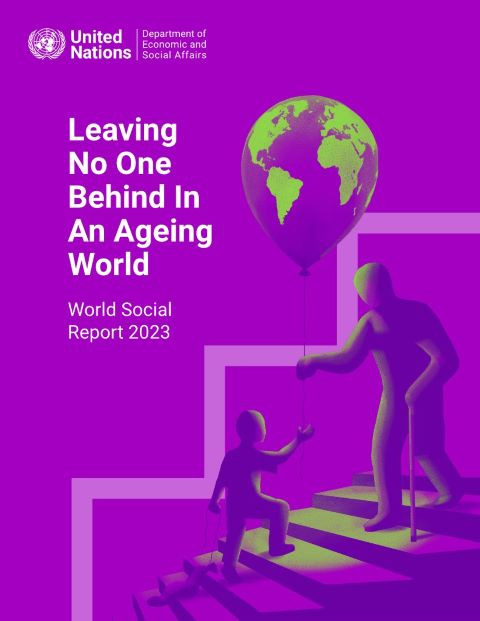 World Social Report 2023 : Leaving No One Behind in an Ageing World Year of publication: 2023 Corporate author: UN. Department of Economic and Social Affairs (UN. DESA) Population ageing is a defining global trend of our time. People are living longer, and more are older than ever before. Spectacular improvements in health and survival and reductions in fertility have driven this momentous shift, which has begun or is expected to begin soon in all countries and areas. This change brings both challenges and opportunities as countries strive to achieve the Sustainable Development Goals (SDGs). In 2022, the world marked the twentieth anniversary of the adoption of the Madrid International Plan of Action on Ageing. To commemorate this landmark, the World Social Report 2023 explores the economic and social implications of the ageing of the human population. It builds on the Plan of Action’s framework for national policies to create equitable, inclusive societies for people of all ages, providing recommendations to put the rights and well-being of older persons at the centre, across the life course. Population ageing is an inevitable result of the demographic transition towards longer lives and smaller families. While the shift towards older populations is largely irreversible, collective actions and policy decisions shape its path and consequences. Postponing critical measures that allow societies to benefit from and adapt to population ageing would impose high social, economic, fiscal and health-related costs, for both current and future generations. By contrast, with appropriate foresight and planning, Governments can manage the challenges from population ageing while enhancing opportunities for all people to thrive and ensuring that no one is left behind. As elaborated in this report, population ageing needs to be widely understood as more than just a set of discrete concerns mainly for one group of people who have advanced beyond a given age. Ageing touches all parts of economies and societies, from health care and education to employment and taxation. Each stage of life can contribute to or detract from well-being at older ages.
 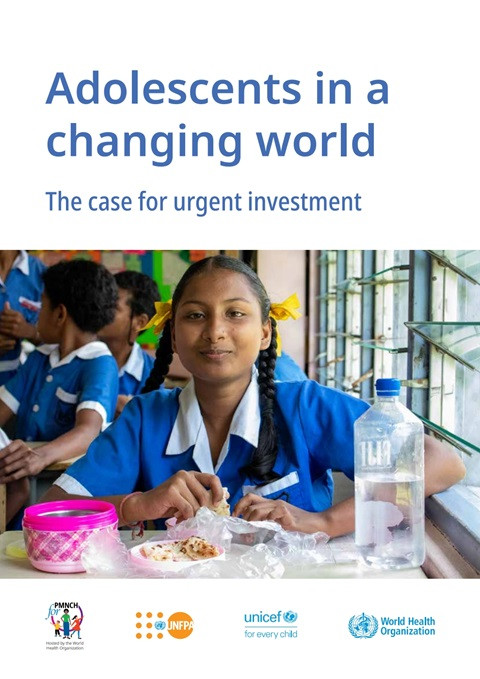 Adolescents in a Changing World: The Case for Urgent Investment Year of publication: 2024 Corporate author: World Health Organization (WHO) | United Nations Children's Fund (UNICEF) This report focuses on the strong returns on investment associated with investing in adolescent health and well-being. Today, adolescents make up more than 16% of the world's population. They are a demographic that is often overlooked or misunderstood. Investments in adolescents can reduce inequalities and help to protect their human rights. The economic and social returns from a wide range of investments to address adolescent well-being are significant. The report makes a compelling case for investing in adolescents, they are living in a world facing multifaceted crises, and they will be tomorrow's changemakers and leaders. The staggering cost of inaction is estimated at US$110 trillion over a period of 27 years (2024-50). That amounts to 7.7% of the total GDP of those countries included in the models, which themselves include around 80% of the world's population. Many interventions will yield high returns, including those focused on health services and multisectoral interventions, for example on SRHR, HPV, TB, myopia, education and training, child marriage and road accident prevention. This evidence base is crucial for policymakers, practitioners, researchers, educators, donors, and civil society organizations as we map the road ahead for a better and more sustainable future. Investing in adolescent health and well-being strengthens the human capital of a country, and hence a country's potential for future development and for ending extreme poverty and creating more inclusive societies.