
Resources
Explore a wide range of valuable resources on GCED to deepen your understanding and enhance your research, advocacy, teaching, and learning.
75 Results found
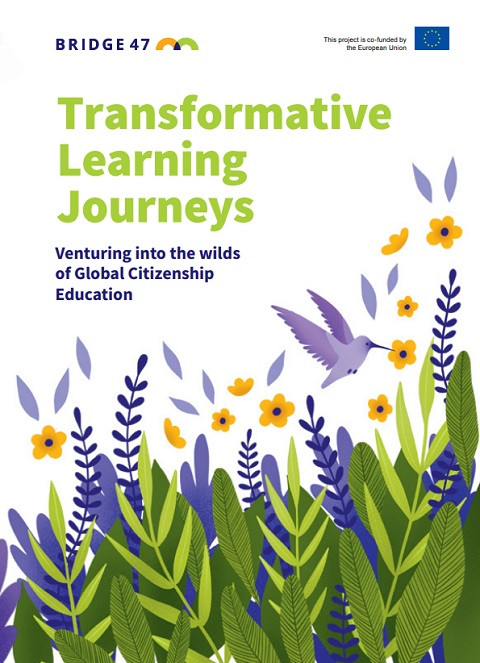 Transformative Learning Journeys: Venturing Into the Wilds of Global Citizenship Education Year of publication: 2021 Corporate author: Bridge 47 With the intensive courses of the Transformative Learning Journey, Bridge 47 created experimental learning spaces for communities of practitioners, researchers and activists of transformative education from around the world.The courses endeavored to challenge common concepts of Global Citizenship Education, to explore questions like those below and to experiment with different, holistic and potentially more transformative, practices of learning and co-creating.What are the (cultural) root causes of the global multi-crisis?How to decolonize and transform a modern system that is broken beyond fixing?What do we have to learn, unlearn or let go of- individually and collectively - in order to allow, embrace and foster real change? What characterizes transformative learning, and how can education create holistic spaces to trigger, support and accompany such learning processes? How transformative is our own organizational and educational practice?Do we have to re-imagine education and activism and become more radical? Are we asking the right questions?Based on the positive resonance, Bridge 47 wants to share some of the learnings through this publication. The book gives insights into the design, content and methodology of the course. Featuring diverse contributions from participants, it is a mosaic of perspectives and experiences of transformation, decolonization and learning. It also comprises some tools and invitations for reflection. It is not a cohesive prescription of how to facilitate transformative learning – as there is none - but an invitation to relate to and play."This book is dedicated to all the curious people out there who are passionate about education in caring for our world and each other - the dreamers, the healers, the lovers, the teachers for a different future to emerge. It goes to the fighters who are desperate and overwhelmed in face of complex challenges and are worn out by their struggle for justice and change – to find inspiration, energy and courage to treat ourselves gently, to let go and to make space for new things to emerge."
 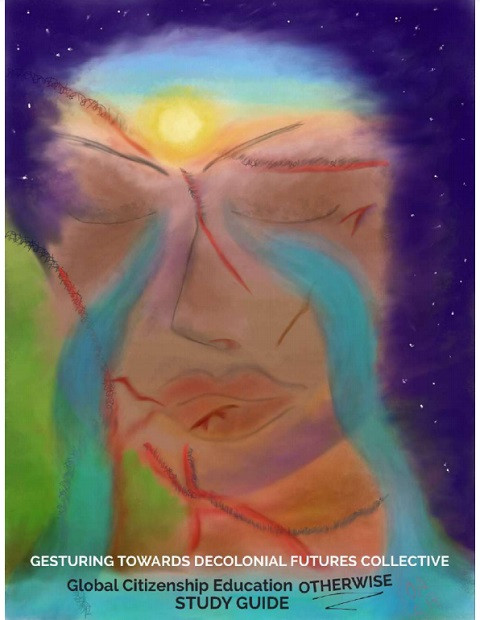 Gesturing Towards Decolonial Futures Collective: Global Citizenship Education Otherwise; Study Guide Year of publication: 2019 Author: Vanessa de Oliveira Andreotti | Sharon Stein | Rene Suša | Dani d’Emilia | Elwood Jimmy | Bill Calhoun | Sarah Amsler | Camilla Cardoso | Dino Siwek | Kyra Fay | Tereza Čajková Corporate author: Decolonial Futures Collective This booklet was developed with a specific audience in mind: educators working with global citizenship education in Europe. It presents an overview of the work of the collective and outlines two pedagogical experiments. The first pedagogical experiment, “Bare Basics” is a program for self or group study consisting of a collection of resources organized around 6 thematic areas (denial of violence, denial of unsustainability, denial of entanglement, how education has helped create the problem, so what/now what?, the difficulties/impossibilities of imagining otherwise). The second pedagogical experiment is an experiential learning program that we run by request (as a TTT or a residency). It involves mapping, imagination, body and land-based exercises. We invite you to engage with the outline of both programs, starting with our “broccoli seed agreement” on the back of the booklet.
 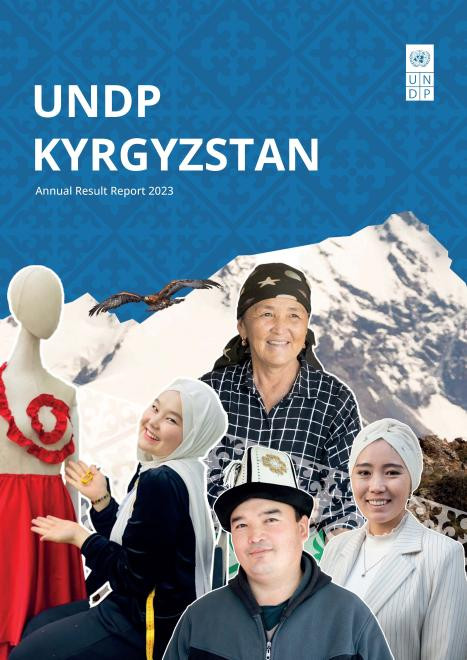 UNDP KYRGYZSTAN : Annual Result Report 2023 Year of publication: 2024 Corporate author: UNDP Kyrgyzstan In 2023, UNDP in Kyrgyzstan will use its global experience and strategic partnerships to achieve Sustainable Development Goals, focusing on digital transformation, development finance and innovation.
  A New Era of Social Justice: International Labour Conference, 100th Session, 2011 Year of publication: 2011 Corporate author: International Labour Organization (ILO) This report specifically presents to the conference what the Director believes are the fundamental problems the ILO faces as it oversees a century of its inception in 2019. These problems are the remnants of an ineffective growth pattern that has increased inequality around the world over the past 30 years. The mission of the organization is to continue to work together to develop effective responses to these challenges - within the ILO itself, with national bodies such as governments, employers and workers, and through ILO cooperation with others.
 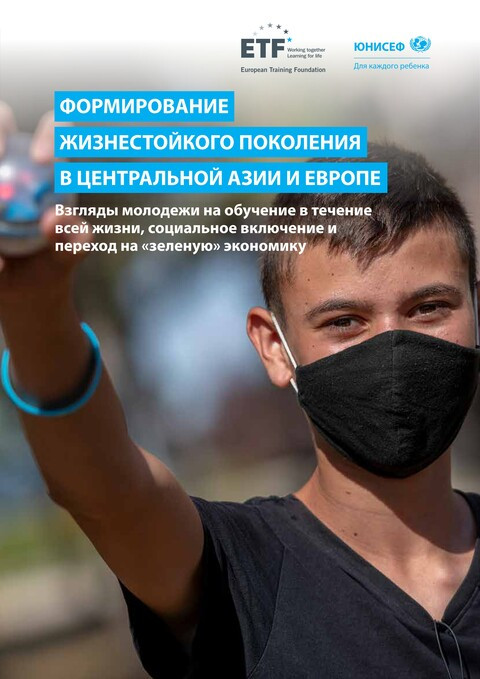 Formation of a Resilient Generation in Central Asia and Europe Year of publication: 2021 Corporate author: ЮНИСЕФ | Европейский фонд образования In this joint report of the United Nations Children's Fund (UNICEF) and the European Education Foundation (ETF) reflect the views, views and sentiments of young people in Central Asia and Europe, which will be taken into account in regional and international discussions on options for creating more effective lifelong learning systems, more inclusive communities and a more "green" society.
 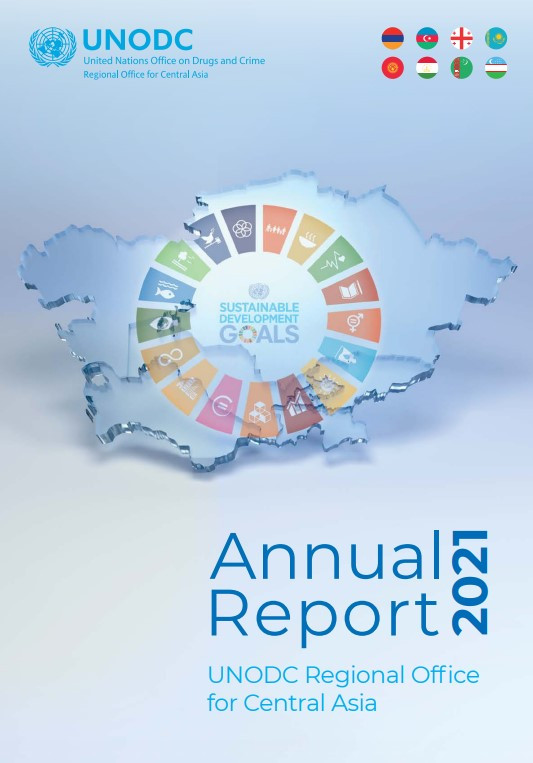 Annual Report for 2021 (UNODC Regional Office in Central Asia) Year of publication: 2022 Corporate author: UN. Office on Drugs and Crime (UNODC) This Annual Report provides an account of the main results achieved by the United Nations Office on Drugs and Crime, Regional Office for Central Asia (UNODC ROCA), in 2021. UNODC has stepped up efforts to help people in these challenging times, addressing emerging threats in line with human rights and gender equality standards, and the rule of law. Through our strategic interventions, we have contributed to strengthening peace, preventing conflict, and tackling the root causes and drivers of instability and violence.
  Buenos Aires Recommendations Year of publication: 2007 Corporate author: PRELAC II Recognizing that education is a public good and is the key to building a more just and better world for all, the Second Intergovernmental Meeting of the Regional Education Project, PRELAC II, held in the city of Buenos Aires, on the 29th and March 30, 2007, agrees the following recommendations as criteria and lines of action for national policies and international cooperation.
  Advancing a Just Energy Transition in Central Asia: Women’s Key Role in the Energy Sector Year of publication: 2024 Corporate author: Организация по безопасности и сотрудничеству в Европе (ОБСЕ) | Global Women’s Network for the Energy Transition (GWNET) The OSCE study analyzes the socio-economic benefits of the energy transition for the five OSCE participating States in the region. It provides specific considerations for the strategic development of an appropriately skilled labour force and also contains critical yet unpublished data on the job creation potential of renewable energy in each Central Asian country.
  ANALYSIS of the Rules for the Prevention of Bullying of a Child, Approved by Order No. 506 of the Minister of Education of the Republic of Kazakhstan dated December 21, 2022 Year of publication: 2022 Author: Шайдуллина Венера Камилевна Corporate author: Кадыр-касиет The focus of this document is to assess the potential effectiveness of the measures provided for by the Rules to counter child bullying. The analysis made it possible to formulate a number of practical recommendations for improving legislation in this area.
  Situation Analysis: Children and Adolescents with Disabilities in Kyrgyzstan Year of publication: 2021 Corporate author: UNICEF Kyrgyzstan The study identified barriers and obstacles to the provision of quality and inclusive services to children and adolescents with disabilities, as well as problems at the level of policy-making and evidence base. The rationale for this Situation Analysis is to inform stakeholders, both governmental, civil society and development partners, as to the current situation with regards to the fulfilment of children and adolescents with disabilities’ rights.