
Resources
Explore a wide range of valuable resources on GCED to deepen your understanding and enhance your research, advocacy, teaching, and learning.
75 Results found
 Violence in Schools: Thematic Report Year of publication: 2023 Corporate author: Higher Council for Education, Training, and Scientific Research (CSEFRS) | United Nations Children's Fund (UNICEF) This report presents the results of an assessment of violence in school settings conducted by the Higher Council for Education, Training and Scientific Research, through the National Evaluation Authority, in partnership with UNICEF. This report highlights the importance of a safe, violence-free school environment to ensure quality education.The main objective of this evaluation is to provide a detailed diagnosis of the situation of violence in the school environment in Morocco. Accordingly, the study focuses on measuring the extent of the spread of this phenomenon and identifying its various forms and manifestations in the school environment, as well as the actors involved in it. It does not only target the perpetrators of violence, but also its victims, including students and educational staff.
  Social and Psychological Determinants of Behavioral Changes in Girls and Women in STEM Education and STEM Employment Year of publication: 2023 Author: Victoria Alekseeva | Marietta Karamyan The objective of the research presented in the report is to examine the social and psychological determinants of behavioral change in girls and women in STEM professions to develop recommendations for engaging them in the professional field.
  Making Every Woman and Girl Count in Europe and Central Asia Year of publication: 2023 Corporate author: United Nations Entity for Gender Equality and the Empowerment of Women (UN Women) The Women Count newsletter provides the latest updates on improving gender data production and use in the region. It highlights the programme's achievements, including key events, new publications and inspiring stories that underscore the importance of gender data in shaping policies and programs to promote gender equality and achieve the Sustainable Development Goals (SDGs).
  Streamlining the Global Path to Gender Equality: The Role of Feminist Foreign Policy Year of publication: 2023 Corporate author: UN WOMEN Europe and Central Asia As of June 2023, 15 UN Member States introduced feminist lenses to their foreign policies (FFPs). The policy brief examines the various FFPs and identifies shared aspects and gaps across seven key themes: WPS, political participation, economic empowerment, diplomacy, official development assistance, human rights/humanitarianism, violence against women and girls.
 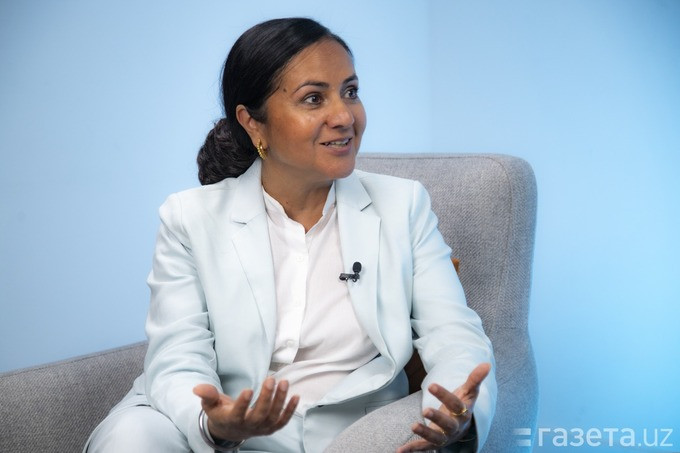 "Creating Equal Opportunities is the Responsibility of the Government.": A Conversation with Anjali Kaur from USAID Year of publication: 2023 Corporate author: Gazeta.uz Anjali Kaur, the deputy assistant administrator of the US Agency for International Development(USAID) for Asia, gave an interview during her visit to Uzbekistan "Газете.uz ". She spoke about the activities of USAID, the importance of creating equal opportunities for all and the responsibility of government, business and citizens. She spoke about the goals and activities of USAID in Uzbekistan, the importance of Uzbekistan for the agency, the need for equal access to education and other services for both boys and girls, as well as the responsibility of the state in ensuring such access.
  Legal Mechanisms for Participation of Legal Minorities in Tajikistan and Their Implementation: Comparison of the Framework Convention and Tajikistan’s Legislation Year of publication: 2022 Author: Berdikulov A. Corporate author: Central Asian Bureau for Analytical Reporting (CABAR) The policy analyzes the legal framework and provisions aimed at protecting the rights of national minorities in Tajikistan, and also provides a comparison of Tajik and European legislation regarding national minorities. Particular emphasis is placed on what legislative and legal practices from the European experience can be used as examples in the Tajik context in order to improve national legislation for the protection of national minorities and their rights. Recommendations are formulated for a number of ministries and the government of Tajikistan, for international donors, as well as for representatives of national minorities.
  Central Asia, the South Caucasus, Eastern Europe and Mongolia: Mapping of Women’s Resource Centres and Other Integrated Service Providers for Survivors of Gender-Based Violence Year of publication: 2022 Corporate author: Организация по безопасности и сотрудничеству в Европе (ОБСЕ) The Gender Issues Programme of the OSCE Office of the Secretary General conducted a comprehensive mapping of Women’s resource centres and other integrated service providers for survivors of gender-based violence (GBV) in Central Asia, the South Caucasus, Eastern Europe and Mongolia as part of the WIN Project. The mapping aimed to collect extensive information on existing services and mechanisms for direct assistance to and protection of survivors of GBV, to assess the main gaps and the need for capacity-building and knowledge-sharing in counteracting GBV, and to identify promising approaches and good practices across the OSCE region.
  Evidence on Inclusive Education in Kazakhstan based on a Formative and a Big Data Evaluation Year of publication: 2024 Author: Arseniy Gurin | Udayan Rathore | Zhanar Zhaxylykova Corporate author: UNICEF Kazakhstan The objective of the JB formative evaluation was to examine the functioning of the state education programmes between 2011 and 2021 with a special focus on inclusivity. This covered children from pre-school to secondary school levels. The Big data evaluation or Social Media Listening (SML) study focused on the same age group of children and aimed to further the understanding of different stakeholder perspectives, as expressed via social media and online news media outlets. The demography of Kazakhstan reflects that it is a relatively young country. Given that the youth are more inclined to using social media, this is an important source of discussions in the country, including those on inclusive education.
 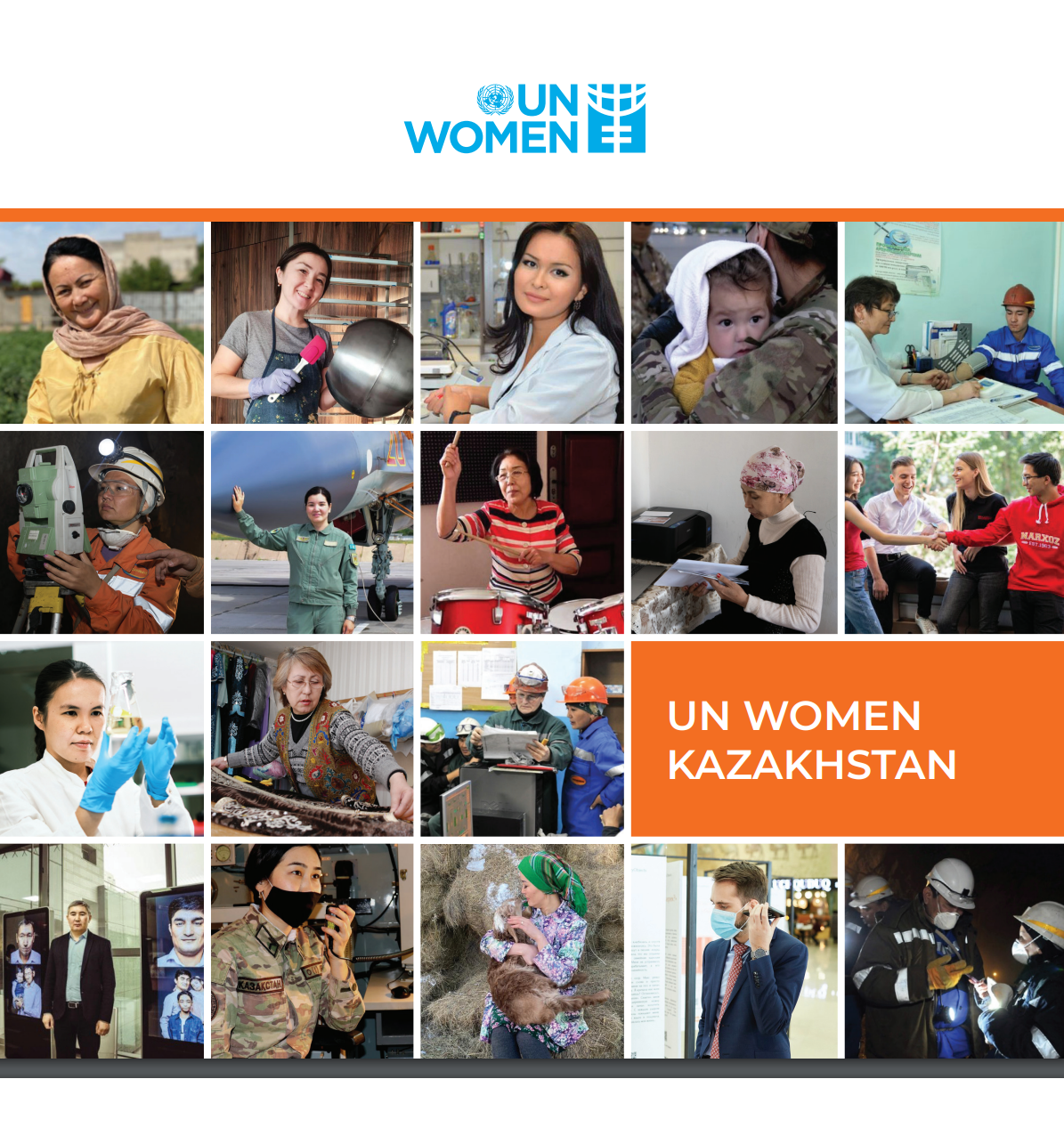 UN WOMEN Kazakhstan Year of publication: 2022 Corporate author: United Nations Entity for Gender Equality and the Empowerment of Women (UN Women) This one-pager provides a brief outline of UN Women Kazakstan's mandate, goals, activities, key audiences, partners, and other important information.
  Women Influencing Multi-Stakeholder Peace Dialogue, Processes and Policy Spaces Year of publication: 2023 Corporate author: United Nations Entity for Gender Equality and the Empowerment of Women (UN Women) This paper seeks to draw lessons on how women have been participating as actors in influencing peace dialogue and processes related to the women, peace and security agenda in Europe and Central Asia. It also highlights challenges that need to be taken into consideration and offers recommendations to promote their greater contribution, influence, and participation in peace processes.