
Resources
Explore a wide range of valuable resources on GCED to deepen your understanding and enhance your research, advocacy, teaching, and learning.
75 Results found
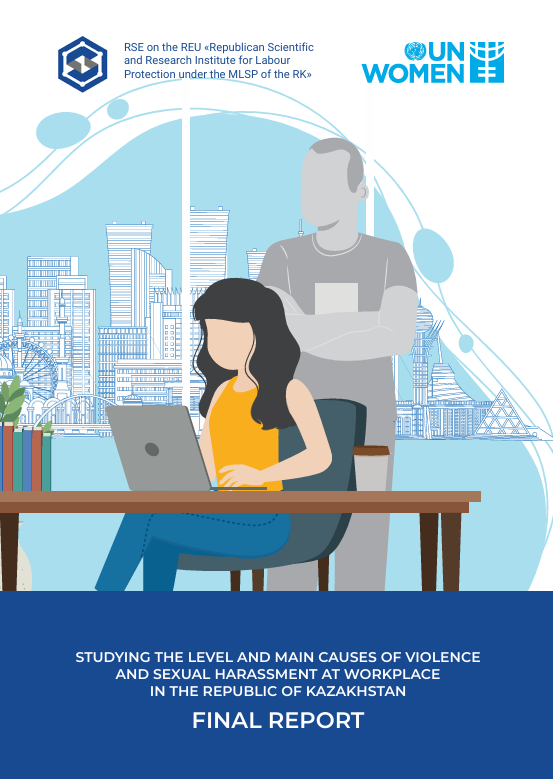 Studying the Level and Main Causes of Violence and Sexual Harassment at Workplace in the Republic of Kazakhstan: Final Report Year of publication: 2023 Author: Nadezhda Gennadievna Dzhumagulova | Gulmira Zheksenovna Yesenova | Rashit Gabitovich Nurmagambetov | Nazgul Batyrbekovna Abdrakhmanova | Shynar Serikkyzy Zhusipkalieva | Zhanna Aleksandrovna Kemelova Corporate author: United Nations Entity for Gender Equality and the Empowerment of Women (UN Women) The authors elucidate the extent and pervasiveness of such atrocities in the country. Authors delve into an analytical discussion of the principal types and causes of this violence and harassment at the workplace, offering significant insights based on the data collected.
 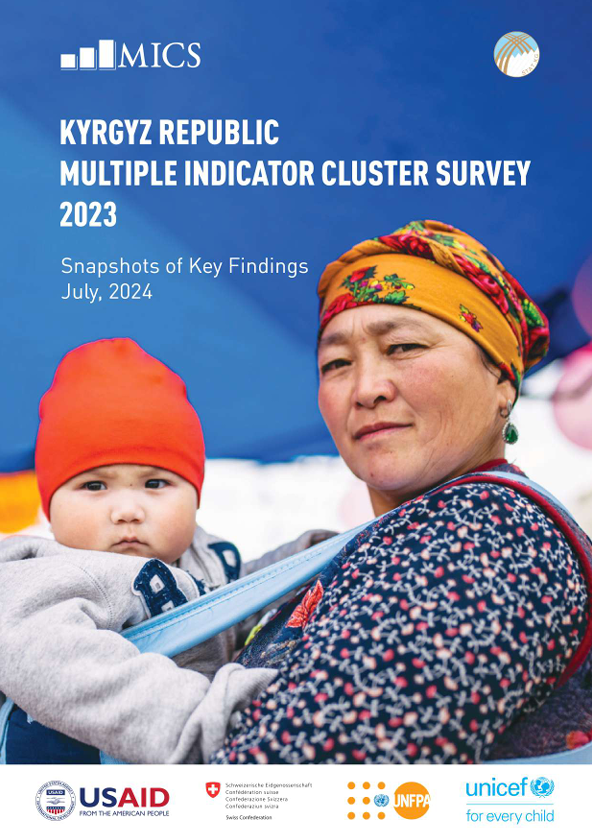 Kyrgyz Republic Multiple Indicator Cluster Survey 2023: Snapshots of Key Findings July, 2024 Year of publication: 2024 Corporate author: National Statistical Committee of the Kyrgyz Republic | UNICEF Kyrgyzstan | United Nations Population Fund (UNFPA) | United States Agency for International Development (USAID) | Government of Switzerland The 5th round of Multiple Indicator Cluster Survey (MICS) covers 7,200 households across Kyrgyzstan, measuring 185 indicators related to healthcare, education, and social protection for women and children. MICS 2023 produced data for 32 global Sustainable Development Goal (SDG) indicators, disaggregated by key characteristics such as gender, age, geographic location, income level and disability.
 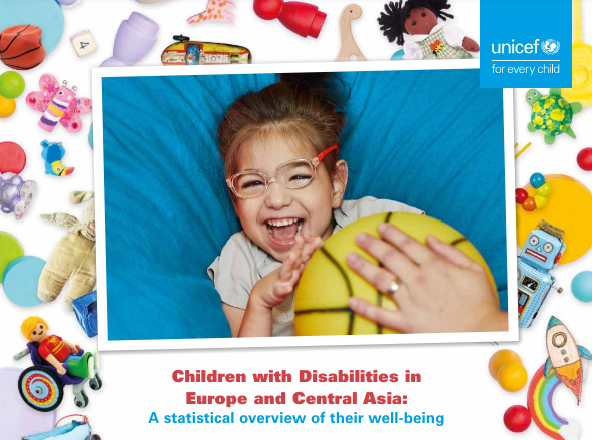 Children with Disabilities in Europe and Central Asia: A Statistical Overview of Their Well-Being Year of publication: 2023 Corporate author: United Nations (UN) This regional report provides critical evidence for decision-makers across countries to use in both policy and programming. In the context of the Global Disability Inclusion Strategy and Policy, UNICEF in Europe and Central Asia will use this valuable resource to embark on the next level of engagement to give all children with disabilities the opportunity to realize their rights on an equal basis with their peers.
  Thematic Alternative Report on the Implementation by the Republic of Tajikistan of the Convention on the Elimination of All Forms of Discrimination Against Women (CEDAW) in Relation to the Rights of Women Released from Places of Deprivation of Liberty Year of publication: 2024 Corporate author: European Union (EU) | DVV International | Bureau of Human Rights and Rule of Law (BHR) This alternative report focuses on the implementation by the Republic of Tajikistan of the UN Convention on the Elimination of All Forms of Discrimination against Women (CEDAW) in relation to the rights of women released from places of deprivation of liberty. The report contains information for the period from 2019 to 2023.
 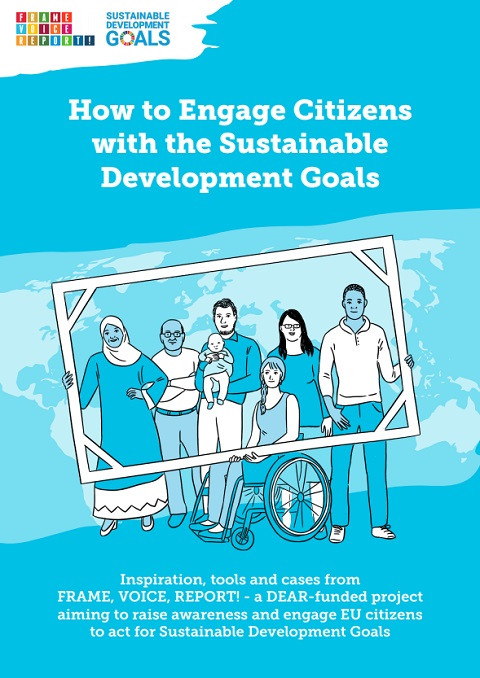 How to Engage Citizens with the Sustainable Development Goals Year of publication: 2020 Corporate author: Finnish Development NGOs Fingo The purpose of this booklet is to share reflections, successes and learning outcomes from the FRAME, VOICE, REPORT! (FVR) project.It can be used to find inspiration from other civil society organisations (CSOs) working on the same topics and themes you do, but also as a source for ideas for new ways of looking at old issues.This booklet covers both the more theoretical approaches and concrete cases from CSOs across Europe. These cases are examples of the many projects funded by the FVR.The project had its roots in the previous successes and tried and tested approaches of the partner organisations. The aim of FVR! was to secure resources and develop the value-based, high quality work of civil society organisations. The second aim was to enable smaller organisations to learn about EU project funding and to build capacity on how to conduct high quality global citizenship education and development communications. Finally, the overarching aim of the project was to engage EU citizens with the SDGs.
 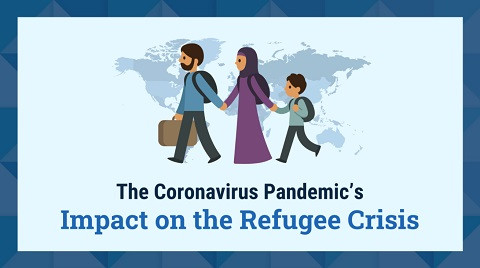 The Coronavirus Pandemic and the Refugee Crisis Year of publication: 2020 Author: Alice Corner Corporate author: Venngage Inc. One group of people most impacted by the Coronavirus Pandemic is the world’s population of refugees and displaced people. There are approximately 25 million refugees in the world, facing unique struggles in access to healthcare, government assistance, and sanitation. Venngage analyzed the data and created this collection of infographics to help paint a fuller picture of COVID-19’s impact on the refugee crisis. This resource includes clear infographics detailing how the conronavirus crisis and refugee crisis relate to each other globally
 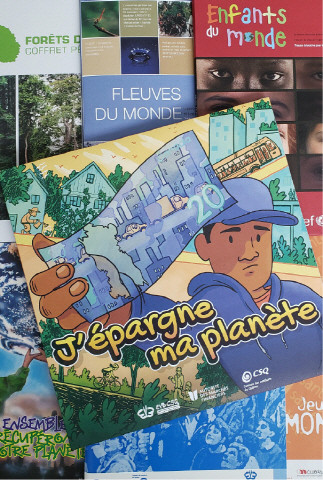 I Spare My Planet Year of publication: 2019 Corporate author: Quebec Labour Congress Produced by the ACTES movement and the Unions Central of Quebec, these vignettes are sure to make you smile, while creating important links between the way we consume and the social and environmental issues that concern us all.They can be viewed on their own or used in conjunction with the activities in the educational kit of the same name, which you can find on the Actes movement website. The themes of the 5 vignettes are:1 - Consumerism2 - Public services3 - Personal debt4 - Ecological limits5 - Thinking the world differently
 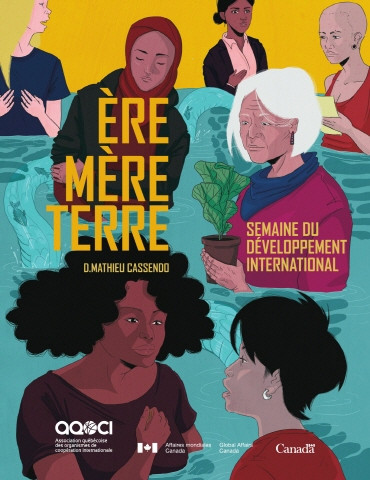 Age, Earth, Sea: International Development Week Year of publication: 2020 Author: Dimani Mathieu Cassendo Corporate author: Quebec Association of International Cooperation Organizations (AQOCI) Each year, International Development Week (IDW) highlights an international issue of concern to society. In Quebec, the Association québécoise des organismes de coopération internationale (AQOCI) organizes this public awareness week. CRÉDIL plays an active role in this campaign, and has participated in the production of comic strips as educational tools, such as "Ère, Terre, Mer" in 2021, which deals with the impact of the climate change on peoples.
 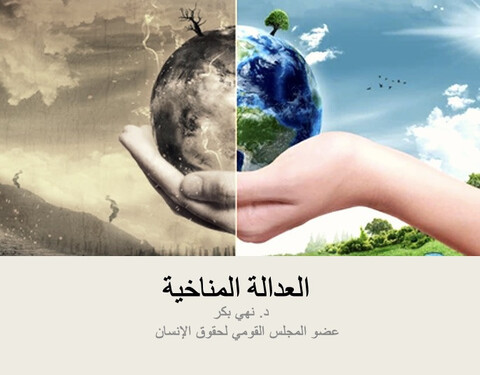 Climate Justice and Human Rights Year of publication: 2022 Author: Noha Bakr Climate justice is linking the impacts of global warming with principles of justice, specifically environmental justice and social justice, by exploring issues resulting from global warming such as equality, human rights, collective rights, and historical responsibilities.
 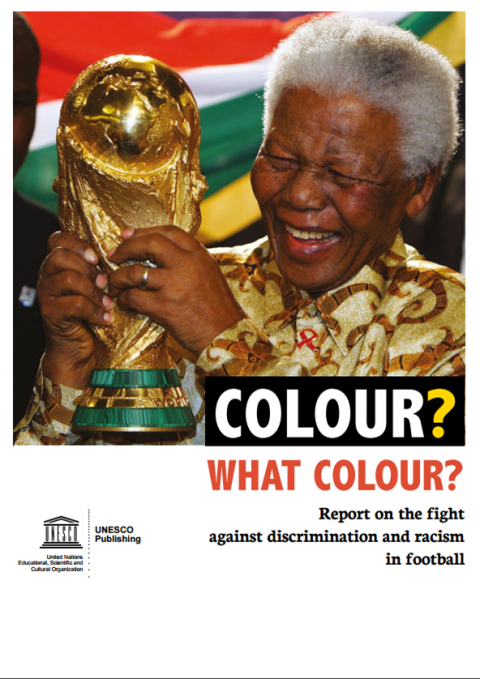 Colour? What colour? Report on the fight against discrimination and racism in football Year of publication: 2015 Author: Albrecht Sonntag | David Ranc Corporate author: UNESCO Football has been shown to be a mirror of society, it may also be viewed as providing a temporary suspension of reality for an interlude of high emotion and idealized hopes and dreams. Football’s public transcends differences of age, gender, culture, religion, and socioeconomic status to unite in support of their team. The broad diversity of backgrounds of football players represents tangible evidence of equal opportunity and meritocracy. The sport itself has team solidarity, fair play and mutual respect among members and for opponents ingrained within its rules and practices. Yet, the ‘beautiful game’ is one with an imbedded paradox. Football is also a game that may in many vaguely resemble war, where opponents face each other in a struggle to win over the other side, with the noisy and emphatic support of the spectators. An ‘us’ and ‘them’ mentality is an integral part of trying to help a team reach the objective, which is to win the game. This setting naturally produces a desire by supporters to intimidate the other side by encouraging their team and expressing both confidence and superiority through their words and actions. When the ‘us’ and ‘them’ mentality turns into symbolic exclusion of others, language of disparagement and insult based on racism or discrimination, or physical confrontation, the ‘beautiful game’ is debased. The existence of racism and discrimination in football is not a secret, but it is a shame on the game. Although much is already being done, both observers and experts feel too many problems persist and measures to tackle them have not been effective enough. This report was commissioned by UNESCO within the framework of UNESCO’s partnership with Juventus. It focuses on discrimination and racism in professional football and to some extent the amateur clubs that funnel into the leagues. It provides an overview of the historic and theoretical background. It reports on the state of affairs on the ground. It summarizes what has been done and is being done to mitigate racism and discrimination in domestic and international football, how the effects of these actions may be evaluated, and which new avenues for further, complementary action are promising. The report is based on a literature review, desk research, regional reports from the Unesco network and a field survey among a purposive sample of experts and actors in a number of countries. The report has a somewhat European focus, in its sources and examples. Europe has a unique position Executive Summary in the world of football, with its leading competitions, championships and clubs. It is the region where racism and discrimination in football has been most intensively researched. A number of civil society organisations from Europe have played a pioneering role in the fight against racism and discrimination in football. Moreover, the pressure that comes with the money invested in and generated by western European football, as well as its exposure in the media, has also made clubs, federations and UEFA particularly sensitive to the negative impact that discrimination can have on the game and its image, within Europe and worldwide. Europe must therefore occupy a central role in a study of the fight against discrimination in professional football and in determined policies to mitigate racism and discrimination related to football wherever they occur. The examples of incidents of discrimination and racism, as well as of existing measures to combat them have been selected to be as wide-ranging as possible. The authors do not, however, claim the report to be a comprehensive listing. Similarly, the examples of best practice have been collected through extensive reading and contacts, but must be looked at as an overview rather than as a directory. They are chosen by the authors to illustrate types of actions and institutions with the potential for greatest impact. The report also does not deal with the methods of allocation of resources to football, with issues of employment, or with womens’ football. While these are significant topics on which concerns can be expressed, the necessary focus of a report of this type means that they are alluded to without being treated in depth.