
Resources
Explore a wide range of valuable resources on GCED to deepen your understanding and enhance your research, advocacy, teaching, and learning.
56 Results found
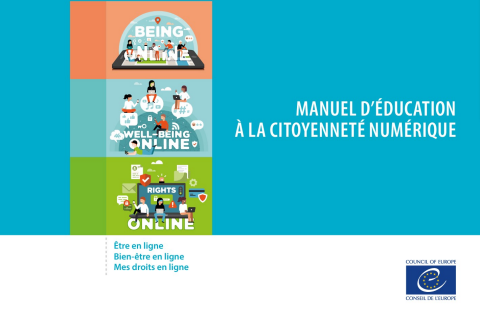 Manuel d'éducation à la citoyenneté Numérique Year of publication: 2020 Author: Janice Richardson | Elizabeth Milovidov Corporate author: Conseil de l'Europe Le manuel se divise en trois chapitres:Chapitre 1: Être en ligne – Quels sont nos modes d’action et d’existence en ligne? Ce chapitre propose une réponse en trois thèmes: accès et inclusion, apprentissage et créativité, éducation aux médias et à l’information.Chapitre 2: Bien-être en ligne – Comment nous sentons-nous en ligne? La réponse se décline là encore en trois thèmes: éthique et empathie, santé et bien-être, présence et communications en ligne.Chapitre 3: Mes droits en ligne – Qui rend compte de quoi sur internet ?Ce chapitre aborde quatre derniers thèmes: participation active, droits etresponsabilités, vie privée et sécurité, sensibilisation des consommateurs. The manual is divided into three chapters: Chapter 1: Being online - How do we act and exist online? This chapter proposes a response in three themes: access and inclusion, learning and creativity, media and information literacy. Chapter 2: Online well-being - How do we feel online? Again, the answer is divided into three themes: ethics and empathy, health and well-being, online presence and communications. Chapter 3: My rights online - Who is accountable for what online? This chapter covers four final themes: active participation, rights and responsibilities, privacy and security, and awareness.
 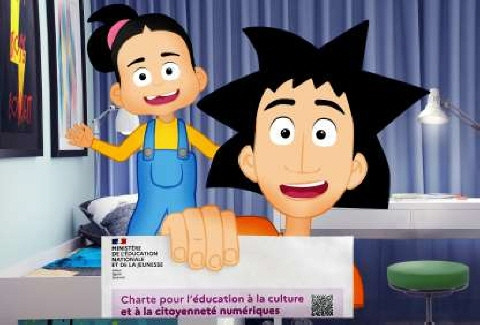 être citoyen numérique, ça te dit ? Year of publication: 2022 Corporate author: TRALALERE Vinz est très excité, il a été sélectionné pour participer au concours du meilleur citoyen numérique ! En effet, dans les vidéos qu’il a déjà réalisées, il respecte, sans le savoir, la Charte pour l’éducation à la culture et à la citoyenneté numériques. Une belle occasion pour Vinz de nous expliquer les notions de charte et de citoyenneté numérique. Vinz is very excited - he's been selected to take part in the best digital citizen competition! In fact, in the videos he's already made, he unknowingly respects the Charter for Education in Digital Culture and Citizenship. This is a great opportunity for Vinz to explain the concepts of the Charter and of digital citizenship.
  L'éducation aux médias, à l'information et à la citoyenneté numérique - rapport sur l'exercice 2022-2023 Year of publication: 2023 Corporate author: Autorité de Régulation de la Communication audiovisuelle et numérique Pour la troisième année consécutive, l'Arcom présente un bilan rendant compte des actions entreprises par les médias audiovisuels en matière d'éducation aux médias, à l'information et à la citoyenneté numérique, et mettant en lumière des initiatives innovantes à l’échelle nationale ou européenne.For the third year in a row, Arcom is presenting a review reporting on actions undertaken by audivisual media, in the field of media education, information literacy, and digital citizenship, and highligthing innovative initiative on nationale and european scale.
  Disinformation and Peacebuilding in Sub-Saharan Africa : Security Implications of AI-Altered Information Environments : Research Report Year of publication: 2024 Author: Eduardo Albrecht | Eleonore Fournier-Tombs | Rebecca Brubake Corporate author: United Nations University This report aims to further explore the way in which AI technologies as they currently stand impact peace and conflict, and what methods might be used to mitigate their adverse effects - through the development of better tools and the inclusion of peace and conflict considerations in AI governance frameworks. The report proposes the following recommendations: 1. More funding and support should be provided to civil society organization efforts to expand media literacy and fact-checking initiatives using AI tools to enhance capabilities. 2. Governments need to work with civil society to develop and implement comprehensive, transparent legal frameworks combating disinformation. These legislative measures need to support digital and media literacy campaigns and fact-checking organizations. 3. Social media companies need to expand investment and research into understanding local information environments, so they can better identify and respond to instances of disinformation in all contexts in which they operate and enhance transparency. 4. Peacebuilding organizations need to carefully consider local media ecosystems and information environments when conducting conflict analyses, and factor these dynamics into their projects' frameworks.
  Les politiques des grandes plateformes sur le discours de haine pendant la COVID-19 Year of publication: 2021 Corporate author: UNESCO Montevideo Ce document fait état d’une augmentation des messages considérés comme des discours de haine sur Facebook, Twitter et YouTube, depuis l’avènement de la pandémie de COVID-19. Bien qu’inégale, cette augmentation peut être établie à partir des rapports de transparence des différentes plateformes et de la croissance enregistrée dans la modération de ces contenus à partir de mars 2020. Étant donné qu’au cours de la même période, et en conséquence des mesures d’isolement prises dans la plupart des pays du monde, les plateformes ont décidé d’accroître l’utilisation d’outils d’intelligence artificielle dans leurs processus de modération, il n’est pas possible d’être certain que cette croissance est due à une augmentation de la création et de la publication de messages ou à un changement dans les systèmes de détection qui a affecté les résultats d’une année à l’autre.
  Social Media to P/CVE: Toolkit for Practitioners Year of publication: 2017 Corporate author: Search for Common Ground This Toolkit has been created on the basis of the key findings obtained in the framework of the Search for Common Ground (Search) “Social Media for De-Radicalization in Kyrgyzstan: A Model for Central Asia’s” pilot project funded by the Bureau of Counterterrorism, US Department of State. The project is based on two parts: a participatory approach, focused on UN Resolution 2250, and a professional approach aimed at creating and conducting social media campaigns in Kyrgyzstan.Extremist and terrorist groups use the Internet to radicalize and recruit young people through social media and instant messaging applications. Therefore, it is important to create new methods to combat online extremist propaganda, focusing not only on measures such as blocking and filtering content, or counter-narratives which are very popular and come naturally in response to radicalization and violent extremism, but also offering a positive alternative to extremist propaganda, while challenging their ideology and messages. Социальные медиа для профилактики/предотвращения насильственного экстремизма: практическое руководство Year of publication: 2017 Corporate author: Search for Common Ground Данный инструментарий был создан на основе ключевых результатов, полученных в рамках пилотного проекта «Поиск социальных сетей (Кыргызстан: модель для Центральной Азии)« Поиск в социальных сетях для Кыргызстана: модель для Центральной Азии », финансируемого Бюро по борьбе с терроризмом, Госдеп США. Проект основан на двух частях: совместный подход, ориентированный на Резолюцию ООН 2250, и профессиональный подход, направленный на создание и проведение кампаний в социальных сетях в Кыргызстане.Экстремистские и террористические группы используют Интернет для радикализации и вербовки молодых людей через социальные сети и приложения для обмена мгновенными сообщениями. Поэтому важно создать новые методы для борьбы с экстремистской пропагандой в Интернете, сосредоточив внимание не только на таких мерах, как блокировка и фильтрация контента, либо контррассказах, которые очень популярны и появляются естественным образом в ответ на радикализацию и насильственный экстремизм, но также предлагая Позитивная альтернатива экстремистской пропаганде, бросая вызов их идеологии и сообщениям.
  세계시민을 위한 미디어정보리터러시 교안 개발 연구 Year of publication: 2022 Author: 김아미 | 김영은 | 박다혜 | 박유신 | 고기식 | 김현정 Corporate author: 유네스코한국위원회 어린이·청소년은 디지털 공간에서 세계시민이자 디지털 시민으로 성장하고 있다. 그러나 지금까지 어린이·청소년과 디지털 미디어를 논할 때에는 어린이·청소년을 미디어로부터 보호하거나 과의존을 방지하는 교육을 강조하거나 디지털 공간에서의 에티켓 교육 등에 치우친 경향이 있다. 하지만 어린이·청소년은 이미 디지털 공간의 중요한 구성원이자 성인과 미디어를 함께 경험해 나가는 주체이므로, 어린이·청소년이 디지털 세상에서 누려야 하는 권리는 무엇인지, 그리고 그러한 권리를 어떻게 지킬 것인지에 대한 보다 활발한 논의가 필요하다.어린이·청소년의 경험과 요구를 이해하고 학습자와 교육자가 함께 만들어가는 미디어정보리터러시 교육이야말로 지금 디지털 시민이자 세계시민으로 성장하는 어린이·청소년에게 필수적인 역량을 함양시킬 수 있는 교육일 것이다.이에 본 연구는 어린이·청소년이 경험하는 여러 미디어 관련 이슈에 대한 이해를 바탕으로 하여, 세계시민을 위한 미디어정보리터러시 교육안을 개발하는 것을 목적으로 한다. 특히 유엔아동권리협약 제12조에서 강조하고 있는 어린이·청소년의 참여권을 지원하기 위하여, 당사자의 목소리를 듣고 이를 반영하는 어린이·청소년 참여형 연구(participatory research)를 계획하였다.
  Journalism, Fake News & Disinformation: Handbook for Journalism Education and Training Year of publication: 2018 Author: Julie Posetti | Cherilyn Ireton | Claire Wardle | Hossein Derakhshan | Alice Matthews | Magda Abu-Fadil | Tom Trewinnard | Fergus Bell | Alexios Mantzarlis Corporate author: UNESCO This handbook seeks to provide an internationally-relevant model curriculum, open to adoption or adaptation, which responds to the emerging global problem of disinformation that confronts societies in general, and journalism in particular. Serving as a model curriculum, the publication is designed to give journalism educators and trainers a framework and lessons to help students and practitioners of journalism to navigate the issues associated with ‘fake news’.The contents draw together the input of leading international journalism educators, researchers and thinkers who are helping to update journalism method and practice to deal with the challenges of misinformation and disinformation. The lessons are contextual, theoretical and in the case of online verification, extremely practical. Used together as a course, or independently, they can help refresh existing teaching modules or create new offerings.It is part of the “Global Initiative for Excellence in Journalism Education”, which is a focus of UNESCO’s International Programme for the Development of Communication (IPDC). The Initiative seeks to engage with teaching, practising and researching of journalism from a global perspective, including sharing international good practices.
  How to Stop Misinformation in Times of Coronavirus? Year of publication: 2020 Corporate author: United Nations Development Programme (UNDP) | UNESCO Learn how to identify unverified content you receive on your cell phone and avoid spreading information on social media that has not been checked by credible sources. Caring for reliable information is everyone's responsibility, and helps us make better decisions.Learn more about this campaign by UNESCO and UNDP at:https://en.unesco.org/news/disinformation-silent-weapon-times-pandemic