
Resources
Explore a wide range of valuable resources on GCED to deepen your understanding and enhance your research, advocacy, teaching, and learning.
7 Results found
 Toward a More Inclusive Post-COVID Recovery: A Tool to Further the Caribbean Policy Agenda Year of publication: 2022 Author: Anna Kasafi Perkins | Stacy Richards-Kennedy | Don Marshall | R. Clive Landis Corporate author: UNESCO Kingston | University of the West Indies The Caribbean is a grouping of islands and low-lying coastal countries of sovereign nations and dependent territories that share a history of colonialism and coloniality,1 which has shaped and continues to shape their “complex mix of political and administrative structures”. Indeed, Caribbean nations experience a “paradoxical, type of political sovereignty and experience of development”. All Caribbean nations have been classified by the United Nations as Small Island Developing States (SIDS), taking account of “the peculiar social, economic and environmental vulnerabilities” they experience. Caribbean SIDS are highly indebted and vulnerable to climate change, hurricanes and other natural hazards. At the same time, theirs is a paradoxical existence as their vulnerabilities place them alongside least developed countries, in spite of some being designated by the World Bank as high or middle-income countries. Such classification limits access to the international financing needed towards achieving the Sustainable Development Goals.
 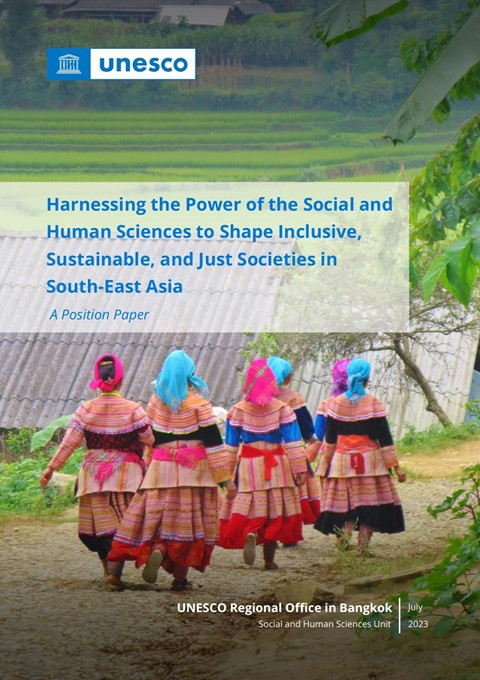 Harnessing the Power of the Social and Human Sciences to Shape Inclusive, Sustainable, and Just Societies in South-East Asia: A Position Paper Year of publication: 2023 Author: Phinith Chanthalangsy Corporate author: UNESCO Bangkok This paper provides an overview of the Social and HumanSciences (SHS) Unit, UNESCO Regional Office in Bangkok holisticapproach to building a more just and fair society for all in theSouth-East Asian region toward 2030 and beyond. The paperprovides two sections focused on thechallengesidentified in theregion and some potentialpathways for the future, from thepoint of view of UNESCO’s Social and Human Sciences Sector. The content of this paper has been discussed with aregionalexpert consultative group that gathered in Bangkok during aMOST regional Conference on 22–23 June 2023. The paper offersgrounds forstrategic orientations and partnershipsin keydomains where UNESCO's expertise in the social and humansciences can make a difference in South-East Asia
  Because youth perspectives matter: UNESCO toolbox for youth policy and programming Year of publication: 2023 Corporate author: UNESCO <Short summary>Placing trust in youth voicesYoung people fear for their future. Pandemics, conflict, climate change, inequality – these are the issues defining their reality.Yet their potential to provide solutions to the multiple crises is not realized. From low representation and tokenistic approaches, to institutional obstacles to participation and limited civic spaces, young people are disconnected from influencing decisions and actions that affect their lives. They need real opportunities to participate in decision-making and contribute to practical solutions.Policy-makers, public officials and practitioners – as well as development sector and civil society actors – can and should create such opportunities for youth. This Toolbox is a comprehensive go-to resource to make that possible. It is intended to support these stakeholders in designing and implementing effective policies and programmes to address the multidimensional needs of youth at national and local levels.It consists of:• A guide for participatory youth policy design;• Intergenerational dialogue tools on holistic youth development and youth civic engagement; and• A training tool on meaningful youth engagement. Together, we can prove that youth perspectives matter.
 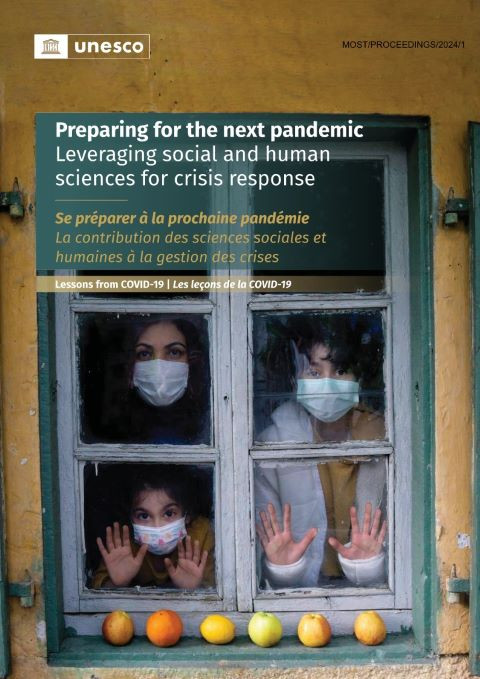 Preparing for the Next Pandemic Leveraging Social and Human Sciences for Crisis: Lessons from COVID-19 Year of publication: 2024 Author: Erwan Dianteill | N'Dri Thérèse Assié-Lumumba Corporate author: UNESCO The Social Sciences Response to COVID-19 Understanding the social impact of the COVID-19 pandemic is crucial for crafting effective and inclusive recovery policies. Prior to the pandemic, growing gaps in well-being were already undermining environmental sustainability, the social fabric, and progress worldwide. Fragile and unequal systems proved to be a pre-existing aggravating condition that fuelled the pandemic on a global scale. COVID-19 widened the gap between developed countries—which already had the financial means to respond to the crisis and had easy access to the vaccine—and the rest of humanity, resulting in devastating effects in the Global South, with more than 130 million people crossing the poverty line. Addressed to policymakers and scholars, this publication presents a comprehensive state of knowledge of the social science perspectives on the COVID-19 pandemic, covering a wide range of topics from its impact on mental health, education, climate change, economy, governance, migration, demography, digitalization, and more. The authors analyse the challenges faced by society during the pandemic and present actionable proposals for policymakers and practitioners. This publication is a reminder of the importance of Social Sciences and Humanities in addressing global challenges and provides a roadmap for future research and policy action to build more resilient societies.
 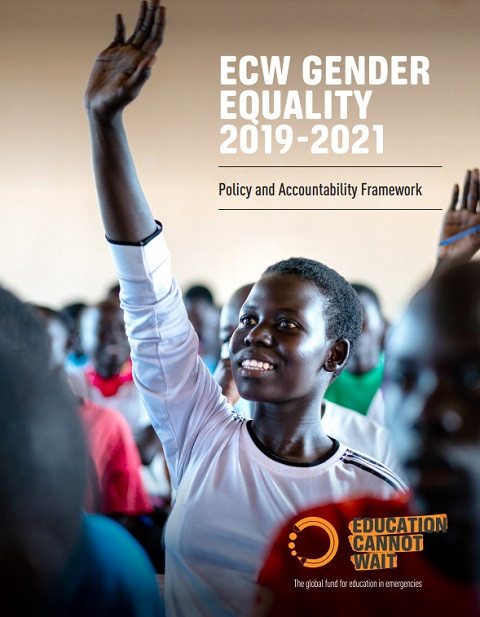 ECW Gender Equality 2019-2021: Policy and Accountability Framework Year of publication: 2020 Corporate author: Education Cannot Wait (ECW) This report presents Education Cannot Wait (ECW)'s gender equality policy, which leverages action and contributes toward coordinated strategies going beyond parity in enrollment. ECW's gender equality policy aims to provide girls and boys with equal access to education during crises, create spaces that allow learning to happen safely and without fear and ensure educational systems empower girls and boys. The Gender and Policy Accountability framework lays out the organizational strategies, explains the implementation process and outlines the compliance regulations that ECW implements to ensure girls and boys in emergencies and protracted crises have access to equitable and inclusive education. Égalité des genres dans le cadre des activités d’ECW 2019-2021: Politique et cadre de responsabilité Year of publication: 2020 Corporate author: Education Cannot Wait (ECW) Éducation sans délai s’est engagé à soutenir la prestation de services d’éducation inclusive et de qualité auprès de 9 millions d’enfants et de jeunes parmi les plus touchés par une situation d’urgence ou de crise prolongée d’ici à 2021. La Politique ECW pour l’égalité des genres vise à détailler, en s’appuyant sur les normes internationales, les aspirations du fonds en matière d’égalité des genres et d’autonomisation des femmes et des filles. Igualdad de género en el marco de las actividades para 2019-2021 de ECW : Política y marco de rendición de cuentas Year of publication: 2020 Corporate author: Education Cannot Wait (ECW) ECW se ha comprometido a respaldar la provisión de educación inclusiva y de calidad a 9 millones de niñas, niños y jóvenes afectados por emergencias y crisis prolongadas no más tarde de 2021. La finalidad de la Política de Igualdad de Género de ECW, que se apoya en normas y estándares internacionales2 , consiste en estructurar la visión del Fondo para promover la igualdad de género y el empoderamiento de las mujeres y las niñas.