
Resources
Explore a wide range of valuable resources on GCED to deepen your understanding and enhance your research, advocacy, teaching, and learning.
191 Results found
 5th Annual Meeting of the GCED Actors' Platform: Meeting Report Year of publication: 2023 Corporate author: APCEIU This meeting report provides the summary of the 5th Annual Meeting of the GCED Actors' Platform held on 20 October 2023. The report outlined the presentations from UNESCO, regional coordinators from 4 Regional GCED Networks (Arab States, Asia-Pacific, Latin America and the Caribbean and Sub-Saharan Africa), including their achievements in advancing GCED in their respective regions over the past year and discussion on potential ways to strengthen GCED implementation on both regional and global levels.
 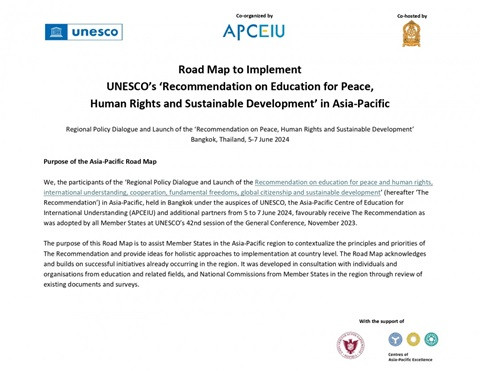 Road Map to Implement UNESCO’s ‘Recommendation on Education for Peace, Human Rights and Sustainable Development’ in Asia-Pacific Year of publication: 2024 Corporate author: UNESCO Bangkok | APCEIU The Road Map is a product of the Regional Policy Dialogue and the Launch of the Recommendation on Education for Peace, Human Rights, and Sustainable Development (hereafter referred to as the 2023 Recommendation), held in Bangkok in June 2024. This document aims to promote the regional implementation of the 2023 Recommendation and outlines the challenges and priorities within the Asia-Pacific educational landscape, making it a valuable resource for policymakers, researchers, and practitioners.
 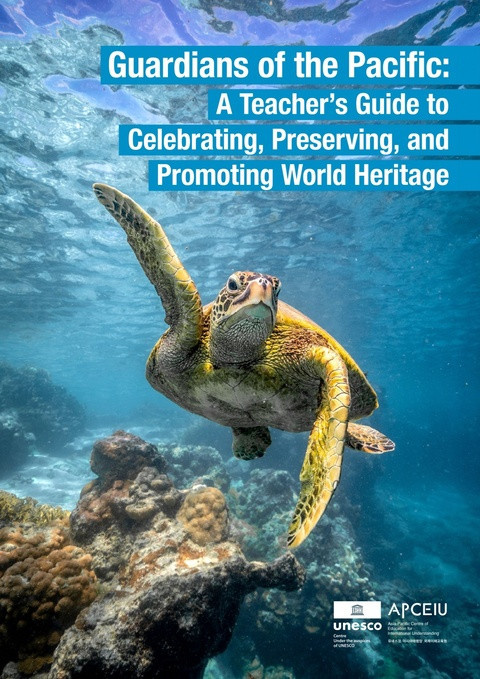 Guardians of the Pacific: A Teacher’s Guide to Celebrating, Preserving, and Promoting World Heritage Year of publication: 2024 Author: Karena Menzie-Ballantyne | Nanise J. Young Okotai | Adi Meretui Tuvou Ratunabuabua Corporate author: APCEIU Guardians of the Pacific: A Teacher’s Guide to Celebrating, Preserving, and Promoting World Heritage is an APCEIU initiative dedicated to advancing Global Citizenship Education (GCED) worldwide. Anchored in the principles of the Sustainable Development Goals (SDGs) and UNESCO World Heritage, the guide places a special emphasis on the rich and diverse heritage of the Pacific region. This Guide reflects GCED’s integrative approach, which encompasses three interconnected dimensions of learning: cognitive, socio-emotional, and behavioral. It encourages critical thinking about heritage and sustainability, fosters empathy by deepening understanding of the Pacific's unique cultural and natural environments, and inspires meaningful actions to protect and preserve local heritage. Tailored for educators working with students in upper primary (grades 4–6) and lower secondary (grades 7–9), the Guide provides step-by-step instructions and practical resources for incorporating Pacific World Heritage into classroom lessons and extracurricular activities. It is a valuable tool for nurturing awareness, appreciation, and stewardship of the Pacific region’s irreplaceable heritage in schools worldwide. <Table of Contents>ForewordHow to Use This GuideSection 1. Learning Framework Rationale Section 2. What Makes a Place Special?Section 3. The 2030 Agenda, Five Pillars and SDGsSection 4. Protecting People: Levuka Historical Port Town (Cultural Site)Section 5. Preserving the Planet: Phoenix Islands Protected Area (Natural Site)Section 6. Ensuring Prosperity: Rock Islands Southern Lagoon (Mixed Site)Section 7. Promoting Peace: Bikini Atoll Nuclear Test Site (Cultural Site)Section 8. Partnerships to Protect the Environment: East Rennell (Natural Site)Section 9. Taking Action to Promote and Protect a Special PlaceReferences WorksheetsPhoto Cards
 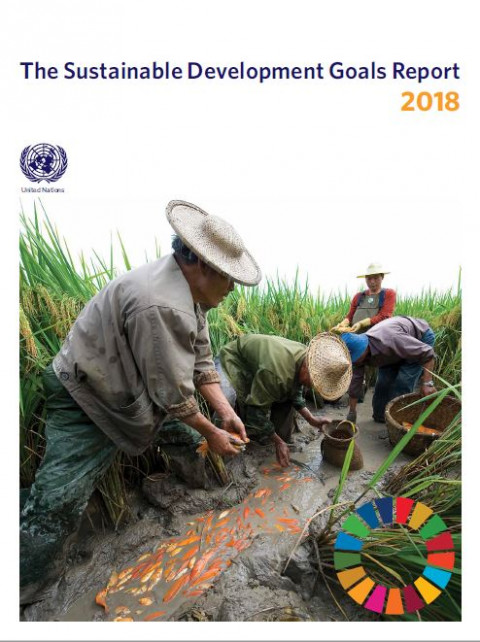 The Sustainable Development Goals Report 2018 Year of publication: 2018 Corporate author: United Nations (UN) The 2030 Agenda for Sustainable Development provides a global blueprint for dignity, peace and prosperity for people and the planet, now and in the future. Three years into the implementation of the Agenda, countries are translating this shared vision into national development plans and strategies.
 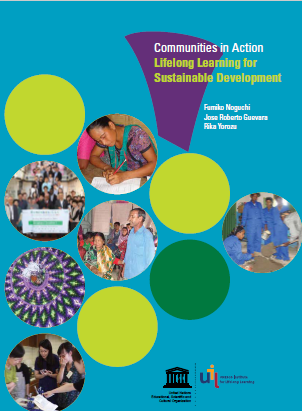 Communities in action: lifelong learning for sustainable Year of publication: 2015 Author: Fumiko Noguchi | Jose Roberto Guevara | Rika Yorozu Corporate author: UNESCO Institute for Lifelong Learning (UIL) This handbook identifies principles and policy mechanisms to advance community-based learning for sustainable development based on the commitments endorsed by the participants of the Kominkan-CLC International Conference on Education for Sustainable Development, which was in Okayama City, Japan, in October 2014. To inform policymakers and practitioners new to this field, the handbook clarifies the international vision and goals for sustainable development and Education for Sustainable Development, and identifies the potential contributions of community-based learning centres and organizations. It documents both policy and practice from different regions and concludes with a summary of principles and policy support mechanisms.
  Making Lifelong Learning a Reality: A Handbook Year of publication: 2023 Corporate author: UNESCO Institute for Lifelong Learning (UIL) This handbook provides education stakeholders with practical guidance on lifelong learning. With an overview of key concepts, policy issues, technical knowledge and practical approaches, it demonstrates how lifelong learning can be strengthened in policy-making and implemented at national, regional, local and institutional levels. The handbook supports those experts and professionals in the field of education who wish to develop their understanding of lifelong learning, and offers tips, information and examples targeted at learners, facilitators, institutional leaders, policy-makers and legislators. More broadly, it illustrates how lifelong learning can address complex political, social, economic and environmental issues affecting people around the world. 让终身学习成为现实:手册 Year of publication: 2023 Corporate author: UNESCO Institute for Lifelong Learning (UIL) 这本关于终身学习的手册试图描绘一个全面立体、包罗万象的终身学习愿景, 并将其塑造成教育利益攸关者的实用指南。本手册并未详尽无遗地介绍所有的终 身学习形式,而是阐明了终身学习的本质,通过制定国家政策和实施战略,使之 得到广泛的了解、认可、推广和具体应用。本手册第一章明确了终身学习的概念,介绍了联合国教科文组织对终身学习及 其关键维度的理解。之后解释了提倡终身学习的原因,为读者提供了一系列循证观 点,说明终身学习将如何应对世界面临的大规模严峻挑战。因此,第一章为政策制 定者、政府官员、机构负责人、相关从业者或研究人员提供了一个起点,以推进终 身学习,将其作为一种政策措施,来应对学习系统当前的挑战和长期的问题。要使终身学习从一个抽象的概念转变成为可以实际增加学习机会和改善学习 体验的行动,政策层面需要有所作为。因此,第二章明确了终身学习政策的定义 和政策制定过程, 并提出了制定有效终身学习政策的多个因素。 这些因素表明, 终身学习政策在根本上应符合国情和地方实际情况、打造全面终身学习愿景、制 定治理方案、具有财政可行性、以实证作为监测和评估的基础,并通过磋商实现 多方参与的终身学习政策制定。第三章侧重于终身学习的实施,并通过国家终身学习实施战略的视角讨论了 不同的实施方式。此外,这一章还展示了实施战略如何在正规、非正规和非正式 学习方面融入终身学习理念并增加终身学习机会。在学习形式之间建立联系,第 三章还提供了有关灵活学习途径的建议,并指导如何使用国家资历框架和学习成 果认证机制等相关政策来创建灵活学习途径。随后,第三章论述了信息通信技术 对于终身学习的重要价值,以及多层级治理在终身学习实施过程中的关键作用。第四章则关注地方层面,首先概述了城市地区的终身学习情况,并重点介绍 了联合国教科文组织全球学习型城市网络的学习型城市模式。之后,通过贝塔市 的研究案例具体展示了终身学习的政策制定过程,并揭示了那些与设计终身学习 实施战略有关的考虑因素如何应用于具体的终身学习政策。立足全球视角,基于实践经验,本手册的最终目标是为读者提供全面、可行 的指导意见,让全民终身学习成为现实。
  Institutional practices of implementing lifelong learning in higher education: research report Year of publication: 2023 Corporate author: UNESCO Institute for Lifelong Learning (UIL) | Shanghai Open University In many countries, higher education is gaining prominence as a means for the general population to engage in lifelong learning (LLL), whether for personal or professional development, or to participate in broader societal change. In some cases, national governments have introduced policies or funding instruments that create incentives for higher education institutions (HEIs) to align their offerings more closely with changing labour market demands and societal needs, and to expand access for groups previously underrepresented in higher education. Key trends in the higher education sector and the associated global socio-economic transformations were discussed in detail in the international survey report, which was published as part of the research project on the contribution of higher education institutions to LLL (UIL and SOU, 2023). This case study report moves from an international overview of the policies, structures and mechanisms that support LLL in higher education to the close study of institutional practices. It explores the interrelations between national policy environments and institutional strategies. It examines different approaches taken by universities to develop, implement and monitor LLL activities, and further provides practical examples of how universities engage with diverse groups of learners through their LLL mission. As such, this report’s value lies in offering both general insights into the implementation of LLL in HEIs, and case-specific descriptions and analyses of institutional policies and practices. 高等教育机构实施终身学习的实践: 研究报告 Year of publication: 2023 Corporate author: UNESCO Institute for Lifelong Learning (UIL) | Shanghai Open University 在许多国家,高等教育作为大众参与终身学习以获得个 人或职业发展或参与更广泛社会变革的一种手段,日益 受到重视。在某些情况下,国家政府推出了政策或资助 工具,为高等教育机构提供激励,使其提供的服务更紧 密地贴合不断变化的劳动力市场需求和社会需求,并为 以前在高等教育中代表性不足的群体提供更多学习机 会。国际调查报告详细介绍了高等教育部门的主要趋势 以及相关的全球社会经济转型,该报告作为高等教育机 构对终身学习贡献的研究项目一部分发布(终身学习研 究所和上海开放大学,2023年)。本案例研究报告提供了对支持高等教育终身学习的政 策、结构和机制的国际性概述,介绍了对机构实践的深 入研究,探讨了国家政策环境与机构性战略之间的相互 关系,研究了大学为开发、实施和监测终身学习活动而采 取的不同方法,进一步提供了大学如何通过其终身学习 任务与不同群体学习者互动的实例。因此,本报告价值 在于既提供了高等教育机构实施终身学习的一般见解, 也提供了对机构政策和实践具体案例的描述和分析。
  Report on Improving the Care System in the Republic of Uzbekistan: A Path to Economic Growth, Poverty Reduction and Improved Quality of Life Year of publication: 2024 Author: Maigul Nugmanova | Adiba Nuruddinova Corporate author: UNDP Uzbekistan This Report explores the crucial role of care system policies in sustainable equitable economic growth, poverty reduction, and improved quality of life, aligning with UN Sustainable Development Goals. Conducted within the framework of the initiative of UNDP in Uzbekistan, the study aims to analyze current care provision, identify critical points, and propose recommendations for an inclusive and sustainable care economy, contributing to overall economic growth and reducing regional inequalities.