
Resources
Explore a wide range of valuable resources on GCED to deepen your understanding and enhance your research, advocacy, teaching, and learning.
191 Results found
 Global Priority Africa Flagships 2023: An Update from UNESCO Regional Office for Southern Africa Year of publication: 2024 Corporate author: UNESCO Harare Two years into the implementation of the Operational Strategy for Priority Africa 2022-2029 (OSPA), a new biennium has commenced through the Programme and Budget for 2024-2025. With a goal of achieving the Sustainable Development Goals (SDGs) of the United Nations’ Agenda 2030 and the African Union’s Agenda 2063 “The Africa We Want”, the OSPA remains pivotal in accelerating the achievement of SDGs amidst a growing threat of regression and stagnation on some of the SDG targets. The relentless climatic changes have resulted in droughts and cyclones whose incessant rains have caused food insecurity, waterborne diseases and loss of biodiversity. Geopolitical crisis and the remnants of the impacts of COVID-19 continue to waylay the aspirations of the continent. Gender inequality, youth unemployment, education and HIV and AIDS continue to be areas for concern. Despite this plethora of challenges, Member States remain committed to Agenda 2030 and 2063 and the strong partnership existing with UNESCO and the rest of the UN system. While the OSPA is driven to address challenges in the areas of demography and sustainable development, education and knowledge, climate change, cultural renaissance, and peace and democracy these all have far-reaching consequences beyond their focus hence addressing these contributes widely to other thematic areas. Priority Africa reinforces UNESCO’s partnerships with African governing bodies such as the African Union (AU), Regional Economic Communities (RECs), Member States as well as other UN agencies. Being also aligned with the Southern African Development Community (SADC) and UNESCO’s Joint Programme of Action (JPA) 2022-2025, the OSPA continues to demonstrate its relevance to the region.
  Our Common Agenda Policy Brief 10: Transforming Education Year of publication: 2023 Corporate author: United Nations (UN) Building on the Transforming Education Summit and the report of the International Commission on the Futures of Education, this policy brief takes a closer look at the current crisis in education and proposes ideas and guiding actions for countries and the international community to transform education. The right to education and lifelong learning is an essential part of the 2030 Agenda for Sustainable Development because education, knowledge and learning are fundamental to human dignity, growth and development. For centuries, education has been the great equalizer, the driving force of nation-building and the engine of social, cultural, economic and technological progress. But today, beset by a dual crisis of equity and relevance, education as we know it is no longer fit for purpose.
  Sustainable Development and Responsible Citizenship Year of publication: 2021 Corporate author: Argentina. Ministry of Education Social inequalities, epidemics and ecological disasters seem to be at an all-time high. Therefore, it is necessary for governments to recognize the freedoms and obligations to exercise responsible citizenship. This resource was developed within the framework of the Seguimos Educando Program, which during 2020 and 2021 allowed, through different means, students to remain in contact with school. The proposed activities and content are guided by the Priority Learning Cores common to the entire country.
  Podcast: Learning for the Future; Education for Sustainability Year of publication: 2024 Author: Alicia Santi | Maximiliano Molina Corporate author: Chile Foundation | Educarchile In this edition of the podcast: Learning for the Future, we develop, together with CEDEUS, the topic of "Education for Sustainability" and the multidimensional view of this phenomenon in educational establishments.
  SDG In the Republic of Korea: Progress Report 2023 Year of publication: 2023 Author: Woohyun Chung | Haesik Jung | Yunjae Hwang | Dawoon Jung | Hyojung Han | Dokyun Kim | Jongho Ahn | Sangyoup Lee | Soeun Ahn | Jungwook Kim | Sangyun Lee | Jiyoung Lee | Sora Yi | Jewoo Hong | Miju Kim | Junghee Cho | Kyungah Koo | Yul Kwon Corporate author: Korea R. Statistics Research Institute | Statistics Korea It has been eight years since the Sustainable Development Goals (SDG) were adopted at the UN General Assembly, and nations began to work toward achieving them. Now we are halfway through the 2030 target period. As an authorized national focal point of SDG data, the Statistics Research Institute has been publishing a 『Sustainable Development Goals in the Republic of Korea: Progress Report』 annually, in keeping with their vision of providing support for ‘eviꠓdence-based decision-making’.『SDG in the Republic of Korea: Progress Report 2023』, released this, was designed as a compass identifying goals to be prioritized in policy implementation during the remaining period until 2030 to keep pace for achieving the SDGs. It is hoped that the report will help to point out the direction for policies responding to the crises and changes we are facing amid the COVID pandemic, the climate crisis, and war, through relevant indicators.
 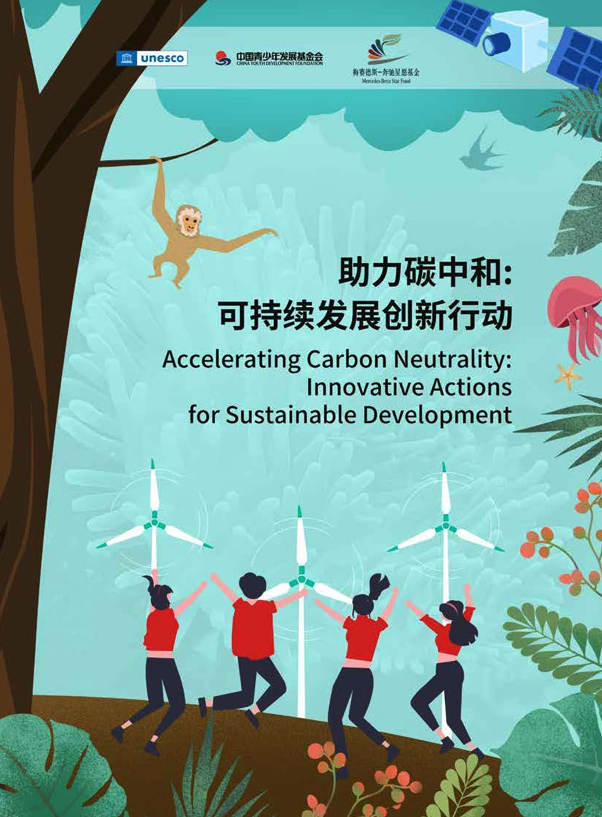 Accelerating Carbon Neutrality: Innovative Actions for Sustainable Development Year of publication: 2024 Author: UNESCO Beijing Climate change is a global challenge that respects no national borders. To achieve the 2030 Sustainable Development Agenda, all nations need to take actions to address climate change and its impacts now. The Chinese government attaches great importance to addressing climate change by setting it as a strategic goal concerning economic and social development while considering green and low-carbon development as an essential aspect of ecological civilization. China pledges to achieve carbon peak before 2030 and carbon neutrality before 2060.Education for Sustainable Development (ESD) is essential to promote climate action. As the creators and builders of the future world, youth play a significant role. Youth are the future. In the spirit of “Changing the minds, not the climate”, UNESCO has been committed to empowering the young generation to tackle climate change, supported by its robust networks in education, sciences, culture, communication and information.In June 2022, the first phase (2022-2025) of the “Accelerating Carbon Neutrality: Innovative Actions for Sustainable Development” project was officially launched under the sponsorship of the China Youth Development Foundation-MercedesBenz Star Fund. This project will fill the gap of China’s carbon neutrality action through activities such as “Accelerating youth climate action”, “Forest Protection Action” and “ Tropical Rainforest biodiversity conservation action” and make a pilot for climate change education and sustainable development education in China and the world by empowering institutions and community residents, including women, children and youth, and contribute to the realization of the UN 2030 Sustainable Development Goals (SDGs) in a bottom-up manner, including SDG 1 (No Poverty), SDG 4 (Quality Education), SDG 5 (Gender Equality), SDG 10 (Reduced Inequalities), SDG 11 (Sustainable Cities and Communities), SDG 13 (Climate Action), SDG 14 (Life below Water), SDG 15 (Life on Land) and SDG 17 (Partnerships for the Goals). The project aims to promote youth capacity in innovation and communication skills. Moreover, it seeks to increase young people’s awareness on how to reduce carbon footprint, protecting the environment, conserving biodiversity and promoting man-nature harmony through education for sustainable development, climate change, environmental protection and global citizenship education. Additionally, the project aims to explore best practices that can be shared and applied internationally. 助力碳中和:可持续发展创新行动 Year of publication: 2024 Author: UNESCO Beijing 气候变化是跨越国界的全球性挑战。为了实现2030议程,各国必须采取紧急行动来 应对气候变化及其影响。中国政府高度重视气候变化问题,将应对气候变化纳入国 家经济社会发展的重大战略,把绿色低碳发展作为生态文明建设的重要内容,并承 诺将在2030年前实现碳达峰,在2060年前实现碳中和。可持续发展教育对于促进气候行动至关重要。 青少年是未来世界的创造者与建设者,秉承着“改变思维,而非气候”的理念,联合国教科文组织教借助其在教育、 科学、文化、传播和信息领域的强大网络,一直致力于加强青少年在气候变化方面 的能力建设。2022年6月, 在中国青少年发展基金会-梅赛德斯-奔驰星愿基金资助下 “助力碳中和:可持续发展创新行动”项目第一期(2022-2025年)正 式启动。 本项目将通过基于可持续发展教育开展的“助力青少年气候行 动”“森林保护行动”和“保护热带雨林生物多样性行动”等活动内容, 填补中国碳中和行动的重要空白,在切实推进气候变化教育和为师生气候 变化赋能的同时,为中国和世界的气候变化教育以及可持续发展教育做出 示范,以自下而上的方式助力联合国2030可持续发展目标,包括SDG13 (气候变化),SDG4(优质教育),SDG11(可持续的城市与社区), SDG14(水下生态保护),SDG15 (陆地生态保护)和SDG17(伙伴 关系)等一系列目标的实现。项目 旨在促进青少年的能力建设、 知识交 流和技能创新, 通过可持续发展教 育、 气候变化教育、 环境教育和全 球公民教育, 提高青少年对减少碳 足迹、生态环境保护、生物多样性保 护、人与自然和谐共生的认知,并开 展可以在国际范围内共享和适用的良 好实践案例。
 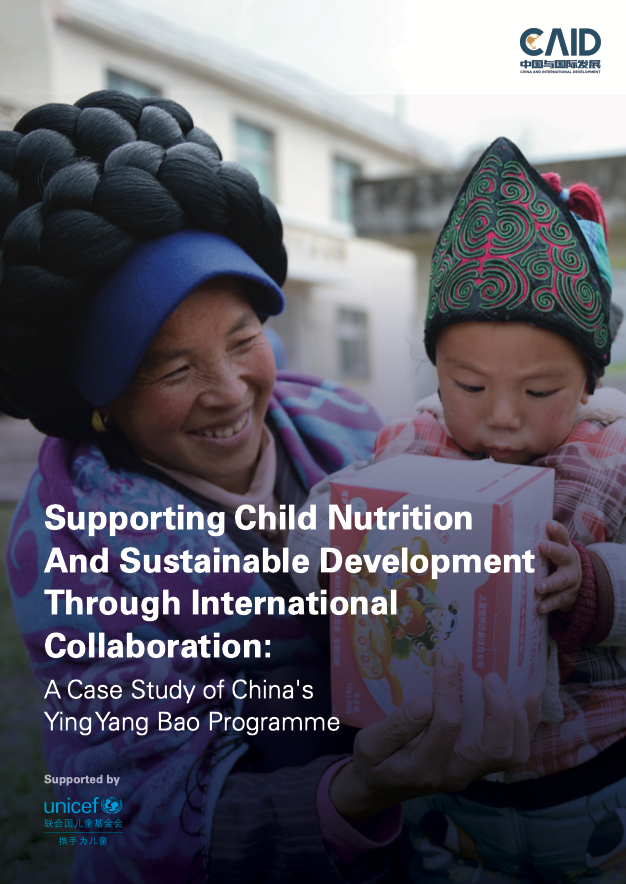 Supporting Child Nutrition and Sustainable Development through International Collaboration Year of publication: 2023 Author: Wang Luo | Chen Xiaoning | Huang Yangmu Corporate author: Chinese Academy of International Trade and Economic Cooperation(CAID) | United Nations Children's Fund (UNICEF) Child health and nutrition are key goals under the 2030 Sustainable Development Agenda. Currently, around 45% of deaths among children under five years of age are linked to undernutrition. These mostly occur in low- and middle-income countries. In June 2023, the Chinese Academy of International Trade and Economic Cooperation (CAITEC) and the UNICEF China Office convened a forum on “Supporting Child Nutrition and Sustainable Development Through International Co-operation”. Participating experts discussed China’s experience, and the potential presented, and challenges faced by Chinese product, in boosting the improvement of child nutrition in impoverished regions of Africa and Asia. The case study is a summary of the views presented at the forum. The content covers global needs and challenges in child nutrition, the importance of complementary food supplements in improving child nutrition, effective practices implemented by the international community to promote the use of complementary food supplements, advantages and on-the-ground results of China’s YYB, challenges to taking the YYB international and recommendations for driving product internationalization of the YYB. 国际合作支持儿童营养和可持续发展: 以营养包走出去为例 Year of publication: 2023 Author: Wang Luo | Chen Xiaoning | Huang Yangmu Corporate author: Chinese Academy of International Trade and Economic Cooperation(CAID) | United Nations Children's Fund (UNICEF) 儿童健康和营养是2030年可持续发展议程的重要目标。当前,5岁以下儿童死亡人数中约45%与营养不良有关,主要发生在中低收入国家。2023年6月,中国商务部国际贸易经济合作研究院与联合国儿童基金会驻华办事处开展 “国际合作支持儿童营养和可持续发展” 的研讨会。与会专家探讨了中国经验和产品在助力改善亚非贫困地区儿童营养问题的潜能和面临的挑战。本案例分析内容为研讨会的观点总结。内容包括:全球儿童面临的营养发展挑战和需求、辅食营养补充品对于促进儿童营养的重要性、国际社会推广辅食营养补充品的有效做法、中国营养包的优势与实践效果、营养包走出去面临的挑战、推进营养包走出去的政策建议。
  Guide to Significant Learning Situations in the Classroom for Global Citizenship and Sustainable Development in Secondary School Year of publication: 2024 Author: Helena Rodriguez de Guzmán Corporate author: Entreculturas | Spanish Agency for International Development Cooperation (AECID) This didactic proposal aims to promote new models of education so that they are more attractive, more conscious and with a profound and greater influence on the exercise of citizenship. Designed from the foundations of Transformative Education, it is committed to giving all students the opportunity to acquire the necessary skills for global and critical citizenship by supporting their vital growth in a comprehensive manner, as proposed by UNESCO (UNESCO, 2022). In turn, this teaching resource provides tools that support the educational strategies promoted by the LOMLOE whose main objective is to guarantee the comprehensive training of students, contributing to the development of their personality, the full exercise of human rights and active and democratic citizenship in the actual society.