
Resources
Explore a wide range of valuable resources on GCED to deepen your understanding and enhance your research, advocacy, teaching, and learning.
340 Results found
 Informe de las Naciones Unidas sobre el desarrollo de los recursos hídricos en el mundo 2016: agua y empleo Year of publication: 2016 Corporate author: UNESCO Three out of four jobs worldwide rely on water. As such, water shortages and lack of access may limit economic growth in the years to come, according to the World Water Development Report 2016. From its collection, through various uses, to its ultimate return to the natural environment, water is a key factor in the development of job opportunities either directly related to its management (supply, infrastructure, wastewater treatment, etc.) or in economic sectors that are heavily water-dependent such as agriculture, fishing, power, industry and health. In its analysis of the economic impact of access to water, the report cites numerous studies that show a positive correlation between investments in the water sector and economic growth. It also highlights the key role of water in the transition to a green economy.
  Egyptian Youth Rethink the Future of Wellbeing in 2050: Report of the Futures Literacy Lab-novelty; Online, 21-24 July 2020 Year of publication: 2020 Corporate author: UNESCO Cairo The UNESCO (Cairo Office and Research, Policy and Foresight Section) and the Egyptian Ministry of Youth and Sport, with support of Bibliotheca Alexandrina, UNFPA and UN Women, organized a Futures Literacy Laboratory - Novelty (FLL-N) entitled “Egyptian Youth Rethink the Future of Wellbeing in 2050”. Held online during 21-24 July 2020, and deploying the latest advances in anticipatory systems thinking and collective intelligence processes, the Lab brought together around 30 persons from across Egypt for 8-hours intensive work spread over a week’s time.Thirty young participants explored the topic of ‘wellbeing’ in Egypt in 2050 using a tool called the Futures Literacy Lab-Novelty (FLL-N). Wellbeing is an open concept that invites many different ways of defining what it means to ‘live well’. The participants engaged in learning-by-doing activities that exercised their imaginations, exploring questions like, how do people in 2050 in Egypt describe ‘wellbeing’? What is daily life like such that people in 2050 believe that they have achieved ‘wellbeing’? By working together to imagine the future this Lab provided an opportunity to better understand the origins of what we imagine, why and how we create the images of the future, and crucially the powerful influence such images have on our fears and hopes, perceptions and choices.
  Education for Sustainable Development Year of publication: 2016 Author: Altayeb Ahmed Corporate author: National Center for Curriculum and Educational Research This paper addresses education for sustainable development. It opens by discussing the concept of education for sustainable development. The author clearly links how education is looking at environment and how we should preserve it.
  تربية الطفل من أجل التنمية المستدامة: المشكلات والحل Year of publication: 2019 Author: Fathy Mohamed Corporate author: Assiut University تهدف هذه الورقة لدراسة المشكلات التي تعوق تربية الطفل من أجل التنمية المستدامة. بعد مناقشة المشكلات تنتهي الورقة بوضع رؤية لتفعيل التربية من أجل التنمية المستدامة في مؤسسات رياض الأطفال. Raising a Child for Sustainable Development: Problems and Solution Year of publication: 2019 Author: Fathy Mohamed Corporate author: Assiut University This paper aims to study the problems that hinder raising a child for sustainable development. After discussing the problems, the paper ends with a vision to activate education for sustainable development in kindergarten institutions. التعليم من أجل التنمية المستدامة Year of publication: 2016 Author: Altayeb Ahmed Corporate author: National Center for Curriculum and Educational Research تتناول الورقة التعليم من أجل التنمية المستدامة. يفتح من خلال مناقشة مفهوم التعليم من أجل التنمية المستدامة. يربط المؤلف بوضوح كيف ينظر التعليم إلى البيئة وكيف يجب أن نحافظ عليه.
 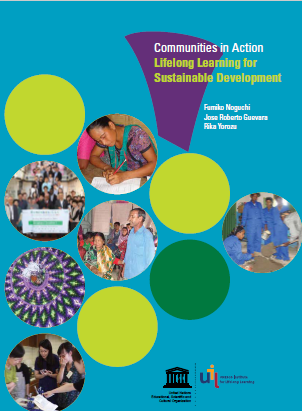 Communities in action: lifelong learning for sustainable Year of publication: 2015 Author: Fumiko Noguchi | Jose Roberto Guevara | Rika Yorozu Corporate author: UNESCO Institute for Lifelong Learning (UIL) This handbook identifies principles and policy mechanisms to advance community-based learning for sustainable development based on the commitments endorsed by the participants of the Kominkan-CLC International Conference on Education for Sustainable Development, which was in Okayama City, Japan, in October 2014. To inform policymakers and practitioners new to this field, the handbook clarifies the international vision and goals for sustainable development and Education for Sustainable Development, and identifies the potential contributions of community-based learning centres and organizations. It documents both policy and practice from different regions and concludes with a summary of principles and policy support mechanisms.
  Repositioning and reconceptualizing the curriculum for the effective realization of Sustainable Development Goal Four, for holistic development and sustainable ways of living Year of publication: 2015 Corporate author: UNESCO International Bureau of Education (IBE) The purpose of this discussion paper is two-fold, it is to reposition curriculum at the center of the national and the global development dialogue and to highlight its power to give effect to national and to global aspirational statements on the role of education in holistic development. When well designed and effectively enacted, curriculum determines the quality, inclusiveness and development-relevance of education.Second, is to reconceptualize curriculum as a fundamental force of integration of education systems and as an operational tool for giving effect to policies on lifelong learning. Curriculum leads all core aspects of education that are known to determine quality, inclusion, and relevance such as content, learning, teaching, assessment and the teaching and learning environments among others. Its horizontal and vertical articulation, as well as its articulation across learning settings is what gives effect to lifelong learning policies.This paper therefore seeks to reposition curriculum as an indispensable tool for giving effect to SDG Goal 4.
  The Critical global educator: global citizenship education as sustainable development Year of publication: 2016 Author: Maureen Eills An acknowledged challenge for humanitarian democratic education is its perceived lack of philosophical and theoretical foundation, often resulting in peripheral academic status and reduced prestige. A rich philosophical and theoretical tradition does however exist. This book synthesises crucial concepts from Critical Realism, Critical Social Theory, Critical Discourse Studies, neuro-, psycho-, socio- and cognitive-linguistic research, to provide critical global educators with a Cultural Historical Activity Theory (CHAT) framework for self- and negotiated evaluation.
 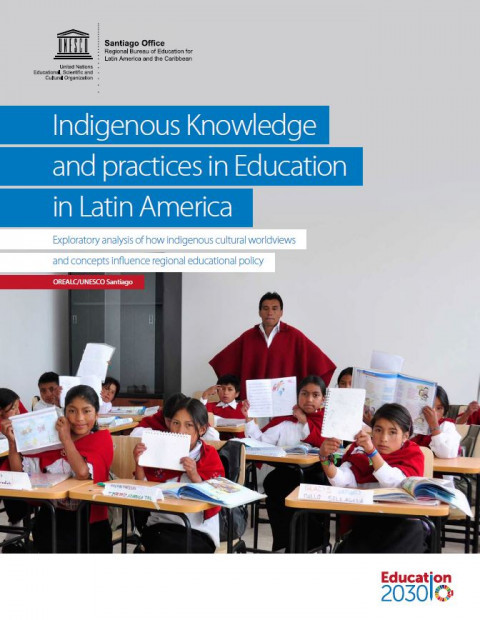 Indigenous Knowledge and practices in Education in Latin America: Exploratory Analysis of How Indigenous Cultural Worldviews and Concepts Influence Regional Educational Policy Year of publication: 2017 Corporate author: UNESCO Santiago This study presents a preliminary exploration of the approaches, processes and tools through which indigenous worldviews and concepts of knowledge and well-being can and have influenced education policies in Latin America. First, it addresses the principal theoretical approaches used in the area of indigenous knowledge and education policies, taking into account the persistence of an “epistemic otherness” and the need for a dialogue between the predominant approaches. Second, it addresses the normative framework and intercultural educational policies, emphasizing how and to what extent the countries in the region take indigenous knowledge into consideration and include it in their education policies and practices. Third, it presents a number of “relevant practices” in terms of dialogue with indigenous knowledge in education policies, taking into account the factors that favour the relevance of education to indigenous views and cultural practices, facilitating their replicability and sustainability. Furthermore, these practices respond to key criteria like recognizing learners as ‘carriers’ and producers of culture, valuing the use of schools as centres of social and cultural activities and favouring the inclusive learning of indigenous and non-indigenous students. Finally, the study unveils challenges for the advancement of the dialogue between indigenous knowledge and education policies, at the same time proposing key concepts to be approached in depth.