
Resources
Explore a wide range of valuable resources on GCED to deepen your understanding and enhance your research, advocacy, teaching, and learning.
340 Results found
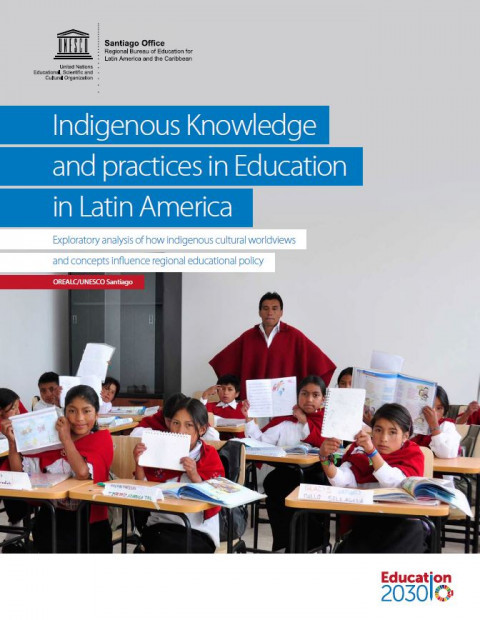 Conocimiento Indígena y Políticas Educativas en América Latina: Análisis exploratorio de cómo las cosmovisiones y conceptos culturales indígenas de conocimiento inciden, y pueden incidir, en la política educativa en la región Year of publication: 2017 Corporate author: UNESCO Santiago El presente estudio explora la idea de una ‘alternativa epistémica’, construyendo desde el conocimiento y los valores que sustentan las prácticas sociales y educacionales indígenas de la región. En particular, explora cómo estos valores y formas de conocimiento han sido adoptados en las políticas educacionales de tres países de la región andina: Bolivia, Ecuador y Perú, que hace poco atravesaron reformas políticas y constitucionales con el fin de reconocer la composición de sus poblaciones multiculturales, multiétnicas y multilingüísticas. Esta publicación es una invitación a considerar el conocimiento indígena como una fuente legítima de inspiración para las políticas educacionales que puedan contribuir al bienestar de todos y a la sostenibilidad del planeta.
 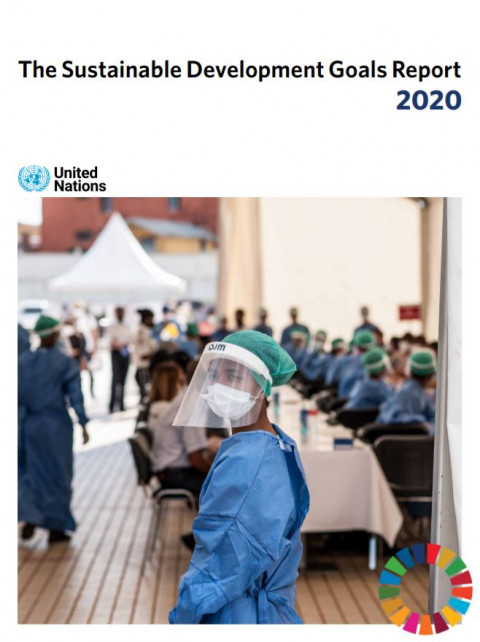 The Sustainable Development Goals Report 2020 Year of publication: 2020 Corporate author: United Nations (UN) The annual Sustainable Development Goals Report provides an overview of the world’s implementation efforts to date, highlighting areas of progress and areas where more action needs to be taken to ensure no one is left behind. Now, in only a short period of time, the COVID-19 pandemic has unleashed an unprecedented crisis, causing further disruption to SDG progress, with the world’s poorest and most vulnerable affected the most.Using the latest data and estimates, this annual stocktaking report on progress across the 17 Goals shows that it is the poorest and most vulnerable – including children, older persons, persons with disabilities, migrants and refugees – who are being hit the hardest by the effects of the COVID-19 pandemic. Women are also bearing the heaviest brunt of the pandemic’s effects.The report also shows that climate change is still occurring much faster than anticipated.
  Educación para la ciudadanía y convivencia: manual de ciudadanía y convivencia desde la construcción colectiva de sentidos y redes; ambiente Year of publication: 2015 Corporate author: Centro de Investigación y Educación Popular (CINEP) | Secretaría de Educación del Distrito (SED) Environment is one of the main themes related to education for citizenship and coexistence. For that reason, this manual identifies three areas of reflection: 1) My first territory: selfcare, caring for others, 2) Environmental territories and their cultural dimension, 3) regional and worldwide territory. Each one of these areas is accompanied by didactic tools that allow to deepening into the contents through the dialogue between the characters that have been created, proposing theoretical and practical fundamental elements, which could be useful in the pedagogical process leaded by the participants of the project.
 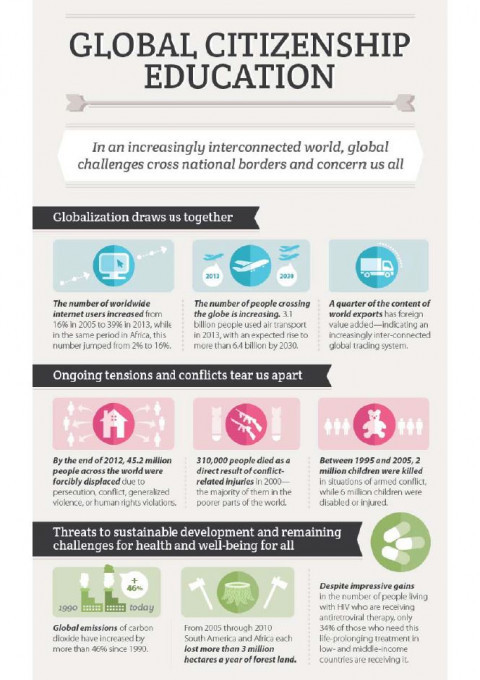 Global Citizenship Education infographic Year of publication: 2014 Corporate author: UNESCO In an increasingly interconnected world, global challenges cross national borders and concern us all. With issues like these threatening human and environmental well-being, we need to re-think the role and relevance of education. We need Global Citizenship Education. Global Citizenship Education is transformative. What are the barriers to this kind of education? What needs to change in education? What is UNESCO doing? What can you do?
  Quality Physical Education (QPE): guidelines for policy makers Year of publication: 2015 Author: Nancy, McLennan | Jannine, Thompson Corporate author: UNESCO A key feature of the Post-2015 Development Agenda is sustainable development. Sustainable development starts with safe, healthy, well-educated children. Participation in quality physical education (QPE), as part of a rounded syllabus, enhances young peoples’ civic engagement, decreases violence and negative patterns of behaviour, and improves health awareness. The UNESCO QPE Policy Package is an original piece of work, which draws upon results from extensive global research (including the Worldwide Survey of School Physical Education). These guidelines, designed for global application and local adaptation, provide a means of analysing current policy through practical guidance and a ‘how-to’ approach. The materials have been developed in consultation with key partners including the European Commission, the International Council for Sport Science and Physical Education (ICSSPE), UNDP, UNICEF, UNOSDP and WHO. Educación física de calidad (EFC): guía para los responsables políticos Year of publication: 2015 Author: Nancy, McLennan | Jannine, Thompson Corporate author: UNESCO A key feature of the Post-2015 Development Agenda is sustainable development. Sustainable development starts with safe, healthy, well-educated children. Participation in quality physical education (QPE), as part of a rounded syllabus, enhances young peoples’ civic engagement, decreases violence and negative patterns of behaviour, and improves health awareness. The UNESCO QPE Policy Package is an original piece of work, which draws upon results from extensive global research (including the Worldwide Survey of School Physical Education). These guidelines, designed for global application and local adaptation, provide a means of analysing current policy through practical guidance and a ‘how-to’ approach. The materials have been developed in consultation with key partners including the European Commission, the International Council for Sport Science and Physical Education (ICSSPE), UNDP, UNICEF, UNOSDP and WHO. L'Education physique de qualité (EPQ): directives à l'intention des décideurs Year of publication: 2015 Author: Nancy, McLennan | Jannine, Thompson Corporate author: UNESCO A key feature of the Post-2015 Development Agenda is sustainable development. Sustainable development starts with safe, healthy, well-educated children. Participation in quality physical education (QPE), as part of a rounded syllabus, enhances young peoples’ civic engagement, decreases violence and negative patterns of behaviour, and improves health awareness. The UNESCO QPE Policy Package is an original piece of work, which draws upon results from extensive global research (including the Worldwide Survey of School Physical Education). These guidelines, designed for global application and local adaptation, provide a means of analysing current policy through practical guidance and a ‘how-to’ approach. The materials have been developed in consultation with key partners including the European Commission, the International Council for Sport Science and Physical Education (ICSSPE), UNDP, UNICEF, UNOSDP and WHO.
  Gender and Rural Development in Eastern Europe and Central Asia: Key Issues Year of publication: 2016 Corporate author: Food and Agriculture Organization of the United Nations (FAO) This report provides a brief overview and description of the critical issues affecting the situation of rural women in the region. This overview has been compiled with the aim of informing all stakeholders and using this information in public campaigns and to achieve greater impact of interventions for development.
  Changing Minds, Not the Climate: UNESCO Mobilizes to Address the Climate Crisis Year of publication: 2019 Corporate author: UNESCO The climate crisis is the challenge of the century. Scientific reports, including those of UNESCO, one after another describe increasingly pessimistic scenarios. All experts agree on one thing: we are in a race against time. A race to try to reserve our natural habitat in all of its beauty and diversity, to protect our ecosystems and natural resources and to pass them on to future generations. A race to mitigate the destructive effects of climate change and find the most appropriate innovative solutions.The disruptions caused by climate change are already part of our daily lives and trigger social, political, geopolitical and humanitarian upheavals. The climate crisis is not only threatening our ecosystems, it is also undermining fundamental rights, widening inequalities and creating new injustices. That is why ethical imperative must guide our action. Beyond the political and legal agreements essential to preparing for the future, change involves a shift in mindset, a different way of considering the place of humans in nature. This challenge mobilizes all resources, including education, research and creativity. It is an ethical and humanistic commitment. This is UNESCO’s mandate, and it is a matter of urgency. Changeons les esprits, pas le climat: l'UNESCO se mobilise face à la crise climatique Year of publication: 2019 Corporate author: UNESCO La crise climatique est le défi du siècle. Les rapports scientifiques, dont ceux de l’UNESCO, se succèdent et dessinent des scénarios de plus en plus pessimistes. Tous les experts s’accordent sur une certitude : une course contre la montre est lancée. Une course pour tenter de préserver notre habitat naturel dans sa beauté et sa diversité, pour protéger nos ecosystèmes, nos ressources naturelles et les transmettre aux générations futures. Une course pour atténuer les effets destructeurs du changement climatique et trouver les solutions innovantes les plus appropriées.Ces dérèglements constituent déjà notre quotidien et provoquent des bouleversements sociaux, politiques, géopolitiques et humanitaires. La crise climatique ne met pas seulement en péril nos écosystèmes : elle ébranle certains droits fondamentaux, creuse des inégalités et crée de nouvelles injustices. C’est pourquoi l’exigence éthique doit orienter notre action. Bien au-delà des accords politiques et juridiques indispensables pour préparer l’avenir, le changement passe par une évolution des mentalités, une manière différente d’envisager la place de l’humain dans la nature. Ce défi mobilise toutes les ressources l’éducation, de la recherche, de la créativité. C’est un engagement éthique et humaniste.Tel est le mandat de l’UNESCO, et l’urgence aujourd’hui.