
Resources
Explore a wide range of valuable resources on GCED to deepen your understanding and enhance your research, advocacy, teaching, and learning.
191 Results found
 Campus Planning Based on Concept of Sustainable Development and Environmental Adaptability: Taking Beibu Gulf University as an Example (Urbanization and Land Use; Vol.11, No.2) Year of publication: 2023 Author: 邓绍云 | 邱清华 Based on the concept of sustainable development and environmental protection, this paper ex-pounds and demonstrates the sustainable development of colleges and universities, and points out that colleges and universities must follow the concept of sustainable development to develop and grow, colleges and universities must expand the scale of enrollment, improve the benefits of education economy, the campus planning and design must be beautiful and spectacular, and adapt to the local culture and environment is very important and necessary. Taking Beibu Gulf University as an example, this paper expounds that only in this way can the university develop and grow continuously for a long time, enhance the attraction of students, improve the teaching quality and education reputation. 基于可持续发展及环境适应性理念的校园规划: 以北部湾大学为例 (城镇化与集约用地; Vol.11, No.2) Year of publication: 2023 Author: 邓绍云 | 邱清华 文章基于可持续发展的理念和环境保护观念,对高校的可持续发展进行了阐述与论证,并指出高校要发展要壮大则必须遵循可持续发展的理念,高校要扩大招生规模,提高教育经济受益,则必须将校园规划设计美观漂亮和壮观等,而适应当地文化和环境非常重要和必要。并以北部湾大学为例,阐述了唯有如此,才能使该高校长久发展和持续壮大,提升生源吸引力,提高教学质量和教育声誉。
 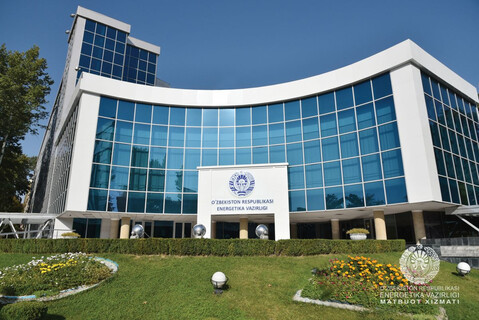 Transition to “Green Economy” in Uzbekistan: Opportunities and Challenges Year of publication: 2023 Author: Nodira Mukhammadkulova | Shakhrizoda Rakhimova Corporate author: Central Asian Bureau for Analytical Reporting (CABAR) Climate change issues and the crisis in the energy market have led to the development of technologies for the use of alternative, more environmentally friendly and possibly renewable resources, which are called “green” technologies. In Uzbekistan, the program of transition to a green economy and green growth until 2030 was adopted at the end of 2022. According to the program, by 2030, the share of renewable energy sources (RES) used will be about 30% of the country’s total electricity generation. The issue of awareness of the population as consumers about the relevance of diversification of energy consumption, advantages and disadvantages of alternative energy sources is relevant.
  中国山西潞安碳中和目标下的企业可持续发展方向研究 Year of publication: 2022 Author: 刘文奇 | 曾一洲 近几年来,社会经济迅猛发展。也对企业的发展模式以及改革创新提出了更高的要求。在碳中和背景下,积极引导企业优化低碳循环发展,从可持续战略落实等相关角度出发,结合山西潞安碳中和目标的设定,积极探寻企业未来可持续发展的方向和思路是十分重要的。因此,本文在探索过程中,主要结合碳中和双碳发展目标,进一步的优化企业改革模式分析。根据碳中和的基本思想以及应用的重要价值,研究走低碳绿色发展道路的重要思路。
  Embracing Peace through UNESCO World Heritage Year of publication: 2024 Author: 장정아 | 김민성 | 김수진 | 김원호 | 안치영 | 오성희 | 오창현 | 이성영 | 이현경 | 전원희 Corporate author: Korean National Commission for UNESCO This resource kit is the product of long labor by 10 researchers consisting of scholars on UNESCO heritage and teachers working in schools that belong to the UNESCO Associated Schools Network (ASPnet). It is distinct from existing educational resources in several ways. First, this kit goes beyond introducing the variously inscribed World Heritage properties one after another, to explain the rich significance of the heritage properties through keywords such as peace, cultural diversity, and sustainability. We also sought to overcome misconceptions about World Heritage and presented the content through various interesting cases for easy, hands-on application in classroom settings. In 2024, KNCU has pilot-tested the teaching materials presented in this resource kit in Korean middle and high schools belonging to UNESCO ASPnet. An online teacher training course based on this book has also been provided in June this year.
 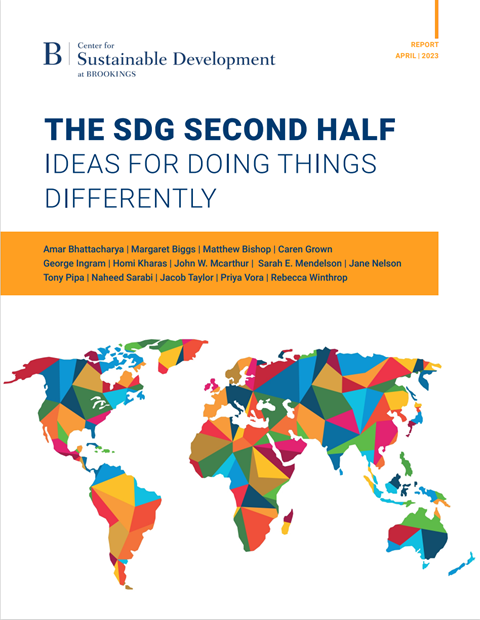 The SDG second half: Ideas for doing things differently Year of publication: 2023 Author: Amar Bhattacharya | Margaret Biggs | Matthew Bishop | Caren Grown | George Ingram | Homi Kharas | John W. Mcarthur | Sarah E. Mendelson | Jane Nelson | Tony Pipa | Naheed Sarabi | Jacob Taylor | Priya Vora | Rebecca Winthrop Corporate author: Center for Sustainable Development at Brookings This short compendium captures a cross section of SDG-focused insights and recommendations from CSD-affiliated scholars. Each brief essay describes something with the potential to be done differently during the second half of the SDG era. Across a dozen contributions, topics range from reframing media coverage of the SDGs to measuring and elevating the role of the private sector; from participatory approaches to transforming education systems to new learning paradigms for human rights; from better risk-taking in fragile countries to improving infrastructure and services for care; from fit-for-purpose multilateral development banks to a purpose-driven fund to end extreme poverty; from turbo-charged Canadian SDG approaches to renewed American SDG leadership; from breakthroughs in digital public infrastructure to innovative frontiers in the digitally empowered methods of collective behavior science.
 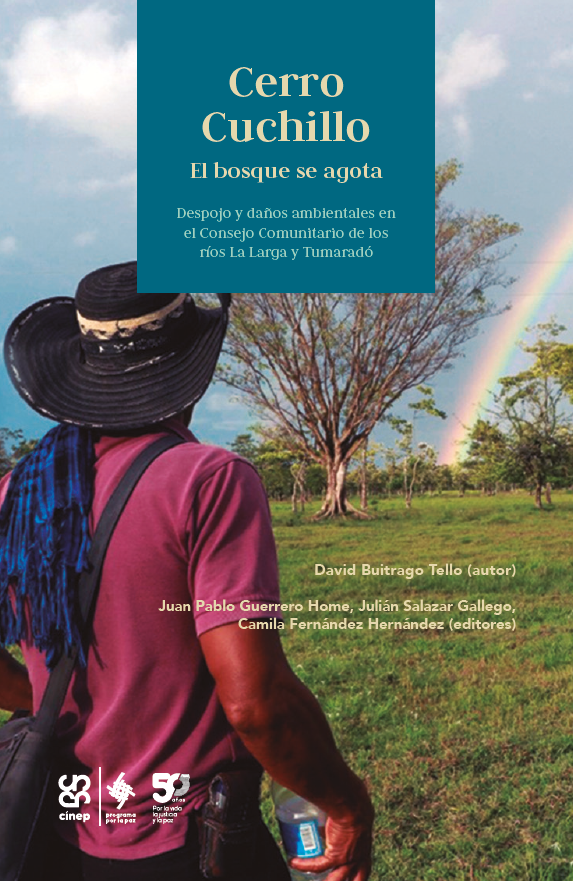 Cerro Cuchillo: The Forest is Exhausted Year of publication: 2022 Author: David Buitrago Tello Corporate author: Centro de Investigación y Educación Popular (CINEP) This report presents different aspects around the "Cerro Cuchillo" territory and its inhabitants. The ecosystems and their relationships with the communities are described, the alterations they have suffered, the processes of change and damage and the protection and restoration measures of the strategic ecosystems. All this, through qualitative research tools, which allowed identifying the processes of change and abandonment of the territory.
  Comprehensive Sex Education Year of publication: 2021 Corporate author: Ministry of Education, Argentina What are we talking about when we say Comprehensive Sex Education? What challenges does integrality take on? In this issue of the Human Rights, Gender and CSE at school collection you will find a series of activities to work in the classroom and a theoretical framework to think about CSE.
 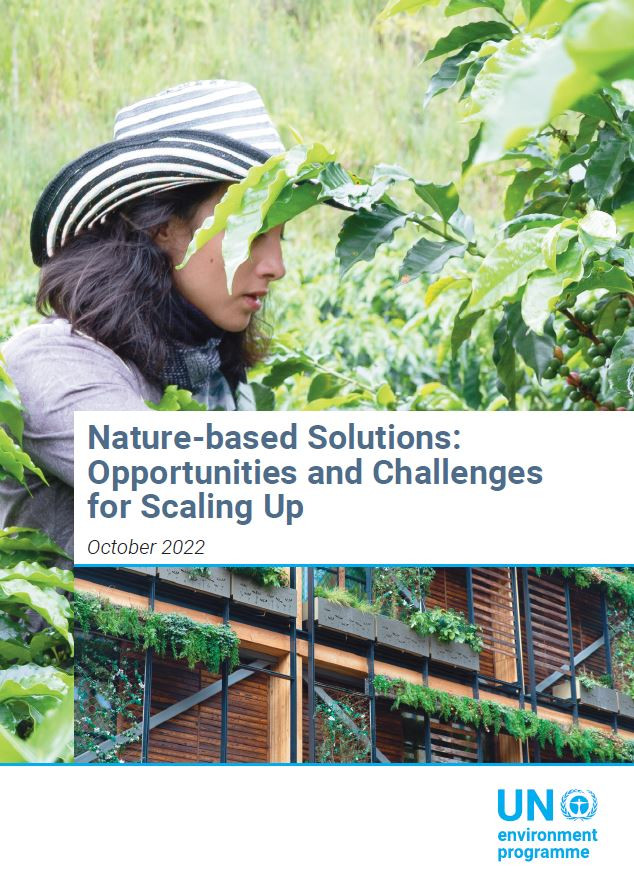 Nature-based Solutions: Opportunities and Challenges for Scaling Up Year of publication: 2022 Author: Charlotte Hicks | Carolina Chambi | Hemant Tripathi | Katie Dawkins | Tania Salvaterra | Kollie Tokpah | Valerie Kapos | Hashim Zaman Corporate author: United Nations Environment Programme (UNEP) Nature-based Solutions (NbS) are important for the global sustainable development agenda because they offer the potential to address, in an effective way, diverse challenges such as climate change, food and water insecurity, disaster impacts, and threats to human health and wellbeing, while reducing environmental degradation and biodiversity loss. Some of the challenges addressed by NbS, including biodiversity loss and climate action, cannot be fully tackled without this contribution. This does not mean that other actions, such as rapid decarbonization of our economies, are not also essential. This report: Outlines recent developments on NbS, with a focus on global, regional and national commitments, and key issues and concerns Builds on the new multilaterally agreed definition of NbS – agreed by the UN Environment Assembly in March 2022 – to set out key elements in the concept, provides examples of NbS, and discusses related approaches Provides recommendations for actions by governments, civil society and the private sector to substantially scale up the use of NbSThe report aims to inform NbS-related initiatives and discussions on NbS at global, regional, and national levels, with a focus on how NbS can be scaled up to more effectively address social, economic, and environmental challenges.
  Reviewing the Korean Sustainable Development Strategy and Policy in Response to COVID-19 Year of publication: 2021 Author: Soeun Ahn | Dokyun Kim | Hongrim Lee | Yoonseon Park | Jaehyuk Lee | Jungseok Lee | Hanwoom Hong | Woohyun Jung | Baeseok Jeon | Garim Jeon Corporate author: Korea Environment Institute (KEI) Through the ‘Sustainable Development Goals (SDGs)’, the United Nations (UN) has established tasks, including 17 policy goals and 169 targets, that civilization must resolve by 2030. It is recommended that each country build its own implementation mechanism, which sets its own policy goals and targets, tailored to its respective national context. South Korea established the ‘National Sustainable Development Goals (K-SDGs)’ in 2018, consisting of 17 policy goals and 122 targets. In 2020, the country prepared the Fourth Basic Plan for Sustainable Development (2021-2040). The K-SDGs were revised and supplemented in consideration of recent changes in conditions.This study aims to develop a national K-SDGs strategy by examining factors that threaten sustainable development, with a focus on the COVID-19 pandemic.