
Resources
Explore a wide range of valuable resources on GCED to deepen your understanding and enhance your research, advocacy, teaching, and learning.
126 Results found
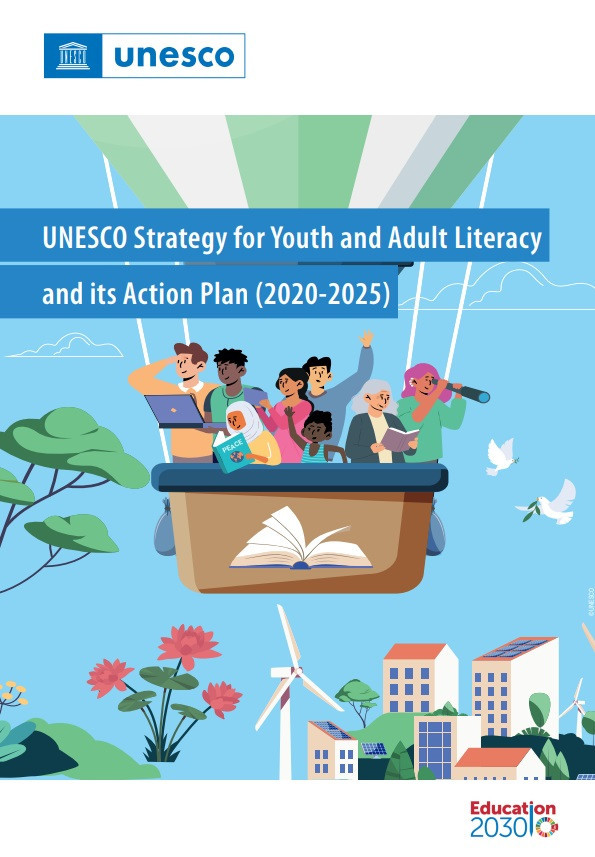 UNESCO Strategy for Youth and Adult Literacy and its Action Plan (2020-2025) Year of publication: 2023 Corporate author: UNESCO I. Introduction1. The international community has set an ambitious 2030 Agenda for Sustainable Development1, with education and learning central to its achievement. The vision of the Incheon Declaration2, Education 2030, is fully captured by Sustainable Development Goal 4 (SDG4) “ensure inclusive and equitable quality education and promote lifelong learning opportunities for all”. Education 2030 devotes considerable attention to literacy and adult learning including through Target 4.6 and related indicative strategies.2. By 205 EX/Decision 6.III, the Executive Board requested the Director-General to review, update and improve the vision and strategy for literacy to contribute to SDG 4 – Education 2030, and to present it at its 207th session, with a view to transmitting it to the General Conference at its 40th session. The present document therefore contains the draft UNESCO Strategy for Youth and Adult Literacy (2020- 2025). The Strategy was developed through an inclusive and participatory process, including research and analysis of key trends, online consultation of Member States and expert meetings.
 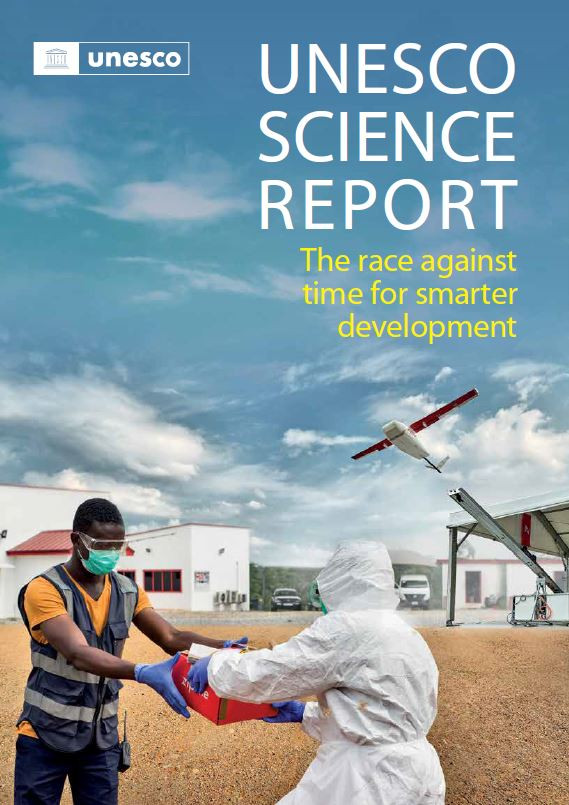 UNESCO Science Report: The Race Against Time for Smarter Development Year of publication: 2021 Author: Susan Schneegans | Tiffany Straza | Jake Lewis Corporate author: UNESCO This seventh edition of the report monitors the development path that countries have been following over the past five years from the perspective of science governance. It documents the rapid societal transformation under way, which offers new opportunities for social and economic experimentation but also risks exacerbating social inequalities, unless safeguards are put in place.The report concludes that countries will need to invest more in research and innovation, if they are to succeed in their dual digital and green transition. More than 30 countries have already raised their research spending since 2014, in line with their commitment to the Sustainable Development Goals. Despite this progress, eight out of ten countries still devote less than 1% of GDP to research, perpetuating their dependence on foreign technologies.
 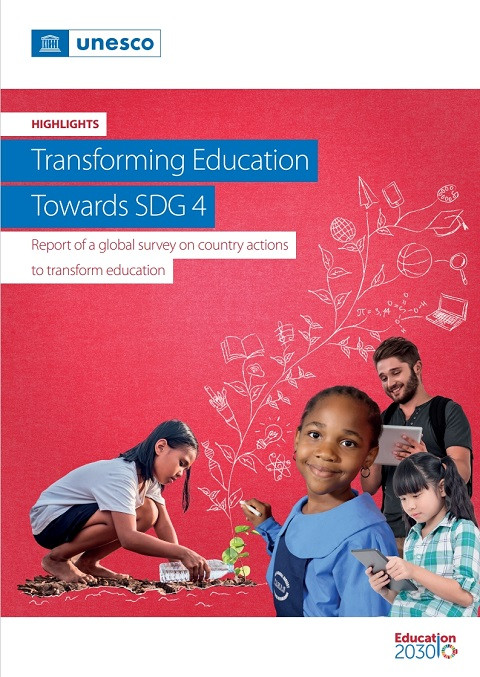 Transforming Education Towards SDG4: Report of a Global Survey on Country Actions to Transform Education; Highlights Year of publication: 2024 Corporate author: UNESCO In 2022, the United Nations Transforming Education Summit responded decisively to mobilize action, ambition and solidarity as well as to elevate education to the top of the political agenda. This powerful mobilization led to 143 countries presenting national statements of commitment, demonstrating their political resolve to reimagine and transform their education systems. On the Summit’s fi rst anniversary, UNESCO invited its Member States to participate in the Survey on Country Actions to Transform Education and report on how they have translated their commitments into actions. This document presents highlights from the Transforming Education Towards SDG 4: Report of a global survey on country actions to transform education. It showcases transformative actions that countries have undertaken to accelerate progress towards SDG 4. The report emphasizes that education must adopt a holistic, lifelong and comprehensive approach that addresses the development and well-being of individual learners and society. Transforming education requires placing inclusion, equity and gender equality at the core of policies and interventions. It also requires more and better education fi nancing, and investments in the teaching profession.
  SDG-Education 2030 Steering Committee: Making Higher Education More Inclusive, July 2020 Year of publication: 2020 Corporate author: UNESCO The rapid expansion of higher education in the past two decades, as well as the growing diversity of providers and technological models for delivering education, have made higher education accessible to more students globally. Yet significant barriers remain for many vulnerable groups, and women still lag behind in science, technology, engineering and mathematics. A better understanding of inequality as well as new paradigms, strategies and a renewed political will for ‘leaving no one behind’ are required. Structural equity policies at all levels throughout the education system, as well as extraordinary measures when needed, should ensure that students from any background with the potential to succeed are fully integrated with equal opportunities into higher education. This policy paper reviews the current literature and sets out findings and recommendations to increase and strengthen equity and inclusion in higher education in a lifelong learning perspective. It provides a conceptual framework for equity and inclusion, analyses the urgent need to improve funding and its efficiency, provides insight into the challenges for teaching and teachers, and recommends policy measures for establishing higher education systems that are more equitable and more inclusive.
 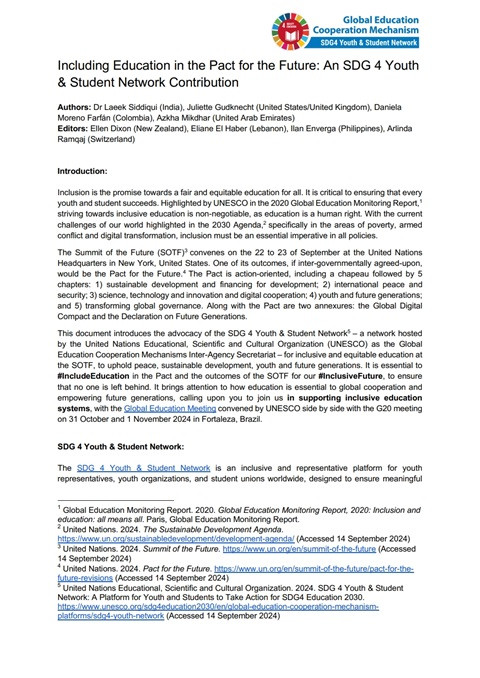 Including Education in the Pact for the Future: An SDG 4 Youth & Student Network Contribution Year of publication: 2024 Author: Laeek Siddiqui | Juliette Gudknecht | Daniela Moreno Farfán | Azkha Mikdhar Corporate author: SDG 4 Youth & Student Network | UNESCO Inclusion is the promise towards a fair and equitable education for all. It is critical to ensuring that every youth and student succeeds. Highlighted by UNESCO in the 2020 Global Education Monitoring Report, striving towards inclusive education is non-negotiable, as education is a human right. With the current challenges of our world highlighted in the 2030 Agenda, specifically in the areas of poverty, armed conflict and digital transformation, inclusion must be an essential imperative in all policies. The Summit of the Future (SOTF) convenes on the 22 to 23 of September at the United Nations Headquarters in New York, United States. One of its outcomes, if inter-governmentally agreed-upon, would be the Pact for the Future. The Pact is action-oriented, including a chapeau followed by 5 chapters: 1) sustainable development and financing for development; 2) international peace and security; 3) science, technology and innovation and digital cooperation; 4) youth and future generations; and 5) transforming global governance. Along with the Pact are two annexures: the Global Digital Compact and the Declaration on Future Generations. This document introduces the advocacy of the SDG 4 Youth & Student Network – a network hosted by the United Nations Educational, Scientific and Cultural Organization (UNESCO) as the Global Education Cooperation Mechanisms Inter-Agency Secretariat – for inclusive and equitable education at the SOTF, to uphold peace, sustainable development, youth and future generations. It is essential to #IncludeEducation in the Pact and the outcomes of the SOTF for our #InclusiveFuture, to ensure that no one is left behind. It brings attention to how education is essential to global cooperation and empowering future generations, calling upon you to join us in supporting inclusive education systems, with the Global Education Meeting convened by UNESCO side by side with the G20 meeting on 31 October and 1 November 2024 in Fortaleza, Brazil.
 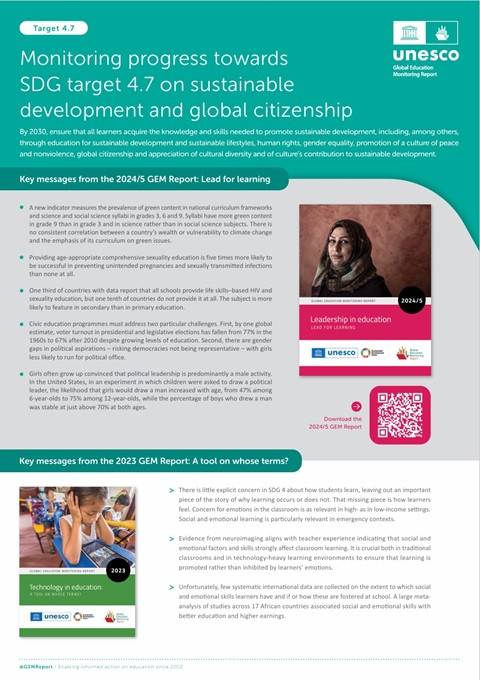 Monitoring Progress towards SDG Target 4.7 on Sustainable Development and Global Citizenship Year of publication: 2024 Corporate author: UNESCO | Global Education Monitoring Report Team This document introduces key messages from the GEM Reports and other related publications and online resources regarding the progress towards SDG Target 4.7.