
Resources
Explore a wide range of valuable resources on GCED to deepen your understanding and enhance your research, advocacy, teaching, and learning.
126 Results found
 الموؤتمر الكشفي العربي ال 29 Year of publication: 2019 Corporate author: Arab Scout Organization يستعرض كتاب المؤتمر الكشفية وأهداف التنمية المستدامة. ويعالج الكتاب مجموعة من القضايا في مجال الكشفية ودورها في تحقيق أهداف التنمية المستدامة.
  Réimaginer l’éducation aux compétences de vie et à la citoyenneté au Moyen-Orient et en Afrique du Nord : Une approche à quatre dimensions et systémique des compétences pour le XXIe siècle ; Cadre programmatique et conceptuel Year of publication: 2017 Corporate author: UNICEF Middle East and North Africa L’Initiative pour l’éducation aux compétences de vie et à la citoyenneté de la région MENA (LSCE) représente un effort de collaboration étatique et régional en faveur de la réalisation de l’objectif de développement durable (ODD) 4 – Assurer l’accès de tous à une éducation de qualité, sur un pied d’égalité, et promouvoir les possibilités d’apprentissage tout au long de la vie. Elle cherche à reformuler la compréhension traditionnelle de l’éducation aux compétences de vie et à la citoyenneté dans la région, tout en rappelant les questions fondamentales au sujet du but et du rôle de l’éducation dans le développement sociétal qui sont pertinentes dans le contexte actuel.L’Initiative LSCE se concentre sur trois défis interdépendants :Une société du savoir inaccessible, résultat de la mauvaise qualité de l’éducation, du bas niveau des résultats scolaires et d’une équité et inclusion limitées.Une croissance économique en déclin, résultat d’un manque d’aptitudes à l’employabilité, du haut taux de chômage chez les jeunes, de l’inégalité des sexes face à l’accès au marché du travail, du manque de création d’emplois, et d’un environnement économique faible.Une faible cohésion sociale, résultat de l’escalade de la violence et de la radicalisation tout autant que d’un faible engagement civique.
 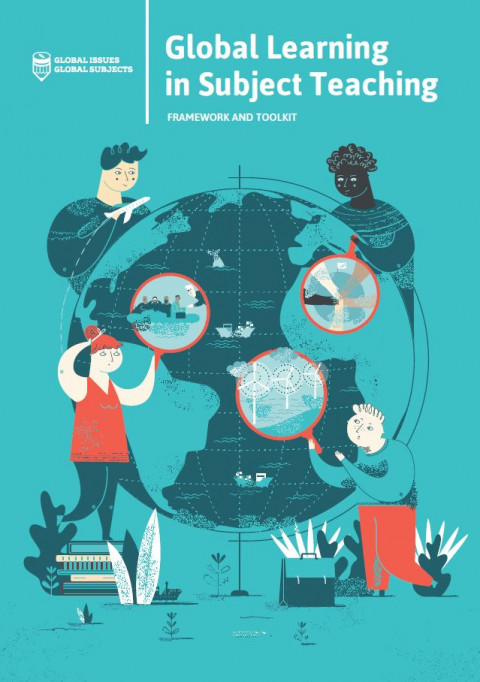 Global Learning in Subject Teaching: Framework and Toolkit Year of publication: 2020 Corporate author: Center for Citizenship Education (CCE) | Global Issues, Global Subjects (GIGS) The brochure 'Global Learning in Subject Teaching: Framework and Toolkit' has been developed as a proposal for teachers, educators and educational institutions on how to reach pupils with Global Learning. In its practical part, the brochure provides the reader with a toolkit of 20 ready-to-use lesson plans for subject lessons where the subject curriculum topics are linked with global issues such as migration, climate change and gender equality.
  Libraries and the Sustainable Development Goals: A Storytelling Manual Year of publication: 2018 Corporate author: International Federation of Library Associations and Institutions (IFLA) The Libraries and the Sustainable Development Goals (SDGs) – a storytelling manual is a guide for librarians and library advocates to support you in your advocacy efforts. The Library Map of the World (LMW) team have compiled some tips and useful information to help you write compelling stories about your library activities, projects and programmes, and their impact on communities. Consequently, we would like to share your story about your library’s contribution to the SDGs through the LMW website.International Federation of Library Associations and Institutions’s (IFLA) Library Map of the World (LMW) provides you with a unique digital space to share the story of your library’s activities, projects, and programmes as well as their impact on your community, and how that contributes to the United Nations (UN) Sustainable Development Goals (SDGs) . By sharing your story, you are engaging and empowering libraries all over the world.
  Access and Opportunity for All: How Libraries Contribute to the United Nations 2030 Agenda Year of publication: 2020 Corporate author: International Federation of Library Associations and Institutions (IFLA) The inclusion of libraries and access to information in national and regional development plans will contribute to meeting the global United Nations 2030 Agenda for Sustainable Development.In support of this goal, IFLA has published a booklet of examples and recommendations for policymakers demonstrating the contribution of libraries to the UN Sustainable Development Goals (SDGs).The booklet includes stories from all types of libraries in many countries around the world.
  How to Engage Citizens with the Sustainable Development Goals Year of publication: 2020 Corporate author: Finnish Development NGOs Fingo The purpose of this booklet is to share reflections, successes and learning outcomes from the FRAME, VOICE, REPORT! (FVR) project.It can be used to find inspiration from other civil society organisations (CSOs) working on the same topics and themes you do, but also as a source for ideas for new ways of looking at old issues.This booklet covers both the more theoretical approaches and concrete cases from CSOs across Europe. These cases are examples of the many projects funded by the FVR.The project had its roots in the previous successes and tried and tested approaches of the partner organisations. The aim of FVR! was to secure resources and develop the value-based, high quality work of civil society organisations. The second aim was to enable smaller organisations to learn about EU project funding and to build capacity on how to conduct high quality global citizenship education and development communications. Finally, the overarching aim of the project was to engage EU citizens with the SDGs.
  [Video] The Ten Targets of the Sustainable Development Goal 4...with Elyx Year of publication: 2017 Corporate author: UNESCO This new UNESCO animation explaining the ten targets of the Sustainable Development Goal 4.Together with Elyx, the UN's first digital ambassador, discover how to ensure inclusive and quality education for all and promote lifelong learning. [vidéo] Les Dix Cibles de l’Objectif de Développement Durable 4...avec Elyx ! Year of publication: 2017 Corporate author: UNESCO Regardez cette nouvelle animation expliquant les dix cibles de l'Objectif de développement durable 4. Avec Elyx, le premier ambassadeur numérique de l'ONU, découvrez comment garantir une éducation inclusive et de qualité pour tous et promouvoir l'apprentissage tout au long de la vie. [Vídeo] Descubre las Diez Metas del Objetivo de Desarrollo Sostenible 4... ¡con Elyx! Year of publication: 2017 Corporate author: UNESCO La UNESCO presenta su nuevo vídeo para explicar las diez metas del Objetivo de Desarrollo 4. Junto a Elyx, la primera embajadora digital de la UNESCO, descubre como garantizar una educación inclusiva, equitativa y de calidad y promover oportunidades de aprendizaje durante toda la vida para todos. Десять задач Цели 4 в области устойчивого развития ... с Эликс! Year of publication: 2017 Corporate author: UNESCO Обеспечение качественного образования для всехПосмотрите эту новую анимацию ЮНЕСКО, объясняющую десять задач Цели 4 в области усточивого развития. Вместе с Эликс, первым цифровым послом ООН, узнайте, как обеспечить всеохватное и качественное образование для всех и содействовать обучению.