
Resources
Explore a wide range of valuable resources on GCED to deepen your understanding and enhance your research, advocacy, teaching, and learning.
109 Results found
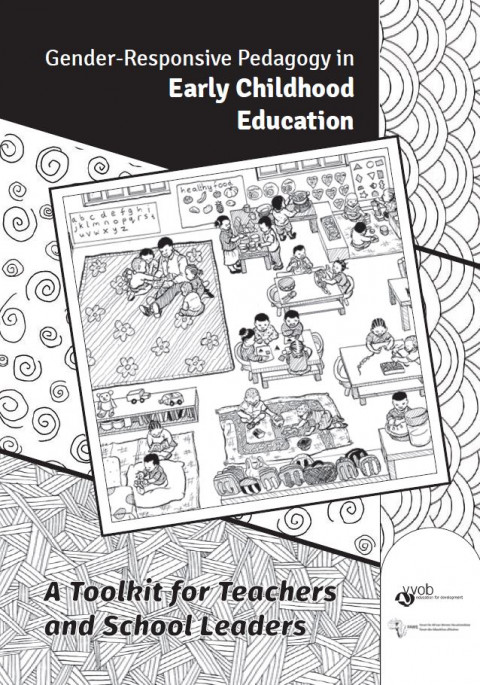 Gender-responsive Pedagogy for Early Childhood Education: A Toolkit for Teachers and School Leaders Year of publication: 2019 Corporate author: VVOB | Forum for African Women Educationalists (FAWE) The Gender-Reponsive Pedagogy for Early Childhood Education Toolkit targets early childhood education teachers and all other practitioners who deal with younger children. It is a practical guide that can be adapted to any context and the related needs as well as a source of ideas and resources that individual teachers and school leaders can put to immediate use in their classrooms and schools. The toolkit is also a useful resource for researchers, school-parent committees and governing bodies, civil society organisations, community leaders and education policy makers.
  Integrating education for sustainable development (ESD) in teacher education in South-East Asia: a guide for teacher educators Year of publication: 2018 Corporate author: UNESCO Bangkok This publication is a cumulative output of the project Sustainability Begins with Teachers in South-East Asia, implemented by UNESCO Bangkok, in cooperation with SEAMEO from 2017 to 2018, with the generous support of the Government of Japan. The initial content was developed together with the representatives of the universities and teacher education institutions who participated in the South-East Asia Sub-Regional Workshop on Education for Sustainable Development for Teacher Education Institutions, held from 5 to 9 June 2017 in Chiang Rai, Thailand. Content has since been enhanced through the sharing of knowledge and experiences gathered from a series of in-country workshops held in Cebu, Philippines; Luang Prabang, Lao PDR; Kampot, Cambodia; Bangkok, Thailand; and Yogyakarta, Indonesia. This culminated in a project review workshop in Bangkok from 24 to 26 April 2018 in which different in-country experiences were shared and comments on the guidebook collected. Twenty-six universities and teacher education institutions have taken part in the project process in total. This guidebook is a result of this collaborative journey.
  A Review of Education for Sustainable Development and Global Citizenship Education in Teacher Education Year of publication: 2017 Author: Douglas Bourn, Frances Hunt, Phil Bamber Corporate author: University College London. Institute of Education This paper has been produced to inform UNESCO in its preparation for the 2017 Global Education Monitoring Report (GEM) Report. Its purpose is to examine the current preparation of teachers in Education for Sustainable Development (ESD) and Global Citizenship Education (GCED) as outlined in the Sustainable Development Goal (SDG) target 4.7.The literature for this study is based on looking not only at material that makes direct reference to ESD and GCED, but also broader themes that have a potential bearing on these areas such as a sense of global, social and environmental responsibility and a commitment to social justice.In this paper teacher education includes the initial and in-service continuing professional development (CPD) of teachers.
  I International Congress: Good Training Practices for the Professional Development of Teachers 2023 Year of publication: 2023 Corporate author: Chile. Ministry of Education | Organization of Ibero-American States for Education, Science and Culture (OEI) This book is the result of the First International Congress of Good Training Practices for the Professional Development of Teachers, held on December 5 and 6, 2023 at the Center for Improvement, Experimentation and Pedagogical Research (CPEIP) of the Ministry of Education of Chile (Mineduc), in conjunction with the Organization of Ibero-American States (OEI). It includes practices for training with a focus on rights and for sustainable development. I Congreso Internacional: Buenas prácticas formativas para el desarrollo profesional docente 2023 Year of publication: 2023 Corporate author: Chile. Ministry of Education | Organización de Estados Iberoamericanos para la Educación, la Ciencia y la Cultura (OEI) Este libro es el resultado del Primer Congreso Internacional de Buenas Prácticas Formativas para el Desarrollo Profesional Docente, desarrollado los días 5 y 6 de diciembre del 2023 en dependencias del Centro de Perfeccionamiento, Experimentación e Investigaciones Pedagógicas (CPEIP) del Ministerio de Educación de Chile (Mineduc), en conjunto con la Organización de Estados Iberoamericanos (OEI). Incluye prácticas para la formación con enfoque de derechos y para el desarrollo sostenible.
  On Educating and Learning for Better Futures: A Journey Through Education in Times of Transformation Year of publication: 2024 Author: Renato Opertti The author of the book, Renato Opertti, president of the OEI Advisory Board, presents this publication divided into six chapters: On the global and the local, On Ibero-America, opportunities and pending challenges, On thinking, educating and learning, PISA findings and the resilience of educational systems, Regarding Meirieu and educators and On the new generations and the future of education in Uruguay. Sobre educar y aprender para futuros mejores: Un viaje por la educación en tiempos de transformación Year of publication: 2024 Author: Renato Opertti El autor del libro, Renato Opertti presidente del Consejo Asesor de la OEI, nos presenta esta publicación que divide en seis capítulos: Sobre lo global y lo local, Sobre Iberoamérica, oportunidades y desafíos pendientes, Sobre pensar, educar y aprender, Hallazgos de pisa y la resiliencia de los sistemas educativos, A propósito de Meirieu y los educadores y Sobre las nuevas generaciones y los futuros de la educación en Uruguay.
  Educating Against Hate Year of publication: 2016 Corporate author: United Kingdom. Department of Education, United Kingdom. Home Office As children grow and become more independent, it is not unusual for them to take risks, explore new things and push boundaries. This can mean that they are particularly vulnerable to extremist groups, who may claim to offer answers, as well as identity and a strong social network. And because they know young people are vulnerable, extremist groups often target them using the internet and social media to spread their ideology. The purpose of this website is to provide practical advice and support to help all individuals with an interest in keeping children safe from the dangers of extremism. Educating Against Hate Year of publication: 2016 Corporate author: United Kingdom. Department of Education, United Kingdom. Home Office Lorsque les enfants grandissent et deviennent plus indépendants, ils prennent des risques, explorent l’inconnu et repoussent les limites. Ils sont alors particulièrement vulnérables aux groupes extrémistes, qui prétendent détenir les réponses à leurs questions et pouvoir leur offrir une identité, ainsi qu’un important réseau social. Et parce qu’ils savent que les jeunes sont vulnérables, les groupes extrémistes utilisent internet et les réseaux sociaux pour répandre leur idéologie et atteindre les jeunes. L’objectif de ce site web est d’apporter des conseils pratiques et un soutien pour tous les individus, afin d’éloigner les enfants des dangers de l’extrémisme.
  Impact of Radical Islamisation of Education on Pakistani Society Year of publication: 2012 Author: Muhammad Safeer Awan This article traces the history, rather briefly, of how the national educational policies and curricula in social sciences and humanities have been changed to serve the jihadist ideology in Pakistani society. The crumbling social order in Pakistan is not only an indication of the bad governance but also the systemic inculcation of ideologies of hatred and extremism among a whole generation of schoolchildren and college graduates. It is a society where extremism, not only of the radical Islamists but also of the average person, is on the rise.