
Resources
Explore a wide range of valuable resources on GCED to deepen your understanding and enhance your research, advocacy, teaching, and learning.
109 Results found
 Impact of Radical Islamisation of Educaion on Pakistani Society Year of publication: 2012 Author: Muhammad Safeer Awan Cet article revient brièvement sur la façon dont les politiques éducatives nationales et les programmes scolaires en sciences sociales et en sciences humaines ont été modifiés au profit de l'idéologie djihadiste présente au sein de la société pakistanaise. Au Pakistan, le délitement de l'ordre social n'est pas seulement révélateur de la mauvaise gouvernance, il dénonce également de l’enseignement systématique d'idéologies haineuses et extrémistes auprès d'une génération entière d'élèves et d'étudiants. C'est une société où l'extrémisme, pas seulement celui porté par les islamistes radicaux mais aussi celui provenant de n'importe quel individu moyen, ne cesse de croître.
  Handbuch Nationalsozialismus und Holocaust. Historisch-politisches Lernen in Schule, außerschulischer Bildung und Lehrerbildung. The educational field of National Socialism and the Holocaust is an indispensable part of historical-political learning in schools, non-formal education and teacher training. This manual gives new impetus to the theoretical discussion as well as to the practical educational work. Basic theoretical texts are complemented by methodological suggestions as well as by accounts based on personal experience and presentations of projects with national and international perspectives. The fact that today, more than sixty years after the events, adolescents have hardly any direct access to this phase of German and European history, and the question of how to deal with this challenge, are here of central importance. The contributions in the manual focus on the following themes: The fundamentals of National Socialism and the Holocaust as an educational field. School practices: Learning from classroom instruction. School practices: Learning from projects. Practices in teacher education. Practices in memorial sites and non-formal educational institutions. International approaches. (By the publisher)
  Personalized Learning within Teacher Education: A Framework and Guidelines Year of publication: 2020 Corporate author: UNESCO International Bureau of Education (IBE) This paper explores the theoretical and practice elements that together inform the concept of personalised learning. These insights are then used to develop a Framework for Personalized Learning within Teacher Education. In addition, the final chapter outlines pedagogical strategies to support the development of personalised learning that were tested during the project within the participating universities.The Framework and Guidelines are intended for use by to teacher educators and their students, as well as by teachers and students in schools, to support the on‐going shift towards a personalised learning and collaborative paradigm which forefronts learner agency and autonomy and encourages learners of all ages to assume increased responsibility for their own learning and achievements. Preparing teachers to educate for 21st century global citizenship:envisioning and enacting Year of publication: 2014 Author: Linyuan Guo Corporate author: Centennial College The changing educational landscape in the global context and the increasing interconnectedness and interdependence of the world have placed unprecedented demands on teacher education programs in preparing teachers to educate for 21st century global citizenship in K-12 schools. To chart the course of preparing global educators for an interconnected world, the Faculty of Education at the University of Prince Edward Island (UPEI) and UNICEF Canada have collaboratively developed an undergraduate course, entitled Educating for Global Citizenship. It focuses on preparing educators to teach for 21st century global citizenship and has been integrated into UPEI’s teacher preparation program as a compulsory course. This paper is based on a three-year study examining teacher candidates' experiences in learning to educate for global citizenship, the changes of their perceptions on global citizenship education, and the challenges and achievements they experienced in educational practices. Findings from this study indicate the unique opportunities and challenges teachers face in learning to educate for global citizenship and suggest the necessity of integrating global citizenship education in teacher education programs through a holistic approach.
  Promoting inclusive teacher education: curriculum Year of publication: 2013 Author: Ian Kaplan | Ingrid Lewis Corporate author: UNESCO Bangkok ‘Promoting Inclusive Teacher Education’ is a series of five advocacy guides. The guides discuss challenges and barriers to inclusive education in different areas of teacher education and offer related strategies and solutions for effective advocacy towards more inclusive practices. The series begins with this introductory guide. It provides an overview of inclusive teacher education and of what advocacy means in this context. It also provides an introduction to the topics covered in the four other guides in the series. These are ‘Policy’, ‘Curriculum’, ‘Materials’, and ‘Methodology’.Advocacy Guide 3: Curriculum – changing the overall organization and sequencing of teacher education. Curriculum refers to the overall courses of study at pre-service teacher education institutions. A curriculum is a way of organizing and sequencing learning experiences with the aim of achieving specified learning outcomes. It guides what will be learned, and why, and how this learning is facilitated. The curriculum reflects connections between society, politics and schools/teachers, so the development of inclusive curricula reflects 2 ADVOCACY GUIDE 1 3 a desire to develop an equitable, non-discriminatory society1 through attention to the overall structuring of teaching and learning within teacher education.
  Promoting inclusive teacher education: materials Year of publication: 2013 Author: Ian Kaplan | Ingrid Lewis Corporate author: UNESCO Bangkok ‘Promoting Inclusive Teacher Education’ is a series of five advocacy guides. The guides discuss challenges and barriers to inclusive education in different areas of teacher education and offer related strategies and solutions for effective advocacy towards more inclusive practices. The series begins with this introductory guide. It provides an overview of inclusive teacher education and of what advocacy means in this context. It also provides an introduction to the topics covered in the four other guides in the series. These are ‘Policy’, ‘Curriculum’, ‘Materials’, and ‘Methodology’.Advocacy Guide 4: Materials – changing the materials that are used to support teaching and learning within teacher education. Materials refer to the resources (e.g. textbooks) which are used in pre-service teacher education institutions. Teacher education utilizes a wide range of materials, including those used by teacher educators as an aid to teaching, and those used by student teachers as an aid to learning.
  Promoting inclusive teacher education: methodology Year of publication: 2013 Author: Ian Kaplan | Ingrid Lewis Corporate author: UNESCO Bangkok ‘Promoting Inclusive Teacher Education’ is a series of five advocacy guides. The guides discuss challenges and barriers to inclusive education in different areas of teacher education and offer related strategies and solutions for effective advocacy towards more inclusive practices. The series begins with this introductory guide. It provides an overview of inclusive teacher education and of what advocacy means in this context. It also provides an introduction to the topics covered in the four other guides in the series. These are ‘Policy’, ‘Curriculum’, ‘Materials’, and ‘Methodology’.Advocacy Guide 5: Methodology – changing teaching methodology within teacher education institutions. Methodology refers to the theory and practice of teaching and learning. This addresses how teaching and learning is understood, organized, and conducted. Methodology, then, is the overall framework or approach to teaching which encompasses specific teaching methods. For example, an overall inclusive teaching methodology involves specific approaches to individualized/personalized instruction, and learner-centred teaching. These four advocacy guides are structured so that they: • break the issue down into several key challenges; • analyse the broad situation in the region, and suggest questions that advocates could ask to help them investigate the situation in their specific context; and • suggest pertinent advocacy goals, and the messages that advocates may want to convey, as well as indicators for deciding whether advocacy on the issue is having any impact. Tables at the end of each advocacy guide summarize the advocacy messages and suggest potential targets for each message, and then offer space for readers to make notes about how they might convey these messages to each target (drawing on advice provided in the brief guide to advocacy in this introductory guide). Illustrative case studies are provided wherever possible, and readers are encouraged to use their own investigations within their context to identify local case studies that they can use to back up their advocacy messages.
  Promoting inclusive teacher education: policy Year of publication: 2013 Author: Ian Kaplan | Ingrid Lewis Corporate author: UNESCO Bangkok ‘Promoting Inclusive Teacher Education’ is a series of five advocacy guides. The guides discuss challenges and barriers to inclusive education in different areas of teacher education and offer related strategies and solutions for effective advocacy towards more inclusive practices. The series begins with this introductory guide. It provides an overview of inclusive teacher education and of what advocacy means in this context. It also provides an introduction to the topics covered in the four other guides in the series. These are ‘Policy’, ‘Curriculum’, ‘Materials’, and ‘Methodology’.Advocacy Guide 2: Policy – raising awareness of existing policies for inclusive education and changing/adapting policies at different levels in the education system (e.g. at the ministry, teacher education institution and school levels). Policy refers mainly to the guiding rules, laws and principles of education at the national level and within teacher education institutions. Policy guides the practices of individuals, groups and institutions on various inclusive education issues.
 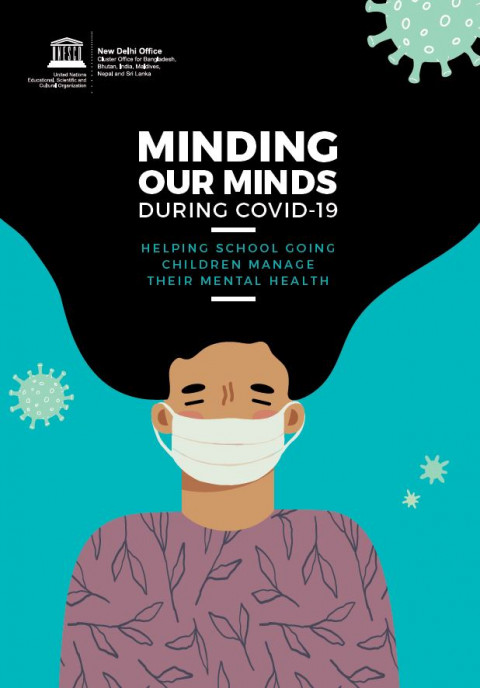 Minding Our Minds during COVID-19: Helping School Going Children Manage Their Mental Health Year of publication: 2020 Author: Huma Masood | Cynthia Saxena Corporate author: UNESCO New Delhi This guide provides an outline of how teachers and parents can address the issue of mental health amongst students. The sections in this guide cover basic information about coronavirus, explanation of anxiety in school going children, as well as ways by which students can take care of their mental health during this crisis. The sub-sections of the guide comprise guidelines outlining the duties and responsibilities that teachers and parents/ caregivers must follow to ensure students’ mental health is not negatively impacted by the COVID-19 pandemic. Additionally, sub-sections of the guide provide activities and exercises that teachers and parents can utilize to engage children with to ensure their wellbeing during these difficult times.
  التعليم متعدد الثقافات بين النمذجة التنظيرية وإشكالية الممارسات : دراسة مقارنة بين مصر وفرنسا واليابان Year of publication: 2006 Author: Ahmed Aidrous | Mohammed Awad Corporate author: Zagazig University تركز هذه الورقة على دراسة التعددية الثقافية كمفهوم والنظريات والأطر والنماذج التطبيقية المرتبطة بها. وتستعرض الدراسة خبرة كلا من فرنسا واليابان ومصر، وتضع مقارنات بينها. تنتهي الدراسة بوضع تصور مقترح للتعليم متعدد الثقافات في ضوء الخبرات المعروضة.