
Resources
Explore a wide range of valuable resources on GCED to deepen your understanding and enhance your research, advocacy, teaching, and learning.
141 Results found
 Diriger et agir pour l’équité, l’inclusion et la justice sociale : boîte à outils pour les directions d’établissement d’enseignement Year of publication: 2020 Author: Julie Larochelle-Audet | Marie-Odile Magnan | Emmanuelle Doré | Maryse Potvin | Lise-Anne St-Vincent | Andréanne Gélinas-Proulx | Anastasie Amboulé Abath Corporate author: Observatoire sur la formation à la diversité et l’équité (OFDE) L’objectif principal de ce document est d’outiller les directions d’établissement, en exercice ou en formation, pour qu’ils puissent contribuer à la mise en œuvre d’une éducation permettant à tous et toutes d’avoir des opportunités équivalentes d’accéder aux services, aux ressourceset aux biens collectifs de la société québécoise et d’y participer en toute égalité et dignité. The main objective of this document is to equip school principals and those in training with the tools they need to contribute to the implementation of an education system that gives everyone equal opportunities to access the services, resources and public goods of Quebec society and to participate in them with full equality and dignity.
  Educação: um tesouro a descobrir, relatório para a UNESCO da Comissão Internacional sobre Educação para o Século XXI (destaques) Year of publication: 2010 Author: Jacques Delors Corporate author: UNESCO Brasilia Learning: The Treasure Within, commonly referred to as the 'Delors Report', proposes a holistic and integrated vision of education based on the paradigms of lifelong learning, and the four pillars of learning to be, to know, to do, and to live together.
 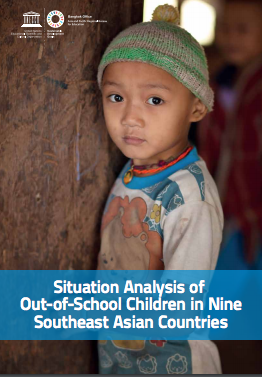 Situation analysis of out-of-school children in nine southeast Asian countries Year of publication: 2017 Corporate author: UNESCO Bangkok In a world that continually aspires for every child and youth to have access to education, there are still large numbers of out-of-school children (OOSC) who are yet to claim their right to basic education. In 2013, the number of children who are not in school, who have dropped out, and who have never been to school have risen to 124 million after seeing the numbers continuously drop for much of the first decade of the 21st century. In much of Southeast Asia, close to seven million children of both primary and lower secondary school-age find themselves in the same situation. In an effort to assist the countries in Southeast Asia to develop more robust policies and programmes for OOSC in their respective countries, this report was commissioned to map out the current legislations, policies, characteristics, and interventions on out-of-school children in nine countries across the region, which include Cambodia, Indonesia, Lao PDR, Malaysia, Myanmar, the Philippines, Thailand, Timor-Leste and Vietnam. Using a desk review of available and relevant secondary data, the study covered OOSC of primary and lower secondary school-age. Situation analysis of out-of-school children in nine southeast Asian countries Year of publication: 2017 Corporate author: UNESCO Bangkok In a world that continually aspires for every child and youth to have access to education, there are still large numbers of out-of-school children (OOSC) who are yet to claim their right to basic education. In 2013, the number of children who are not in school, who have dropped out, and who have never been to school have risen to 124 million after seeing the numbers continuously drop for much of the first decade of the 21st century. In much of Southeast Asia, close to seven million children of both primary and lower secondary school-age find themselves in the same situation. In an effort to assist the countries in Southeast Asia to develop more robust policies and programmes for OOSC in their respective countries, this report was commissioned to map out the current legislations, policies, characteristics, and interventions on out-of-school children in nine countries across the region, which include Cambodia, Indonesia, Lao PDR, Malaysia, Myanmar, the Philippines, Thailand, Timor-Leste and Vietnam. Using a desk review of available and relevant secondary data, the study covered OOSC of primary and lower secondary school-age. Situation analysis of out-of-school children in nine southeast Asian countries Year of publication: 2017 Corporate author: UNESCO Bangkok In a world that continually aspires for every child and youth to have access to education, there are still large numbers of out-of-school children (OOSC) who are yet to claim their right to basic education. In 2013, the number of children who are not in school, who have dropped out, and who have never been to school have risen to 124 million after seeing the numbers continuously drop for much of the first decade of the 21st century. In much of Southeast Asia, close to seven million children of both primary and lower secondary school-age find themselves in the same situation. In an effort to assist the countries in Southeast Asia to develop more robust policies and programmes for OOSC in their respective countries, this report was commissioned to map out the current legislations, policies, characteristics, and interventions on out-of-school children in nine countries across the region, which include Cambodia, Indonesia, Lao PDR, Malaysia, Myanmar, the Philippines, Thailand, Timor-Leste and Vietnam. Using a desk review of available and relevant secondary data, the study covered OOSC of primary and lower secondary school-age.
  Six ways to ensure higher education leaves no one behind Year of publication: 2017 Corporate author: UNESCO International Institute for Educational Planning (IIEP) This policy paper, written in partnership with the UNESCO International Institute for Education Planning (IIEP), makes policy recommendations for equitable and affordable higher education to better support the implementation of the SDG agenda. To do this, it reviews recent trends in higher education expansion, identifies disparities in student participation, examines policy tools and practices for fostering equity, and explores ways to target assistance at those who need it most. Six façons de garantir que l'enseignement supérieur ne laisse personne sur le carreau Year of publication: 2017 Corporate author: UNESCO International Institute for Educational Planning (IIEP) This policy paper, written in partnership with the UNESCO International Institute for Education Planning (IIEP), makes policy recommendations for equitable and affordable higher education to better support the implementation of the SDG agenda. To do this, it reviews recent trends in higher education expansion, identifies disparities in student participation, examines policy tools and practices for fostering equity, and explores ways to target assistance at those who need it most. Seis maneras de asegurar que la educación superior no deje a nadie atrás Year of publication: 2017 Corporate author: UNESCO International Institute for Educational Planning (IIEP) This policy paper, written in partnership with the UNESCO International Institute for Education Planning (IIEP), makes policy recommendations for equitable and affordable higher education to better support the implementation of the SDG agenda. To do this, it reviews recent trends in higher education expansion, identifies disparities in student participation, examines policy tools and practices for fostering equity, and explores ways to target assistance at those who need it most.
 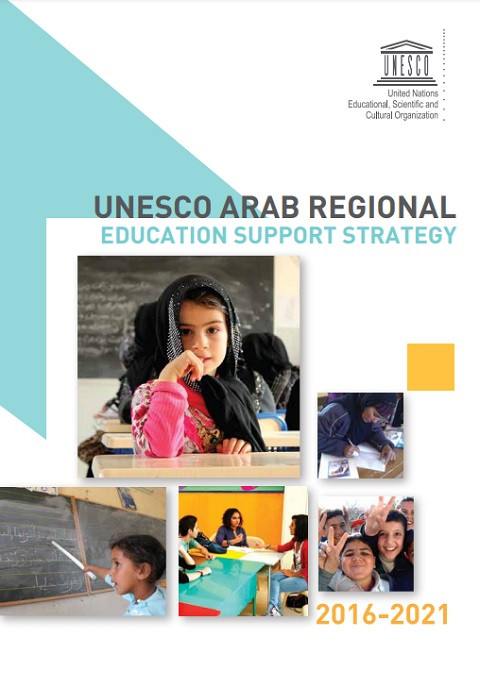 UNESCO Arab Regional Education Support Strategy: 2016-2021 Year of publication: 2016 Corporate author: UNESCO Beirut Covering the period of 2016-2021, this strategy document aims to provide tangible support for each Member State in the Arab Region, taking into account national needs and priorities and thus employing nationally relevant approaches based on the Agenda 2030 for Sustainable Development.
 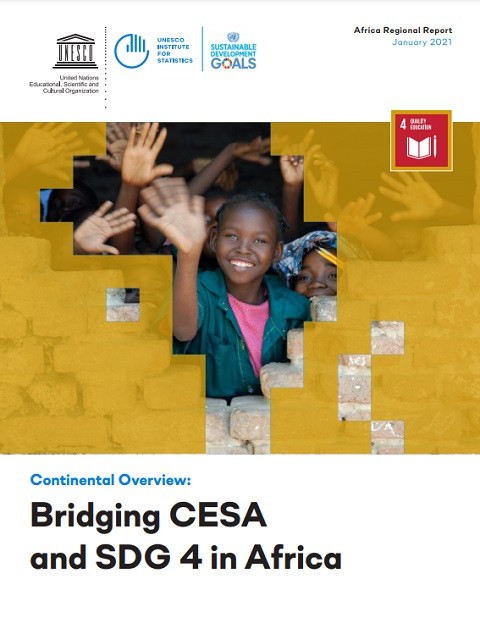 Continental Overview: Bridging CESA and SDG 4 in Africa; Africa Regional Report Year of publication: 2021 Corporate author: UNESCO Institute for Statistics (UIS) Monitoring progress toward Sustainable Development Goal 4 for education (SDG 4) is crucial to ensuring that children around the world have access to a quality education where they can learn and gain the skills they need to meet their full potential. SDG 4 indicators are organized with a view to global, thematic, regional and national targets.This report by the UNESCO Institute for Statistics (UIS) is the first in a series intended to bring a regional focus to SDG 4 monitoring, highlight the work being done in the regions and compare SDG 4 targets with those established by regional bodies.This new series of regional reports serve two purposes. Firstly, to map regional and SDG 4 targets to provide an overview of the symmetries between the two. Continental Overview: Bridging CESA and SDG 4 in Africa looks at how the strategic objectives of the Continental Education Strategy for Africa (CESA) compares with SDG 4 targets. Secondly, it analyses progress towards these objectives by African sub-regions.