
Resources
Explore a wide range of valuable resources on GCED to deepen your understanding and enhance your research, advocacy, teaching, and learning.
145 Results found
 Preventing Extremism Through Education: A Safe and Supportive School Environment Year of publication: 2020 Author: Mohammad Madbouli This video talks about preventing extremism in schools. The presenter uses the UNESCO guide for policy-makers published in 2018 as framework for discussing preventing extremism. The presenter speaks about safe and supportive environment for students in schools.
 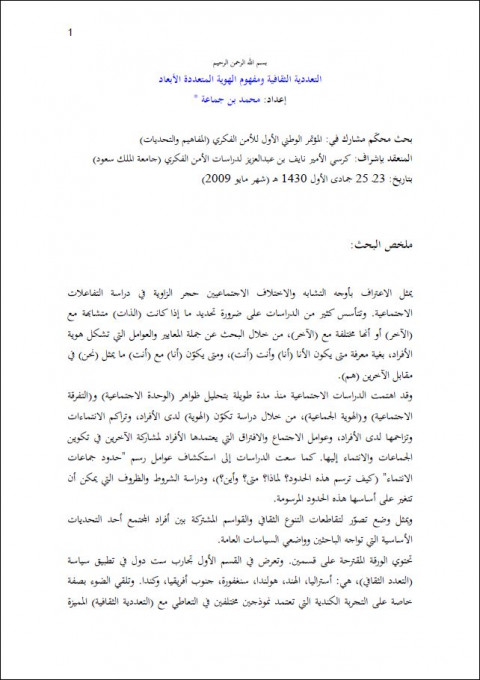 التعددية الثقافية ومفهوم الهوية المتعددة الأبعاد Year of publication: 2009 Author: Mohamed Ben Jemaa Corporate author: King Saud University يمثل الاعتراف بأوجه التشابه والاختلاف الاجتماعيين حجر الزاوية في دراسة التفاعلات الاجتماعية. وتتأسس كثير من الدراسات على ضرورة تحديد ما إذا كانت (الذات) متشاة مع (الآخر) أو أا مختلفة مع (الآخر)، من خلال البحث عن جملة المعايير والعوامل التي تشكل هوية الأفراد، بغية معرفة متى يكون الأنا (أنا) وأنت (أنت)، ومتى يكوّن (أنا) مع (أنت) ما يمثل (نحن) في مقابل الآخرين (هم).وقد اهتمت الدراسات الاجتماعية منذ مدة طويلة بتحليل ظواهر (الوحدة الاجتماعية) و(التفرقة الاجتماعية) و(الهوية الجماعية)، من خلال دراسة تكوّن (الهوية) لدى الأفراد، وتراكم الانتماءات وتزاحمها لدى الأفراد، وعوامل الاجتماع والافتراق التي يعتمدها الأفراد لمشاركة الآخرين في تكوين الجماعات والانتماء إليها. كما سعت الدراسات إلى استكشاف عوامل رسم "حدود جماعات الانتماء" (كيف ترسم هذه الحدود؟ لماذا؟ متى؟ وأين؟)، ودراسة الشروط والظروف التي يمكن أن تتغير على أساسها هذه الحدود المرسومة.ويمثل وضع تصوّر لتقاطعات التنوع الثقافي والقواسم المشتركة بين أفراد اتمع أحد التحديات الأساسية التي تواجه الباحثين وواضعي السياسات العامة.تحتوي الورقة المقترحة على قسمين. وتعرض في القسم الأول تجارب ست دول في تطبيق سياسة (التعدد الثقافي)، هي: أستراليا، الهند، هولندا، سنغفورة، جنوب أفريقيا، وكندا. وتلقي الضوء بصفة خاصة على التجربة الكندية التي تعتمد نموذجين مختلفين في التعاطي مع (التعددية الثقافية) المميزة للمجتمع الكندي بسبب تركيبته التكوينية تاريخيا، والجامعة بين الهنود الحمر (أو الأمم الأولى) والفرنسيين والإنجليز، وبسبب الانفتاح الفريد على قبول المهاجرين. ويعرف النموذج الأول باسم وهو النموذج المعتمد من الحكومة الفيدرالية الكندية. ،(Multiculturalism) " "التعددية الثقافية .(Interculturalism) " أما الثاني فهو معتمد من قبل مقاطعة كيبك ويعرف باسم "التفاعل الثقافي ثم تعرض في القسم الثاني إطارا نظريا لمفهوم (الهوية متعددة الأبعاد)، يسعى لفهم أشكال التراكم والتزاحم بين الانتماءات، وتحديد عدد من العوامل المؤثرة فيها. كما تعرض أخطاء اعتماد الهوية ذات البعد الواحد في تصنيف الأفراد والجماعات، وعلاقة ذلك بالعنف، من خلال محاولة لتحديد معالم الهوية الإسلامية المختزلة التي يرسمها تنظيم القاعدة لنفسه في الصراع الذي يخوضه على المست وى الدولي. Multiculturalism and the Concept of Multi-Dimensional Identity Year of publication: 2009 Author: Mohamed Ben Jemaa Corporate author: King Saud University A conference paper discussing multiculturalism and contains two parts, where the first part discusses multiculturalism policies in 6 countries. While the second part shows the multi-dimensional identity.
 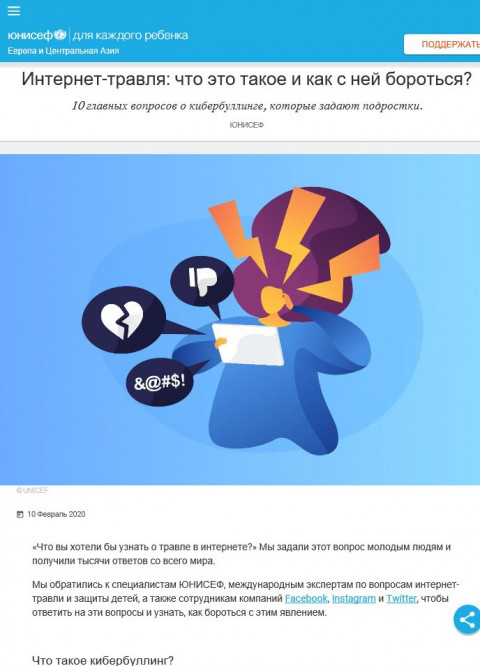 Internet Bullying: What is It and How to Deal with It? ; Top 10 Cyberbullying Questions Asked by Teens Year of publication: 2020 Corporate author: UNICEF Europe and Central Asia In the article, UNICEF experts, international experts on Internet bullying and child protection, as well as employees of Facebook, Instagram and Twitter, answer questions about how to deal with Internet bullying. Top 10 Cyberbullying Questions: How to understand that I am being harassed on the Internet? How to distinguish a joke from bullying? How does Internet bullying affect a person? Who should I talk to if someone is chasing me on the Internet? Why is it important to report bullying? I am being harassed by the Internet, but I’m afraid to talk to my parents about it. How do I turn to them for help? How can I help my friends report online bullying, especially if they don’t want to do this? The Internet gives me access to a lot of information, but it also means that I can become a victim of online violence. How can you protect yourself from cyberbullying without refusing to use the Internet? How to avoid using my personal information to manipulate or humiliate me on social networks? Is there any punishment for Internet harassment? Internet companies are not trying to solve the problem of cyberbullying. Are they responsible for this? Are there any online tools to combat bullying of children or youth? Интернет-травля: что это такое и как с ней бороться? ; 10 главных вопросов о кибербуллинге, которые задают подростки Year of publication: 2020 Corporate author: UNICEF Europe and Central Asia В статье специалисты ЮНИСЕФ, международные эксперты по вопросам интернет-травли и защиты детей, а также сотрудники компаний Facebook, Instagram и Twitter отвечают на вопросы о том, как бороться с интернет травлей. 10 главных вопросов о травле в интернете: Как понять, что меня преследуют в интернете? Как отличить шутку от травли? Как интернет-травля влияет на человека? С кем мне поговорить, если кто-то преследует меня в интернете? Почему важно сообщать о случаях травли? Я подвергаюсь интернет-травле, но боюсь поговорить с родителями об этом. Как мне обратиться к ним за помощью? Как мне помочь друзьям сообщить об интернет-травле, особенно, если они не хотят этого делать? Интернет дает мне доступ к большому количеству информации, но это также означает, что я могу стать жертвой насилия в сети. Как можно оградить себя от кибербуллинга, не отказываясь от использования интернета? Как избежать использования моей личной информации для манипуляции или унижения меня в соцсетях? Существует ли какое-то наказание за интернет-травлю? Интернет-компании не пытаются решить проблему кибербуллинга. Несут ли они за это ответственность? Существуют ли какие-нибудь онлайн-инструменты для борьбы с травлей детей или молодёжи?
  Evaluation of UNESCO’s Action to Prevent Violent Extremism Year of publication: 2020 Corporate author: UNESCO Internal Oversight Service (IOS) The purpose of this evaluation was twofold. To provide evidence, ideas and insights on how UNESCO’s efforts on PVE in the period from 2015-2018 have contributed to enhancing UNESCO’s action and position in the PVE sphere in light of the decisions of Member States. And to provide evidence and formulate lessons learned and good practices on the intersectoral approach with the aim of informing what works and what does not work in intersectoral cooperation.The evaluation found that UNESCO’s work on PVE was context specific and adjusted to respond to the needs of the countries and sub-regions where the work was being implemented.UNESCO’s work is aligned with the agency’s mandate and expertise and makes the most of its strong relationships with government bodies and civil society actors. UNESCO’s work on PVE has led to positive results around the quality, use and effectiveness of guidance documents, around capacity building of UNESCO partners and stakeholders, and around the provision of expertise and policy advice both at national and global level. Using an intersectoral approach led to an increase in information sharing and coordination. However, this was not always translated to intersectoral implementation or delivery of PVE initiatives.
 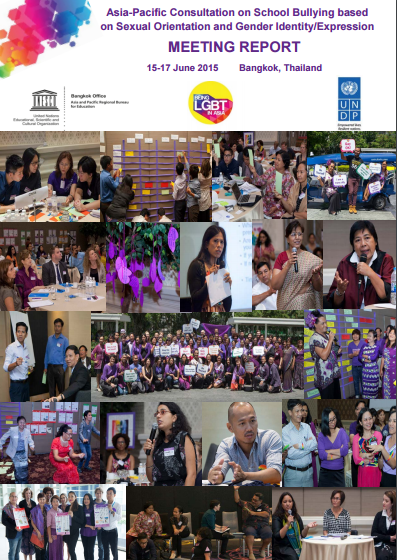 Asia-Pacific Consultation on School Bullying Based on Sexual Orientation and Gender Identity/Expression Year of publication: 2015 Corporate author: UNESCO Bangkok This report documents the presentations and discussions made during the Asia-Pacific Consultation on School Bullying based on Sexual Orientation and Gender Identity/Expression held from 15-17 June 2015 at the Pullman King Power Hotel in Bangkok, Thailand.
  School-related violence and bullying on the basis of Sexual Orientation and Gender Identity or Expression (SOGIE): synthesis report on China, the Philippines, Thailand and Viet Nam Year of publication: 2018 Corporate author: UNESCO Bangkok School related violence and bullying is a problem in all countries. UNESCO is committed to ensuring that all children and young people have access to safe, inclusive, health-promoting learning environments as part of its strategy on education for health and well-being. This synthesis report on school related violence and bullying on the basis of Sexual Orientation and Gender Identity or Expression (SOGIE), covering China, the Philippines, Thailand and Viet Nam, was developed to broaden awareness and understanding about this issue, while also identifying best practices and policies. It also aims to mobilize support for advocacy among educators, research institutions, policy makers and activists at the national and regional levels.
  Working On Emotions, Advancing Equality: Learning Situations Year of publication: 2024 Author: Marta Álvarez | María Burgos | Ricardo Hurtado | Francisca Marañón | Laura Seoane Corporate author: InteRed This publication proposes several learning situations to be carried out in the classroom and in other socio-educational spaces with the aim of understanding and managing the emotions that underlie attitudes and behaviours that generate violence, discrimination and inequality. This proposal continues the work that we at InteRed have been doing to generate in people the capacities to position themselves in the current system of inequalities from a social justice perspective, without losing confidence that another model of development that is more fair, equitable and sustainable is possible. In this process of capacity building, we believe it is essential to address the management of emotions. Trabajando emociones, avanzando en igualdad: Situaciones de aprendizaje Year of publication: 2024 Author: Marta Álvarez | María Burgos | Ricardo Hurtado | Francisca Marañón | Laura Seoane Corporate author: InteRed Esta publicación propone varias situaciones de aprendizaje para realizar en el aula y en otros espacios socioeducativos con el objetivo de comprender y manejar las emociones que están en la base de actitudes y comportamientos que generan violencia, discriminación y desigualdad. Esta propuesta da continuidad al trabajo que desde InteRed venimos realizando de generar en las personas capacidades para posicionarse en el actual sistema de desigualdades desde un enfoque de justicia social, sin perder la confianza de que es posible otro modelo de desarrollo más justo, equitativo y sostenible. En ese proceso de generación de capacidades creemos imprescindible abordar la gestión de las emociones.