
Resources
Explore a wide range of valuable resources on GCED to deepen your understanding and enhance your research, advocacy, teaching, and learning.
11 Results found
 No Fear at School: Prevention of Violence Against Children in Educational Settings; Colombia Country Report Year of publication: 2024 Corporate author: Aulas en Paz | Red Papaz This report presents an overview of progress in preventing and responding to violence against children and adolescents (NNA) in educational settings in Colombia, using the framework developed by Safe to Learn. This document is part of the initiatives led by the Latin American Hub for the Prevention of Violence Against Children in Schools, in which six Latin American countries participate and which is coordinated by Aulas en Paz. Sin miedo en la escuela: Prevención de la violencia contra la niñez en entornos educativos; Informe país Colombia Year of publication: 2024 Corporate author: Aulas en Paz | Red Papaz Este informe presenta el panorama respecto a los avances en la prevención y respuesta a la violencia contra niños, niñas y adolescentes (NNA) en entornos educativos en Colombia, usando el marco desarrollado por Safe to Learn. Este documento es parte de las iniciativas lideradas por el Nodo Latinoamericano de Prevención de Violencia Contra la Niñez en la Escuela, en el que participan seis países de Latinoamérica y que es coordinado por Aulas en Paz.
  العنف ضد الأطفال في المجتمع السعودي دراسة اجتماعية من واقع إحصاءات الجمعية الوطنية لحقوق الإنسان Year of publication: 2020 Author: Dr. Faisal bin Abdullah Al-Ruwais The study aimed to identify the reality of violence against children in Saudi society by determining the extent of violence against children by region, identifying patterns of violence against children according to the type of abuse they are exposed to, and identifying the children most exposed to violence by gender, in addition to revealing The most common family members commit violence against children, based on statistics from the National Society for Human Rights. This study is a descriptive and analytical study. The qualitative approach was used by using the content analysis method for the total statistical data for the period from 2014-2018 AD. It has become clear from the statistical data: that the highest percentage of violence against children over the five years occurred in the Riyadh region, followed by the Makkah Al-Mukarramah region, then the Medina region, and that the highest types of abuse to which children are exposed is physical abuse, then deprivation of education, then deprivation of Identification documents indicate that the highest degree of violence against children was committed against females, then males, and that the family member who committed the most violence against children was the father, then the mother, then the stepmother.
  INSPIRE: семь стратегий по ликвидации насилия в отношении детей Year of publication: 2016 Corporate author: World Health Organization (WHO) Cборник информационных материалов, основанных на фактических данных и предназначенных для всех, кто заинтересован в профилактике насилия в отношении детей и подростков и принятии ответных мер — от государственных деятелей до обычных граждан и от организаций гражданского общества до представителей частного сектора. В этом документе представлен комплекс избранных стратегий, основанных на самых убедительных из имеющихся на сегодняшний день фактических данных и призванных помочь странам и сообществам сосредоточить усилия на профилактических программах и услугах, обладающих наибольшим потенциалом для снижения уровня насилия в отношении детей. В комплекс входят семь следующих стратегий: Implementation and enforcement of laws (Принятие и обеспечение соблюдения нормативных актов); Norms and values (Нормы и ценности); Safe environments (Создание безопасной среды); Parent and caregiver support (Поддержка родителей и воспитателей); Income and economic strengthening (Повышение доходов и улучшение экономического положения); Response and support services (Ответные меры и оказание поддержки); Education and life skills (Обучение и формирование жизненных навыков). Кроме того, в комплекс INSPIRE входят два типа сквозных мероприятий, сочетание которых позволяет связывать между собой и усиливать эти семь стратегий и одновременно оценивать ход их реализации. INSPIRE: Seven strategies for Ending Violence Against Children Year of publication: 2016 Corporate author: World Health Organization (WHO) Evidence-based resource for everyone committed to preventing and responding to violence against children and adolescents – from government to grassroots, and from civil society to the private sector. It represents a select group of strategies based on the best available evidence to help countries and communities intensify their focus on the prevention programmes and services with the greatest potential to reduce violence against children. The seven strategies are: Implementation and enforcement of laws; Norms and values; Safe environments; Parent and caregiver support; Income and economic strengthening; Response and support services; and Education and life skills. Additionally, INSPIRE includes two cross-cutting activities that together help connect and strengthen – and assess progress towards – the seven strategies.
  Speak Out - Be Protected! Development Framework: Guide for Practitioners; Creating Child-sensitive Reporting Mechanisms of Alleged Cases of Violence Against Children Year of publication: 2016 Author: Raša Sekulović | Stephanie Delaney Corporate author: Plan International Produced by Plan International, the Child-Sensitive Reporting Mechanisms toolkit “Speak Out – Be Protected!” identifies simple, user-friendly processes through which children and their peers (and families) can raise child protection concerns and report them to child protective agencies, services or trusted community groups and institutions.
 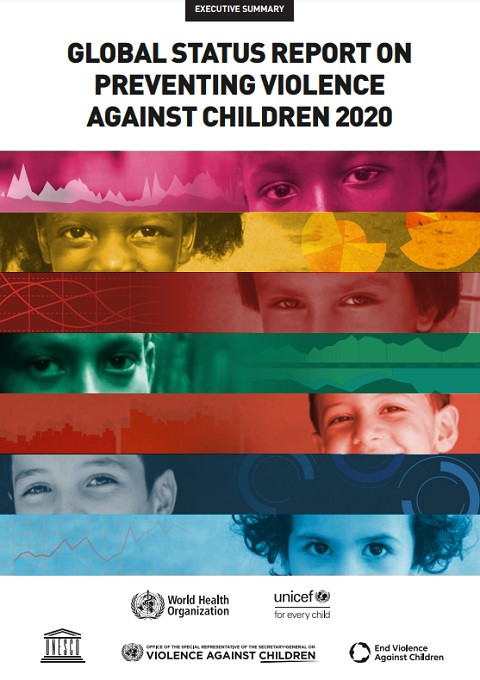 Global Status Report on Preventing Violence Against Children 2020: Executive Summary Year of publication: 2020 Corporate author: World Health Organization (WHO) The Global status report on preventing violence against children 2020 charts countries’ progress towards the SDGs aimed at ending violence against children. Jointly published by WHO, UNICEF, UNESCO, the UN Secretary-General’s Special Representative on Violence against Children, and the Global Partnership to End Violence against Children, it collates inputs from over 1000 decision-makers in 155 countries who assessed their violence prevention status against the evidence-based approaches set out in INSPIRE: Seven strategies for ending violence against children. The report shows that while many of the participating countries are taking some action, government officials from these same countries acknowledge that their efforts are clearly insufficient to achieve the SDG targets. The report concludes with recommendations for boosting INSPIRE implementation efforts and accelerating national progress. [Résumé] Rapport de situation 2020 sur la prévention de la violence à l’encontre des enfants dans le monde Year of publication: 2020 Corporate author: World Health Organization (WHO) Le Rapport de situation 2020 sur la violence à l’encontre des enfants dans le monde présente les progrès accomplis par les pays en vue d’atteindre les ODD visant à mettre un terme à la violence dont sont victimes les enfants. Publié conjointement par l’OMS, l’UNICEF, l’UNESCO, le Représentant spécial du Secrétaire général de l’ONU chargé de la question de la violence contre les enfants et le Partenariat mondial pour mettre fin à la violence envers les enfants, il rassemble les contributions de plus d’un millier de décideurs de 155 pays qui ont évalué la situation de leur pays en matière de prévention de la violence à la lumière des approches basées sur des données factuelles proposées dans le cadre d’INSPIRE, un ensemble de sept stratégies pour mettre fin à la violence à l’encontre des enfants. Le rapport montre que si de nombreux pays ayant participé à l’enquête prennent des mesures, les autorités gouvernementales de ces mêmes pays reconnaissent que leurs efforts sont clairement insuffisants pour atteindre les cibles des ODD. Le rapport se conclut par des recommandations visant à intensifier les efforts de mise en œuvre des stratégies INSPIRE et à accélérer les progrès au niveau national. [Resumen] Informe sobre la situación mundial de la prevención de la violencia contra los niños de 2020 Year of publication: 2020 Corporate author: World Health Organization (WHO) En el Informe sobre la situación mundial de la prevención de la violencia contra los niños de 2020 se recogen los progresos realizados por los países en la aplicación de los Objetivos de Desarrollo Sostenible (ODS) en esta esfera. El documento, que publican conjuntamente la OMS, el UNICEF, la UNESCO, el Representante Especial del Secretario General de las Naciones Unidas sobre la violencia contra los niños y la Alianza Mundial para poner fin a la violencia contra los niños, reúne las aportaciones de más de 1000 instancias normativas procedentes de 155 países que evaluaron la situación nacional comparándola con los enfoques basados en datos probatorios que se presentan en las siete estrategias INSPIRE que tratan sobre este tema. El informe muestra que, si bien muchos de los países participantes están adoptando algunas medidas, sus propios funcionarios reconocen que son claramente insuficientes para alcanzar las metas de los ODS. En la parte final del documento se formulan recomendaciones para que los países potencien la aplicación de las estrategias INSPIRE y avancen más rápidamente hacia su consecución. [الملخص] تقرير الحالة العالمية بشأن منع العنف ضد الأطفال لعام 2020 Year of publication: 2020 Corporate author: World Health Organization (WHO) يتناول تقرير الحالة العالمي عن الوقاية من العنف ضد الأطفال لعام 2020 ما أحرزته البلدان من تقدّم في تحقيق أهداف التنمية المستدامة الرامية إلى وضع حدّ للعنف ضد الأطفال. ويستند هذا التقرير الصادر بشكل مشترك عن منظمة الصحة العالمية واليونسيف واليونسكو والممثلة الخاصة للأمين العام للأمم المتحدة المعنية بالعنف ضد الأطفال والشراكة العالمية من أجل إنهاء العنف ضد الأطفال، إلى مدخلات تم تجميعها مما يزيد على 1000 من صنّاع القرار في 155 بلداً، استناداً إلى تقييم حالة الوقاية من العنف في بلدانهم من خلال تطبيق النُهج المسندة بالبيّنات المحددة في حزمة إنسباير: الاستراتيجيات السبع لإنهاء العنف ضد الأطفال. ويُظهر التقرير أنه في حين اتخذت العديد من البلدان المشاركة إجراءات بالفعل في هذا الصدد، فإن المسؤولين الحكوميين من هذه البلدان نفسها يعترفون بأن جهودهم لا تكفي بكل وضوح لبلوغ غايات أهداف التنمية المستدامة ذات الصلة.ويخلص التقرير إلى توصيات ترمي إلى تعزيز الجهود الرامية إلى تطبيق إجراءات حزمة إنسباير وتسريع وتيرة التقدم المحرز على المستوى الوطني.