
Resources
Explore a wide range of valuable resources on GCED to deepen your understanding and enhance your research, advocacy, teaching, and learning.
20 Results found
 Tales of hope: grassroots activities of Education for Sustainable Development (ESD) in Asia and the Pacific Year of publication: 2007 Corporate author: Asia-Pacific Cultural Centre for UNESCO (ACCU) This publication is a compilation of the keynote speeches, case presentations, and reports of the field visits conducted during the abovementioned seminar. Chapter Ⅰ presents two highly suggestive keynote speeches, describing the current challenges of “Sustainable Development” and “Education.” The case presentations in Chapter Ⅱ illustrate grassroots activities, well exemplifying ESD, which had been implemented even before the launch of UNDESD, to be followed by commentaries from ESD perspectives. Chapter Ⅲ is dedicated to describing, as an innovative approach to ESD, the “Asaza Project,” a strategy for establishing a sustainable society in the Lake Kasumigaura catchment basin in Japan. Histoires d'espoir: activités de base de l'éducation pour le développement durable (EDD) en Asie et dans le Pacifique Year of publication: 2007 Corporate author: Asia-Pacific Cultural Centre for UNESCO (ACCU) Cette publication est une compilation des discours d'ouverture, des présentations de cas et des rapports des visites sur le terrain menées au cours du séminaire susmentionné. Le chapitre Ⅰ présente deux discours liminaires très suggestifs décrivant les défis actuels du développement durable et de l'éducation. Les présentations de cas présentées au chapitre Ⅱ illustrent les activités de base, qui illustrent bien l'EDD, qui avait été mise en œuvre avant le lancement de l'UNDEDD. Suivis des commentaires des perspectives EDD. Le chapitre Ⅲ est consacré à décrire, en tant qu'approche novatrice de EDD, le «Projet Asaza», une stratégie pour établir une société durable dans le bassin versant du lac Kasumigaura au Japon.
 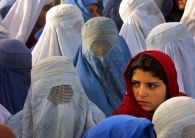 Women’s Education: Promoting Development, Countering Radicalism Year of publication: 2014 Author: Hedieh Mirahmadi Corporate author: World Organization for Resource Development and Education (WORDE) Increasing access to quality secular education can create better jobs for women and reduce some of the economic drivers of radicalization. Educated women can in turn play a pivotal role in inoculating their children and communities against the radical narratives used to recruit followers. Women’s Education: Promoting Development, Countering Radicalism Year of publication: 2014 Author: Hedieh Mirahmadi Corporate author: World Organization for Resource Development and Education (WORDE) Améliorer l'accès à une éducation laïque de qualité peut contribuer à la création de meilleurs emplois pour les femmes et réduire certains facteurs économiques de la radicalisation. Les femmes éduquées peuvent à leur tour jouer un rôle essentiel en protégeant leurs enfants et les communautés contre les récits radicaux utilisés pour recruter des adeptes.
  Achieving Social Justice Through a Demographic-driven Initiative: Responding to the Unique Needs of Youth, Women and Refugees Year of publication: 2017 Author: Nader Said-Foqahaa | Nicholas Hyman Corporate author: International Labour Organization (ILO) The Arab world is currently going through a period of great socio-economic change, unprecedented since the revolutions and wars of independence more than half a century ago. The issue of social justice, which has been a challenge to Arab states over the past decades, is a matter of particular concern. The authors attempt to establish a conceptual background of social justice, and to discuss its linkage with youth, children, women, and refugees. The paper concludes with recommendations on social justice in the Arab world. تحقيق العدالة الاجتماهية من خلال مبادرة ديموغرافية: تلبية الاحتياجات الفريدة للشباب والنساء واللاجئين Year of publication: 2017 Author: Nader Said-Foqahaa | Nicholas Hyman Corporate author: International Labour Organization (ILO) يمرّ العالم العربي حالياً بفترة من التغيير الاجتماعي الاقتصادي الكبير، الذي لم يسبق له مثيل منذ الثورات وحروب الاستقلال منذ أكثر من نصف قرن. وتُعتبر مسألة العدالة الاجتماعية التي شكّلت تحدياً للدول العربية على مدى العقود الماضية، مسألة مثيرة للقلق بشكل خاص. يحاول المؤلفون لوضع خلفية مفاهيمية للعدالة الاجتماعية، ومناقشة ربطها بالشباب والأطفال والمرأة واللاجئين. تنتهي الورقة بوضع توصيات حول العدالة الاجتماعية في الوطن العربي.
 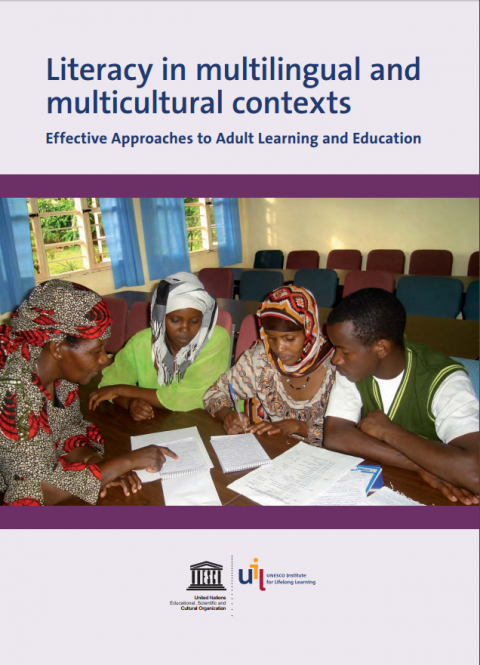 Literacy in multilingual and multicultural contexts: effective approaches to adult learning and education Year of publication: 2016 Author: Ulrike Hanemann, Cassandra Scarpino All of the literacy programmes featured in this publication offer valuable experiences and lessons on how the challenges posed by linguistic and cultural diversity can be productively addressed by harnessing the potential of language and culture as enriching resources in the process of literacy teaching and learning. A major lesson that has emerged over the years is that the use of local languages as the medium of instruction enhances the effectiveness and efficiency of the learning process in developing literacy, numeracy and (second or more) language skills. However, mother tongue-based literacy not only facilitates the learning process, but is also an important symbol of identity, unity and self-determination. It is closely intertwined with culture and local values, wisdom, worldviews and tradition. A number of the featured programmes demonstrate that language and culture in education are highly political. Respect for all languages and cultures, and their equal treatment, can play a critical role in fostering national cohesion. In some cases, this is contributing to rebuilding peace in post-conflict communities. Literacy programmes that contribute to the preservation of linguistic and cultural diversity should, also, be viewed as integral to sustainable development.
  The rights of political women in Islam and their role in the political sphere Year of publication: 2020 Author: Hussein Zubair Thalj Al-Fahdawi | Mayada Ali Abdel Nabi Karim Praise be to God, who by His grace the righteousness is fulfilled and the pitfalls are forced and the honorees and may God’s prayers be granted to the foreboding Bashir and the enlightening OS and all his family and companions.And it was from the success of God Almighty for me to reach, through this study, some results. I summarize it as follows:Islam honored the humanity of man, so he raised it to the highest ranks and did not differentiate between it between a man and a woman. Rather, he made a man (a man and a woman) the most important thing in this universe. Human dignity, and Islam. A man and a woman are obligated to learn and understand everything and agree in religion and science, and commit them to peaceful jihad to spread the supreme belief and meanings both in the field in which he can work.It was clear from the previous presentation that the increased participation of women in political work is a pivotal factor for the advancement of gender equality and women's empowerment, as women participate in political action.And that all areas of political work are legally permissible to be assumed by whoever is her family, man or woman, just as the view of Islam for women is derived from the view of Islam for the honorable man, so there is no distinction or difference, and the provisions of the Sharia in which equality and justice are established and the origin is equal for women and men in the origin of creation and costs Legitimacy, and what is different between them is an exception to the original, and what was an exception, it is not correct to measure it.Finally, what is right in this research is from God Almighty, and all the defects and shortcomings in it are from myself and from Satan, and I cannot conclude this humble research except that Ahmed is the Most High, praise be to God, Lord of knowledge and prayer and peace be upon our Prophet Muhammad and his family and companions and from his family to the Day of Judgment. حقوق المرآة السياسية في الإسلام ودورها في المجال السياسي Year of publication: 2020 Author: Hussein Zubair Thalj Al-Fahdawi | Mayada Ali Abdel Nabi Karim الحمد لله الذي بنعمته تتم الصالحات وتجبر العثرات وتنال المكرمات وصلى الله على البشير النذير والسراج المنير وعلى آله وصحبه أجمعين . وقد كان من توفيق الله تعالى لي أن توصلت من خلال دراستي هذه إلى بعض النتائج أوجزها فيما يلي: كرم الإسلام إنسانية الإنسان فرفعها الى اسمى الدرجات ولم يفرق فيها بين الرجل والمرأة، ب ل جعل الانسان )رجلا وامرأة( اهم ما في هذا الكون، ولما كانت المرأة نصف المجتمع البشري وهي الأم والأخت والزوجة والبنت، فمن الطبيعي ان تشارك الرجل مشاركة كاملة في كل مظاهر الكرامة الإنسانية، والإسلام الزم الرجل والمرأة ان يتعلما وان يتفهما كل شيء ويتفقها في الدين والعلم، والزمهما بالجهاد السلمي لنشر العقيدة والمعاني السامية كلا في الحقل الذي يستطيع العمل فيه . اتضح من العرض السابق أن المشاركة المتزايدة للنساء في العمل السياسي تمثل عاملا محوريا لارتقاء بالمساواة بين الجنسين وتمكين المرأة، فالمرأة المشاركة في العمل السياسي . وأن مجالات العمل السياسي كافة يباح شرعا أن يتولاها من هو أهل لها رجلا كان أو امرأة، كما إن نظرة الإسلام للمرأة منبثقة من نظرة الإسلام للإنسان المكرم فلا تمايز ولا اختلاف، وأحكام الشريعة تقرر فيها المساواة وتحقيق العدالة والأصل هو تساوي المرأة والرجل في أصل الخلقة والتكاليف الشرعية، وما اختلف بينهما هو استثناء للأصل، وما كان استثناء فإنه لا يصح القياس علي ه .وأخيرا إنَّ ما في هذه البحث من صواب؛ فهو من الله عز وجل، وإنَّ كل ما فيها من خلل وقصور؛ فهو من نفسي ومن الشيطان، ولا يسعني في ختام هذه البح ث المتواضع إلا أن أحمد الله تعالى؛ فالحمد لله رب العلمين والصلاة والسلام على نبينا محمد وعلى آلهِ وصحبه ومن والاه إلى يوم الدين
 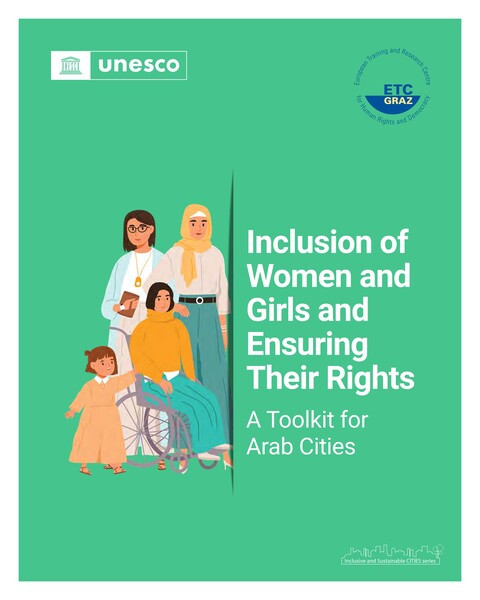 Inclusion of Women and Girls and Ensuring Their Rights: A Toolkit for Arab Cities Year of publication: 2023 Corporate author: UNESCO Cairo | European Training and Research Centre for Human Rights and Democracy (Austria) Even though women and girls represent close to or more than half of the population of most Arab cities, they are one of the groups that are historically and structurally excluded from decision-making and development planning in the cities. They face many barriers in accessing cities services, and inequality participating in cities activities. Developed on the basis of a virtual regional consultation workshop, as well as in-depth interviews with cities officials and representatives from the Coalition of Arab Cities against Racism, Discrimination, Xenophobia and Intolerance, this Toolkit provides tools and practical advice to enable Arab cities achieve a better inclusion of women and girls, and ensure their full right to benefit from local development programs. The toolkit mainly targets local authorities in Arab cities including Mayors, Members of Municipality Councils, Municipal executives, and Entities concerned with the design, implementation, follow-up, and evaluation of local projects and programs. “Since wars begin in the minds of men andwomen it is in the minds of men and womenthat the defences of peace must be constructed”Inclusion of women and girls in Arab cities: challenge or opportunity?This publication is the result of a joint effort involving the European Training and Research Centre for Human Rights and Democracy in Graz, UNESCO Coalition of Arab Cities against Racism, Discrimination, Xenophobia and Intolerance, and UNESCO Cairo Office.