
Resources
Explore a wide range of valuable resources on GCED to deepen your understanding and enhance your research, advocacy, teaching, and learning.
46 Results found
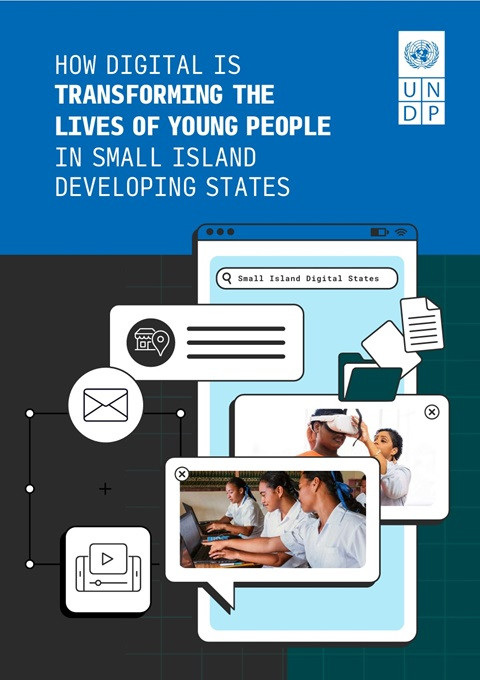 How Digital is Transforming the Lives of Young People in Small Island Developing States Year of publication: 2024 Corporate author: United Nations Development Programme (UNDP) Young people represent a sizeable and vital population in Small Island Developing States (SIDS). For them, digital technologies are more than just tools; they are gateways to new horizons. Digital is creating fresh opportunities, opening doors to unconventional careers, and redefining how knowledge is acquired and shared. Young people are using digital to start new businesses, explore new opportunities, learn new knowledge and skills, and to build global connections. However, young people are also cautious about digital – and they recognise risks and issues posed by digital channels, tools, and technologies. ‘How Digital is Transforming the Lives of Young People in SIDS’ explores these opportunities and challenges by hearing from young people – in their own words. Through a bespoke survey chatbot, running on messaging platforms most used by young people living in SIDS, more than 5,000 respondents from over 30 countries discuss how they’re using digital to transform their lives and livelihoods. And the barriers and challenges that they are facing on their digital journeys.
  Emerging Horizons: Youth Insights on Climate Change and Breakthrough Solutions; 2024 Leading Minds on Climate Action Year of publication: 2024 Corporate author: UNICEF Innocenti | United Nations Development Programme (UNDP) This paper shares insights from a participatory foresight workshop designed and facilitated by UNICEF Innocenti in the framework of the Youth4Climate: Sparking Solutions event co-hosted by UNDP and the Government of Italy. This convened 100 youth-led solutions in the areas of climate education, energy, food and agriculture, and urban sustainability. By using the Three Horizons foresight approach, a dialogue was created that delineated the patterns of change young people envisaged, their shared visions for the future, and the high potential innovations they felt could be leveraged to bring that future about. The paper identifies research and policy questions to be further explored by young climate leaders, UNDP, UNICEF, and their partners.
 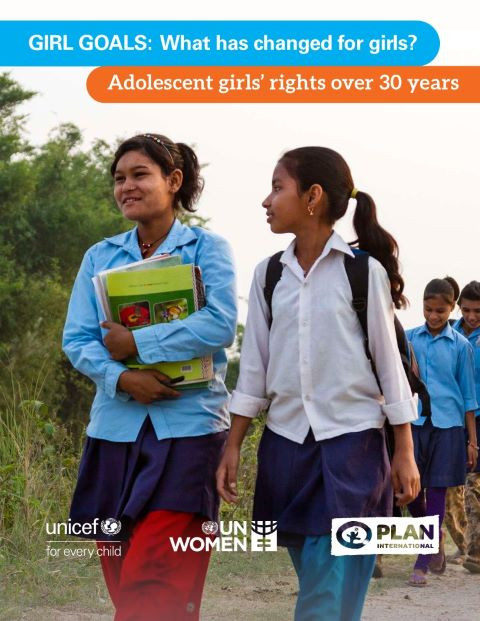 Girl Goals: What has Changed for Girls? Adolescent Girls’ Rights over 30 Years Year of publication: 2025 Corporate author: United Nations Children's Fund (UNICEF) | United Nations Entity for Gender Equality and the Empowerment of Women (UN Women) | Plan International This report makes three key recommendations on action we can take now to advance adolescent girls’ rights at scale, in ways that account for fiscally constrained contexts and multiple competing priorities: 1. Ensure tangible and actionable support for adolescent girls’ voices, advocacy and action. The current generation of girls are raising their voices to be heard and are already at the forefront of making change around the world. With the right support, resources and seats at the table, adolescent girls can help transform the world for the better, shaping better policy outcomes for themselves and everyone. This is not about girls’ voices above all others, or endless consultation, but about specific, meaningful actions that ensure girls get the support they need and are heard on policy issues that matter to them. 2. Establish and track explicit targets for change for adolescent girls, who are too often invisible and sidelined Setting explicit targets to monitor outcomes for adolescent girls is key to making progress. Context-specific prioritization will be necessary, but there are some issues that stand out globally. Gaps in progress (such as child marriage gains accruing disproportionately to wealthier households) demonstrate the need forprogrammes that address poverty and economic realities alongside harmful social norms. The disproportionate number of adolescent girls not in education, employment or training, not entering the labour market as young women, and left behind when it comes to digital skills, is a threat to the gains made for girls and to economic growth that will benefit everyone. Stagnation on issues like underweight also stand out. Country- specific priorities supported by data- driven accountability mechanisms and investments are needed to translate policy commitments into change on the ground. 3. Resource and deliver smartly to unlock the social and economic dividend Governments and partners should invest in solutions proven to change outcomes across multiple SDGs at scale – for example, investing in education and skills, cash transfers and economic empowerment programmes designed to support girls. Existing systems, from maternal health care to school curricula, should be adapted to meet girls’ needs rather than creating small- scale, separate projects. Streamlined, evidence-based ‘add-ons’ – such as adding parenting support to existing maternal health-care programmes – can be cost effective and accelerate outcomes if well designed. Change is possible, and this report shows that great gains have been made. Smart investments now can transform the world for girls, families, communities and national economies. It is time to act.
  Planning education with and for youth Year of publication: 2015 Author: Anja Hopma | Lynne Sergeant Corporate author: UNESCO International Institute for Educational Planning (IIEP) As a central stakeholder in education, young people should be involved in educational planning. This publication focuses on the rationale for and obstacles to youth involvement, as well as the efforts of ministries of education to engage youth in their planning work. It is based on discussions and recommendations that emerged from the high-level international policy forum on ‘Engaging youth in planning education for social transformation’ organized by the UNESCO International Institute for Educational Planning (IIEP) in Paris from 16 to 18 October 2012. This policy forum set out to explore the following broad themes: (i) youth engagement in planning education for conflict transformation and peace building; (ii) strengthening young people’s skills and opportunities for civic engagement within formal and non-formal education systems; and (iii) enhancing the relevance of education systems for young people in their transition to employment. This publication draws on the exchanges during the pre-forum online debates, discussions among participants during the forum, and testimonials from practitioners and youth.
  Egyptian Youth Rethink the Future of Wellbeing in 2050: Report of the Futures Literacy Lab-novelty; Online, 21-24 July 2020 Year of publication: 2020 Corporate author: UNESCO Cairo The UNESCO (Cairo Office and Research, Policy and Foresight Section) and the Egyptian Ministry of Youth and Sport, with support of Bibliotheca Alexandrina, UNFPA and UN Women, organized a Futures Literacy Laboratory - Novelty (FLL-N) entitled “Egyptian Youth Rethink the Future of Wellbeing in 2050”. Held online during 21-24 July 2020, and deploying the latest advances in anticipatory systems thinking and collective intelligence processes, the Lab brought together around 30 persons from across Egypt for 8-hours intensive work spread over a week’s time.Thirty young participants explored the topic of ‘wellbeing’ in Egypt in 2050 using a tool called the Futures Literacy Lab-Novelty (FLL-N). Wellbeing is an open concept that invites many different ways of defining what it means to ‘live well’. The participants engaged in learning-by-doing activities that exercised their imaginations, exploring questions like, how do people in 2050 in Egypt describe ‘wellbeing’? What is daily life like such that people in 2050 believe that they have achieved ‘wellbeing’? By working together to imagine the future this Lab provided an opportunity to better understand the origins of what we imagine, why and how we create the images of the future, and crucially the powerful influence such images have on our fears and hopes, perceptions and choices. Pan-African forum: sources and resources for a culture of peace Year of publication: 2013 Corporate author: African Union The Pan-African Forum “ Sources and resources for a culture of peace” was held in Luanda, Angola, from 26 to 28 March 2013, and was jointly organized by UNESCO, the African Union and the Government of Angola, under the High Patronage of H. E. Mr José Eduardo dos Santos, President of the Republic of Angola. This forum was the result of a close cooperation between UNESCO and the African Union, one of their main objectives being building peace in Africa, through the promotion of a culture of peace based on the intrinsic values of African societies. The Republic of Angola Government, through its President of the Republic H. E. Mr José Eduardo dos Santos, resolutely engaged in this process with major financial and technical support for the organization of the Forum in the Angolan capital city. As indicated in the Action Plan adopted by the participants in plenary (Annex I), recommendations made during the Forum are directed at all components of African society : political leaders, national and regional institutions, civil society, community associations, youth movements and women’s organizations, religious and traditional leaders, entrepreneurs and leaders from the private sector, etc. The implementation of the Action Plan will be continuously monitored by the two institutions that jointly organized the Luanda Forum, the African Union and UNESCO. Representatives from the 55 African countries participating in the Forum will both contribute to the proposal for action by bringing their national experience and take the lead in the follow‐up of the recommendations made at country level. In order to ensure this follow‐up it will be important to link together the participants by the creation of an African Network for the Promotion of a Culture of Peace and Non‐violence. The representatives of African countries will play the role of focal points of the awareness campaign at the national level. Finally, the agenda of the Forum includes a plan to hold a roundtable on the establishment of a multi-stakeholder partnership for action. Organized with the participation of regional institutions, public and private economic actors as well as representatives of Governments and Civil Society, this session will be the occasion to launch a continental and lasting Movement for the promotion of a culture of peace. For this round table and for the Campaign, the stakeholders can now witness the action as their Foundation / Company / Institution / Organization leads to help in building the defence of peace in the minds of men and women and ensure that peace is a reality: "Make Peace Happen".
  Toolkit for Urban Inclusion in Arab Cities: Cities Promoting Inclusion Through Public Participation, Access to Information, Sport, and Citizenship and Human Rights Education Year of publication: 2020 Author: Kareem Ibrahim | Deena Khalil | Marwa Barakat | Salwa Salman Corporate author: UNESCO | European Training and Research Centre for Human Rights and Democracy (Austria) | UNESCO Cairo Arab cities are witnessing an unprecedented expansion. Home to more than half of the region’s population, Arab cities have transformed into heterogeneous spaces that host diverse identities, cultures, and ethnicities. In order for this transformation to lead to prosperity, city officials must adopt a rights-based, human-centred approach, and implement inclusive policies and measures that provide equal opportunities for all.In this context, the Toolkit for Urban Inclusion in Arab Cities provides Arab city leaders and local government officials with practical tools and advice to guide their efforts towards establishing inclusive and sustainable cities. The Toolkit is based on the real experiences and practices of cities members of the Coalition of Arab Cities against Racism, Discrimination, Xenophobia and Intolerance in planning, implementing and evaluating programs and projects that promote urban inclusion and combat exclusion in all its forms.The Toolkit focuses on four topics of high priority to the Arab Coalition member cities: public participation, access to information, sport for youth inclusion, and citizenship and human rights education. COMPASS: a manual on human rights education with young people Year of publication: 2012 Author: Patricia Brander Corporate author: Council of Europe Compass was first published in 2002 within the framework of the Human Rights Education Youth Programme of the Directorate of Youth and Sport of the Council of Europe. The programme was created because human rights education – meaning educational programmes and activities that focus on promoting equality in human dignity – was and remains of incalculable value in shaping a dimension of democratic citizenship for all young people and in promoting a culture of universal human rights.Compass has become a reference manual for many young people involved in value-based youth work and non-formal education. It is currently available in more than 30 languages, ranging from Arabic and Japanese to Icelandic and Basque. In some countries it has become part of the resources for human rights education in schools and in some others it is not possible to use it in schools. The adventures of Compass across Europe often mirror the contrasted reality of human rights education: promoted here and combated there, praised by some and despised by others.The success of Compass has been followed by its younger sibling, Compasito – a manual for human rights education with children is already available in several languages and on the way to becoming another bestseller for human rights education. More importantly, Compass and its publication in various language versions has been the medium through which human rights education has been brought onto the agenda of youth work and into the programme of many schools. National networks for human rights education have been created in several countries, where they reinforce the work done by human rights organisations and educational professionals in making the right to human rights education a reality to more children and young people across Europe. The forum on human rights education with young people, Living, Learning, Acting for Human Rights, held in Budapest in 2009, stressed the importance of human rights education today. Fórum Panafricano: fundamentos e recursos para uma cultura de paz Year of publication: 2013 Corporate author: African Union The Pan-African Forum “ Sources and resources for a culture of peace” was held in Luanda, Angola, from 26 to 28 March 2013, and was jointly organized by UNESCO, the African Union and the Government of Angola, under the High Patronage of H. E. Mr José Eduardo dos Santos, President of the Republic of Angola. This forum was the result of a close cooperation between UNESCO and the African Union, one of their main objectives being building peace in Africa, through the promotion of a culture of peace based on the intrinsic values of African societies. The Republic of Angola Government, through its President of the Republic H. E. Mr José Eduardo dos Santos, resolutely engaged in this process with major financial and technical support for the organization of the Forum in the Angolan capital city. As indicated in the Action Plan adopted by the participants in plenary (Annex I), recommendations made during the Forum are directed at all components of African society : political leaders, national and regional institutions, civil society, community associations, youth movements and women’s organizations, religious and traditional leaders, entrepreneurs and leaders from the private sector, etc. The implementation of the Action Plan will be continuously monitored by the two institutions that jointly organized the Luanda Forum, the African Union and UNESCO. Representatives from the 55 African countries participating in the Forum will both contribute to the proposal for action by bringing their national experience and take the lead in the follow‐up of the recommendations made at country level. In order to ensure this follow‐up it will be important to link together the participants by the creation of an African Network for the Promotion of a Culture of Peace and Non‐violence. The representatives of African countries will play the role of focal points of the awareness campaign at the national level. Finally, the agenda of the Forum includes a plan to hold a roundtable on the establishment of a multi-stakeholder partnership for action. Organized with the participation of regional institutions, public and private economic actors as well as representatives of Governments and Civil Society, this session will be the occasion to launch a continental and lasting Movement for the promotion of a culture of peace. For this round table and for the Campaign, the stakeholders can now witness the action as their Foundation / Company / Institution / Organization leads to help in building the defence of peace in the minds of men and women and ensure that peace is a reality: "Make Peace Happen".
  Women’s Rights in Review 30 Years after Beijing Year of publication: 2025 Corporate author: United Nations Entity for Gender Equality and the Empowerment of Women (UN Women) In 2025, the world celebrates 30 years of achievement on the Beijing Declaration and Platform for Action, a visionary 1995 plan agreed by 189 governments to achieve the equal rights of all women and girls. The UN Secretary-General’s report on the 30-year review and appraisal of the Beijing Declaration and Platform for Action reflects global, regional, and national reviews of 159 countries, summarizing progress and priorities for further action. It finds that many countries have made strides on gender equality and women’s empowerment, from banning discrimination in employment to adopting gender-responsive climate action plans. Innovation is accelerating progress, and opportunities are opening to scale up proven strategies. Yet gender discrimination remains deeply embedded in all economies and societies, imposing chronic constraints on the rights and hopes of women and girls.