
Resources
Explore a wide range of valuable resources on GCED to deepen your understanding and enhance your research, advocacy, teaching, and learning.
1,329 Results found
 How to Understand Misinformation, Disinformation and Malinformation Year of publication: 2020 Corporate author: Shout Out UK | U.S. Embassy London | Association for Citizenship Teaching (ACT) We live in a world where information is very easy to fabricate. Now more than ever, media literacy (the ability to critically analyse information) is critical for us as citizens and for our democracy to function. This video explains the difference between Misinformation, Disinformation and Malinformation and presents you with some examples! This video is part of a resource pack created and designed by Shout Out UK, supported by the US Embassy in London and in collaboration with the Association For Citizenship Teaching.For more info: https://www.shoutoutuk.org/media-literacy/
 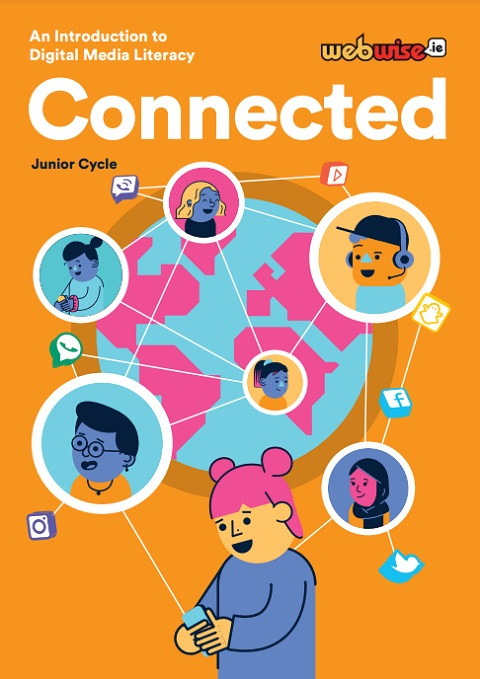 Connected: An Introduction to Digital Media Literacy Year of publication: 2020 Corporate author: Webwise | Professional Development Service for Teachers (PDST) Connected comprises five modules exploring young people’s rights and responsibilities online, emerging digital technologies and topics including big data and the data economy, deep fakes, false information and online wellbeing. The five modules are:1. My Online Wellbeing2. News, Information and Problems of False Information3. Big Data & the Data Economy4. My Rights Online5. Publishing Online - Group ProjectThe programme is mapped to the Junior Cycle Digital Media Literacy Short Course and will give students an understanding of the role of digital technologies and will help students develop key digital media literacy skills to responsibly navigate the online environment.
  Information Neighbourhoods Year of publication: 2020 Corporate author: Shout Out UK | U.S. Embassy London | Association for Citizenship Teaching (ACT) We live in a world where information has a variety of purposes. So how can you identify what each type of information is trying to do? Now more than ever, media literacy (the ability to critically analyse information) is critical for us as citizens and for our democracy to function. This video explains what Information neighbourhoods exist and how to identify them.
 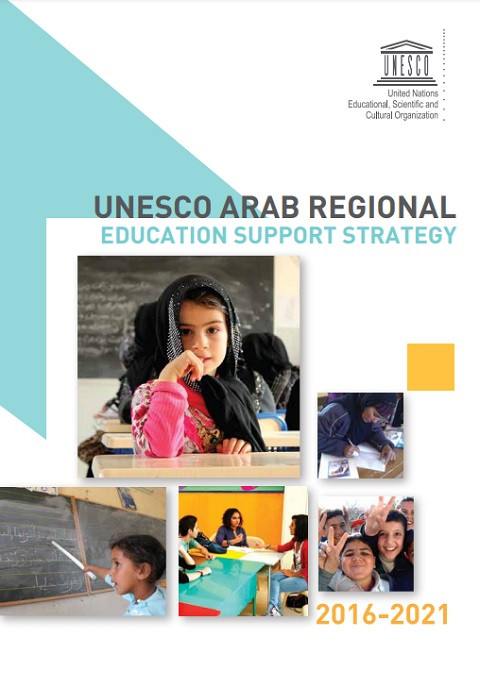 UNESCO Arab Regional Education Support Strategy: 2016-2021 Year of publication: 2016 Corporate author: UNESCO Beirut Covering the period of 2016-2021, this strategy document aims to provide tangible support for each Member State in the Arab Region, taking into account national needs and priorities and thus employing nationally relevant approaches based on the Agenda 2030 for Sustainable Development.
 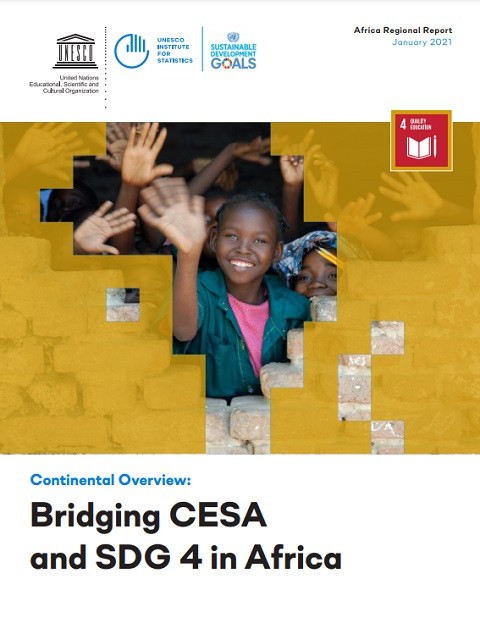 Continental Overview: Bridging CESA and SDG 4 in Africa; Africa Regional Report Year of publication: 2021 Corporate author: UNESCO Institute for Statistics (UIS) Monitoring progress toward Sustainable Development Goal 4 for education (SDG 4) is crucial to ensuring that children around the world have access to a quality education where they can learn and gain the skills they need to meet their full potential. SDG 4 indicators are organized with a view to global, thematic, regional and national targets.This report by the UNESCO Institute for Statistics (UIS) is the first in a series intended to bring a regional focus to SDG 4 monitoring, highlight the work being done in the regions and compare SDG 4 targets with those established by regional bodies.This new series of regional reports serve two purposes. Firstly, to map regional and SDG 4 targets to provide an overview of the symmetries between the two. Continental Overview: Bridging CESA and SDG 4 in Africa looks at how the strategic objectives of the Continental Education Strategy for Africa (CESA) compares with SDG 4 targets. Secondly, it analyses progress towards these objectives by African sub-regions.
 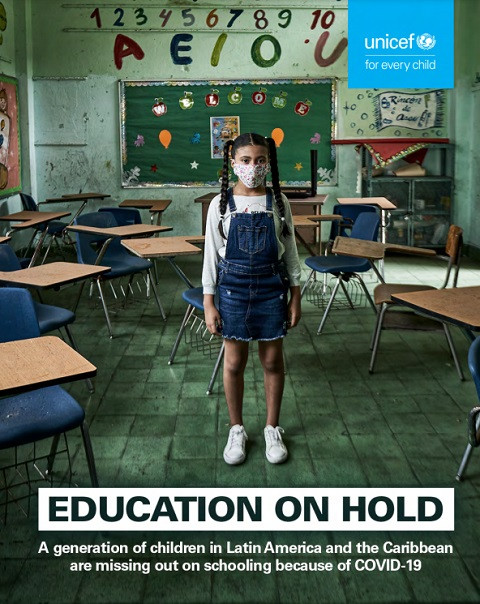 Education on Hold: A Generation of Children in Latin and the Caribbean Are Missing Out on School Because of COVID-19 Year of publication: 2020 Author: Laura Andreea Seusan | Rocío Maradiegue Corporate author: United Nations Children's Fund (UNICEF) More than seven months into the pandemic, COVID-19 is putting education on hold for more than 137 million children in Latin America and the Caribbean. This is according to a new UNICEF report about the devastating impacts of COVID-19 on education. The report also finds that COVID-19 has further widened the education gaps between rich and poor families in Latin America and the Caribbean. New UNICEF data shows that the percentage of children not receiving any form of education across the region has soared dramatically, from 4 to 18 per cent in the past few months. UN projections reveal that COVID-19 may push up to 3 million additional children out of school in Latin America and the Caribbean. Educación en Pausa: Una generación de niños y niñas en América Latina y el Caribe está perdiendo la escolarización debido al COVID-19 Year of publication: 2020 Author: Laura Andreea Seusan | Rocío Maradiegue Corporate author: United Nations Children's Fund (UNICEF) Más de siete meses después de que iniciara la pandemia, el COVID-19 está poniendo la educación en pausa de más de 137 millones de niños, niñas y adolescentes en América Latina y el Caribe, según un nuevo informe de UNICEF acerca de los devastadores impactos del COVID-19 en la educación.El informe encuentra también que el COVID-19 ha ampliado aún más las brechas educativas entre las familias ricas y las pobres en América Latina y el Caribe. Los nuevos datos de UNICEF muestran que el porcentaje de niños, niñas y adolescentes que no reciben ninguna forma de educación en la región se ha disparado drásticamente, del 4 al 18 por ciento en los últimos meses. Las proyecciones de la ONU revelan que el COVID-19 podría sacar de la escuela hasta 3 millones de niños más en América Latina y el Caribe.
  Glocal Education in Practice: Teaching, Researching, and Citizenship (BCES Conference Books; Vol. 17) Year of publication: 2019 Author: Nikolay Popov | Charl Wolhuter | Louw de Beer | Gillian Hilton | James Ogunleye | Elizabeth Achinewhu-Nworgu | Ewelina Niemczyk Corporate author: Bulgarian Comparative Education Society (BCES) This volume contains selected papers submitted to the XVII Annual International Conference of the Bulgarian Comparative Education Society (BCES) held in June 2019 in Pomorie, Bulgaria. The XVII BCES Conference theme is Glocal Education in Practice: Teaching, Researching, and Citizenship. The book includes 34 papers written by 69 authors from 20 countries.
  Mapping of Media Literacy Practices and Actions in EU-28 Year of publication: 2016 Corporate author: European Audiovisual Observatory | Council of Europe A project conducted by the European Audiovisual Observatory and financed by the European Commission This study aims at analysing the various media literacy initiatives on a national or regional level in order to provide an overview of what is currently being undertaken. This is the first major mapping exercise to survey the field in Europe. Although this study does not aim at covering the entire media literacy initiatives, it provides a detailed overview of the main trends, coming out of a selection of 547 featured projects involving 939 stakeholders across the European Union, which were identified through a questionnaire addressed at national experts from the different EU-28 member states. So what is Europe doing to encourage our media literacy? What measures are being taken at national and European levels to foster our critical appreciation and understanding of the mass media? The results of this study can be found in a general report accompanied by 4 annexes: Annex 1 provides national summaries showing the findings of the responses concerning each of the 28 EU member states; Annex 2 contains the list of the 547 featured projects; Annex 3 summarises the 145 case-study projects; Annex 4 contains the original responses from the 29 national experts, which are accessible in separate files available on the website of the European Commission.
 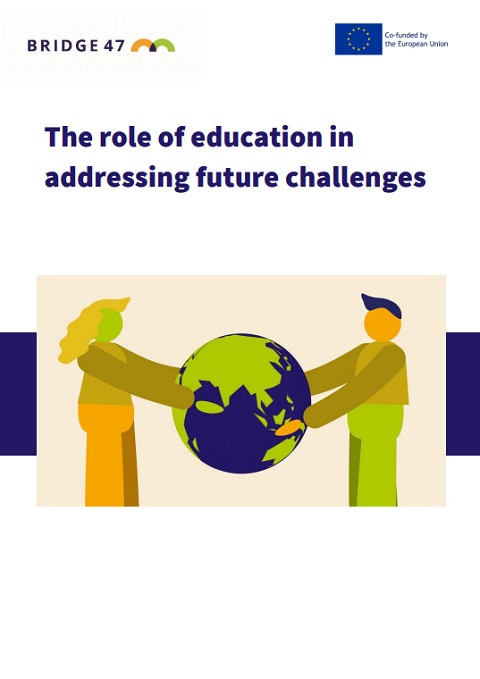 The Role of Education in Addressing Future Challenges Year of publication: 2020 Corporate author: Bridge 47 In response to UNESCO’s Futures of Education consultation, Bridge 47 has released the following report on the power that transformative education has to address future challenges, including those linked to inequalities, climate change and health.Through the consultation process UNESCO raises questions about the importance and purpose of education by 2050. In a fast-evolving world, Bridge 47 supports the idea that education should foster the kind of education that helps learners of all ages to become active global citizens and thus contribute to building a more just and sustainable report world for all.The report, ‘The Role of Education in Addressing Future Challenges’, further emphasises the importance of measuring and monitoring the progress towards achieving the transformative vision of education as outlined in Sustainable Development Goal Target 4.7. It is hoped that the overall Future of Education report will encourage a measuring framework for SDG 4.7 that acknowledges the connection between non-formal and formal education as well as supporting dialogue between key actors that the reflect any conceptual shifts within the fields of Education for Sustainable Development and Global Citizenship Education.