
Resources
Explore a wide range of valuable resources on GCED to deepen your understanding and enhance your research, advocacy, teaching, and learning.
1,372 Results found
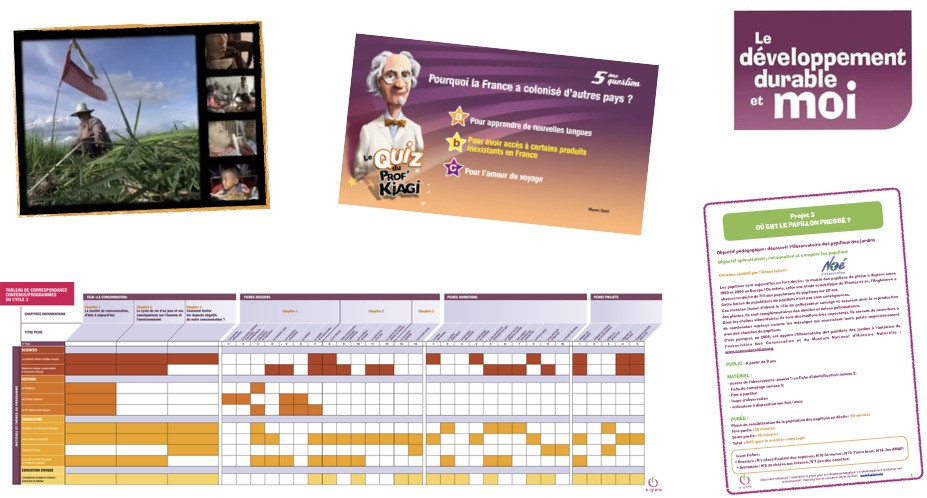 Le développement durable et moi Year of publication: 2010 Corporate author: E-graine Les mallettes pédagogiques constituent un des supports historiques d’e-graine dans sa batterie d’outils pédagogiques. Destinées en premier lieu aux enseignants dans les années 2010, elles ont été pensées comme des outils clés en mains pour éduquer au développement durable et à la solidarité internationale. A l’aide d’un tableau de correspondance pédagogique fourni avec la mallette, un enseignant pouvait, dans les différentes disciplines, intégrer facilement ces vidéos à ses cours. Le dispositif était idéal pour appuyer les écoles ne disposant pas toujours des moyens financiers permettant de faire appel à des animateurs spécialisés. Il était également possible pour le grand public de se procurer ces mallettes pour une utilisation dans le cadre familial.Pour toucher le plus grand nombre et parcequ’elle modernise ses outils pour rester à la pointe de l’innovation pédagogique, e-graine fait le choix de les proposer gratuitement en ligne pour le plus grand nombre. Le contenu que vous trouverez ci-dessous en vidéo demeure évidemment une bonne base d’initiation pour une cible 8-12 ans. Teaching kits are one of e-graine's long-standing educational tools. First designed for teachers in the 2010s, they were conceived as turnkey tools for teaching sustainable development and international solidarity. Using a pedagogical correspondence table supplied with the kit, teachers could easily integrate the videos into their lessons in any subject. The system was ideal for supporting schools that don't always have the financial resources to hire specialized animators. It was also possible for the general public to purchase the kits for use in the home. In order to reach as many people as possible, and because it is constantly updating its tools to remain at the cutting edge of educational innovation, e-graine has decided to make them available free of charge online. The video content you'll find below is obviously a good introduction for 8-12 year-olds.
  À l'école des droits de l'enfant Year of publication: 2020 Corporate author: Asmae Association Soeur Emnanuelle Basée sur la même pédagogie que le "projet Yalla ! Pour les droits de l’enfant", nous retrouvons un ensemble d’outils pédagogiques clés en mains, évolutifs et interactifs. Les enfants pourront apprendre en s’amusant avec : des vidéos, des jeux, des quizz, des défis à relever. Une surprise se cache également dans les leçons …. le parrain de notre projet, Joan Faggianelli, anime les vidéos pédagogiques. La plateforme est utilisable en classe par l’enseignant.e ou à la maison. L’objectif de cet outil est de maximiser l’impact de notre action avec plus d’enfants sensibilisés, étant à même de comprendre leurs droits, dénoncer des situations de danger et devenir acteurs de la solidarité. Based on the same pedagogy as the Yalla! Pour les droits de l'enfant (Children's Rights) project, we offer a set of turnkey, scalable and interactive teaching tools. Children can learn while having fun with videos, games, quizzes and challenges. A surprise is also hidden in the lessons .... Our project sponsor, Joan Faggianelli, animates the teaching videos. The platform can be used in class by the teacher or at home with parents. The aim of this tool is to maximize the impact of our action, with more children aware of their rights, able to denounce dangerous situations and become actors in solidarity.
 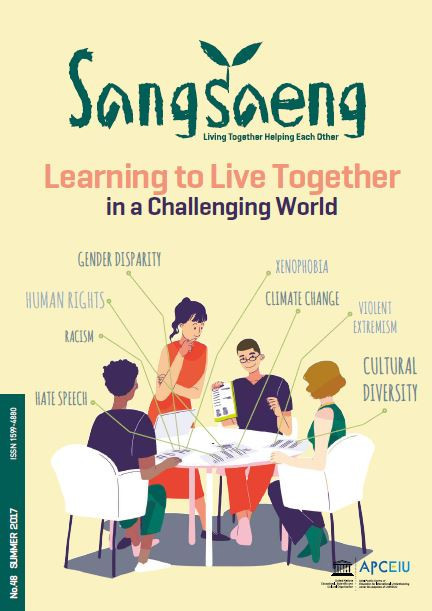 Learning to Live Together in a Challenging World (SangSaeng no. 48 summer 2017) Year of publication: 2017 Corporate author: APCEIU The 48th issue of SangSaeng, “Learning to Live Together in a Challenging World,” has been published. With nationalism on the rise and support for populist perspectives, this edition of SangSaeng emphasizes the global community’s efforts for tolerance and learning to live together. It contains articles reminding us of the importance of empowering learners to assume active roles to face and resolve global challenges. 3 Director’s Message4 Special Column4 Education of Harmony, Peace and Happiness8 We Must Educate Global Citizens to Sustain Peace in the World11 Focus: Learning to Live Together in a Challenging World11 Access to Equitable Quality Education.14 How Business Helps People Learn to Live and Work Together17 Challenges in the Horn of Africa and Desire for Human Dignity20 Ethnic Identity in the Era of Minority Recognition 23 Special ReportShrinking Spaces: A Perspective from Iraq26 Best Practices26 Free2Choose-Create30 Strengthening Literacy Learning in Lesotho35 Youth NetworkGCED & Youth: An Open Forum in Jeju38 InterviewThe Power of Music: An Agent of Transformation42 Understanding the Asia-Pacific Region42 Naadam: A Celebration of Culture46 Bomena in Bhutan50 APCEIU in Action 더불어 살아가기 위한 교육이 직면한 도전 (상생 제48호 2017년 여름호) Year of publication: 2017 Corporate author: 유네스코 아시아태평양 국제이해교육원 48호 <상생>이 “더불어 살아가기 위한 교육이 직면한 도전”이라는 주제로 발간되었다. 이번 호는 국가이기주의와 포퓰리즘 등 도전적인 상황 속에서 관용과 더불어 살아가기 위한 교육(Learning to Live Together)을 지켜나가는 국제사회의 노력을 살펴보고, 학습자들이 도전적인 상황을 직면하고 적극적인 역할을 수행하도록 역량을 키우는 것이 얼마나 중요한지 일깨워준다. 3 발간사4 스페셜 칼럼4 공존과 평화, 행복을 위한 교육8 우리는 세계평화를 지속시키기 위해 세계시민교육을 해야 한다11 포커스: 더불어 살아가기 위한 교육이 직면한 도전11 질적 교육에 평등하게 접근하기14 비즈니스가 함께 살고 일하도록 가르치는 방법17 아프리카 북동부 지역의 인간존엄을 향한 열망과 도전20 소수자 인정 시대의 종족 정체성 23 스페셜 리포트축소되는 공간: 이라크의 관점26 국제이해교육 모범사례26 안네프랑크하우스 Free2Choose-Create30 레소토 리터러시 교육 강화35 유스네트워크세계시민교육과 청년: 제주포럼38 인터뷰음악의 힘: 변혁의 주체42 아시아태평양 지역 이해하기42 나담: 축하의 문화46 부탄 보메나50 교육원 활동
 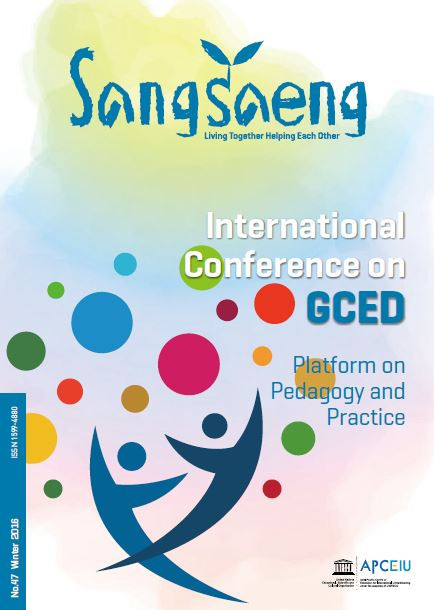 1st International Conference on GCED (SangSaeng no. 47 winter 2016) Year of publication: 2017 Corporate author: APCEIU The 47th issue of SangSaeng, a special edition dedicated to the successful hosting of the 1st International Conference on GCED, has been released. This winter edition introduces how the Conference served as a platform for sharing GCED ideas. This issue also covers the various sessions conducted at the Conference and highlights some of the important moments. 3 Director’s Message4 Introduction to the Conference5 Outside the Sessions6 Opening CeremonyThe Rise of GCED and APCEIU’s Role in Promoting GCED Worldwide10 Focus10. [Keynote Session] GCED for Sustainable and Peaceful Societies: What Practices and Pedagogies? 16 Panel Discussion] What Does It Mean to Be a Global Citizen22 [GCED Talks] Learning to Live Together28 Concurrent Session IActors of GCED32 Concurrent Session IIThematic Approaches to GCED36 Concurrent Session IIILearning Process and Assessment 40 After the Conference42 Best Practices42. Planting the Seeds of Bhutan’s Agricultural Progress46 Little Circle for Embracing Diversity, Bridging Differences50 LetterCJK Youths as Global Citizens: Sharing Perspectives, Extending Identities 제1회 세계시민교육 국제회의 (상생 제47호 2016년 겨울호) Year of publication: 2017 Corporate author: 유네스코 아시아태평양 국제이해교육원 47호 <상생>이 제 1회 세계시민교육 국제회의의 성공적 개최를 소개하는 특집호로 발간되었다. 이번 겨울호는 이번 국제회의가 어떤 방식으로 세계시민교육에 대한 경험과 활동을 공유하는 장을 제공하였는지 살펴보고, 회의를 구성한 각 섹션에서 다루어진 내용들을 소개한다. 3 발간사4 국제회의 소개5 회의장 밖에는 (기타행사)6 개회사세계시민교육의 부상과 아태교육원의 역할10 포커스[기조세션] 지속가능하고 평화로운 사회를 만들기 위한 세계시민교육: 어떤 실천과 페다고지가 필요한가? 16 [패널토크] 내가 생각하는 세계시민이란?22 [GCED Talks] 더불어 살기 위한 교육28 분과세션 I세계시민교육 실천가32 분과세션 II세계시민교육의 주제별 접근36 분과세션 III세계시민교육의 학습과정 및 평가 40 국제회의를 마치며참가자들의 후기42 국제이해교육 모범사례42 부탄의 농업 발전에 싹을 틔우기46 차이를 받아들이고 다양성을 육성하는 NGO, Little Circle50 APCEIU에 보내는 편지세계시민이 된 한·중·일 대학생, 관점을 나누고 경계를 허물다
 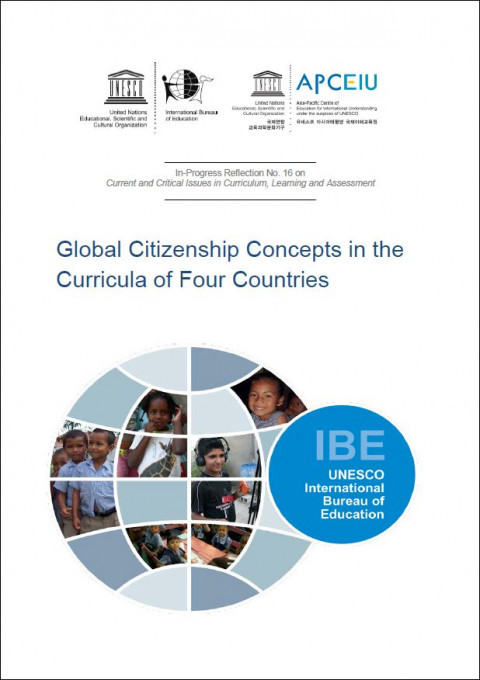 Global Citizenship Concepts in the Curricula of Four Countries Year of publication: 2017 Author: Natalie Browes Corporate author: UNESCO International Bureau of Education (IBE) | APCEIU This report details the presence of Global Citizenship Education (GCED) concepts in the education systems of four countries: Cambodia, Colombia, Mongolia and Uganda. It highlights the main findings of eight reports: four expert reports, which predominately analyse curriculum content, and four situational analysis reports, which take a broader view and detail some of the country-specific challenges and opportunities with regard to GCED. Findings reveal the presence of GCED concepts across the curricula of the four countries. In addition to cognitive content related to GCED, competency-based content is also found present within the curricula of these countries. However, the majority of this content can only be indirectly linked to GCED, and it is better interpreted as part of the more traditional civics or citizenship education approach. As such, it generally lacks a global perspective and does not engage with all key themes of GCED. Furthermore, this content is often concentrated at the lower and upper secondary levels, instead of being equally distributed across all grade levels. This is particularly true in the case of behaviour-based competencies. Findings also reveal challenges beyond the curriculum. These include lack of teacher training and lack of support to implement GCED, which are concerns expressed by stakeholders in all four countries. A lack of GCED content in textbooks and lack of supplementary materials were also found to be issues. The report concludes with recommendations regarding the effective implementation of GCED within curricula. Among others, the report suggests the transversal integration of GCED - across the curriculum at all grade levels, while at the same time, actors from all levels of the education system, ranging from central government to teachers, should be engaged to ensure the use of complementary learning materials, pedagogies and assessment techniques.
  Revision Process of the 1974 Recommendation concerning Education for International Understanding, Co-operation and Peace and Education relating to Human Rights and Fundamental Freedoms: Compilation of Member State Comments Year of publication: 2023 Corporate author: UNESCO Adopted in 1974, the Recommendation concerning education for international understanding, co-operation and peace and education relating to human rights and fundamental freedoms is considered a landmark legal instrument that brings together for the first time peace, international understanding, human rights, fundamental freedoms and education. As per Circular letter 4401, the preliminary report and the first draft of the revised 1974 Recommendation were transmitted to Member States for their written comments and observations. These written comments were taken into consideration by the Director-General when preparing the revised second draft of the Recommendation to be discussed at the Intergovernmental Special Committee Meeting (Category II), in view of its submission to the 42nd session of the General Conference in November 2023 and eventual adoption.
  Revision Process of the 1974 Recommendation concerning Education for International Understanding, Co-operation and Peace and Education relating to Human Rights and Fundamental Freedoms: Comments from Observers to the Plenary Meetings of the International Expert Group (IEG) Year of publication: 2023 Corporate author: UNESCO Adopted in 1974, the Recommendation concerning education for international understanding, co-operation and peace and education relating to human rights and fundamental freedoms is considered a landmark legal instrument that brings together for the first time peace, international understanding, human rights, fundamental freedoms and education. In line with the Resolution adopted at UNESCO’s General Conference at its 41st Session in November 2021 (41C/Resolution 17), UNESCO launched the revision of the Recommendation and convened an International Expert Group (IEG) to advise the Organization on the changes. The work of the IEG took place between May and June 2022. Though the meetings of the IEG were technical in nature (category VI), in order to ensure an open and transparent process, the Permanent Delegations were invited to listen-in to the deliberations of the IEG online, as observers, along with a select number of non-governmental organizations, intergovernmental organizations, and United Nations entities. At the end of each plenary meeting, observers to the IEG plenary meetings could submit written comments. This document compiles the comments received from observers during this process and submitted to the IEG members for their consideration.
  加拿大学前儿童公民教育:概念、方法及启示 (教育进展 第14卷 第4期) Year of publication: 2024 Author: 俞玥 在全球正经历重大发展、变革和调整的关键时刻,学前儿童公民教育成为备受瞩目的热门话题。加拿大作为早期致力于公民教育的发达国家之一,在各省的课程改革中已普遍将公民教育纳入学前教育的核心范畴。本文将在新时代背景下深入阐释加拿大学前儿童公民教育的概念,并以不列颠哥伦比亚省为例详细分析其七项实施方法。通过对概念和实施方法的系统研究,本文旨在为我国学前儿童公民教育提供有益的启示。